Had some free time and managed to finish off this mammoth tome.
"And lastly," Wolfhere said, "no man or woman is given the Eagle's badge until she has seen a comrade die. Death is ever at hand. We do not truly become Eagles until we accept and understand that we are willing to pay that price for our service and our king." (p. 260 SFBC edition).
In most campaigns, the players will have numerous options when it comes to organizations to join. One of the quick hits in the Forgotten Realms would be the Harpers. In many such settings, guilds have a tremendous amount of power.
If the players are part of a guild, or members of multiple guilds, what is expected of them? What do they have to do in order to 'earn their wings'? What do they have to bring to the guild to make it accept them? If a wizard is always out adventuring with his fellow sellswords, what does the mage guild expect of him in turn?
It's not that you want to make these memberships in and of themselves a burden, but rather, a springboard. If the players are always out and about, then the guilds the players are members of would not only recognize this, but use it to send them out for various guild business. It's essentially free labor for them and plot points for the campaign. Are there certain monsters you want to use? The warrior's guild informs the fighters and rangers that their time away from the guild must be earned back with varlous battle against these invaders. The mages guild informs the wizard that certain bits of these creatures can be used as components in a ritual. The divine elements dream of their deity demanding the death of these offending monsters.
"This is certainly grave news, but what am I to tell the people of Gent? Given enough time, the Eika amry outside will burn and batter down Gent's bridges, and when they have done that, they will have free passage up the Vester whether we will it or no." (p. 274 SFBC)
The Game Master should make efforts to show why the players are needed. In some campaigns like the Forgotten Realms, one of the 'strikes' against it is that it is filled with NPC's who should be able to solve all of the problems. But well, so is reality. America for example, truly has enough wealth to offer health care to everyone, but it's not necessarily in the interest in all of the powers that be to spread that around.
The 'good' NPC's of a setting have their own problems to deal with and even when what the players are involved in is campaign shattering, it's up to the players to pull themselves up by the bootstraps and be the heroes of the campaign setting.
"The soft ones are not true people, of course, but they are a kind of people. People can talk. It is the lesson the WiseMothers teach. It is what they whispered to him when he was a half-grown pup and dared venture up the mountainside to the sacred palce tended by the SwiftDaughters to see whether the WiseMothers would speak to him or else kill him for his presumption.
"The knife and the tongue are equally strong weapons."
One of the interesting things about 4th edition is that it somewhat eliminated the wide range of alignments that Dungeons and Dragons has relied on to guide so much of its behavior. Players and NPCs may have motivations that aren't necessarily so crystal clear that every orc child must be battered against a rock.
If the players are able to make a real influence against their enemies, either by sparing them, communicating with them, or showing them a better way, if the Game Master can incorporate that into his campaign instead of just shrugging his shoulders and having the monsters continue to attack brainlessly, the players will see that their actions have a direct influence on the growth of the campaign.
"So do some of us work today to ban inheritance through the male line." (p. 453 SFBC).
When looking at parts of the campaign world, how are things determined in a time of inheritance? The old joke is the son of my daughter is my grandson and the son of my son may be my grandson as one never knows. Of course with modern technology and all that comes with it, and possibly with rituals and magical aid to dtermine in a fantasy campaign the same could be said, but it does bring into question rights of inheritance, differences in culture, and things that players may not be used to in a standard psuedo historical setting.
King's Dragon boasts a wide cast and uses a huge array of characters to tell merely a part of a story despite being over five hundred pages. If the Game Master can take some of the ideas for setting that don't necessarily happen in his game now, ranging from humanoid invaders that are harsh because they come from a harsh land and climate, to patrons that can't always protect their wards, then King's Dragon can act as your own book in your own Appendix N reading list.
Friday, September 4, 2009


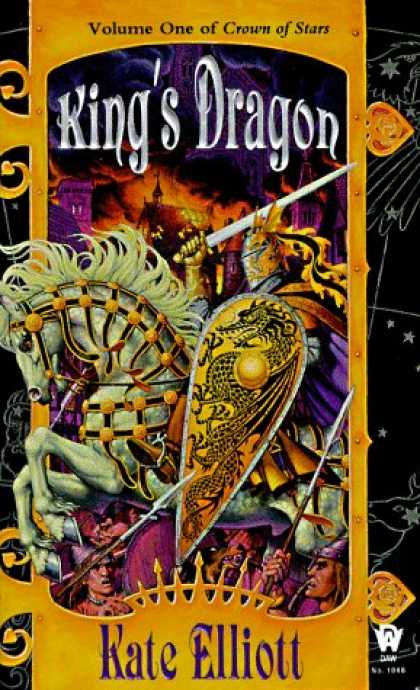
First and Lasting Impressions: King's Dragon by Kate Elliot
“A rider approached. Armed in bright mail, it guided its horse forward at a sedate walk, untroubled by the raging wind. ..The horse was beautiful, as white as untouched snow, almost blinding, and the woman- She was a woman of middle age, scarred on the face and hands, her boots muddied and scuffed, her coat of mail patched here and there with gleaming new rings of iron. Her long sword, sheathed in leather, swayed in front of him. A battered, round shield hung by her knee, tied to the saddle… Her gaze was at once distant and utterly piercing. If her eyes had color, he could not make it out. They seemed as black as a curse to him.” (p. 27 SFBC hardcover)
“Who are you?” he whispered. The sword, like death by pain, was lifted. Her reply rang out and yet was muted by the howl of the wind. “I am the Lady of Battles.” (p. 28 SFBC hardcover)
A good description goes a long way. Ask each player to not only describe themselves, but make sure they have a description written down so that they can refer to it for future reference. Do the characters dress in a certain fashion? Do they wear certain styles of cloth? Are their clothes new or old? Do they have fine silks or worn through materials? Are their weapons nicked from long use and battle or well oiled?
Having a good description for an NPC goes a long way too. Make sure that when doing so, you have the description ready if you plan on using the character again. Insure that things that are unique about the NPC are bolded so that the players can recognize these characters when meeting them in the future. When introducing them, give them a unique persona not only through what they wear and what they are, but by your own actions as a GM. Hand gestures and voice are some of the greatest tools you have at your disposal in such a case and making the same hand gestures in association with a certain NPC, will ingrain that habit into the minds of the players.
“It is necessary that we act. We must find another to consecrate at the altar. One who will not be missed.” (p. 170 SFBC hardcover).
This falls under the rule of no good deed goes unpunished. When attempting to push their own views of right and wrong on the setting, the GM has many options, especially when trying to showcase that the players cannot be everywhere and do everything at the same time. In this example, Alain has saved a savage humanoid from a gruesome death. In response, another is taken in place for sacrifice.
If the players are known defenders of one place, can they be at another? If the players champion one cause, do they directly or indirectly, oppose another and cause people who follow that cause hardship?
When trying to follow the old adage of no good deed goes unpunished, it’s not necessarily that you as the GM are trying to showcase that the world is a harsh and cruel place, but rather, that actions has consequences both intended and unintended. In some games, one of the standard methods here is the players freeing something long dormant from an ancient crypt in their running around and digging up the dead.
“But the blessed Daisan fasted and prayed for seven days! He didn’t suffer!”… “So the church taught falsely for years. So this truth was proclaimed as a heresy at the Great Council of Addai over three hundred years ago.” (p. 175 SFBC hardcover).
“Which fort?” she asked, then knew what he meant: This fort, the old Dariyan fort built by order of Arki-kai Tangashuan seven hundred years ago, reckoning by the calendars she knew. Now of course it was known as Steleshame, a small estate under the authority of the freeholder Gisela that was also an official posting stop for the King’s Eagles and thus under the king’s protection rather than that of the local count.” (P. 250 SFBC hardcover)
Depending on what campaign setting you’re using, either home brewed or store bought, the history may be so vast and grand that things players tend to take as everyday events and elements may be prone to change. One way to introduce these changes is to simply note that some time in the campaign’s past “THIS” is what had actually happened.
But then why doesn’t the campaign reflect it? Take the Forgotten Realms and it’s new incarnation for 4th edition. It incorporated many elements of the 4e default setting by taking a massive hammer to the setting and instead of allowing that unknown history to be discovered by the players, its thrust upon them. Have the characters be the ones who discover these ancient things. Have the players be the ones to discover that Lathandar is actually a different deity. Have the players discover that in prewritten history there was another land. Have the players discover these hidden facets of the setting so that they may be the new authorities and can be part of the change as opposed to just being battered about the head with it.
And as the second quote shows, sometimes the campaign will reflect it. People change. Monsters migrate. Fortress rise and fall. Things have multiple names and multiple purposes depending on who you ask and whose living there now. When dealing with something of great age, have multiple names for the old forts that stretch back into history. Have multiple names for the elves who have seen hundreds of years. Have variety when the players discover a long lost weapon that once served on the front line of battle against shadow and shade.
“Who are you?” he whispered. The sword, like death by pain, was lifted. Her reply rang out and yet was muted by the howl of the wind. “I am the Lady of Battles.” (p. 28 SFBC hardcover)
A good description goes a long way. Ask each player to not only describe themselves, but make sure they have a description written down so that they can refer to it for future reference. Do the characters dress in a certain fashion? Do they wear certain styles of cloth? Are their clothes new or old? Do they have fine silks or worn through materials? Are their weapons nicked from long use and battle or well oiled?
Having a good description for an NPC goes a long way too. Make sure that when doing so, you have the description ready if you plan on using the character again. Insure that things that are unique about the NPC are bolded so that the players can recognize these characters when meeting them in the future. When introducing them, give them a unique persona not only through what they wear and what they are, but by your own actions as a GM. Hand gestures and voice are some of the greatest tools you have at your disposal in such a case and making the same hand gestures in association with a certain NPC, will ingrain that habit into the minds of the players.
“It is necessary that we act. We must find another to consecrate at the altar. One who will not be missed.” (p. 170 SFBC hardcover).
This falls under the rule of no good deed goes unpunished. When attempting to push their own views of right and wrong on the setting, the GM has many options, especially when trying to showcase that the players cannot be everywhere and do everything at the same time. In this example, Alain has saved a savage humanoid from a gruesome death. In response, another is taken in place for sacrifice.
If the players are known defenders of one place, can they be at another? If the players champion one cause, do they directly or indirectly, oppose another and cause people who follow that cause hardship?
When trying to follow the old adage of no good deed goes unpunished, it’s not necessarily that you as the GM are trying to showcase that the world is a harsh and cruel place, but rather, that actions has consequences both intended and unintended. In some games, one of the standard methods here is the players freeing something long dormant from an ancient crypt in their running around and digging up the dead.
“But the blessed Daisan fasted and prayed for seven days! He didn’t suffer!”… “So the church taught falsely for years. So this truth was proclaimed as a heresy at the Great Council of Addai over three hundred years ago.” (p. 175 SFBC hardcover).
“Which fort?” she asked, then knew what he meant: This fort, the old Dariyan fort built by order of Arki-kai Tangashuan seven hundred years ago, reckoning by the calendars she knew. Now of course it was known as Steleshame, a small estate under the authority of the freeholder Gisela that was also an official posting stop for the King’s Eagles and thus under the king’s protection rather than that of the local count.” (P. 250 SFBC hardcover)
Depending on what campaign setting you’re using, either home brewed or store bought, the history may be so vast and grand that things players tend to take as everyday events and elements may be prone to change. One way to introduce these changes is to simply note that some time in the campaign’s past “THIS” is what had actually happened.
But then why doesn’t the campaign reflect it? Take the Forgotten Realms and it’s new incarnation for 4th edition. It incorporated many elements of the 4e default setting by taking a massive hammer to the setting and instead of allowing that unknown history to be discovered by the players, its thrust upon them. Have the characters be the ones who discover these ancient things. Have the players be the ones to discover that Lathandar is actually a different deity. Have the players discover that in prewritten history there was another land. Have the players discover these hidden facets of the setting so that they may be the new authorities and can be part of the change as opposed to just being battered about the head with it.
And as the second quote shows, sometimes the campaign will reflect it. People change. Monsters migrate. Fortress rise and fall. Things have multiple names and multiple purposes depending on who you ask and whose living there now. When dealing with something of great age, have multiple names for the old forts that stretch back into history. Have multiple names for the elves who have seen hundreds of years. Have variety when the players discover a long lost weapon that once served on the front line of battle against shadow and shade.
Thursday, September 3, 2009
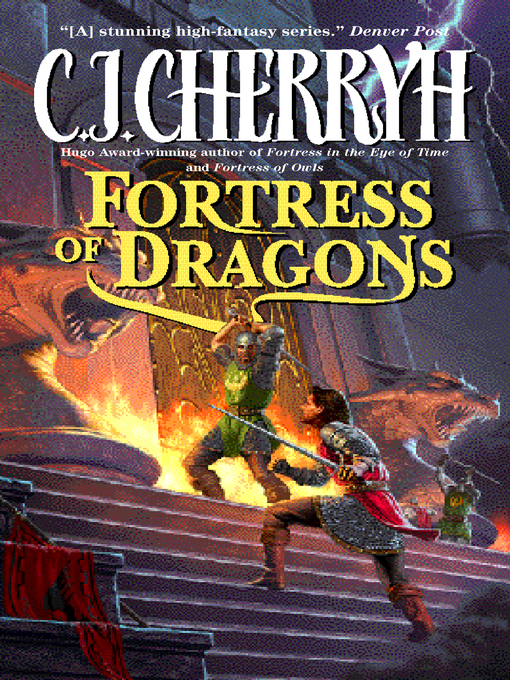
Fortress of Dragons by C. J. Cherryh
“He he knew his body had lost the resiliency of his boyish years; for the first time he accounted how he would pay for all the little follies of youth. .. at seven, he had cracked his knee falling through the stable-loft floor: that came back to haunt him. The elbow he had affronted in weapons practice not five years gone, that afflicted his shoulder as well. The time Danvy had pitched him off over his head, the slip of the ice when he was twelve, the times his mother had warned him about leaping off the side of the staircase… you’ll break your feet, she had said, and he had not remembered his mother’s voice clearly in years, but he could now, in this long watch.” (p. 166 SFBC hardcover).
Many times the dice roll against the characters. Critical hits, the GM wisely using his monster’s abilities, traitors in the group, and the dice falling where they may, can lead players to experience all levels of pain that their super human characters can endure.
But what about when they’re not in combat? In combat, if you can spare it, take a few seconds to note critical hits and note how you describe them. Remind the player later of that pain. In most cases, the players probably will suffer only light scaring if even that thanks to quickly being healed through magic, but what of death? What if the players have to bring back one of their own? What marks will death leave on the player? Will it leave him with a stutter? With it leave him with a limp? Putting role playing elements in that have no game mechanics can give the players more ties to their own history in the campaign.
“He drew his sword and with it traced a Line of his own on the stones, slowly, surely, drawing the Line with the touch of the metal on stone, securing it with the touch of his boots on the floor and the strength of his wishes in the stones.” (p. 259 SFBC hardcover).
Many magic systems are tied into rite and ritual. In the new edition of Dungeons and Dragons (4th ed as of 2009 still), rituals are methods of using magic that often take time and do a variety of utility needs. However, most of these rituals are vaguely described in terms of how they’re actually performed as opposed to what they do. Like much else that is scant in 4e, this is an opportunity for the Game Master to put his own touches on the campaign or even better, have the players put their own personal touches on the setting. When a player tells you he’s using a ritual, ask him how exactly he goes about it. Ask what items are brought, ask when its performed, ask if there are any unique rituals and movements.
These things, following the old five W (who, what, when, where and why) along with how, can allow each character to have some unique traits that aren’t impeded by game mechanics and provides them with unique flavor.
“It threatens everything,” Tristen said, and could not bid Crissand avoid it: could not bid any one of his friends avoid it. It was why they had come, why they pressed forward, why they had gone to war at all, and everything was at risk.” (p. 282 SFBC hardcover.)
As the campaign progresses, it’s not longer enough to guard the town. It’s not longer enough to watch over wagons. It’s not enough to save the city nor the country. Sometimes the very nature of the world itself is at stake. Such gambits can be hard to pull off and should be near the maximum levels of the game’s limits, or when the Game Master or players know ahead of time that the campaign will be coming to an end. By letting the threat elevate to new levels, the GM can bring a sense of urgency to the campaign that a standard villain may lack. In this case, the true enemy is something beyond standard naming conventions, it’s beyond being merely an evil entity. Much like the One Ring from Lord of the Rings, it’s powers lie in corruption, but much like Sauron himself, the real power is always waiting in the background, waiting for its opportunity to rise, to strike, to take it all when the time is right.
Many times the dice roll against the characters. Critical hits, the GM wisely using his monster’s abilities, traitors in the group, and the dice falling where they may, can lead players to experience all levels of pain that their super human characters can endure.
But what about when they’re not in combat? In combat, if you can spare it, take a few seconds to note critical hits and note how you describe them. Remind the player later of that pain. In most cases, the players probably will suffer only light scaring if even that thanks to quickly being healed through magic, but what of death? What if the players have to bring back one of their own? What marks will death leave on the player? Will it leave him with a stutter? With it leave him with a limp? Putting role playing elements in that have no game mechanics can give the players more ties to their own history in the campaign.
“He drew his sword and with it traced a Line of his own on the stones, slowly, surely, drawing the Line with the touch of the metal on stone, securing it with the touch of his boots on the floor and the strength of his wishes in the stones.” (p. 259 SFBC hardcover).
Many magic systems are tied into rite and ritual. In the new edition of Dungeons and Dragons (4th ed as of 2009 still), rituals are methods of using magic that often take time and do a variety of utility needs. However, most of these rituals are vaguely described in terms of how they’re actually performed as opposed to what they do. Like much else that is scant in 4e, this is an opportunity for the Game Master to put his own touches on the campaign or even better, have the players put their own personal touches on the setting. When a player tells you he’s using a ritual, ask him how exactly he goes about it. Ask what items are brought, ask when its performed, ask if there are any unique rituals and movements.
These things, following the old five W (who, what, when, where and why) along with how, can allow each character to have some unique traits that aren’t impeded by game mechanics and provides them with unique flavor.
“It threatens everything,” Tristen said, and could not bid Crissand avoid it: could not bid any one of his friends avoid it. It was why they had come, why they pressed forward, why they had gone to war at all, and everything was at risk.” (p. 282 SFBC hardcover.)
As the campaign progresses, it’s not longer enough to guard the town. It’s not longer enough to watch over wagons. It’s not enough to save the city nor the country. Sometimes the very nature of the world itself is at stake. Such gambits can be hard to pull off and should be near the maximum levels of the game’s limits, or when the Game Master or players know ahead of time that the campaign will be coming to an end. By letting the threat elevate to new levels, the GM can bring a sense of urgency to the campaign that a standard villain may lack. In this case, the true enemy is something beyond standard naming conventions, it’s beyond being merely an evil entity. Much like the One Ring from Lord of the Rings, it’s powers lie in corruption, but much like Sauron himself, the real power is always waiting in the background, waiting for its opportunity to rise, to strike, to take it all when the time is right.
Fortress of Dragons ties up C. J. Cherryh's fantasy tale of friendship not only on a high note, but also on a note of future exploration. When ending your own campaigns, try to insure that even though all the immediate needs are filled that there is always the possibility of coming back to that campagin.
Sunday, August 23, 2009
Fortress of Eagles
The follow up to Fortress in the Eye of Time, the same cast and crew continue their adventurers. One of the main characters, Tristen, continues to be a useful tool in showing readers how the setting works. See, Tristen doesn't have a lot of knowledge being a 'shaping', a kind of returned soul from the dead so he's always asking seemingly innocent questions in a thirst for knowledge. Take this little gem.
"You pray to the gods. Do they hear you?"
"I pray to the gods, on holiday. On a battlefield. Truth be known, that's the way of most men." (p. 81 hardcover sci-fi edition).
Note this. In the Forgotten Realms and other fantasy campaigns, it's common for the gods to be pantheon based and the players would pray to each god that was in charge of the sphere that the player was seeking assistance in. Want to win a battle? Pray to Tempus. Want to survive a storm at sea? Pray to the bitch queen.
Knowing the gods of the world and their methodologies will allow the GM to showcase the different ways religion effects the different castes of the setting.
"You pray to the gods. Do they hear you?"
"I pray to the gods, on holiday. On a battlefield. Truth be known, that's the way of most men." (p. 81 hardcover sci-fi edition).
Note this. In the Forgotten Realms and other fantasy campaigns, it's common for the gods to be pantheon based and the players would pray to each god that was in charge of the sphere that the player was seeking assistance in. Want to win a battle? Pray to Tempus. Want to survive a storm at sea? Pray to the bitch queen.
Knowing the gods of the world and their methodologies will allow the GM to showcase the different ways religion effects the different castes of the setting.
Sunday, August 16, 2009
Fortress In The Eye of Time or How to Host A Party

"...There have been now ten attempts on my life, of which the south gate is witness save the last, where we lost good men in my stead, and yet Lord Heryn swears the district under his control - ah, what else of gossip have I forgot? Armed bandits in the countryside, of which there now are fewer. Perhaps you have had such difficulties, my lords. If so I earnestly pray you advise me." (p. 242 hardcover sci-fi version.)
It's easily possible for a group of players to meet numerous factions and gain from them information. One way to allow the players a wider degree of control in what they may seek out in terms of adventure, is to have a gathering of like minded friends and allies and have them speak of their recent adventurers, issues, and potential problems. This allows the Dungeon Master to throw out several plot lines and see which ones the players are interested in before working fingers to the bone on something that the players may have no interest in.
Players have characters that are generally not the standard citizen of a fantasy realm. They go out and risk live and limb for treasure if not for personal reasons. Have them meet wagon masters who gather together and speak of the trouble on the roads. Have them meet nobles from different corners who gather together to tell old tales and speak of problems yet unsolved. Have them gather together with rival adventuring bands and share tales of woe.
The larger the DM can make the setting ahead of time as the players travel through it, the more options possible when presenting adventurers from those different venues. The trick is to have something that brings all of these elements together and adventurers being far from the normal citizen, can be that. Mayors they've helped in small communities may call for a feast in their honor. Warrior Kings whose aid they're secured may call for a show of might, allowing the players to show off their abilities while gathering new information.
And don't forget, during any such meeting, the chance for adventure is always there. Do all of the assembled like the characters? Do unfriendly forces know of the assembly and have the means to attack it? Are there any poisoners in the crowd? Any assassins?
Don't limit the danger to the dungeon. Provide the characters opportunities to use the world as a springboard for further adventurers and this will give the world more depth and character then only allowing the players meeting time with NPC's during mission hirings.
Friday, August 14, 2009
The Riot at Bucksnort and other Western Tales or Mistaken Identity

One of the things it can be fun to do in a role playing game is to play the mistaken identity game. In The Riot at Bucksnort and Other Western Tales by good old Robert E. Howard, the first story Mountain Main introduces us to Breckinridge, a huge man whose skin is imprevious to normal harm and whose size pits him in the role of one of Robert E. Howard's standard "old blood" style characters.
When Breckinridge goes into town, he's mistaken for a boxer and this leads to some interesting scenarios.
In another story, Guns of the Mountains, Breckinridge temporarily falls in with a bad crowd that lies to him, claiming to be the sheriff and his deputies.
In terms of mistaken identity, it can happen one of two ways. The NPC's in the setting think the character is someone he isn't, or the player's think that a particular NPC or group of NPC's are someone they're not.
This can come about in an innocent way or it can be done through deliberate machinations where the players are trying to deceive someone or someone is trying to deceive the players.
In terms of actually pulling it off, a lot of the mechanics will depend on the game system. For example, in 3rd edition, there are several skills that can be used right off the bat such as bluff. Of course there is always magic. In addition to those standards, depending on how big the scam is, the party trying to hide may draw other people into the scam. For example, what if the players come to a town that's supposed to be under threat of bandit raid and they're too late? The bandits are already here and have informed the town people that if they let the character's know, things won't go well for them.
The GM should think of how the 'scam' is going to be pulled off and for how long. Players should do the same.
While impersonation can be a difficult piece to pull off well, it can also be fun providing new venues to the game that might not have been open otherwise. After all, who hasn't seen some type of spoof where one character of a social circle has a twin out there of another social circle and the two decide to swap families?
But it doesn't always have to be about people pretending to be other people. In a game like Dungeons and Dragons, what if it's monsters pretending to be other monsters? For example, in the story, The Haunted Mountain, the mountain man goes into a cave to wrestle with a primative wearing a panther and using a club. In the dark though, he comes across something else but isn't aware of it until he gets back into the light and asks where the primative is. "Well, what was that thing I just run outa the cave?" I hollered. "That was a grizzly b'ar." said Glanton (p.88).
One favorite of that method is the dragon that's one color but is actual another. This is usually the albino red dragon that breaths fire. All of the players arm up against a white dragon that uses frost and get a nasty little surprise when the fight actually starts. Its best to go light with that touch though as its not something that will work more than a time or two.
Wednesday, August 5, 2009
Silver Wolf, Black Falcon
Before starting off on any quotes from Dennis L. McKiernan's book, Silver Wolf, Black Falcon, I'll take a moment to make a general observation.
Do not force the campaign setting down the throats of your players unless they are all intensely interested in the world you've set the story in. Do not be so in love with all of the characters, locations, and histories of the campaign world that instead of actually doing something, the characters spend all of their time learning new things about the campaign setting.
Now if the players are enjoying themselves and enjoy looking around, not a problem. Completely ignore that statement above.
Some of the things I found in Silver Wolf, Black Falcon to be most interesting, were unintended consequences. Much like the old artifacts from back in the day, something like the old Dragon Orbs, Mithgar (the setting of the book), also has an item, the Dragonstone, that can compel dragons to heel.
"Destroy!" shriekd the Kutsen Yong again, reeling back from Chale's red-eyed gaze...
"You unworthy fool, you did not tell me what to destroy, and so I destroyed that which I most hated as wel las that which I most loved." (p.441-443).
In some game systems, there are spells like Wish, or the divine equal, Miracle, that rely on the caster using a carefully worded desire in order to gain something. In other instances, such as with magic items that allow you to control someone or something else, by not being careful and noting what exactly you want the subject to do, the consequences can be tragic.
Further on, in the afterwords, it notes, "...all Dragons were compelled to comply, Fire-drakes and Cold-drakes alove, but at that time the Ban was in effect, and all Cold-drakes suffered the Ban...it is said that in remote fastness Ban-slain Drakes still lie, their treasures waiting to be found." (p.466)
In essence, a throw away line from the back of the book but a great campaign start up or idea. Something happens to a series of powerful creatures that empties the threat, or at least the original threat, from the monster lair and allows it to be open. But in inhospitable climes with danger just getting to said treasure, who would dare seek it out? Players of course.
In a setting like Forgotten Realms, the Game Master could use the Year of the Rogue Dragons and its events as a similiar cause and effect. Numerous lairs emptied out of dragons, but of treasure and danger? No.
Do not force the campaign setting down the throats of your players unless they are all intensely interested in the world you've set the story in. Do not be so in love with all of the characters, locations, and histories of the campaign world that instead of actually doing something, the characters spend all of their time learning new things about the campaign setting.
Now if the players are enjoying themselves and enjoy looking around, not a problem. Completely ignore that statement above.
Some of the things I found in Silver Wolf, Black Falcon to be most interesting, were unintended consequences. Much like the old artifacts from back in the day, something like the old Dragon Orbs, Mithgar (the setting of the book), also has an item, the Dragonstone, that can compel dragons to heel.
"Destroy!" shriekd the Kutsen Yong again, reeling back from Chale's red-eyed gaze...
"You unworthy fool, you did not tell me what to destroy, and so I destroyed that which I most hated as wel las that which I most loved." (p.441-443).
In some game systems, there are spells like Wish, or the divine equal, Miracle, that rely on the caster using a carefully worded desire in order to gain something. In other instances, such as with magic items that allow you to control someone or something else, by not being careful and noting what exactly you want the subject to do, the consequences can be tragic.
Further on, in the afterwords, it notes, "...all Dragons were compelled to comply, Fire-drakes and Cold-drakes alove, but at that time the Ban was in effect, and all Cold-drakes suffered the Ban...it is said that in remote fastness Ban-slain Drakes still lie, their treasures waiting to be found." (p.466)
In essence, a throw away line from the back of the book but a great campaign start up or idea. Something happens to a series of powerful creatures that empties the threat, or at least the original threat, from the monster lair and allows it to be open. But in inhospitable climes with danger just getting to said treasure, who would dare seek it out? Players of course.
In a setting like Forgotten Realms, the Game Master could use the Year of the Rogue Dragons and its events as a similiar cause and effect. Numerous lairs emptied out of dragons, but of treasure and danger? No.
Subscribe to:
Posts (Atom)


