Because I have several Half-Price Bookstores within driving
distance, I’m rarely at a loss for reading material. Time on the other hand…
but reading material? Inexpensive reading material? The Half Price store on
Touhy has a nice dollar spinner rack and I buy a book or ten from it every now
and again. It’s one of the reasons I have a hard time paying some of the prices
that Kindle books are marked at when not on the Daily Deal or the monthly deal.
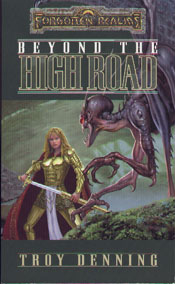
In this case, Troy Denning brings us Beyond the High Road, a
Forgotten Realms novel set in the Forest Kingdom known as Cormyr. This is one
of those that I believe is set firmly during the 3rd edition era and
while it has a lot of bells and whistles and some efforts at political
materials, is really a good quick popcorn read. I finished it in a few hours
and enjoyed it for what it was.
When I look over at Amazon, it is available as a Kindle Book
, http://www.amazon.com/Beyond-High-Road-Cormyr-ebook/dp/B0060B6GRY/ref=sr_1_2?ie=UTF8&qid=1348787446&sr=8-2&keywords=beyond+the+high+roadfor
a little over $5 bones. Not a bad price but I’m more happy with the $1 paid
from the ole rack.
The novel does bring up a few interesting threads that can
be fun when throwing them into a campaign.
1.
The Old Evil. Yeah, overplayed extremely but if it’s
a well known old evil, that usually works out better in my opinion that some
whack job monster that is some ancient evil that no one has heard of or
bothered with before. In those cases I wish the author would just go to a “NEW”
thing. “Yes, I have brought about never before seen enemies and powers to deal
with you. Forget Orcus. You’re my bitch now.” Or something along those lines.
2.
Politics. While the book is certainly no Game Of
Thrones, Troy does bring in the problems of having a Royal Church, one approved
by the royal family, when the setting is home not to one faith, but home to
many deities, some of which have actually walked in the country before. It adds
a nice touch when the idea of having a royal church is first introduced and
then the feedback, both from other religious organizations wondering when they
can get their official royal church and from organizations already well
established that quickly seek to hold onto their current power by shutting out
any competition.
3.
Old Friends: While Cat and her man Grigori aren’t
the main stars or even really anything other than a cameo here, it’s always
nice to see a character well known in another series in the same setting make a
pop up here and there without taking over the story. If you have some NPCs that
the party knows are in the area, don’t go out of your way to hide or not-use
them but make it clear that those individuals are not there for the story, just
there to keep the continuity of the setting alive.
4.
Magic Items. If you’re playing in a high magic
game, use it. There are several individuals here who use the Cormyr armory to
armor themselves in magic. It makes sense in the context of the story because
the Forgotten Realms is a high magic setting and the Forest Kingdom is known
for its war wizards.
5.
Slap Magic Down. On the other hand, when magic
becomes too easy, there are often things in the game that are designed to get
around those limitations. Sometimes it’s a well placed Dispel Magic spell or an
Anti-Magic Shell or a monster with immunities to various common spells or a
monster that has a high magical resistance or a mirror like ability to reflect
attacks. In this instance, the monsters can absorb magic. It’s a good trick
that doesn’t make them exactly completely immune and doesn’t take place
instantly but does bring up the limits of magic.
6.
Magic Commonality: One of the problems with
magic follows the old saying if all you have is a hammer, all of your problems
become nails. In this instance, the head war wizard finds himself, while not
helpless, at least far less able then he should be given the resources at his
disposal. In a society where magic has replaced technology, imagine what
happens when it fails. It’s a similar theme we see in modern takes when
electricity or physics fail and man is forced to a more primitive life style.
Whatever is making you too comfortable then becomes a crutch you must endure
all to save.
7.
It’s a Dangerous World Out There. One of the
things that draws the characters out, is blighted farms. Initially its thought
that the orcs, often a dark and cave dwelling race, have brought some type of
fungus based blight to the lands they raid due to the various locals they
inhabit. In other venues, the characters come under attack by goblins. Most
Dungeons and Dragons settings are not for the faint of heart and a good
reminder of that every now and again with ‘random violence!’ is a good way to
remind the characters.
Troy Denning made Beyond the High
Road a quick read and while the Royal Family does come across as a bit spoiled
and out of their element in a market where A Game of Thrones and other novels
try to emulate a deeper and richer complexity, the magic and relationships of
the characters in the book to each other make it worth a read.