I like Super Heroes.
I like anime.
So a series about a preteen in a world of superheroes where something like 80% of the population has a super ability and he does not, but he wants to be an actual hero comes out, I'm interested.
So +Hulu has My Hero Academia season one available to stream.
And hey, Amazon had the first volume of the Manga on sale.
So for those who are curious, the manga and the anime follow each other pretty closely.
It also ties into the recent posts of legacy, of passing down values or taking values and bringing them to a new generation.
Midoriya is a youth in a world of 'quirks.' These 'quirks' tend to fall into the useful to the useless. They are similar to 'mutant' abilities in the Marvel Universe but are often highly augmented by technology. Much like the other series, Bunny & Tiger, there are heroes who do it for the money, those who do it for the popularity, and those, like All Might, the blonde United States Hero, the most powerful of them all, who does it because it's the right thing to do.
Now the thing about 'quirks' is like in DC or Marvel, there's the technology factor. When you get super smart people, for example, you get technology that goes way beyond anything available in the 'real' world. This means cloning, genetic modification, etc... So there's a bit of that going on as well.
Midoriya though, has no quirk. This is devastating for him because he grew up watching All Might and had a serious case of hero worship. Of doing the right thing. Of being an actual hero, not for the money, not for the popularity, not for the arrogant righteousness of it, but to help others.
Despite not having a quirk, and being teased relentlessly by former friend Bakugo, a youth with an impressive quirk who himself dreams of being a big hero, mainly for the popularity, to set new roads and records for himself, Midoryia keeps dreaming. He takes notes. He observes how super hero fights go, how tactics work.
And then he gets to met All Might. It's amusing to note that even the character recognizes that All Might is "drawn in a totally different style," a less than sublet nod to western comics.
Midoryia flat out asks All Might if he can be a hero. All Might tells him to not become a super hero but rather, become a police man or something that does help people.
And then he surprises All Might with his bravery and his actions, going to save Bakugo from a super villain.
All Might decides that Midoriya will be his pupil and that thanks to All Might's own unique quirk, "All For One", a quirk that can be passed down to others, Midoriya is back in action and has the potential to be one of the greatest heroes of all.
All Might does this because he is in Japan originally to find an appropriate heir. In a previous battle, All Might was badly injured and cannot stay in his quirk form for long and his powers are fading. His nonquirk form is less than flattering.
Midoriya, by being like All Might, inspired by All Might indeed, is just the type of hero that All Might is looking for. Even without quirks, with no thought to his own safety, Midoriya charged in to save someone else's life.
This impresses All Might.
And as a reader, I was impressed by how All Might works with Midoriya. How he gives him a plan to let Midoriya accept the All For One power without it destroying him. How he works with him in almost all things. It's great to see an actual mentor-apprentice relationship where
My Hero Academia is a fun title that like it's characters, has it's share of quirks. For example, if Midoriya never wept again, I'd be impressed. The kid has more tears than Steven from Steven Universe, which is damn impressive.
The art is solid. The storytelling solid. There are elements going on in the background that are building up. If you have Hulu, check it out, otherwise check out the manga it's based on. Fun stuff.
Showing posts with label Anime. Show all posts
Saturday, December 3, 2016
Thursday, April 9, 2015
F is For Full Metal Alchemist
Full Metal Alchemist is a story about two brothers trying to reclaim their lost humanity. Along the way they make numerous friends and enemies and wind up in a much larger scale of events than they had ever anticipated.
The series has proven very popular. There are two separate animes on it. While this is not unusual (see Gundam), the fact that they came out so close together is a little unusual. There is also a lengthy manga. I stopped reading a while ago as I had caught up to the series and after watching the new anime, will have to go back and catch up on it all over again.
One of the things that's great about Fullmetal Alchemist, is the world building. By making the characters Edward and Alphone, into specialist in a field of specialist, the viewers are able to have numerous favorites. There are different named characters like the 'Crimson Alchemist' or the 'Flame Alchemist'. Some very impressive sounding names.
These named characters also have named maneuvers and abilities. This puts them into a category that is above the standard soldier. In many ways, this makes them perfect classes with each type of class having a different specialization.
Because they work for the government, they also automatically have a patron. This prevents the Game Master from having to work too hard in order to get the characters involved with the adventure.
When a setting gives you an "in" like this, it can make running the campaign easier. In the classic game, Legend of the Five Rings, one of the suggestions is to make the characters Emerald Magistrates. This allows the game to get moving without the dreaded "You all meet in a bar" standard. In newer games, Spears of the Dawn has a similar option in that the title, Spears of the Dawn, is an actual title of those who fought against monsters and are well respected.
Ed and Al have their own motivations though. In this case, it is to get their bodies back. To do this, they need to do research. This involves them going to different research faculties and studying. While that could be boring, the writer showcases several small bits that are anything but ranging from a burned down library, to a random encounter with a former state alchemist who knows more than he's telling.
By having both options, player driven quests, and the ability to introduce patron level quests, the Game Master has the best of both worlds. Indeed, if the characters are having too easy a time of getting their own deeds, the Game Master can add complications through the patron. They may have to do some standard guard duty instead of hunting down that serial killer.
Of course players will seek to work around such restrictions but that's the point. The conflict of trying to do what they want against what others want them to do, is how the game creates a sense of tension.
The setting that Fullmetal takes place in, is one that has a variety of creatures that themselves can be different than one another. For example, Alphonse does not have a body, but rather, his soul is bonded to a suit of armor. During the series, we discover that there are others like this.
There are also combinations of men and animal known as chimeria. Each one potentially different than the others.
Then there are the Seven Sins. Some of these are 'standard' like Lust and Gluttony while others are a bit more friendly than you'd think.
The setting is large enough to weave numerous threats that the characters can't overcome just with punching or kicking.
Despite the grim overtones the series carries, the writer is able to weave quite a bit of humor into it. This should be something that a Game Master keeps in mind when prepping his own work. Even as plagues and zombies take over the land, there needs to be some genuinely funny things. Perhaps someone has a favorite cup that he dropped and is always talking about it. "My favorite cup!"
The humor helps break down the gruesome elements and gives the viewer a break and allows the reader to recharge her batteries.
Another element to note, is that there are changing alliances. One of the most popular characters here is Scar, named (originally!) after his scarred face. He's a tough loner who hates the heroes! This type of anti-hero is fairly common and the anime/manga Dragon Ball Z is littered with characters who once fought against Goku but now work alongside him.
When designing your NPCs, are there 'hooks' that the characters can use to turn them from enemies to friends? Are there deeds that the characters can perform to show these foes that the players are not the true enemies?
Have any other gamers used Fullmetal Alchemist as inspiration for their games? If so, how did it go? I have friends who are enamored of the art style in the series and love the animated suits of armor as well as some of the villains the characters face.
Labels:
A to Z Challenge,
Anime,
Character Design,
Full Metal Alchemist,
Manga
Tuesday, May 13, 2014
Fist of The North Star: Rei
The anime based on the manga, Fist of the North Star, has two main schools initially. The one used by the protagonist, Kenshiro, is the Fist of the North Star. The other is the Southern Cross. The North Star is supposed to only have one practionioner while we discover later that the Southern Cross has no less then Six, and one of those Six, the General, has Six defenders who are also masters of martial arts.
Visually, I always liked the Southern Cross. It's a style that cuts its opponents to pieces whereas the North Star causes them to blow up. Of those who practice it, Rei was my personal favorite. His introduction is all over Youtube but this clip is as good as any other I suppose.
The thing about Rei that works, is initially, he's very much out to pursue a specific goal. In this case, finding the man with seven scars on his chest. (Kenshiro has seven on his chest by the way!) and killing that man. Apparently such an individual killed Rei's parents and enslaved his sister!
Of course it turns out NOT to be Ken and the two managed to join forces to kill those who've done these terrible things.
The thing I like about Rei though, is his change. He becomes concerned for other people. He sees the value in what Kenshiro is doing. He grows to care for Bat and Lin and others in a short time. He understands that its not just about doing only what he wants to do.
And that makes him a perfect example of how some players should fit into the game. Sure it's all fun to be the 'Wolverine' or if this was the 90's, the 'new' Ghost Rider, but in a role playing game that's not a solo game, you need to have hooks that fit in with the other players. You need to be able to engage them. Even if your initial concept is lone wolf, you need to be able to have hooks that go into the others.
For example, lone rogue whose only goal is wealth? Role playing an appreciation for what the other characters can do if only as a nod to the fact that a group can gather more wealth than an individual rogue can, is the way to go. "While I may not appreciate the noise that this armored buffon makes, I admit that his ability to destroy ogres and hill giants is quite useful in the liberation of their funds."
A wizard whose only purpose is to find more and greater magics to master? "While Amar is a fool for worshipping the gods instead of magic, I admire the fact that his ability to channel positive energy saved me the trouble of having to pull out real arcane power to destroy that lich and its minions."
You have to role with it to roll with it.
The thing about Rei that works, is initially, he's very much out to pursue a specific goal. In this case, finding the man with seven scars on his chest. (Kenshiro has seven on his chest by the way!) and killing that man. Apparently such an individual killed Rei's parents and enslaved his sister!
Of course it turns out NOT to be Ken and the two managed to join forces to kill those who've done these terrible things.
The thing I like about Rei though, is his change. He becomes concerned for other people. He sees the value in what Kenshiro is doing. He grows to care for Bat and Lin and others in a short time. He understands that its not just about doing only what he wants to do.
And that makes him a perfect example of how some players should fit into the game. Sure it's all fun to be the 'Wolverine' or if this was the 90's, the 'new' Ghost Rider, but in a role playing game that's not a solo game, you need to have hooks that fit in with the other players. You need to be able to engage them. Even if your initial concept is lone wolf, you need to be able to have hooks that go into the others.
For example, lone rogue whose only goal is wealth? Role playing an appreciation for what the other characters can do if only as a nod to the fact that a group can gather more wealth than an individual rogue can, is the way to go. "While I may not appreciate the noise that this armored buffon makes, I admit that his ability to destroy ogres and hill giants is quite useful in the liberation of their funds."
A wizard whose only purpose is to find more and greater magics to master? "While Amar is a fool for worshipping the gods instead of magic, I admire the fact that his ability to channel positive energy saved me the trouble of having to pull out real arcane power to destroy that lich and its minions."
You have to role with it to roll with it.
Labels:
Anime,
Character Motivations,
Characters,
Fist of the North Star,
Manga
Monday, May 12, 2014
Fist of the North Star (Anime 1984)
It was the mid-80's when I went to the theater, the Music Box, and first saw the movie, Fist of the North Star.
It was an intense action movie with ultra levels of violence that brought two of my favorite things, anime and kung fu, together into a glorious feast for the eyes. I would later buy it on VHS and DVD while one of my friends owned it on laserdisk. The laserdisk version was a fantastic transfer while the VHS and DVD copies were terrible in color and quality.
Even back then though, the movie didn't make a lot of sense. It had so much going on that seemed to belong to something else.
So on +Hulu they have both seasons of the original anime from 1984 and it's like over 150 episodes.
And I see that Amazon has a few of them, but I'm not sure if that's the 'revised' one or the original ones.
It's one of the reasons I've been quite over here. I've been trying to plow my way through it. Back in the day, Viz comics was publishing the Fist of the North Star in monthly serials. They folded. Then another company was publishing master editions in full color that were graphic novel sized. They stopped production around seven or eight.
So I was always curious to know, "WTF was all that?"
Having seen it all, m'eh.
Part of this is just the age of it. The subtitles are terrible in some instances. Like flat out wrong. In addition, it was done in a time before widescreen so you've got the black bars common to those older shows. This shows up in the quality of the animation as well as the sound of the animation itself.
And remember how I said it was ultra violent? Like martial arts whose techniques involve cutting through people like katanas or making them blow up by hitting pressure points?
Censorship from Japan must have been weird in those days. If the character has blood on him, it's okay if it's red. If it's an explosion of blood, it's white. Which looks funny and in some instances "wrong" depending on where all the blood is splashing.
I enjoyed some of the characters. The designs on some of them are very 'super heroic' and at the same time, very 'Mad Max.'. It's certainly inspiring for anyone looking for visuals in a wasted world where strength is the only law. It's great for those who want names for special martial art maneuvers for whatever games their players.
For anyone who wants a coherent story? Ugh. The translations are terrible to start with, and more worrisome is the soap opera nature of things. Hidden brothers, hidden half brothers, hidden blood lines, hidden martial arts and a whole slew of things that just go straight into that soap opera realm.
In terms of themes, well, people are going to die, especially people you love. That seems to be one of the biggest themes. You may be the strongest fighter there, you may be able to come back from beatings that should have killed you, but if you have any loved ones, wish them good bye when you see them, often getting killed just as you arrive.
The other problem, and I'm pretty sure it's not just the anime, was the consistency of the character's in terms of their size. Ken is the main hero of the story. Everyone whose 'good' or 'non-monstrous', is drawn like Ken in terms of body type. In that aspect, it reminds me of how toys used to be designed. Every toy was the same damn toy just with different outfits and accessories.
But the 'monstrous' characters, like Raoh? In some sequences he's a little bigger then Ken, in others he's like three times Ken's size.
There's also the whole internal consistency of things. When Ken is angered and going into an all out attack, he often bursts straight out of his clothes. In the post apocalypse world, who is repairing those clothes?
And after watching the whole thing, I have to wonder, what the hell planet is this supposed to be? There are some bits that are like, "Well, maybe it's Earth in the future (from when it was done), but no one calls any of the places by their old names. The technology is a mix of motocycles, because they look cool, crossbows and arrows, and well, in some sequences, a city whose lights are powered by slave labor. Those things were just a little annoying, but paled in contrast to the whole drama of the series.
For example, we learn that Toki and Raoh are actual blood brothers. Toki takes Ken to graves for his parents and for himself and Raoh. All a big revelation at the time. But later on, when Ken crosses the sea to fight Raoh's older brother, we see in a flashback that Ken and Raoh talk about the later's older brother. And their mother died on that other shore so whose buried in the graves? Messes like that show up all over the place.
For a bigger example, Ken is supposed to be the sole heir to the martial art, Divine Fist of the North Star, because it's such a dangerous martial art. But there is Toki, Raoh, and well, a former teacher who decided not to pursue the art and I'm sure a few others I'm missing. But when Ken finally does decide to do something about Raoh, to "seal his fists", he's already let Roah kill hundreds if not thousands of people and it feels very forced.
These inconsistencies go on and on. The one that annoyed me personally is when we see Souther, a man who has a secret that makes him immune to the deadly martial art that Ken pratices. Because of that, Ken is beaten like a dog and hung out to drain of his blood. While Ken recovers, another martial artist fights Souther and is killed. In the meanwhile, turns out Toki knew the weakness. Good work Toki, you managed to get more people killed by not telling anyone ahead of time.
Again, ugh!
The thing I'll give Fist of the North Star over say, Dragonball Z, is that the battles are relatively quick. In some episodes of Dragonball Z you could leave and come back four episodes later and the same fight is still going on. Here that may happen once or twice with the biggest villains of the series but for the most part, the fights against one specific individual are done in one while the battles against that person's minions may take a while, which in and of itself is actually more boring. "Oh, fifteen people that are all freakishly large with giant mohawks. I wonder how long it'll take to kill them."
And then that gets me thinking about how stupid everyone is in the series. Raoh takes over territories and gives them to people who aren't 'super villain' evil, but 'stupid villain evil'. "Ah, in this desolate time of no food and water, I villain A will waste all of the food, while villain B wastes all the water!"
I can see the whole series being a touch different if written today.
"Roah, come out and face me!"
"What, what is it Kenshiro!"
"I've come to seal your fists!"
"Didn't we already do this whole fight thing?"
"Yes, but now I'm possessed by justice!"
"Ken, you're like the most honest guy I know. Turns out these warlords I've been using are stupid as hell, How about being an agent of good and going around killing the corrupt and incompetent idots out there so that we can get some work done eh?"
"Raoh, you want to conqueror the heavens!
"Turns out they don't care. I took my big ass horse to the biggest mountain and hey, it was cold up there and the air was thin. Seems that I should actually you know, prepare for the invasion of the other land. Maybe give Falco and a few other people a call and see if they're looking for jobs. Some good people that aren't getting properly used."
"I hate you Roah."
"I love you Ken."
No, seriously, like 90% or more of the villains of the series would've been normal people if they just had some normal conversations with people before they were on the verge of death.
Anyway, I'll probably have more to say about the anime in terms of inspiration. When I was a young man, that experience at the Music Box opened my eyes to how powerful and ridiculous you can make martial arts and that served me well in many games ranging from Champions to Rifts. As an older man, know that I already know that, the storylines here make me cringe, but some of the names and visual executions of the moves are still popcorn worthy.
Long live the Fist of the North Star!
It was an intense action movie with ultra levels of violence that brought two of my favorite things, anime and kung fu, together into a glorious feast for the eyes. I would later buy it on VHS and DVD while one of my friends owned it on laserdisk. The laserdisk version was a fantastic transfer while the VHS and DVD copies were terrible in color and quality.
Even back then though, the movie didn't make a lot of sense. It had so much going on that seemed to belong to something else.
So on +Hulu they have both seasons of the original anime from 1984 and it's like over 150 episodes.
And I see that Amazon has a few of them, but I'm not sure if that's the 'revised' one or the original ones.
It's one of the reasons I've been quite over here. I've been trying to plow my way through it. Back in the day, Viz comics was publishing the Fist of the North Star in monthly serials. They folded. Then another company was publishing master editions in full color that were graphic novel sized. They stopped production around seven or eight.
So I was always curious to know, "WTF was all that?"
Having seen it all, m'eh.
Part of this is just the age of it. The subtitles are terrible in some instances. Like flat out wrong. In addition, it was done in a time before widescreen so you've got the black bars common to those older shows. This shows up in the quality of the animation as well as the sound of the animation itself.
And remember how I said it was ultra violent? Like martial arts whose techniques involve cutting through people like katanas or making them blow up by hitting pressure points?
Censorship from Japan must have been weird in those days. If the character has blood on him, it's okay if it's red. If it's an explosion of blood, it's white. Which looks funny and in some instances "wrong" depending on where all the blood is splashing.
I enjoyed some of the characters. The designs on some of them are very 'super heroic' and at the same time, very 'Mad Max.'. It's certainly inspiring for anyone looking for visuals in a wasted world where strength is the only law. It's great for those who want names for special martial art maneuvers for whatever games their players.
For anyone who wants a coherent story? Ugh. The translations are terrible to start with, and more worrisome is the soap opera nature of things. Hidden brothers, hidden half brothers, hidden blood lines, hidden martial arts and a whole slew of things that just go straight into that soap opera realm.
In terms of themes, well, people are going to die, especially people you love. That seems to be one of the biggest themes. You may be the strongest fighter there, you may be able to come back from beatings that should have killed you, but if you have any loved ones, wish them good bye when you see them, often getting killed just as you arrive.
The other problem, and I'm pretty sure it's not just the anime, was the consistency of the character's in terms of their size. Ken is the main hero of the story. Everyone whose 'good' or 'non-monstrous', is drawn like Ken in terms of body type. In that aspect, it reminds me of how toys used to be designed. Every toy was the same damn toy just with different outfits and accessories.
But the 'monstrous' characters, like Raoh? In some sequences he's a little bigger then Ken, in others he's like three times Ken's size.
There's also the whole internal consistency of things. When Ken is angered and going into an all out attack, he often bursts straight out of his clothes. In the post apocalypse world, who is repairing those clothes?
And after watching the whole thing, I have to wonder, what the hell planet is this supposed to be? There are some bits that are like, "Well, maybe it's Earth in the future (from when it was done), but no one calls any of the places by their old names. The technology is a mix of motocycles, because they look cool, crossbows and arrows, and well, in some sequences, a city whose lights are powered by slave labor. Those things were just a little annoying, but paled in contrast to the whole drama of the series.
For example, we learn that Toki and Raoh are actual blood brothers. Toki takes Ken to graves for his parents and for himself and Raoh. All a big revelation at the time. But later on, when Ken crosses the sea to fight Raoh's older brother, we see in a flashback that Ken and Raoh talk about the later's older brother. And their mother died on that other shore so whose buried in the graves? Messes like that show up all over the place.
For a bigger example, Ken is supposed to be the sole heir to the martial art, Divine Fist of the North Star, because it's such a dangerous martial art. But there is Toki, Raoh, and well, a former teacher who decided not to pursue the art and I'm sure a few others I'm missing. But when Ken finally does decide to do something about Raoh, to "seal his fists", he's already let Roah kill hundreds if not thousands of people and it feels very forced.
These inconsistencies go on and on. The one that annoyed me personally is when we see Souther, a man who has a secret that makes him immune to the deadly martial art that Ken pratices. Because of that, Ken is beaten like a dog and hung out to drain of his blood. While Ken recovers, another martial artist fights Souther and is killed. In the meanwhile, turns out Toki knew the weakness. Good work Toki, you managed to get more people killed by not telling anyone ahead of time.
Again, ugh!
The thing I'll give Fist of the North Star over say, Dragonball Z, is that the battles are relatively quick. In some episodes of Dragonball Z you could leave and come back four episodes later and the same fight is still going on. Here that may happen once or twice with the biggest villains of the series but for the most part, the fights against one specific individual are done in one while the battles against that person's minions may take a while, which in and of itself is actually more boring. "Oh, fifteen people that are all freakishly large with giant mohawks. I wonder how long it'll take to kill them."
And then that gets me thinking about how stupid everyone is in the series. Raoh takes over territories and gives them to people who aren't 'super villain' evil, but 'stupid villain evil'. "Ah, in this desolate time of no food and water, I villain A will waste all of the food, while villain B wastes all the water!"
I can see the whole series being a touch different if written today.
"Roah, come out and face me!"
"What, what is it Kenshiro!"
"I've come to seal your fists!"
"Didn't we already do this whole fight thing?"
"Yes, but now I'm possessed by justice!"
"Ken, you're like the most honest guy I know. Turns out these warlords I've been using are stupid as hell, How about being an agent of good and going around killing the corrupt and incompetent idots out there so that we can get some work done eh?"
"Raoh, you want to conqueror the heavens!
"Turns out they don't care. I took my big ass horse to the biggest mountain and hey, it was cold up there and the air was thin. Seems that I should actually you know, prepare for the invasion of the other land. Maybe give Falco and a few other people a call and see if they're looking for jobs. Some good people that aren't getting properly used."
"I hate you Roah."
"I love you Ken."
No, seriously, like 90% or more of the villains of the series would've been normal people if they just had some normal conversations with people before they were on the verge of death.
Anyway, I'll probably have more to say about the anime in terms of inspiration. When I was a young man, that experience at the Music Box opened my eyes to how powerful and ridiculous you can make martial arts and that served me well in many games ranging from Champions to Rifts. As an older man, know that I already know that, the storylines here make me cringe, but some of the names and visual executions of the moves are still popcorn worthy.
Long live the Fist of the North Star!
Labels:
Anime,
Fist of the North Star,
Ken,
Manga,
Martial Arts
Tuesday, April 22, 2014
Jormungand (Anime)
Continuing my viewing of anime new to me via +Hulu, next up on the list was Jormungand, the wiki can be found here.
I'm a little torn on this one.
I like the character designs.
Many of the individual stories are well done and provide a nice sense of action and information.
The characters almost each get at least one episode to shine through as we learn more about them.
I like the animation style and art.
I like the soundtrack.
Hated the payoff. The whole payoff of the series is, for me at least, essentially counted by the main character's brother who spells out what's going to happen regardless of what Koko does.
If you want to see an anime about weapon's dealers that looks like it's part Nicholas Cage Lord of War and part post modern, Jormungand is for you. There are some observations about the modern world that are getting more and more referenced. For example, in a recent James Bond movie, the whoel sleight of hand of the incident being oil when it was really water? Referenced here in that water is going to be the biggest resource people will be fighting for. Overall I enjoyed it because the character interaction and friendships that develop are nicely done.
If you want to look at a series and think, again, you might enjoy it.
But if you want to see some of the grand scheme come to actual payoff? Nope. Nowhere near as bad as Berserk when it first came out mind you as the manga for that wasn't even locally available but still kinda of a "Well now the story's actually starting" bit for me.
Spoilers below!
The series is broken up into individual missions with an overarching mission for Koko, the leader of the mercenaries who act as her bodyguards. The viewpoint character here, is Jonah, a child soldier whose parents were killed by weapons sold by a weapons dealer but he's a good soldier so while he hates what he does, he accepts it.
Koko and her various guards and allies, include a wide variety of characters which makes a nice change of pace from everyone being super skilled at everything. For example, the 'driver' is a former mafia member while some of her other 'standard' guards are former members of various specialty units.
In many ways, this would be the perfect adventuring group and scenario. They have a powerful patron who values them. They are paid well. They have access to some of the most modern and devastating weaponry on the market.
They also have a constant source of enemies. Their patron needs them precisely because she is worth a lot of money and because a lot of people would rather she be dead. This gives the character many unique enemies to battle that are as bright and colorful as they themselves are.
The patron even has her own goals and has the wealth and allies to at least try it.
In this case, which to me is a perfect super hero challenge, she is crafting Jormungang as a quantum level computer and intends to use it to ground mankind from the sky. She feels that without the ability to travel via the air that it'll make things more difficult in a 'flat world' and hey, only some odd 700,000 people will be in the air or crushed by planes falling out of the sky at the time to achieve it.
Imagine the characters have to knock out satellites orbiting the earth in order to stop the deaths of almost a million people. And of course in a super hero or even super spy campaign, those satellites might have armed defense systems ranging from lasers and missiles to even more gonzo stuff the higher technology the setting has available to it.
Her brother, Kasper, doesn't mind. He goes on a little bit about how he's a weapons dealer and he'll use boats as his ancestors used to. He'll sell them guns until there are no more guns, and then knives and then clubs because he's a weapons dealer. And to me, it's a strong argument that all those people are going to die for nothing.
The viewers get a hint of how terrible the world is becoming in the last episode when Jormungand is activated, but then the series stops. We don't get to see how things actually play out. Some people love that. It sets up the whole thing either for the reader to make up what happened in their own head, or leaves room for a sequel down the road. Me? I wanted to see the payoff of gathering all those scientists and going through all those betrayals.
Jormungand is two seasons and I'm unsure of how closely it follows the manga as I haven't read that yet. Only problem? I think it's a little expensive. Season one and season two are a little over $40 bones each. Ouch. While the commercials are indeed annoying, I'll stick with Hulu on that.
I'm a little torn on this one.
I like the character designs.
Many of the individual stories are well done and provide a nice sense of action and information.
The characters almost each get at least one episode to shine through as we learn more about them.
I like the animation style and art.
I like the soundtrack.
Hated the payoff. The whole payoff of the series is, for me at least, essentially counted by the main character's brother who spells out what's going to happen regardless of what Koko does.
If you want to see an anime about weapon's dealers that looks like it's part Nicholas Cage Lord of War and part post modern, Jormungand is for you. There are some observations about the modern world that are getting more and more referenced. For example, in a recent James Bond movie, the whoel sleight of hand of the incident being oil when it was really water? Referenced here in that water is going to be the biggest resource people will be fighting for. Overall I enjoyed it because the character interaction and friendships that develop are nicely done.
If you want to look at a series and think, again, you might enjoy it.
But if you want to see some of the grand scheme come to actual payoff? Nope. Nowhere near as bad as Berserk when it first came out mind you as the manga for that wasn't even locally available but still kinda of a "Well now the story's actually starting" bit for me.
Spoilers below!
The series is broken up into individual missions with an overarching mission for Koko, the leader of the mercenaries who act as her bodyguards. The viewpoint character here, is Jonah, a child soldier whose parents were killed by weapons sold by a weapons dealer but he's a good soldier so while he hates what he does, he accepts it.
Koko and her various guards and allies, include a wide variety of characters which makes a nice change of pace from everyone being super skilled at everything. For example, the 'driver' is a former mafia member while some of her other 'standard' guards are former members of various specialty units.
In many ways, this would be the perfect adventuring group and scenario. They have a powerful patron who values them. They are paid well. They have access to some of the most modern and devastating weaponry on the market.
They also have a constant source of enemies. Their patron needs them precisely because she is worth a lot of money and because a lot of people would rather she be dead. This gives the character many unique enemies to battle that are as bright and colorful as they themselves are.
The patron even has her own goals and has the wealth and allies to at least try it.
In this case, which to me is a perfect super hero challenge, she is crafting Jormungang as a quantum level computer and intends to use it to ground mankind from the sky. She feels that without the ability to travel via the air that it'll make things more difficult in a 'flat world' and hey, only some odd 700,000 people will be in the air or crushed by planes falling out of the sky at the time to achieve it.
Imagine the characters have to knock out satellites orbiting the earth in order to stop the deaths of almost a million people. And of course in a super hero or even super spy campaign, those satellites might have armed defense systems ranging from lasers and missiles to even more gonzo stuff the higher technology the setting has available to it.
Her brother, Kasper, doesn't mind. He goes on a little bit about how he's a weapons dealer and he'll use boats as his ancestors used to. He'll sell them guns until there are no more guns, and then knives and then clubs because he's a weapons dealer. And to me, it's a strong argument that all those people are going to die for nothing.
The viewers get a hint of how terrible the world is becoming in the last episode when Jormungand is activated, but then the series stops. We don't get to see how things actually play out. Some people love that. It sets up the whole thing either for the reader to make up what happened in their own head, or leaves room for a sequel down the road. Me? I wanted to see the payoff of gathering all those scientists and going through all those betrayals.
Jormungand is two seasons and I'm unsure of how closely it follows the manga as I haven't read that yet. Only problem? I think it's a little expensive. Season one and season two are a little over $40 bones each. Ouch. While the commercials are indeed annoying, I'll stick with Hulu on that.
Labels:
Anime,
Hulu,
Jormungang,
Patrons,
Super Heroes
Sunday, April 20, 2014
Zetman (Anime)
I'm continuing my journey through +Hulu and its anime selection. Next up on the list was Zetman. The anime feels a little rushed being twelve episodes but it does feel complete in and of itself. The wiki is over here for those who want a breakdown, but note that appears to be the manga Zetman wiki and I didn't see one for the anime proper.
I enjoy most of the character designs. One of the 'heroes', Alphas, looks like a cross between Iron Man and Moon Knight in a white and blue armored outfit. The main hero, Jin and his human outfit are 'street' but his 'hero' form is the one I actually dislike. The good thing is that there are a few varieties to it and its not in heavy rotation as he's actually human most of the series.
The villains really have some great images here though. For example, the Sweeper? Classic hooded style enigmatic entity. Not all of them are 'hits' though. Some of the lower end ones are just well, goofy looking.
The series follows Jin who is Zetman. In this series, most powers are explained through the genetically created 'Players' who have a host of different abilities and different levels of power. These players were created by the ultra rich who bet on gladiator battles. Sounds incredibly inefficient to me but I'll accept it as the premise.
Jin is created to destroy the Players but is taken by 'Gramps' who wants the boy to have a normal life and its not until he's older and already encountered two of the 'Players' that he learns what he is and that he isn't a fully realized creature but has some evolutions to go through.
Now I did say most abilities come from genetics right? The other player here, Koba, is a young man obsessed with fighting evil doers. He's often called a 'cosplayer' because he's in weird uniforms, including the eventual Alphas outfit. He has different methods and styles than Jin and the two handle justice and saving individuals in a different way.
The anime puts both Jin and Koga through the ringers to showcase what they are made of and their eventual differences and how they handle the Players around them.
The series does a nice job of showcasing how people can want similiar goals but approach them in completely different ways.
For those looking for super hero style action, Zetman has you covered.
In terms of themes?
Rivals: Jin and Koga aren't necessarily rivals in the sense that they're both trying to do exactly the same thing, but both often wind up in the same place at the same time and have different ideas of how things should be done. In addition, both continue to gain in experience and abilities as they mature in the series.
Ulterior Motives: There are many mentor style individuals in the series to both Jin and Koba and both have their own reasons for doing what they do. When providing mentors and allies to the players, make sure that you know what their own reasons are for doing what they do.
Secrets: While the 'Players' and their existence are relatively unknown to the public, many try to keep it that way and have developed technology to keep it that way. When players and those around them have their own secrets that they have to keep from each other, how do they do it. Do they have different explanations for why they do what they do?
Limited Origin: I mentioned with Tiger and Bunny that if you want Mutants like the X-Men but don't want to call them Mutants, just come up with a name. For example, Tiger and Bunny uses 'Next' while Zetman uses 'Players'. Both stretch a little past that though as both series have technology playing a prime role in making things equal to the 'Player's or even providing more abilities to those that have them.
On bluray, the series runs a little under $44 from Amazon and is not available on Amazon Prime but is available on Hulu. In terms of the manga, maybe a kinder soul than I can make sense of what Amazon's search shows as I find the Spanish and Japanese versions but didn't see the English one.
For those watching anime, are there any series out there that you'd recommend on Hulu? I've been impressed with the depth of the selection on Hulu and its modernity in contrast to Amazon or Netflix.
Wednesday, April 9, 2014
Tiger & Bunny
Super heroes are my favorite role playing genre right after fantasy. In terms of reading, I'd say that might be true as well if we count comics as 'reading' material. My comic collection was so vast at one point it took up a whole room in and of itself despite stacking those boxes way higher than they should ever have been.
So while I have +Hulu I figured I'd hit up two of my favorite bits as Tiger & Bunny is an anime tale about super heroes in a futuristic city. The Wiki page over here does a pretty good job of breaking down Tiger & Bunny.
Seeing as how this isn't a new anime and it's streaming in a few places and has already had a few movie tie ins and a mangan, I'm going to hit some of the high points.
The setting, Sternbild City, is visually appealing. It's a true technological miracle of tomorrow. But like all such things, it is a bit well, comic book stupid. For example, they build up and those higher buildings are supported by columns which are easy to attack as we discover later on. When developing your city and other setting bits, are there things that shouldn't work, but because of the setting itself do?
In terms of character origins, if you don't feel comfortable with the word 'Mutant', just make up your own classification like they did here with 'Next'. In part, that's one of the things I like about the show. While it's not 'deep', the show does have bits that resonate with any X-Men fan in terms of the Next thinking their superior, the Next being treated differently, and many of the Next just not having abilities that are all that useful or powerful.
Another nice nod to comics, was that time marches on., In this instance, we have super heroes, but they also rely on technology. For example, Tiger is initially seen in a suit that would resemble something like a humours Batman. When he joins with Bunny under a new corporation, he gets a 'hardsuit'. The suit has all sorts of technological bits to it and is very difficult to damage, being shown to withstand high degrees of heat for example, like from a flamethrower.
But on the flip side of that technology, comes androids. One of the themes running through the second half of the series is that with the right technology, the Next themselves are obsolete. Having a variety of enemies and options to draw from allows anyone who wants to run a game like Tiger & Bunny a little more leeway than having normal villains or just rogue Next be the bad guy of the week.
In terms of campaign twists though, the whole corporate sponsorship is an interesting one. While not a brand new idea by far and in super hero comics, we see many corporations with their own super powered individuals, not necessarily heroes mind you, but body guards and enforcers, the idea here is that these corporate sponsored heroes fight crime and earn points based on how good of a job they do. Their costumes incorporate company logos and they are connected via network to a specialized television program that highlights their adventures and assigns points on them.
Nick names and catch phrases have their place here. For example, the series title, Tiger & Bunny, comes along because Tiger gives that name, Bunny, to his partner, Barnaby, because of the 'ears' on Barnaby's suit. Not to mention that it's pink. Blue Rose, a female super with the ability to create ice, has a catchphrase "my ice is a little bit cold, but your crime has been put completely on hold."
Heck, the Bunny nickname actually winds up saving Tiger when Bunny is mind-controlled into attacking him. You see, Barnaby hated it so much he recalls that and snaps out of it.
Tiger & Bunny may have a silly name but it's a solid anime and fans of super heroes should check it out.
So while I have +Hulu I figured I'd hit up two of my favorite bits as Tiger & Bunny is an anime tale about super heroes in a futuristic city. The Wiki page over here does a pretty good job of breaking down Tiger & Bunny.
Seeing as how this isn't a new anime and it's streaming in a few places and has already had a few movie tie ins and a mangan, I'm going to hit some of the high points.
The setting, Sternbild City, is visually appealing. It's a true technological miracle of tomorrow. But like all such things, it is a bit well, comic book stupid. For example, they build up and those higher buildings are supported by columns which are easy to attack as we discover later on. When developing your city and other setting bits, are there things that shouldn't work, but because of the setting itself do?
In terms of character origins, if you don't feel comfortable with the word 'Mutant', just make up your own classification like they did here with 'Next'. In part, that's one of the things I like about the show. While it's not 'deep', the show does have bits that resonate with any X-Men fan in terms of the Next thinking their superior, the Next being treated differently, and many of the Next just not having abilities that are all that useful or powerful.
Another nice nod to comics, was that time marches on., In this instance, we have super heroes, but they also rely on technology. For example, Tiger is initially seen in a suit that would resemble something like a humours Batman. When he joins with Bunny under a new corporation, he gets a 'hardsuit'. The suit has all sorts of technological bits to it and is very difficult to damage, being shown to withstand high degrees of heat for example, like from a flamethrower.
But on the flip side of that technology, comes androids. One of the themes running through the second half of the series is that with the right technology, the Next themselves are obsolete. Having a variety of enemies and options to draw from allows anyone who wants to run a game like Tiger & Bunny a little more leeway than having normal villains or just rogue Next be the bad guy of the week.
In terms of campaign twists though, the whole corporate sponsorship is an interesting one. While not a brand new idea by far and in super hero comics, we see many corporations with their own super powered individuals, not necessarily heroes mind you, but body guards and enforcers, the idea here is that these corporate sponsored heroes fight crime and earn points based on how good of a job they do. Their costumes incorporate company logos and they are connected via network to a specialized television program that highlights their adventures and assigns points on them.
Nick names and catch phrases have their place here. For example, the series title, Tiger & Bunny, comes along because Tiger gives that name, Bunny, to his partner, Barnaby, because of the 'ears' on Barnaby's suit. Not to mention that it's pink. Blue Rose, a female super with the ability to create ice, has a catchphrase "my ice is a little bit cold, but your crime has been put completely on hold."
Heck, the Bunny nickname actually winds up saving Tiger when Bunny is mind-controlled into attacking him. You see, Barnaby hated it so much he recalls that and snaps out of it.
Tiger & Bunny may have a silly name but it's a solid anime and fans of super heroes should check it out.
Saturday, February 8, 2014
The Legend of Korra season one
I've admitted before that I'm certainly unhip when it comes to what's new and good in the various forms of media out there before. Way behind the curve so to speak. So I noticed that on Amazon Prime that they had the first season of The Legend of Korra, wiki over here and Nick site over here, which is the sequel to Avatar the Last Airbender taking place 70 years later.
I'll be speaking of some specifics below and as the series in nearing it's third season and I'm only covering the first one...
Korra is quite different than Aang outside of the fact that she's a woman. First, she's older than Aang was. Second, she's more proficient with the elements than Aang was. She's also more aggressive in her approach to things and doesn't have the angst of having her tribe destroyed or being displaced in time. In addition, the element she has a hard time bending, is air. This allows some other elements to be used by the mainstream character as opposed to airbending. These elements are a pleasant boost from Aang in that they allow her to do more right off the bat and engage stronger opposition off the bat.
The setting has many nods to the previous series. Not only nods if you will, but direct continuations. Aang has children here. Korra, while not directly related to Aang, has ties to the Water Tribe. The setting continues the use of technology, becoming almost steam punk like if not past that.
With some of the setting specifics, there are things in the previous series that are expanded and some of the previous unique elements have become standard. For example, metal bending, a unique element of the previous series, while still difficult, is something that the police, earth benders, all have the ability in. The ability to block 'bending', the ability to control an element, is now something used by a terrorist organization to hinder benders.
Kora faces two 'enemies' here. The first is councilman Tarrlok who uses the political situation to further his own ends. Not only is he clever in the fields of navigating the people and situations around him, but he has the ability to bloodbend, a unique water bending ability. Tarrlok provides a change of pace in that initially, he's not normally the sort of foe you can just attack without ramifications. His ambitions prove to be his undoing though as he actually loses his composure and attacks the Avatar.
In a role playing game, such methodology might also work. Navigating a political opponent into a position where they have to attack or where they have to show their darker nature is a common enough theme in fiction.
The second foe is Amon. He claims that he is empowered by spirits to be a great equalizer and to take away the power of benders and make everyone on the same footing. Between Tarrlok's power grabs to benefit himself and Amon's methods of spreading fear and terror, he is more dangerous than most straight forward enemies could ever be.
Amon is not only a leader though, but is also a holder of secrets. For example, he is Tarrlok's brother and also a water bender with an even greater ability to blood bend, to not only control people's physical bodies, but to take away their ability to bend. These unique elements continue with the pattern established in the original series where exceptional characters have exceptional abilities.
I personally thought it interesting that Tarrlok and Amon were brothers. Initially I would have bet money that Amon was actually Tarrlok but the writers surprised me.
In terms of 'small characters' or those with minor roles, the show does a good job of giving distinctive features to those that don't have big roles. For example, the announcer at the sports. These announcements are entertaining and the speaker keeps that voice over style going.
Part of the 'fun' of the series is its use of voice overs at the start of each episode. These are like the old radio serials from the early years of the twentieth century. Another fun thing is the 'propaganda' posters that Amon uses. For an example, there a great picture over here at Deviant Art: http://th05.deviantart.net/fs70/PRE/i/2012/174/a/2/amon_by_desneaky-d54iy4g.jpg
Amon also has a unique apperance thanks to his mask and uniform. His charisma allows him to engage a series of followers that includes an inventor. The inventor acts as an excellent method of introducing new technological horrors including 'walking tanks' made of platinum. The reason their made of platinum is that's a metal that cannot be controlled with earth bending because of its purity.
By having an innovator against the characters, for example, in a fantasy setting, wizards traditionally fill that role, such as the creation of the old favorite the owl bear, the Game Master can add new mosnters and animals to the setting that might not ordinarily occur.
Another thing used in the setting, is statues to cement the heroes of yesteryear. For example, Aang is immortalized as a large figure in the middle of the bay. The damage from the previous setting, the near destruction of the air benders, is also continued here.
For more setting specifics, the world continues its use of animals that are made up of multiple parts. Kora's mount for example, is a polar bear dog combination.
In addition to the elements of the setting though, the strength of the series is in its characters. Kora has the son of Aang as her mentor, but he's not some solitary figure but rather a father of four with a wife and an 'old flame' whose the daughter of Toph from the original series. She also has friends and allies that stand by her side and throw some drama into the whole relationship circles that make the story more than a slug fest though.
In terms of information dump, the viewer gets a few venues for this. One of those is through the children. For example, the children are willing to talk just about everything and anything. This lets the GM pour information into the game that might not be accurate but still come to the players in at least an amusing method.
Kora, being the avatar, also has access to the previous Avatars. Because of this, she has access to previous memories and is able to have a broader understanding of what is going on. This includes learning that there was in the past, a blood bender who was able to use the manner without the benefit of a full moon. Having characters with access to such information dumps is a useful tool for bringing new information into the campaign.
In campaigns, long running ones especially, the series does a good job of showcasing temporary setbacks. Korra is defeated several times throughout the series but in the long run is victorious. A few adventurers have tried to capture this feel such as by having the players guard a city that is destined to fall only for the characters to defeat the main villains at the end of the saga even though they've suffered some setbacks.
The most surprising thing to me though, was one of the 'endings' of the series. After Amon is defeated and Tarrlok and he reunited, the two are sailing away and Amon is speaking of the things to come and how things will be just like they were when the two were chldren. Tarrlok then exploded the boat they were traveling on. While no bodies were seen, it's something like a play out of a Martin Scorsese movie.
The writing of the series is particularly strong in a lot of aspects. For example the comedy of the series is well timed and comes through in small patches but at appropriate times. The writer's use of children for example, could be ill timed but the writer's make the most of it with their inappropriate comments and actions.
The Legend of Kora is available to stream on Amazon Prime for season one or on dvd for $14.96, prime eligible.
I'll be speaking of some specifics below and as the series in nearing it's third season and I'm only covering the first one...
Korra is quite different than Aang outside of the fact that she's a woman. First, she's older than Aang was. Second, she's more proficient with the elements than Aang was. She's also more aggressive in her approach to things and doesn't have the angst of having her tribe destroyed or being displaced in time. In addition, the element she has a hard time bending, is air. This allows some other elements to be used by the mainstream character as opposed to airbending. These elements are a pleasant boost from Aang in that they allow her to do more right off the bat and engage stronger opposition off the bat.
The setting has many nods to the previous series. Not only nods if you will, but direct continuations. Aang has children here. Korra, while not directly related to Aang, has ties to the Water Tribe. The setting continues the use of technology, becoming almost steam punk like if not past that.
With some of the setting specifics, there are things in the previous series that are expanded and some of the previous unique elements have become standard. For example, metal bending, a unique element of the previous series, while still difficult, is something that the police, earth benders, all have the ability in. The ability to block 'bending', the ability to control an element, is now something used by a terrorist organization to hinder benders.
Kora faces two 'enemies' here. The first is councilman Tarrlok who uses the political situation to further his own ends. Not only is he clever in the fields of navigating the people and situations around him, but he has the ability to bloodbend, a unique water bending ability. Tarrlok provides a change of pace in that initially, he's not normally the sort of foe you can just attack without ramifications. His ambitions prove to be his undoing though as he actually loses his composure and attacks the Avatar.
In a role playing game, such methodology might also work. Navigating a political opponent into a position where they have to attack or where they have to show their darker nature is a common enough theme in fiction.
The second foe is Amon. He claims that he is empowered by spirits to be a great equalizer and to take away the power of benders and make everyone on the same footing. Between Tarrlok's power grabs to benefit himself and Amon's methods of spreading fear and terror, he is more dangerous than most straight forward enemies could ever be.
Amon is not only a leader though, but is also a holder of secrets. For example, he is Tarrlok's brother and also a water bender with an even greater ability to blood bend, to not only control people's physical bodies, but to take away their ability to bend. These unique elements continue with the pattern established in the original series where exceptional characters have exceptional abilities.
I personally thought it interesting that Tarrlok and Amon were brothers. Initially I would have bet money that Amon was actually Tarrlok but the writers surprised me.
In terms of 'small characters' or those with minor roles, the show does a good job of giving distinctive features to those that don't have big roles. For example, the announcer at the sports. These announcements are entertaining and the speaker keeps that voice over style going.
Part of the 'fun' of the series is its use of voice overs at the start of each episode. These are like the old radio serials from the early years of the twentieth century. Another fun thing is the 'propaganda' posters that Amon uses. For an example, there a great picture over here at Deviant Art: http://th05.deviantart.net/fs70/PRE/i/2012/174/a/2/amon_by_desneaky-d54iy4g.jpg
Amon also has a unique apperance thanks to his mask and uniform. His charisma allows him to engage a series of followers that includes an inventor. The inventor acts as an excellent method of introducing new technological horrors including 'walking tanks' made of platinum. The reason their made of platinum is that's a metal that cannot be controlled with earth bending because of its purity.
By having an innovator against the characters, for example, in a fantasy setting, wizards traditionally fill that role, such as the creation of the old favorite the owl bear, the Game Master can add new mosnters and animals to the setting that might not ordinarily occur.
Another thing used in the setting, is statues to cement the heroes of yesteryear. For example, Aang is immortalized as a large figure in the middle of the bay. The damage from the previous setting, the near destruction of the air benders, is also continued here.
For more setting specifics, the world continues its use of animals that are made up of multiple parts. Kora's mount for example, is a polar bear dog combination.
In addition to the elements of the setting though, the strength of the series is in its characters. Kora has the son of Aang as her mentor, but he's not some solitary figure but rather a father of four with a wife and an 'old flame' whose the daughter of Toph from the original series. She also has friends and allies that stand by her side and throw some drama into the whole relationship circles that make the story more than a slug fest though.
In terms of information dump, the viewer gets a few venues for this. One of those is through the children. For example, the children are willing to talk just about everything and anything. This lets the GM pour information into the game that might not be accurate but still come to the players in at least an amusing method.
Kora, being the avatar, also has access to the previous Avatars. Because of this, she has access to previous memories and is able to have a broader understanding of what is going on. This includes learning that there was in the past, a blood bender who was able to use the manner without the benefit of a full moon. Having characters with access to such information dumps is a useful tool for bringing new information into the campaign.
In campaigns, long running ones especially, the series does a good job of showcasing temporary setbacks. Korra is defeated several times throughout the series but in the long run is victorious. A few adventurers have tried to capture this feel such as by having the players guard a city that is destined to fall only for the characters to defeat the main villains at the end of the saga even though they've suffered some setbacks.
The most surprising thing to me though, was one of the 'endings' of the series. After Amon is defeated and Tarrlok and he reunited, the two are sailing away and Amon is speaking of the things to come and how things will be just like they were when the two were chldren. Tarrlok then exploded the boat they were traveling on. While no bodies were seen, it's something like a play out of a Martin Scorsese movie.
The writing of the series is particularly strong in a lot of aspects. For example the comedy of the series is well timed and comes through in small patches but at appropriate times. The writer's use of children for example, could be ill timed but the writer's make the most of it with their inappropriate comments and actions.
The Legend of Kora is available to stream on Amazon Prime for season one or on dvd for $14.96, prime eligible.
Sunday, February 3, 2013
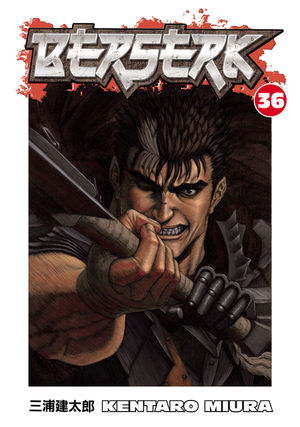
Berserk 36 by Kentaro Miura
I'm out of touch. I didn't even know the new Berserk came out until I saw that a new animate 'movie' came out. Immediately bought both. Don't know if I'll be talking about the movie outside of "m'eh" and yet it's a "m'eh" with potential if they cover the core story elements cut out like Puck and Skullknight and actually, you know continue it.
Anyway, Berserk 36 was like visiting an angry old friend. Kentaro's art reminds me of Goerge Perez or Jim Lee in that his detailed line work is awesome. I still refer to my art book despite the fact that the text is all in Japanese. I figure it's an art book right?
The book continues to make use of some elements that I find would be right at home in most campaigns.
1. Curse Magic Items. Elric had Stormbringer. Guts has the Berserk Armor. With it pain and injuries that don't outright kill him are... well, not healed by the armor, but modified enough that he keeps fighting. Bad news is that in this state he makes a frenzied berserker look sane. Still, unlike Elric, Guts has at least one comrade wo can pull him out of the frenzy.
2. Ritual Magic is very powerful. Despite the limited knowledge of magic that Lady Farnese has, she is able to do a ritual magic that prevents magical entities from entry. A mystical barrier if you will to prevent fully monstrous magical creatures from entering it. While it's use is somewhat limited and it doesn't stop those things that are hybrids of magic, it's powerful enough to stop those that are fully of 'the other world'. Many games use some type of this effort but often have such long casting times or high material component costs that they're not very practical. Here the same is true but they do have the time and knowledge to use it.
3. The Foe Too Big To Face! Many times a character will encounter something that they just shouldn't be able to defeat. In Star Wars, A New Hope, the rebels have no chance against the death star but it does have a certain famous weakness. In How To Train Your Dragon, Toothless, as powerful and unique as he is, is not where near powerful enough to battle 'the Red Death'. Here, Guts comes face to face with 'The Sea God'. It's so enormous that the ship sized creatures that he has been fighting with the ship he's taken passage on, are essentially it's whisker's and decides the only way to kill it is by going to it's heart!
This is old hat as they say. I've seen Thor do it with Celestials and other heroes with Ego the living planet and I'm sure other people could point out numerous instances of the foe too powerful to simply beat down. In 4e, it might be possible to use a Skill Challenge to model how best to overcome this entity. In another game, it might be possible to just model many of the 'antibodies' or other efforts of the host body to repel the invaders. Make the players realize what a do or die situation they're in and don't hold back!
4. New Character Bring It. Isma has just joined the crew but already in this new world, she's shown that she fits right in as she is capable of turning into a mermaid. In traditional games, the power level of the core group may grow and grow to such a point that a fresh character starting at the recommended baseline power level wouldn't have a chance to survive much less contribute to the game. There are numerous ways around this including splitting the party or the focus of the campaign and giving the lower level characters appropriate enemies and side liens and goals and then they're the way Kentaro takes and that's to make the new character have a 'hook' or a unique ability that lets them jump right into the fray.
The only problem with Berserk 36 is that despite it's hefty length, we're left with essentially a very long high level fight which means that we've got to wait until the next issue to get resolution. Damn you Kentaro!
Anyway, Berserk 36 was like visiting an angry old friend. Kentaro's art reminds me of Goerge Perez or Jim Lee in that his detailed line work is awesome. I still refer to my art book despite the fact that the text is all in Japanese. I figure it's an art book right?
The book continues to make use of some elements that I find would be right at home in most campaigns.
1. Curse Magic Items. Elric had Stormbringer. Guts has the Berserk Armor. With it pain and injuries that don't outright kill him are... well, not healed by the armor, but modified enough that he keeps fighting. Bad news is that in this state he makes a frenzied berserker look sane. Still, unlike Elric, Guts has at least one comrade wo can pull him out of the frenzy.
2. Ritual Magic is very powerful. Despite the limited knowledge of magic that Lady Farnese has, she is able to do a ritual magic that prevents magical entities from entry. A mystical barrier if you will to prevent fully monstrous magical creatures from entering it. While it's use is somewhat limited and it doesn't stop those things that are hybrids of magic, it's powerful enough to stop those that are fully of 'the other world'. Many games use some type of this effort but often have such long casting times or high material component costs that they're not very practical. Here the same is true but they do have the time and knowledge to use it.
3. The Foe Too Big To Face! Many times a character will encounter something that they just shouldn't be able to defeat. In Star Wars, A New Hope, the rebels have no chance against the death star but it does have a certain famous weakness. In How To Train Your Dragon, Toothless, as powerful and unique as he is, is not where near powerful enough to battle 'the Red Death'. Here, Guts comes face to face with 'The Sea God'. It's so enormous that the ship sized creatures that he has been fighting with the ship he's taken passage on, are essentially it's whisker's and decides the only way to kill it is by going to it's heart!
This is old hat as they say. I've seen Thor do it with Celestials and other heroes with Ego the living planet and I'm sure other people could point out numerous instances of the foe too powerful to simply beat down. In 4e, it might be possible to use a Skill Challenge to model how best to overcome this entity. In another game, it might be possible to just model many of the 'antibodies' or other efforts of the host body to repel the invaders. Make the players realize what a do or die situation they're in and don't hold back!
4. New Character Bring It. Isma has just joined the crew but already in this new world, she's shown that she fits right in as she is capable of turning into a mermaid. In traditional games, the power level of the core group may grow and grow to such a point that a fresh character starting at the recommended baseline power level wouldn't have a chance to survive much less contribute to the game. There are numerous ways around this including splitting the party or the focus of the campaign and giving the lower level characters appropriate enemies and side liens and goals and then they're the way Kentaro takes and that's to make the new character have a 'hook' or a unique ability that lets them jump right into the fray.
The only problem with Berserk 36 is that despite it's hefty length, we're left with essentially a very long high level fight which means that we've got to wait until the next issue to get resolution. Damn you Kentaro!
Labels:
Anime,
Berserk,
Cursed Magic Items,
Guts,
Kentaro Miura,
Manga,
New Characters,
Ritual Magic,
Skill Challenge
Sunday, October 2, 2011
Samurai Champloo
One of the benefits of actually having two days off in a row, is I caught up on Samurai Champloo. I'd been hearing good things about it for a while now, especially in compassion to Cowboy Bebop. While I enjoyed it, I'd have to say that the larger cast in Cowboy allowed it to tell more within its frame work as Samurai Champloo uses only three main characters and towards the end veered off into some weirdness that topped anything Bebop did.
In terms of character, I'll let Wikipedia do the work;
Mugen: A brash vagabond from the Ryukyu Islands, Mugen is a wanderer with a wildly unconventional fighting style. He wears metal-soled geta and carries an exotic sword on his back. In Japanese, the word "Mugen" means "infinite" (literally, "without limit" or "limitless").
Jin: Jin is a reserved ronin of 20 years who carries himself in the conventionally stoic manner of a samurai of the Tokugawa era. Using his waist-strung daishō, he fights in the traditional kenjutsu style of a samurai trained in a prominent, sanctioned dojo. Jin wears glasses, an available but uncommon accessory in Edo era Japan. Spectacles, called "Dutch glass merchandise" ("Oranda gyoku shinajina" in Japanese) at the time, were imported from Holland early in the Tokugawa period and became more widely available as the 17th century progressed. In Japanese, the word "Jin" means "benevolence" or "compassion."
Fuu: A feisty 15-year-old girl, Fuu recruits Mugen and Jin to help her find a sparsely described man she calls "the samurai who smells of sunflowers." A flying squirrel named "Momo" (short for momonga, "flying squirrel") accompanies her, inhabiting her kimono and frequently leaping out to her rescue.
Mugen, is, in many ways a player character to the bone.
He is interested in showcasing his strength and little else. This demonstration of physical prowess isn't necessarily limited to just swordsmanship though. When there is a contest for eating, he joins. When there is a graffiti contest, he joins in. When there is a baseball game against Americans, he wins it. When not being able to read becomes something his comrades are able to harass him about, he learns it. In this, he is much like Guts of the manga Berserk in some of the early material. His goal is to find strong enemies so that he himself may become stronger.
His adventuring spirit though, isn't just killing. It's living life the way he wants to. He has no use or need for social conventions. He's perfectly happy fighting against lawmen as well as bandits. This allows him to be put into many situations that a paladin or other good type of character would inherently avoid.
Jin on the other hand, like Usagi Yojimbo from the graphic novels and comics, suffers a bit because he's a true believer of the samurai caste and its meanings. Because of this, and the fact that the lands are now at peace, the true value of armed men is diminishing and doing so rapidly. Who needs a standing army of soldiers when there is no war? This theme of a soldier without a war is used often when dealing with Samurai in films such as Hari Kari, an old classic of soldiers out of luck and needing support to comics such as the already mentioned Usagi Yojimbo.
It's one of the reasons why having characters active in a time of danger, in a time of trouble, is often more viable. There are things to do when the country is at war and when times are tough. When things are good, its time for another type of character such as yakuza or nobles or rising merchants. For a warrior, things are difficult in these times because they're not needed nor wanted.
Jin finds himself fighting against what he sees as the corruption of the samurai spirit starting from the first episode, asking if its worth serving a corrupt lord when service is part of the samurai creed, but to do so to those who are foolish or greedy or otherwise unworthy of that service, renders that need to serve false. It is why he walks the road alone as opposed to being the head of his own school.
The two are an interesting contrast in many ways.
The former, a wild fighter looking only to test his strength, and the later willing to walk the line of Bushido even when its inconvenient to do so.
The show has several other bits going for it that a GM might want to crib for his own game.
For one, there is a showdown between Jin and a blind assassin. The battle takes place on a narrow wooden bridge. This prevents a lot of movement and fancy footwork. The environment becomes its own thing.
On another showdown between Mugen and an assassin, they fight on a boat. The small boat capsizes and puts the battle underwater. Try to keep some options available for those scenes where it needs to be dramatic and needs to move fast paced.
In terms of pacing, while the series does follow an overall goal of finding a specific individual, most of the episodes are very self contained. This type of campaign would be an easy model for a GM to run with an over arching goal and various encounters that the GM puts together between sessions to keep things moving along.
Samurai Champloo does mix a lot of modernismsbling or having other aspects of 'gangsta' life hit the points of let default setting that 4e uses.
Samurai Champloo is worth a viewing and Netflix has it for those with that service.
In terms of character, I'll let Wikipedia do the work;
Mugen, is, in many ways a player character to the bone.
He is interested in showcasing his strength and little else. This demonstration of physical prowess isn't necessarily limited to just swordsmanship though. When there is a contest for eating, he joins. When there is a graffiti contest, he joins in. When there is a baseball game against Americans, he wins it. When not being able to read becomes something his comrades are able to harass him about, he learns it. In this, he is much like Guts of the manga Berserk in some of the early material. His goal is to find strong enemies so that he himself may become stronger.
His adventuring spirit though, isn't just killing. It's living life the way he wants to. He has no use or need for social conventions. He's perfectly happy fighting against lawmen as well as bandits. This allows him to be put into many situations that a paladin or other good type of character would inherently avoid.
Jin on the other hand, like Usagi Yojimbo from the graphic novels and comics, suffers a bit because he's a true believer of the samurai caste and its meanings. Because of this, and the fact that the lands are now at peace, the true value of armed men is diminishing and doing so rapidly. Who needs a standing army of soldiers when there is no war? This theme of a soldier without a war is used often when dealing with Samurai in films such as Hari Kari, an old classic of soldiers out of luck and needing support to comics such as the already mentioned Usagi Yojimbo.
It's one of the reasons why having characters active in a time of danger, in a time of trouble, is often more viable. There are things to do when the country is at war and when times are tough. When things are good, its time for another type of character such as yakuza or nobles or rising merchants. For a warrior, things are difficult in these times because they're not needed nor wanted.
Jin finds himself fighting against what he sees as the corruption of the samurai spirit starting from the first episode, asking if its worth serving a corrupt lord when service is part of the samurai creed, but to do so to those who are foolish or greedy or otherwise unworthy of that service, renders that need to serve false. It is why he walks the road alone as opposed to being the head of his own school.
The two are an interesting contrast in many ways.
The former, a wild fighter looking only to test his strength, and the later willing to walk the line of Bushido even when its inconvenient to do so.
The show has several other bits going for it that a GM might want to crib for his own game.
For one, there is a showdown between Jin and a blind assassin. The battle takes place on a narrow wooden bridge. This prevents a lot of movement and fancy footwork. The environment becomes its own thing.
On another showdown between Mugen and an assassin, they fight on a boat. The small boat capsizes and puts the battle underwater. Try to keep some options available for those scenes where it needs to be dramatic and needs to move fast paced.
In terms of pacing, while the series does follow an overall goal of finding a specific individual, most of the episodes are very self contained. This type of campaign would be an easy model for a GM to run with an over arching goal and various encounters that the GM puts together between sessions to keep things moving along.
Samurai Champloo does mix a lot of modernismsbling or having other aspects of 'gangsta' life hit the points of let default setting that 4e uses.
Samurai Champloo is worth a viewing and Netflix has it for those with that service.
Wednesday, September 7, 2011
Character Archetypes Inspired by Blue Gender
On ye old Netflix, I'm watching the 'classic' anime, Blue Gender. In honor of this watching, I've decided to give some half assed thoughts to what I see as two archetypes that I've seen in a few different situations and genres. Let me know if this is something a reader would like to see more of, or perhaps more random babbling from the various viewings and readings.
The Out of Time Character:
In many different genres, a character can become locked in time. In many instances, this character can be a default 'standard' viewpoint character. In Thundar the Barbarian for example, there are instances of people from pre-Cataclysm Earth that Thundar runs into. In Blue Gender, Eugene is another such character. He suffers from a disease and is placed into a sleep that allows him to bypass the Blue invasion. In other settings, such as those written by David Gemmell, a whole race of warriors is set in stone so that they may be called forth when needed to fight an invasion by an old foe.
Such a viewpoint character often fits the standard of where they come from or what the rules and or time of the genre may be. For example, in a setting taking place in an Oriental Adventure setting, the character may be a Westerner whose outlook and equipment is familiar to those who read Knightly tales or standard fantasy. In a Vampire or other setting where the characters are monstrous, the character in question may be new. The path of the character is to discover what they are in relation to the setting about them.
They judge others around them by the manner in which they used to. It may take them some time, if ever, to accumulate to the new setting and or situation that they find themselves in. Such an archetype is useful for new characters or new players who may not be familiar with the current setting or game system. A potential problem such individuals may have, is adapting to the current weapons and armor of the setting. For example, while a sword may just be a sword, a blade like the Sunsword in Thundar might be quite different than one a standard character is used to. In some instances, such a time displaced characters may not have any weapon skills to call upon.
When such a character is offered the chance to return to the womb, or to return to the simpler times, they often pass on it. They've already lived that life, already done those deeds. This is a new life and a new time and even though it is challenging, they accept where they are.
The Doomed Soldier:
A professional by trade, the Doomed Soldier is a stoic individual that doesn't complain. They are often highly skilled in their field and while not necessarily boastful of it, they have no problem demonstrating their skills to others. They have little use for those who don't follow orders, because in their experience, those who do not follow orders tend to die and often times, wind up taking other members of the crew with them. In terms of respecting those they work with, they often only have a great degree of respect for those in a similar outlook to themselves, especially if they are part of the same organization.
The Doomed Soldier doesn't necessarily have a problem making allies, but making real friends on the other hand, is difficult. In their experience and history, it just isn't worth the time. They know that most people they associate with and ally themselves with, will in time, through circumstance or situation, perish.
They do not hold themselves above such a situation happening to them, but worry that due to some failure of their own, they may cause others to die. This is something that the Doomed Soldier struggles against with every fiber of their being. Others perishing because of their own inability to follow the rules and existing structure is bound to happen but under their watch and under their control? Never.
Despite their outlook of death being perhaps inevitable, or perhaps because of it, they have no problem enjoying the sensations that the world offers. This could be as simple as a fine meal, or satisfying other physical needs. Their theory is that because they could die at any point, weeks, days, or minutes from now, they should take advantage of life when they can. This pleasure seeking however, never interferes with the mission.
Doomed Soldiers may not necessarily start off with such a pessimistic attitude but may gain one through game play and suffering through difficult times that tend to stretch on for years at a time.
The Out of Time Character:
In many different genres, a character can become locked in time. In many instances, this character can be a default 'standard' viewpoint character. In Thundar the Barbarian for example, there are instances of people from pre-Cataclysm Earth that Thundar runs into. In Blue Gender, Eugene is another such character. He suffers from a disease and is placed into a sleep that allows him to bypass the Blue invasion. In other settings, such as those written by David Gemmell, a whole race of warriors is set in stone so that they may be called forth when needed to fight an invasion by an old foe.
Such a viewpoint character often fits the standard of where they come from or what the rules and or time of the genre may be. For example, in a setting taking place in an Oriental Adventure setting, the character may be a Westerner whose outlook and equipment is familiar to those who read Knightly tales or standard fantasy. In a Vampire or other setting where the characters are monstrous, the character in question may be new. The path of the character is to discover what they are in relation to the setting about them.
They judge others around them by the manner in which they used to. It may take them some time, if ever, to accumulate to the new setting and or situation that they find themselves in. Such an archetype is useful for new characters or new players who may not be familiar with the current setting or game system. A potential problem such individuals may have, is adapting to the current weapons and armor of the setting. For example, while a sword may just be a sword, a blade like the Sunsword in Thundar might be quite different than one a standard character is used to. In some instances, such a time displaced characters may not have any weapon skills to call upon.
When such a character is offered the chance to return to the womb, or to return to the simpler times, they often pass on it. They've already lived that life, already done those deeds. This is a new life and a new time and even though it is challenging, they accept where they are.
The Doomed Soldier:
A professional by trade, the Doomed Soldier is a stoic individual that doesn't complain. They are often highly skilled in their field and while not necessarily boastful of it, they have no problem demonstrating their skills to others. They have little use for those who don't follow orders, because in their experience, those who do not follow orders tend to die and often times, wind up taking other members of the crew with them. In terms of respecting those they work with, they often only have a great degree of respect for those in a similar outlook to themselves, especially if they are part of the same organization.
The Doomed Soldier doesn't necessarily have a problem making allies, but making real friends on the other hand, is difficult. In their experience and history, it just isn't worth the time. They know that most people they associate with and ally themselves with, will in time, through circumstance or situation, perish.
They do not hold themselves above such a situation happening to them, but worry that due to some failure of their own, they may cause others to die. This is something that the Doomed Soldier struggles against with every fiber of their being. Others perishing because of their own inability to follow the rules and existing structure is bound to happen but under their watch and under their control? Never.
Despite their outlook of death being perhaps inevitable, or perhaps because of it, they have no problem enjoying the sensations that the world offers. This could be as simple as a fine meal, or satisfying other physical needs. Their theory is that because they could die at any point, weeks, days, or minutes from now, they should take advantage of life when they can. This pleasure seeking however, never interferes with the mission.
Doomed Soldiers may not necessarily start off with such a pessimistic attitude but may gain one through game play and suffering through difficult times that tend to stretch on for years at a time.
Friday, June 10, 2011
GUN X SWORD
Watching Gun X Sword, a space opera style anime. Some interesting character designs, and while at times a little too 'cute' in its telling, has some solid action sequences and various characters ranging from heroes and anti-heroes to retired heroes coming out for that one last glorious battle.
Below I'll mention a specific line that's a hell of a spoiler for the series so beware if you'd rather not have it spoiled.
Ray, the 'anti-heroes' says to the villain, "Your dream of your life." The Claw as he's known, has been speaking about his dream through most of the later half of the series. The sacrifices and decesions that have been made in order to further acheive this vital dream. At the point of that dream becoming a reality, Ray, despite being heavily wounded, has him dead to rights apparently but the Claw isn't listening when Ray fires off a shot.
You see, the Claw bats the projectile away from himself but in so doing, destroys the machine that was supposed to make his dream a reality. The bullet had to go somewhere see. It wasn't destroyed, merely deflected by his saving of his own life. Had he allowed the bullet to kill him, the dream could have gone on. Having went for survival though, the villain loses.
This is something that I try to bring into the game when possible. Try to have what I've heard other's call 'an out'. Something that doesn't necessarily mean the death of each and every opponent, but does provide victory for the players.
Gun X Sword provides some slick character designs and a lot of one liners as well as some strange character behavior and the light heartedness of earlier episodes gets far heavier into the later part of the series. If you're looking for some ideas on giving characters motivations and alliances and family and how those things all tie into each other, Gun X Sword has it in spades.
Below I'll mention a specific line that's a hell of a spoiler for the series so beware if you'd rather not have it spoiled.
Ray, the 'anti-heroes' says to the villain, "Your dream of your life." The Claw as he's known, has been speaking about his dream through most of the later half of the series. The sacrifices and decesions that have been made in order to further acheive this vital dream. At the point of that dream becoming a reality, Ray, despite being heavily wounded, has him dead to rights apparently but the Claw isn't listening when Ray fires off a shot.
You see, the Claw bats the projectile away from himself but in so doing, destroys the machine that was supposed to make his dream a reality. The bullet had to go somewhere see. It wasn't destroyed, merely deflected by his saving of his own life. Had he allowed the bullet to kill him, the dream could have gone on. Having went for survival though, the villain loses.
This is something that I try to bring into the game when possible. Try to have what I've heard other's call 'an out'. Something that doesn't necessarily mean the death of each and every opponent, but does provide victory for the players.
Gun X Sword provides some slick character designs and a lot of one liners as well as some strange character behavior and the light heartedness of earlier episodes gets far heavier into the later part of the series. If you're looking for some ideas on giving characters motivations and alliances and family and how those things all tie into each other, Gun X Sword has it in spades.
Monday, March 28, 2011
Afro Samurai Resurrection
Afro Samurai is a strange hybrid of different cultural elements. On one hand, it's the high energy Rap music wrapped up in Eastern Samurai warriors dressed like some weird combination of hip hop apocalypse survivors, which doesn't seem that far from what it actually is.
But what can you drag out of it for your own campaigns?
Actions have consequences is a theme I've mentioned before. In the original movie, Afro cuts a swathe of destruction through the land in his search for the #1 headband, worn by the man who killed his father. Friends, loves, and others all suffer under... almost indifference... to the need of his quest for revenge. Many of those people who die, have loved ones who aren't happy with those results. In this movie, they come back for some of their own revenge.
The Nemesis Effect is also in play here. Afro has proven himself fit against a robot duplicate of himself in past performance, and referenced here, but what is it that drives Afro? His father. So using the post-modern super science of the era, the villainess of this piece brings Afro's father back to life to act as his executioner.
It's not a one way street though. In order to challenge the #1, now Sio, Afro needs the #2 headband. The current owner of it is travelling with a child. This doesn't stop Afro mind you and much like the young heroine at the end of Kill Bill, Afro lets the child know that when he's ready for the fight, Afro will be there. This makes things cyclic. There are no real good guys here, just people obsessed with following their own agendas.
Some game systems build these types of innate activities into the player's through game mechanics. Games like Dungeons and Dragons use alignment as a broad guideline in allowing how players act. Hero and GURPS have psychological disadvantages with different strengths that show how the players may react to different scenarios.
Simple Plans Are the Best: This resurrection of Afro's father probably wasn't the best thing to do for several reasons. The first, is that Jinno and Sio had already proven their superiority to Afro in the initial conflict. To go further in the name of bring further pain to Afro, works against the act of killing Afro.
This is a common problem that many ego-maniacs have. When you are designing your head villains, how powerful do they think they are? How untouchable do they believe themselves to be? The more on the crazy scale they are, the more likely they are to make plans within plans within plans that can fall apart without that much required to happen. This desire to inflict more than pain and to inflict incarnate suffering leaves the hero too many opportunities to overcome.
The Control Effect: Like any good monster, Afro's father quickly falls out of control from Sio. What's worse, is that her brother, Jinno, is still Afro's friend underneath all of the cybernetics and takes this time to renew that friendship by trying to save Afro from his father. This of course leads to the resurrected father killing pretty much everyone that gets in his way leaving Afro a few moments to gather himself and claim victory.
It may seem that some of these things could only happen in such an anime but in my opinion, this could almost have been a Godzilla movie where the bad guys bring bad another giant monstrous enemy of Godzilla and lose control over it only to have it turn on them and be saved by Godzilla at the end. The common themes of arrogance, cyclical events, and things beyond our control, are common to story telling and can be used in many mediums.
Afro Samurai boasts some great action sequences and some interesting character designs. If you're looking for some high powered post-apocalyptic action, Afro Samurai Resurrection hits the spot.
Sunday, March 27, 2011
Black Blood Brothers
When I think about the origins of Appendix N, in the first Advanced Dungeon Master's Guide, I often wonder how things would have been different had it been done years later. Anime and manga really hadn't made it over big in America at that point yet, and while Appendix N didn't cover comics or movies for that matter, the idea of seeing some of the self spoofs like Slayer's on such a list makes me smile a bit.
Having said that, I used my good old Netflix account to watch Black Blood Brothers. It's a short, 12 ep, feature, each one being a half hour, that brings a few interesting characters together for some big battles and brings with it some things I'd crib for my own games.
For instance, one of the main characters, Jiro, has a few earned names of his own including the Silver Blade, named so after his sword, and the Kin Killer, named so because he had fought and killed a lot of other vampires. Many of the other characters, even those that don't get a lot of screen time, have their own long lists of alias and earned names. If you can provide the players some earned names, see if they stick.
This is something that was looked for in the book, The Heroes. The people of the north went out to war to earn their names like the Bloody Nine for example.
There's also the idea of the Kowloon children. In this series, you generally don't become a vampire unless you're given the blood. The Kowloon Children however, are highly contagious and just a bite will turn man or vampire into one of the Kowloon Children. It gives people reason to fight together when something no one else wants starts cropping up. In some ways, its similar to a zombie plague, another great disease based undead attack theme.
The thing I would try to avoid taking from the series though, is letting the NPCs NOT do their job. At the end of the series, the King of the East is cleansing the city left and right of the Kowloon Children. Another power player, an 800 year old pyro master, is burning them up with his fire eye. All of this and they let one of them get away because the main character, Jiro, was fighting her. If I was the King of the East or one of the others, it'd be bye bye Jiro as all of them would get the hand of god cleansing. Maybe I missed it why they couldn't specifically take care of those two individuals and had to have Jiro do it but it seemed a cop out to give Jiro a chance to shine and then allow his failure to actually happen.
Hulu has some of the series on now: http://www.hulu.com/black-blood-brothers and as I've already mentioned, Netflix has the whole run and apparently other venues are available to those who wish to watch it and judge for themselves.
Having said that, I used my good old Netflix account to watch Black Blood Brothers. It's a short, 12 ep, feature, each one being a half hour, that brings a few interesting characters together for some big battles and brings with it some things I'd crib for my own games.
For instance, one of the main characters, Jiro, has a few earned names of his own including the Silver Blade, named so after his sword, and the Kin Killer, named so because he had fought and killed a lot of other vampires. Many of the other characters, even those that don't get a lot of screen time, have their own long lists of alias and earned names. If you can provide the players some earned names, see if they stick.
This is something that was looked for in the book, The Heroes. The people of the north went out to war to earn their names like the Bloody Nine for example.
There's also the idea of the Kowloon children. In this series, you generally don't become a vampire unless you're given the blood. The Kowloon Children however, are highly contagious and just a bite will turn man or vampire into one of the Kowloon Children. It gives people reason to fight together when something no one else wants starts cropping up. In some ways, its similar to a zombie plague, another great disease based undead attack theme.
The thing I would try to avoid taking from the series though, is letting the NPCs NOT do their job. At the end of the series, the King of the East is cleansing the city left and right of the Kowloon Children. Another power player, an 800 year old pyro master, is burning them up with his fire eye. All of this and they let one of them get away because the main character, Jiro, was fighting her. If I was the King of the East or one of the others, it'd be bye bye Jiro as all of them would get the hand of god cleansing. Maybe I missed it why they couldn't specifically take care of those two individuals and had to have Jiro do it but it seemed a cop out to give Jiro a chance to shine and then allow his failure to actually happen.
Hulu has some of the series on now: http://www.hulu.com/black-blood-brothers and as I've already mentioned, Netflix has the whole run and apparently other venues are available to those who wish to watch it and judge for themselves.
Labels:
Anime,
Black Blood Brothers,
Earned Names,
Vampires
Subscribe to:
Posts (Atom)