Showing posts with label Religion. Show all posts
Monday, March 10, 2014
Borgia: Further Random Ramblings
I'll be hitting a few more points from the non-Showtime series, Borgia below. Anyone who doesn't want any spoilers should read no further.
One of the things I failed to mention about the Borgia series, the non-Showtime one, is that the motivation for Lucrezia to murder Juan, or at least to murder him at that time, is that Juan wants to redeem himself. He wants to confess his sins. He wants to live a virtuous life.
This means he'd get into Heaven.
So Lucrezia kills him to prevent that from happening. Her hatred of her brother is so great, that she cannot abide the thought of him going to Heaven. Her motivation is there, but the timing is directly influenced by religious belief.
It resounded in my mind an echo of the version of Hamlet with Mel Gibson as well as the play itself mind you. Here Hamlet comes across the king who has begged the Lord for forgiveness so if Hamlet does kill him at that junction, the king would go to heaven.
The hatred that Hamlet and Lucrezia share, to prevent the soul from going to a 'just' reward in the afterlife, is played out in both instances here.
In role playing games, what religious motivations can be arranged to do something similar for characters and their enemies?
In fantasy settings that have saints or gods or war, would fleeing from overwhelming victory be enough to damn a soul? What if the individual suffered from a magical compulsion that forced them to flee?
What if the damnation of the soul is of secondary importance but the appearance of the damnation is what's important?
For example, during the siege of a city, a war leader priest might call for a retreat when the city is going to fall and a high marshal or otherwise highly placed and respected knight prepares to lead the retreat but his assassination is arranged so that it looks like he was killed fleeing from the combat. This can be a devastating blow to the morale of the people he was supposed to be leading.
Such a thing might call on the players to investigate what actually happened. Was the weapon used to kill the knight one that the enemy uses? Did the knight suffer any other wounds? Is there a 'signature' mark like Zorro or other skilled opponents leave on their foes? Has the body been moved?
That's the first plot point that has a lot of potential implications for the game master and those players who pick clerics as their characters.
The second is specific missions.
Cesare's rise to power starts with a limited force of soldiers. So few in fact, that he has no desire to spend any of their lives when he doesn't have to.
In one instance, he's able to assure the people of the town that if they resist, the destruction he rains on them will be hoffic and on the other hand, he assures them that taxes and other fees will be lessened under him. They surrender.
He tries this on another town, but Caterina, 'Il Tiger', has captured the man's son so he cannot surrender without his son paying for it.
Cesare sees this as a perfect opportunity and infiltrates the castle holding the child, kills the child's captors, and makes the get away with the child and a bonus prisoner.
He does this alone, but in a role playing game, something like this might be accomplished by a few special characters, like the player's characters.
By having specific missions that can have tremendous impact on the game, the Dungeon Master allows the players the opportunity to directly influence the game. By having the players rescue an important son, or daughter, it gives the players a 'touch' with someone whose powerful or influential directly and gives that powerful person, a reason to respect the abilities of the players and to have a personal tie to the players.
Borgia: Rules of War, Rules of Love, provides a lot of ideas and visual inspiration for those who want to take their campaigns out of the dungeon.
Monday, February 10, 2014
Vikings: The Complete First Season
I haven't had cable television in years. It's one of the reasons I'm always behind on television series. I heard good things about Vikings. I was a little surprised to learn that it was a History Chanel program, but I've since learned that their programming is winning all sorts of awards. and when it first came out, for some reason Best Buy of all places, was selling the bluray version for something like $19.95. So I picked it up.
And time passed.
And finally I managed to watch the nine episodes that comprise season one.
If you're looking from a grim and gritty take on the start of the viking invasion of England, this is right up your alley. The costumes, soundtracks, and landscapes, ranging from mountains and hills and rolling fields, to the ever present sea, provide a possible look at what life would have been like all those long years ago.
Make no mistake, while there are protagonists and antagonists, this is a time of savagery and barbarism. Having said that, it interested me enough that when season two hits blu ray, I'll be looking forward to picking that up as well.
I haven't dug into the special features yet as my LG bluray player for the computer has decided at the last minute that hey, why would I want to work and allow you to actually enjoy your purchase? Go watch that on the tv and leave the computer alone.
Below I'll be discussing some of the things I enjoyed and how they may or may not fit your own role playing games.
1. Family. Strangely enough, Ragnar, who claims to be a son of Odin, the all father of the Nose deities, is a family man with a shield maiden wife and two children and a farm. These lands bond him to his Earl and insure that he has servants and animals of his own. His relationship with his family is one that the authors of the show use multiple times in order to draw him into conflict with others. Not only does he have this family, but he also has an ambitious brother Rollo.
Rollo is a great character to have in this show and would be tricky to do in a role playing game. For you see, Rollo is all about his own interests and rise. When he first joins with his brother Ragnar, they are supposed to do so as equals but Ragnar, perhaps due to his vision of wanting to raid the west in the first place, or having an ally capable enough to make a ship to survive the voyage, is the one hailed and whose renown grows. This sits ill with Rollo.
So Rollo is always being tempted to be against his brother. Initially this is 'merely' being a witness against Ragnar during a trial but when Ragnar's wife, Lagertha also stands to be killed, Rollo decides against it. His loyalty is tested later on as well and we'll see how that plays out in season two! The good thing though about Rollo, is you never quite know if he's actually against Ragnar.
And that's the problem for a role playing prospective. How often would you let someone seemingly betray you before you distanced yourself from them either by not travelling with them anymore or by attempting to kill them?
Family can have many functions in a campaign. They can be a place to rest when returning from adventure. In Lagertha's case, they can be direct assistance to the characters when they are low on resources because of her shield maid skills for example. They can also act as complications as when Ragnar is cheating on his wife and his son is infuriated with him over it.
2. Exploration. While the raids and the desire for new wealth is a huge part of why the vikings sail to the west, Ragnar at least, is seen as an explorer. He wants to visit new lands and learn new things. The desire to see what's over the next horizon fits perfectly in most role playing games where the state of roads and technology in general are low at best.
3. Tactics: Bernard Cornwell describes the shield wall in several of his viking and Arthurian sagas. The writers of Vikings do not shy away from it. I suppose my point is that as well loved as 'Tucker's Kobolds' are, don't punish the players when they use superior tactics and outflank the enemy or should be outflanking the enemy. Not every encounter should be one with enemies who fight just as intelligently as the players, especially if the foes the characters face are arrogant and cocksure of themselves. Who expects a night raid after all? Who expects extra traps to be set? Who expects a force to keep fighting when its members are wounded?
4. The Gods One of the things about The Desert Spear by Peter V. Brett is that it played off of Middle East assumptions that it's better to die against the enemy than grow old. Vikings had similar attitudes and did not wish to die old women. This is showcased as one elder viking swears allegiance to Ragnar and wishes to raid and fight and die in combat so that he may enter the halls of valhalla. The willingness to die, the preference to die in such a cause, stands against that of those they face who'd rather live to fight another day.
5.Mind altering substances: In his first raid, Ragnar captures a priest who was wide traveled and can speak Ragnar's native tongue. Learning about the people who have made him a slave occurs gradually over the course of time, but also happens in ceremonies where in one instance, special leaves are burned that enhance the story telling about ragnarok and later on, mushrooms devoured and perceptions altered of events at a religious gathering. With the leaves burned, it shows that directly putting some mind altering substances don't have to be something that characters have to be 'hit' by or drunk down.
5. Distinctive Features: I've mentioned distinctive features as being useful tools to distinguish one character from another before. Ragnar's hair style and the tattoos on the side of his head for example, are very much distinctive from others. Scars, large body wide scars, are often visible on those who fight alongside Ragnar. Rollo, during one of his times of loyalty to Ragnar, or simply because he didn't actually know, is scared across both sides of his face by the Earl. Taking this to an extreme level, there is the Seer who serves the northmen. This seer is almost an albino and whose face is like melted wax with blackened lips. Truly distinctive!
Vikings has a lot going for it. Season one is available to stream for free from Amazon Prime right now, and on blu ray it runs $39.98.
And time passed.
And finally I managed to watch the nine episodes that comprise season one.
If you're looking from a grim and gritty take on the start of the viking invasion of England, this is right up your alley. The costumes, soundtracks, and landscapes, ranging from mountains and hills and rolling fields, to the ever present sea, provide a possible look at what life would have been like all those long years ago.
Make no mistake, while there are protagonists and antagonists, this is a time of savagery and barbarism. Having said that, it interested me enough that when season two hits blu ray, I'll be looking forward to picking that up as well.
I haven't dug into the special features yet as my LG bluray player for the computer has decided at the last minute that hey, why would I want to work and allow you to actually enjoy your purchase? Go watch that on the tv and leave the computer alone.
Below I'll be discussing some of the things I enjoyed and how they may or may not fit your own role playing games.
1. Family. Strangely enough, Ragnar, who claims to be a son of Odin, the all father of the Nose deities, is a family man with a shield maiden wife and two children and a farm. These lands bond him to his Earl and insure that he has servants and animals of his own. His relationship with his family is one that the authors of the show use multiple times in order to draw him into conflict with others. Not only does he have this family, but he also has an ambitious brother Rollo.
Rollo is a great character to have in this show and would be tricky to do in a role playing game. For you see, Rollo is all about his own interests and rise. When he first joins with his brother Ragnar, they are supposed to do so as equals but Ragnar, perhaps due to his vision of wanting to raid the west in the first place, or having an ally capable enough to make a ship to survive the voyage, is the one hailed and whose renown grows. This sits ill with Rollo.
So Rollo is always being tempted to be against his brother. Initially this is 'merely' being a witness against Ragnar during a trial but when Ragnar's wife, Lagertha also stands to be killed, Rollo decides against it. His loyalty is tested later on as well and we'll see how that plays out in season two! The good thing though about Rollo, is you never quite know if he's actually against Ragnar.
And that's the problem for a role playing prospective. How often would you let someone seemingly betray you before you distanced yourself from them either by not travelling with them anymore or by attempting to kill them?
Family can have many functions in a campaign. They can be a place to rest when returning from adventure. In Lagertha's case, they can be direct assistance to the characters when they are low on resources because of her shield maid skills for example. They can also act as complications as when Ragnar is cheating on his wife and his son is infuriated with him over it.
2. Exploration. While the raids and the desire for new wealth is a huge part of why the vikings sail to the west, Ragnar at least, is seen as an explorer. He wants to visit new lands and learn new things. The desire to see what's over the next horizon fits perfectly in most role playing games where the state of roads and technology in general are low at best.
3. Tactics: Bernard Cornwell describes the shield wall in several of his viking and Arthurian sagas. The writers of Vikings do not shy away from it. I suppose my point is that as well loved as 'Tucker's Kobolds' are, don't punish the players when they use superior tactics and outflank the enemy or should be outflanking the enemy. Not every encounter should be one with enemies who fight just as intelligently as the players, especially if the foes the characters face are arrogant and cocksure of themselves. Who expects a night raid after all? Who expects extra traps to be set? Who expects a force to keep fighting when its members are wounded?
4. The Gods One of the things about The Desert Spear by Peter V. Brett is that it played off of Middle East assumptions that it's better to die against the enemy than grow old. Vikings had similar attitudes and did not wish to die old women. This is showcased as one elder viking swears allegiance to Ragnar and wishes to raid and fight and die in combat so that he may enter the halls of valhalla. The willingness to die, the preference to die in such a cause, stands against that of those they face who'd rather live to fight another day.
5.Mind altering substances: In his first raid, Ragnar captures a priest who was wide traveled and can speak Ragnar's native tongue. Learning about the people who have made him a slave occurs gradually over the course of time, but also happens in ceremonies where in one instance, special leaves are burned that enhance the story telling about ragnarok and later on, mushrooms devoured and perceptions altered of events at a religious gathering. With the leaves burned, it shows that directly putting some mind altering substances don't have to be something that characters have to be 'hit' by or drunk down.
5. Distinctive Features: I've mentioned distinctive features as being useful tools to distinguish one character from another before. Ragnar's hair style and the tattoos on the side of his head for example, are very much distinctive from others. Scars, large body wide scars, are often visible on those who fight alongside Ragnar. Rollo, during one of his times of loyalty to Ragnar, or simply because he didn't actually know, is scared across both sides of his face by the Earl. Taking this to an extreme level, there is the Seer who serves the northmen. This seer is almost an albino and whose face is like melted wax with blackened lips. Truly distinctive!
Vikings has a lot going for it. Season one is available to stream for free from Amazon Prime right now, and on blu ray it runs $39.98.
Labels:
Exploration,
Family,
Historical Characters,
Historicals,
Religion,
Vikings
Sunday, March 31, 2013
Easter Versus Istar
Neat little picture.
This article says nonsense.
Religion is a funny thing. It has to adopt to the times to survive.
I remember when I was in a particular religious study, they were discussing that Jesus was not accepted by the Jewish at the time because they were waiting for two kings; one a religious figure, which Jesus fit, and the other, a warrior king to throw the imperial rule of the Romans off them. It wasn't something I had heard before then, but they had a wide body of literature and theories to back their belief.
Since then I've seen a lot of studies that discuss how saints and angels are actually the incorporated gods and goddesses of the various countries that the Christian Church has occupied.
Time has a way of changing things in order to be more appealing to the people that practice it. Slavery for example, isn't something we have as a legal entity. Sure, we could argue the semantics of it back and forth in terms of having to have a job, and having to have enough money to survive and not work 80 hours a week, but hopefully no one has to worry about being whipped or beaten to death at work. Although boxers and people who work in the S&M may have something else to say about that.
Anyway, in terms of slavery, unless I"m really misremembering my bible, it's in there. There's even a whole section in there about how to treat your slaves.
Not something that comes up in every day conversation about the bible I'm sure.
It is one of the reasons why those who don't necessarily follow the bible, often want more than just "the bible says so" in terms of convincing arguments. The bible says a LOT of things. It's a very old book. It tried to cover a lot of ground for its time and still has a lot of relevance to many millions of people.
But as you can see above, in the whole Ishtar and Easter bit, we've still got a lot of theories on how things all work out.
In role playing games, it can be more difficult to do this. Many games have modern sensibilities despite their technological backward settings. Any race or religion or culture that endorses slavery? Probably not going to be on the good guys side. Drow, orcs, and hobgoblins aren't traditionally the good guys and this is reflected in the evil things they do like have slaves.
But in terms of having symbolism and deities have all of these different culture elements incorporated into them, it can be more difficult in a setting like the Forgotten Realms or Greyhawk say, where the deities are actual entities. Would you put up with the dilution of your church in terms of someone changing your portfolios, symbols, and other elements? It's pretty much an bypass in terms of games that do this. It's not dungeon crawl enough.
When setting up your own campaigns, think about the impact that the deities and the social norms have on the setting not only in terms of adventure, but how they interact with the rules. Dungeons and Dragons, despite being the backbone of the industry (or Pathfinder), has its simplicity knobs in alignment and when acts are evil, like slavery, despite their widespread use in the ancient world, and parts of the world today, the two do not mix unless you have a lot of buy in from the players.
Someone playing a paladin for example in a culture where slavery is normal? Is that really a lawful good person? It's best to discuss what the appropriate roles and opinions of such elements are and how they can impact the players enjoyment of the setting and how they interact with it.
For those who celebrate the holiday, enjoy it! For those who don't, enjoy, what is turning out in Chicago at least, to be a beautiful day.
This article says nonsense.
Religion is a funny thing. It has to adopt to the times to survive.
I remember when I was in a particular religious study, they were discussing that Jesus was not accepted by the Jewish at the time because they were waiting for two kings; one a religious figure, which Jesus fit, and the other, a warrior king to throw the imperial rule of the Romans off them. It wasn't something I had heard before then, but they had a wide body of literature and theories to back their belief.
Since then I've seen a lot of studies that discuss how saints and angels are actually the incorporated gods and goddesses of the various countries that the Christian Church has occupied.
Time has a way of changing things in order to be more appealing to the people that practice it. Slavery for example, isn't something we have as a legal entity. Sure, we could argue the semantics of it back and forth in terms of having to have a job, and having to have enough money to survive and not work 80 hours a week, but hopefully no one has to worry about being whipped or beaten to death at work. Although boxers and people who work in the S&M may have something else to say about that.
Anyway, in terms of slavery, unless I"m really misremembering my bible, it's in there. There's even a whole section in there about how to treat your slaves.
Not something that comes up in every day conversation about the bible I'm sure.
It is one of the reasons why those who don't necessarily follow the bible, often want more than just "the bible says so" in terms of convincing arguments. The bible says a LOT of things. It's a very old book. It tried to cover a lot of ground for its time and still has a lot of relevance to many millions of people.
But as you can see above, in the whole Ishtar and Easter bit, we've still got a lot of theories on how things all work out.
In role playing games, it can be more difficult to do this. Many games have modern sensibilities despite their technological backward settings. Any race or religion or culture that endorses slavery? Probably not going to be on the good guys side. Drow, orcs, and hobgoblins aren't traditionally the good guys and this is reflected in the evil things they do like have slaves.
But in terms of having symbolism and deities have all of these different culture elements incorporated into them, it can be more difficult in a setting like the Forgotten Realms or Greyhawk say, where the deities are actual entities. Would you put up with the dilution of your church in terms of someone changing your portfolios, symbols, and other elements? It's pretty much an bypass in terms of games that do this. It's not dungeon crawl enough.
When setting up your own campaigns, think about the impact that the deities and the social norms have on the setting not only in terms of adventure, but how they interact with the rules. Dungeons and Dragons, despite being the backbone of the industry (or Pathfinder), has its simplicity knobs in alignment and when acts are evil, like slavery, despite their widespread use in the ancient world, and parts of the world today, the two do not mix unless you have a lot of buy in from the players.
Someone playing a paladin for example in a culture where slavery is normal? Is that really a lawful good person? It's best to discuss what the appropriate roles and opinions of such elements are and how they can impact the players enjoyment of the setting and how they interact with it.
For those who celebrate the holiday, enjoy it! For those who don't, enjoy, what is turning out in Chicago at least, to be a beautiful day.
Sunday, March 18, 2012
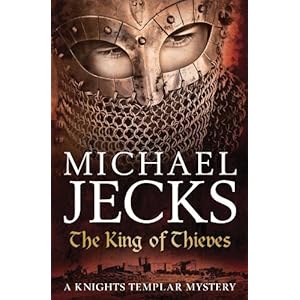
The King of Thieves by Michael Jecks
When Borders Bookstore was closing, I purchased many a book that looked interesting. I didn't do it when the hordes were crowding and pushing one another for 20% off. I waited until the books were well and low priced at 60% or greater. Mind you, the selection wasn't at its peak but there was more then enough that I'm still reading those books when I find the time.
I'd never heard of Michael Jecks before. I'm also NOT an armchair historian. However, I do like a good historical and I find them easier to mine for role playing purposes since most of the games I play tend to be low tech, dark ages styling. Well, magic is usually a big element too but that's another thing I'd have to add as needed.
I'll be discussing some spoilers pulled out of the book so if you want no spoilers, read no further on Michael Jecks The King of Thieves.
Let's start with terminology. I love it when the author provides us some details. Like a Crophead being slang for a priest, or a harvester a cutpurse or a picker, a thief who takes everything from his victims or a planter, a thief that makes fake jewels. Great stuff. Adds to the atmosphere of the book right away.
Another thing I enjoy is learning about real characters that were... interesting so that I can steal, I mean, borrow them or their routines for my games. I hate to say it, but I was ignorant of Hug Despenser and that's a shame because after reading some on him in this novel and on good ole Wiki, I have to say, he's a hell of a bastard and looks like he would make a great rival noble enemy for characters, one whose protection from a higher source means that the outmaneuvering must take place in the courts and not on the field of battle where character often have an advantage.
Another character mentioned in this historical, is Charles Martel, a well known warrior with his own nick name. Adding such background elements to your own campaign, famous warriors, generals, saints, and other well known figures of history, can provide more depth to the setting as it gives, say, the martial characters in the game, something to strive for, to go beyond.
"and now the King was married to his third wife..." Not a particularly grand statement in all things but one that puts out there that people, everyone suffers. One of the problems I've heard players complain about with their loved ones or NPCs close to them, is that the Game Master is always messing with them so its easier not to have any close contacts. Well, remind them that life is indeed a contact sport and kings and queens suffer the disasters of disease and death in child birth and other ravages, that its okay for them too.
"But the instability which he had assisted was now growing alarming. Robert Sapy's deputy in Wales had been attacked... There had been a time... when no man would have dared to treat such an important man in such dreadful a manner, but that time was past. Now no one was safe."
Political unrest can be a powerful tool. But it might be only part of a problem. For example, if there is famine, is there is plaque, is there is banditry, then adding to that a King whose most favorite subject is widely hated? Yeah, that might cause some problems. On the other hand, it also sets the stages for players to shine. I've mentioned it before, but if you're playing a 'standard' styling of Dungeons and Dragons where players will be in combat, then you want there to be unrest in the land, you want political factions lining up to march to war, you want bandits for the players to fight, you want church and state taking shots at each others. The more conflict, the easier it is to get the players actively involved in it.
"A large sideboard stood at one wall and upon it were many silver plates and some goblets... Large tapestries covered the bare walls on two sides...the large goblet with gilding all around it."
A quick quote about the wealth of one man of the cloth. This type of wealth, these material things that are not coins, is mentioned several times. I myself am guilty to resorted to X amount of platinum, Y amount of gold, and Z amount of silver, but it can give the setting some contrast and character when you start throwing in physical art objects. In this case, one of the objects actually turns out to be a clue later on. The physical descriptions of combs, plates, goblets, utensils, tapestries, and other non-coin wealth can say a lot about the campaign.
Of course it doesn't hurt that at lower levels it can make it difficult for the players to simply pick it all up and leave.
"Let me put it like this: the King is now moving his prisoners from one castle to another."
In terms of those uprisings, well, there really weren't any prisons in those days. You did a crime, chances are you'd get the immediate punishment, like having your ear clipped or your lip split and then be sent on your merry way. Otherwise you went into the dungeon of a castle. Not good times. In the above case, the King's forces may not be up to the task of taking care of fomenting rebellion so he keeps the prisoners on the move to prevent them from being freed.
"It was hard when speaking to someone like this to remember that he was just a man like any other. Jean was intimidated by rank. He was too aware of his own lowly background."
IN today's 'modern' D&D, for some reason we still have kings and farmers but no slaves and a social system that tries its best to mime modern times so that rank and other non-tangible values are well, meaningless. When setting up your own campaign, talk with the players about their own expectations of what they assume the setting is going to be like. If everyone is on the same page, that's great, but if you're running a dark and gritty fantasy campaign with low magic and rank is everything, well, wandering adventurers may get a welcome they'd rather not have.
"Just the atmosphere made Jean feel chilled as he entered the place. There were marks scrawled into the walls here, the despairing words of prisoners who knew that their time was almost over..."
Here's an idea for a map. Instead of finding one in a treasure lair on a piece of paper, what if it's actually a huge map on the wall. A dragon, beholder, or other fantastical creature would have no problem defacing a granite wall and it would give the players a little something different to remember as they try to copy down the map.
"Cardinal, if is your duty to uphold God's laws, surely."
"I have many duties. I have served four Popes now. They each were different men, but the main thing was, they were practical men."
Here's an interesting one. When looking at fantasy religions that actually have deities and miracles and divine powers in the game, how does one NOT serve correctly? In Eberron, well, the gods don't necessarily take an active interest. It's far more nebulous than say the Forgotten Realms where the gods have walked the earth and even had children. ON the other hand, the Forgotten Realms has had its share of heresy and its share of deities impersonating one another. Some churches, like that of Tempus, encourage active war fare as that is the god's portfolio. Others... you kind of have a hard time seeing them not be one large brother hood under that active god. Think about the role of religion, how heavy the god's hands are, are they any clerics who've actually lost spellcasting ability, or is spellcasting ability something only players can do? It changes setting assumptions quite quickly if it is.
"It was mere good fortune that he himself was not present in the Preceptory on that day, and thus evaded the arrest and subsequent punishment."
It's a comment about the fall of the Templars. In Dungeon Siege 3, it starts off with your organization being crushed. Some might think that heavy handed but organizations come and go all the time in history. The stalwart warrior against God's foes today, is the gold laden victim to be robbed tomorrow. If the players are part of a guild, it's always good to have a few real life organizations that were taken down in order to show case that, no, you as the Game Master are not being mean to them and that these things do happen and will they please man up about it.
"He killed my boy' the cook said...
Anyone ever see New Jack City? The heroes of the tale go about finding out how to take down a very bad man. They lose friends and allies and suffer great hardships and loses and at the end, the bad guy is going to walk away free as a bird when an old man pops out of the crowd and guns him down!
The same thing happens here where the heroes find out the clues and find the murderer and that murderer is killed by another minor character.
That doesn't work too bad in a movie or in a novel but I personally would NOT be happy as a player if the Game Master were to do that. "Great game guys. You spent weeks hunting down the murderer but it's the kings brother. He laughs as you'll never be able to prove it all but then old man Fellows whose daughter was killed steps up and stabs the King's brother right in the neck!" Ugh. If you want to write a story, there's no need to drag the players into it. Write the story. Give the players their moment of glory.
On the other hand if the players are getting restless with the current crop and don't want to do the whole law and order thing and you asked them if they'r ready to move on, yeah, it might be time to New Jack that NPC.
Michael Jecks does a great job of bringing history, and Paris, to live. He makes Paris a filthy city, but one that is teeming with life of all sorts. A strong read, I hope to find more Jecks on sale or for those ebooks to come down in price.
I'd never heard of Michael Jecks before. I'm also NOT an armchair historian. However, I do like a good historical and I find them easier to mine for role playing purposes since most of the games I play tend to be low tech, dark ages styling. Well, magic is usually a big element too but that's another thing I'd have to add as needed.
I'll be discussing some spoilers pulled out of the book so if you want no spoilers, read no further on Michael Jecks The King of Thieves.
Let's start with terminology. I love it when the author provides us some details. Like a Crophead being slang for a priest, or a harvester a cutpurse or a picker, a thief who takes everything from his victims or a planter, a thief that makes fake jewels. Great stuff. Adds to the atmosphere of the book right away.
Another thing I enjoy is learning about real characters that were... interesting so that I can steal, I mean, borrow them or their routines for my games. I hate to say it, but I was ignorant of Hug Despenser and that's a shame because after reading some on him in this novel and on good ole Wiki, I have to say, he's a hell of a bastard and looks like he would make a great rival noble enemy for characters, one whose protection from a higher source means that the outmaneuvering must take place in the courts and not on the field of battle where character often have an advantage.
Another character mentioned in this historical, is Charles Martel, a well known warrior with his own nick name. Adding such background elements to your own campaign, famous warriors, generals, saints, and other well known figures of history, can provide more depth to the setting as it gives, say, the martial characters in the game, something to strive for, to go beyond.
"and now the King was married to his third wife..." Not a particularly grand statement in all things but one that puts out there that people, everyone suffers. One of the problems I've heard players complain about with their loved ones or NPCs close to them, is that the Game Master is always messing with them so its easier not to have any close contacts. Well, remind them that life is indeed a contact sport and kings and queens suffer the disasters of disease and death in child birth and other ravages, that its okay for them too.
"But the instability which he had assisted was now growing alarming. Robert Sapy's deputy in Wales had been attacked... There had been a time... when no man would have dared to treat such an important man in such dreadful a manner, but that time was past. Now no one was safe."
Political unrest can be a powerful tool. But it might be only part of a problem. For example, if there is famine, is there is plaque, is there is banditry, then adding to that a King whose most favorite subject is widely hated? Yeah, that might cause some problems. On the other hand, it also sets the stages for players to shine. I've mentioned it before, but if you're playing a 'standard' styling of Dungeons and Dragons where players will be in combat, then you want there to be unrest in the land, you want political factions lining up to march to war, you want bandits for the players to fight, you want church and state taking shots at each others. The more conflict, the easier it is to get the players actively involved in it.
"A large sideboard stood at one wall and upon it were many silver plates and some goblets... Large tapestries covered the bare walls on two sides...the large goblet with gilding all around it."
A quick quote about the wealth of one man of the cloth. This type of wealth, these material things that are not coins, is mentioned several times. I myself am guilty to resorted to X amount of platinum, Y amount of gold, and Z amount of silver, but it can give the setting some contrast and character when you start throwing in physical art objects. In this case, one of the objects actually turns out to be a clue later on. The physical descriptions of combs, plates, goblets, utensils, tapestries, and other non-coin wealth can say a lot about the campaign.
Of course it doesn't hurt that at lower levels it can make it difficult for the players to simply pick it all up and leave.
"Let me put it like this: the King is now moving his prisoners from one castle to another."
In terms of those uprisings, well, there really weren't any prisons in those days. You did a crime, chances are you'd get the immediate punishment, like having your ear clipped or your lip split and then be sent on your merry way. Otherwise you went into the dungeon of a castle. Not good times. In the above case, the King's forces may not be up to the task of taking care of fomenting rebellion so he keeps the prisoners on the move to prevent them from being freed.
"It was hard when speaking to someone like this to remember that he was just a man like any other. Jean was intimidated by rank. He was too aware of his own lowly background."
IN today's 'modern' D&D, for some reason we still have kings and farmers but no slaves and a social system that tries its best to mime modern times so that rank and other non-tangible values are well, meaningless. When setting up your own campaign, talk with the players about their own expectations of what they assume the setting is going to be like. If everyone is on the same page, that's great, but if you're running a dark and gritty fantasy campaign with low magic and rank is everything, well, wandering adventurers may get a welcome they'd rather not have.
"Just the atmosphere made Jean feel chilled as he entered the place. There were marks scrawled into the walls here, the despairing words of prisoners who knew that their time was almost over..."
Here's an idea for a map. Instead of finding one in a treasure lair on a piece of paper, what if it's actually a huge map on the wall. A dragon, beholder, or other fantastical creature would have no problem defacing a granite wall and it would give the players a little something different to remember as they try to copy down the map.
"Cardinal, if is your duty to uphold God's laws, surely."
"I have many duties. I have served four Popes now. They each were different men, but the main thing was, they were practical men."
Here's an interesting one. When looking at fantasy religions that actually have deities and miracles and divine powers in the game, how does one NOT serve correctly? In Eberron, well, the gods don't necessarily take an active interest. It's far more nebulous than say the Forgotten Realms where the gods have walked the earth and even had children. ON the other hand, the Forgotten Realms has had its share of heresy and its share of deities impersonating one another. Some churches, like that of Tempus, encourage active war fare as that is the god's portfolio. Others... you kind of have a hard time seeing them not be one large brother hood under that active god. Think about the role of religion, how heavy the god's hands are, are they any clerics who've actually lost spellcasting ability, or is spellcasting ability something only players can do? It changes setting assumptions quite quickly if it is.
"It was mere good fortune that he himself was not present in the Preceptory on that day, and thus evaded the arrest and subsequent punishment."
It's a comment about the fall of the Templars. In Dungeon Siege 3, it starts off with your organization being crushed. Some might think that heavy handed but organizations come and go all the time in history. The stalwart warrior against God's foes today, is the gold laden victim to be robbed tomorrow. If the players are part of a guild, it's always good to have a few real life organizations that were taken down in order to show case that, no, you as the Game Master are not being mean to them and that these things do happen and will they please man up about it.
"He killed my boy' the cook said...
Anyone ever see New Jack City? The heroes of the tale go about finding out how to take down a very bad man. They lose friends and allies and suffer great hardships and loses and at the end, the bad guy is going to walk away free as a bird when an old man pops out of the crowd and guns him down!
The same thing happens here where the heroes find out the clues and find the murderer and that murderer is killed by another minor character.
That doesn't work too bad in a movie or in a novel but I personally would NOT be happy as a player if the Game Master were to do that. "Great game guys. You spent weeks hunting down the murderer but it's the kings brother. He laughs as you'll never be able to prove it all but then old man Fellows whose daughter was killed steps up and stabs the King's brother right in the neck!" Ugh. If you want to write a story, there's no need to drag the players into it. Write the story. Give the players their moment of glory.
On the other hand if the players are getting restless with the current crop and don't want to do the whole law and order thing and you asked them if they'r ready to move on, yeah, it might be time to New Jack that NPC.
Michael Jecks does a great job of bringing history, and Paris, to live. He makes Paris a filthy city, but one that is teeming with life of all sorts. A strong read, I hope to find more Jecks on sale or for those ebooks to come down in price.
Saturday, February 25, 2012
Circle Orboros
Another 'cheat' post where I get to talk about my love of miniatures with my interest in role playing games.
I've been playing Dungeons and Dragons for a long time. I know there are man, many people who started before I did around 85', but I'm just putting out my own reference point here. One of the things I remember when I first started gaming, was how different druids were back then.
I don't want to say that druids have become some green peace hippy thing but it seems to me that a lot of focus on druids being the old religion so to speak, the old ways, the old gods, is left by the doorstop in order to make druids a still useful part of the game. Even in the old Village of Hommlet, the druids were on the way out. The reader could easily get the idea that the only reason that the druids were there at all was because it was an out of the way location that bordered on the wilderness.
And part of the problem with this is that D&D is so enmeshed in making things equal that you'd almost never know that druids are on the way out in the setting proper. They tend to be everywhere adventurers are. The urban druid is actual a thing now.
I think part of this borders from the way the alignment system works. Good and neutral faiths aren't necessarily going to go out of the way to crush the old ways and replace them.
So what does this have to do with the Circle Orboros? These druids are some of the first I've seen where they have a very detailed structure and have their own allies and enemies. Some of which can port over to almost any fantasy setting. Unlike the steam driven side of Warmachine, the druids here rely on monstrous allies, both unique or rare beasts and humanoids who fit that criteria. They train their soldiers off away from the beaten paths.
But they have deep religion on their 'side' too if you will. They are not peaceful. They are not content to tend the woods. They have ties to the ley lines of the world. They see the rise of man, of civilized man as something that must be pushed back and rendered out. But prior to that, they have numerous invaders from other venues and have issues with creatures that blight the very land itself.
This makes them an interesting faction in that they consider their goals noble, they wind up often fighting those who are vile, and they have internal politics where some of the factions are actually noble but are caught up in others intrigues.
When looking at druids in a standard Dungeons and Dragons game, how do they fit in the overall setting? Why do they fit? Ask if these druids are really necessary and make them earn their keep. If you're running a campaign on the borders of civilization, its much easier to rationalize why druids and their standing stones and sacrificial stones would be up and about but when adventuring primarily in a city based dwelling, why are they there? Other 'wilderness' based classes aren't necessarily religion based so the barbarian may be uncouth wherever he goes, but he's still a warrior. A ranger may not feel comfortable around the civilized world, but depending on how you look at the ranger, as original done, someone who gives up the comforts of civilization to safeguard civilization or a tree hugger who couldn't cut it as a druid, their city life may be a natural fit.
The Circle Orboros provides a lot of thought not only in how such an old faith might worship, but what allies it might have and since its free of the tech, is easily ported to most fantasy based campaigns.
Labels:
Barbarians,
Druids,
Hordes,
Miniatures,
Rangers,
Religion,
Wargaming
Sunday, August 14, 2011
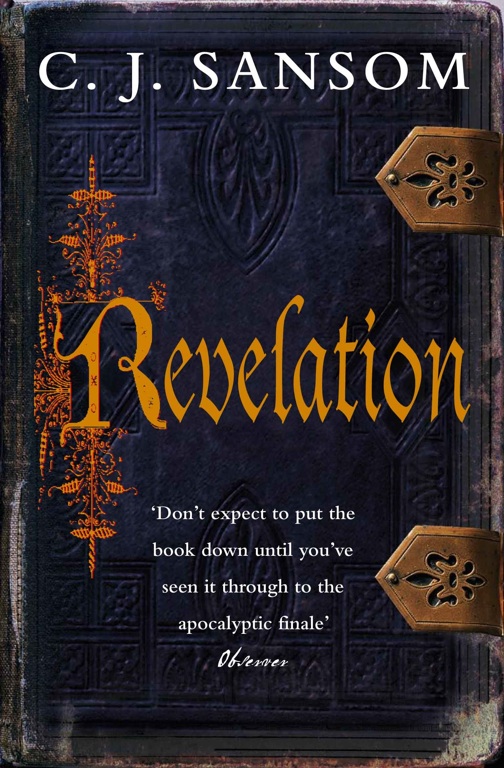
Revelation by C. J. Sansom
C. J. Sansom's lawyer, Matthew Shardlake, continues his tour with the authorities of his time in this novel by the author of Winter in Madrid and Sovereign. This time around, the author pits Matthew's keen mind against a serial killer. It's an interesting twist of how things can be worked in an different setting, and while most fantasy games have a lot of elements of magic to them, there are a few bits that might prove of use to someone attempting to run an adventure with murder mystery elements to it.
The first, is a wide cast of characters. Sansom isn't afraid to throw characters into the mix and then murder them off. I've heard it said before that GM's must be ready to murder their children. This is a truism that needs to be followed. While some of the characters you create may have some untold stories, keep those stories in mind and transfer them over and let the characters wonder what's going on as some of their favorites die off.
The next thing, is keep the plot moving. If the character run up against some walls or issues or, well, let's be honest, just stink at investigating, throw them a bone or two. Perhaps the villain isn't as clever as he though and leaves some evidence out to torture the players with just how smart he thinks he is? Perhaps someone the players have helped in the past has seen something and wishes to provide some assistance in compensation for the player's aid in the past?
Another factor to keep in mind, is bodies rot. In the novel, the villain leaves the windows open during winter so that the cold air will slow down the rot. In a game where blasts of ice might not be that hard to summon up, or even where magical means of completely destroying a body might be applicable, players may not discover murder has been done in a timely fashion or at all unless they use their own divination magics.
For the old school gamers, remember poisons are bad. In most old school games, if you fail a saving throw versus poison, you're dead. On the other hand, an interesting thing used here, is a poison that provide not death, but a pleasant feeling so that when the corpses are found, they seem to be in a state of bliss. Poisons and drugs can do more than kill, then can alter perception, alter reality, and without some type of anti-venom or cure-all, there isn't much that can be done outside of making a save and noting that the poison didn't enter the old blood stream.
Another aspect of the book that takes place is omens and con men. A few big fish wash up on shore from the Thames and people claim that they are Leviathan. Of course as soon as some religious significance is attached to the fish, the snake oil sellers are out selling various unguents, oils, and potions that they claim are made from the fish with various abilities to heal, cure, and do other things. Small incidents can help showcase the reality of the setting so to speak, and provide players with some interaction with the background that isn't necessarily of the violent nature. GMs feeling generous might even allow the players to make some knowledge or skill checks to see if any of the snake oil is real or might have properties that the seller's are unaware of. Its okay to let the players occasionally cheat a con man out of something he doesn't know he has.
For campaign seeds, it can be difficult to provide advice that means anything unless its specific to a campaign. For example, one of the characters here, Guy, is a doctor. He is reading a book that focuses on medicine in a whole new way. A manner that proves older books, books that have been used for decades if not longer, are false. While the same fervor is not attached to them as might be a religious text, old ideas can be hard to change. But if none of the people in the group are interested in medicine, its a moot point. It's a possible background element you might be able to introduce.
The same is true of false teeth. Here doctors are buying people's teeth for the creation of false teeth, apparently a fad that was popular in France during this time that made its way among the English. Little elements that provide a touch of, in this case, strangeness.
Having said all of that though, when you're running a game, it's not the same thing as reading a book at all. The players may simply be smarter then you or may get lucky. In a novel, the author can keep the audience and the hero guessing for quite a while. In a role playing game, the players may just stumble onto the main villain in the first act.
Go with it. Few things are more annoying than having the players do this as it's happened to me. It happens in written modules all the time. While I love the concept of the Witch Fire trilogy for the Iron Kingdoms Game, originally just for fantasy d20 in many ways, I don't think I ever saw a group have a hard time figuring out what was going on in the mystery portion of the game. Just run with it. Keep the rest of the stuff, characters, encounters, details, and other important bits, for another game or another sesson.
C. J. Sansom provides a wide cast of characters and events to keep the story going and someone looking for how an investigation might have happened during this darker days should pick up a copy of Revelation today.
The first, is a wide cast of characters. Sansom isn't afraid to throw characters into the mix and then murder them off. I've heard it said before that GM's must be ready to murder their children. This is a truism that needs to be followed. While some of the characters you create may have some untold stories, keep those stories in mind and transfer them over and let the characters wonder what's going on as some of their favorites die off.
The next thing, is keep the plot moving. If the character run up against some walls or issues or, well, let's be honest, just stink at investigating, throw them a bone or two. Perhaps the villain isn't as clever as he though and leaves some evidence out to torture the players with just how smart he thinks he is? Perhaps someone the players have helped in the past has seen something and wishes to provide some assistance in compensation for the player's aid in the past?
Another factor to keep in mind, is bodies rot. In the novel, the villain leaves the windows open during winter so that the cold air will slow down the rot. In a game where blasts of ice might not be that hard to summon up, or even where magical means of completely destroying a body might be applicable, players may not discover murder has been done in a timely fashion or at all unless they use their own divination magics.
For the old school gamers, remember poisons are bad. In most old school games, if you fail a saving throw versus poison, you're dead. On the other hand, an interesting thing used here, is a poison that provide not death, but a pleasant feeling so that when the corpses are found, they seem to be in a state of bliss. Poisons and drugs can do more than kill, then can alter perception, alter reality, and without some type of anti-venom or cure-all, there isn't much that can be done outside of making a save and noting that the poison didn't enter the old blood stream.
Another aspect of the book that takes place is omens and con men. A few big fish wash up on shore from the Thames and people claim that they are Leviathan. Of course as soon as some religious significance is attached to the fish, the snake oil sellers are out selling various unguents, oils, and potions that they claim are made from the fish with various abilities to heal, cure, and do other things. Small incidents can help showcase the reality of the setting so to speak, and provide players with some interaction with the background that isn't necessarily of the violent nature. GMs feeling generous might even allow the players to make some knowledge or skill checks to see if any of the snake oil is real or might have properties that the seller's are unaware of. Its okay to let the players occasionally cheat a con man out of something he doesn't know he has.
For campaign seeds, it can be difficult to provide advice that means anything unless its specific to a campaign. For example, one of the characters here, Guy, is a doctor. He is reading a book that focuses on medicine in a whole new way. A manner that proves older books, books that have been used for decades if not longer, are false. While the same fervor is not attached to them as might be a religious text, old ideas can be hard to change. But if none of the people in the group are interested in medicine, its a moot point. It's a possible background element you might be able to introduce.
The same is true of false teeth. Here doctors are buying people's teeth for the creation of false teeth, apparently a fad that was popular in France during this time that made its way among the English. Little elements that provide a touch of, in this case, strangeness.
Having said all of that though, when you're running a game, it's not the same thing as reading a book at all. The players may simply be smarter then you or may get lucky. In a novel, the author can keep the audience and the hero guessing for quite a while. In a role playing game, the players may just stumble onto the main villain in the first act.
Go with it. Few things are more annoying than having the players do this as it's happened to me. It happens in written modules all the time. While I love the concept of the Witch Fire trilogy for the Iron Kingdoms Game, originally just for fantasy d20 in many ways, I don't think I ever saw a group have a hard time figuring out what was going on in the mystery portion of the game. Just run with it. Keep the rest of the stuff, characters, encounters, details, and other important bits, for another game or another sesson.
C. J. Sansom provides a wide cast of characters and events to keep the story going and someone looking for how an investigation might have happened during this darker days should pick up a copy of Revelation today.
Labels:
C. J. Sansom,
Matthew Shardlake,
Mystery,
Omens,
Religion
Sunday, May 1, 2011
The Winter King by Bernard Cornwell
When many of the local Borders Bookstores closed, I managed to purchase many a book for low prices. Among those was The Winter King, recommended to me from a reader based off of another Bernard Cornwell book I had read.
The Winter King tells a far different tale of Arthur that I'm used to, much like the Hawk of May, but does so in a well written fashion, in first person, as a sort of historical account of Arthur. While many of the themes are present, the greatness of Arthur, how Arthur wishes for a kingdom where the normal people who live there are unafraid, it also brings in many differences, such as Mordred being the true heir to the kingdom Arthur is fighting for not due to his relationship with Arthur, but his relationship with Uther, who has disowned Arthur. There are other differences but I'll leave those to people who read the book.
Below I'll be pulling some quotes out of the novel so spoilers will follow. Any page references in this instance are from the trade paperback.
"I had once escaped from a druid's death-pit. All Owain's men, like soldiers everywhere, were mightily superstitious. Every omen was considered and debated; every many carried a hare's foot or a lightning stone; and every action was ritualized, so that no man would pull on a right boot before a left or sharpen a spear in his own shadow." pg. 126
Sounds silly in some ways, but it's still a part of many soldier's every day routines today. The need to ritualize things is the effort to control them. When making a warrior, a character that relies on martial power or is otherwise expected to be in the thick of it, how does he try to control his destiny? Does he have a lucky talisman that he rubs? Does he have a certain gesture he makes before combat?
"We have a change- Arthur leaned on the high rampart as he spoke- to make a Dumnonia in which we can serve our people. We can't give them happiness, and I don't know how to guarantee a good harvest that will make them rich, but I do know that we can make them safe, and a safe man, a man who knows that his children will grow without being taken for slaves and his daughter's bride price won't be ruined by a soldier's rape, is a man more likely to be happy than a man living under the threat of war." pg. 144
When it comes to character motivation, sometimes warriors are easy to do. After all, the lure of battle itself should be enough to stir the blood! In Dragonball Z, the entire series is essentially a one up fight. However, after many volumes and episodes, even Vegita is like, "Uh, yeah, you're stronger, let's move on. I'm going home to be with my Earthling wife."
So what comes next? Many people believe in a better world. Many people would like to live in a better world. But the worldly warrior? He's willing to fight and kill for that better world, even when he doesn't want to. Even when he regrets the loss of life. He has a cause and a purpose that is more than his own life, it is the betterment of his people.
"There was no news of Merlin." pg. 164
Through most of the first half of the book, Merlin is a known, but missing entity. His presence or lack of it, is a powerful thing with its own omens and meanings. The desire to know where Merlin is propels much internal character motivation.
In a game, while this could easily be applied to any high powered spellcaster, such as a druid, wizard, or cleric, because after all, each of these entities at higher levels is a potential campaign changer, it could just as easily be applied to a dragon. "None know for certain where the golden scaled dragon Anbrosis is but he has been missing for three years so far... your mission is to hunt down his whereabouts and see if he still supports the Jade Throne or if his support has gone another way."
...he who initiated me into Mithras's service. Mithras was a God the Romans had brought to Britain and He must have liked our climate for He still has power. He is a solders' God and no women can be initiated into His mysteries." pg. 193
... I dressed and then was given the secret words of the cult that would allow me to identify my comrades in battle. If I found I was fighting a fellow Mithraist I was enjoined to kill him swiftly, with mercy, and if such a man became my prisoner I was to do him honour." pg. 194
Being a warrior, or rogue, does not necessarily mean cleaving only to the metal that one wields or the allies one has. In the 'dark times' that most fantasy campaigns take place in, especially in those with clerics who are actual spellcasters, the lure of the gods is strong and most warriors will at least follow a patron deity, if not worship the whole pantheon depending on the circumstances.
In addition to swearing by such deities, these cults often have their own little codes of conduct, as given example by the two requirements here when fighting fellow cultist.
My men had all stayed on the mainland and I wished I had brought them to see the wonders of the city: the carved gates; the steep stone stairs that plunged up and down the granite island between the temples and shops; the balconies houses decorated with urns of flowers; the statues; and the springs that poured clean fresh water into carved marble troughs where anyone could dip a pail or stoop to drink. pg. 215
Making cities distinctive from each other can be difficult. It can be even made easier though, if you know the short term plans for a city. It's easy to make a city, like Myth Drannor, into a thing of wonder, if you know its going to fall. So would go Ynys Trebes and so its grandeur is expanded upon and seen from a fresh set of eyes, perhaps made more magnificent than it would be to those who already lived there.
"In this small place, my dear fellow, is stored the wisdom of our world, gathered from its ruins and held in trust." pg. 219
"I'm saying the fight is lost, but yes, you're oath-bound by Arthur to fight, and every moment that Ynys Trebes lives is a moment of light in a dark world. I'm trying to persuade Father to send his library to Britain, but I think he'd rather cut his own heart out first." pg. 224
Most fantasy settings try to paint a setting where literacy is not taken for granted and knowledge is rare, but most fantasy settings tend to fail at that by making literacy rates higher than some countries have today. The arts of magic, seen in many mage schools, are also places of learning and hold vast stores of knowledge. But if you can portray to the group how rare something actually is, then its perceived value goes up dramatically. Its unique nature becomes easier to place.
"...when god made man He gave us a paradise in which to live, and it occurs to me that we have been losing that paradise, inch by inch, ever since. and soon, I think, it will be gone. Darkness descends.' He went silent for a while then sat up as his thoughts gave him a new energy. 'Just think of it,' he said, 'not a hundred years ago this land was peaceful. Men built great houses. We can't build like they did. I know Father has made a fine palace, but it's just broken pieces of old palaces cobbled together and patched with stone. We can't build like the Romans. We can't build as high, or as beautifully. We can't make roads, we can't make canals, we can't make aqueducts."... 'The Romans built whole cities...'places so vast... it would take a whole morning to walk from one side of the city to the other and all of your footsteps would fall on trimmed, dressed stone." pg. 227
What if the world really is ending? What if the world that the characters have come to inhabit, from the start, from the get go, is like the of the Dying Sun? That there are still miracles and still individuals of note, but as a society, or even as a species, that the bright star has passed and regardless of what happens on the morrow, or what treasures are reclaimed or what monsters slain, that it's all just a flickering torch holding back the darkness?
"I kill, I lust, I envy.' He was truly miserable, but then Galahad like Arthur, was a man who was for ever judging his own soul and finding it wanting and I never met such a man who was happy for long. pg. 228
Internal character conflict can be a powerful thing. Some games build elements within the game to stimulate this. Others rely on the GM and players hashing it out through actual game play. When characters are conflicted, they can be tempted. This doesn't necessarily have to be a monetary temptation, nor one of conquest, but rather, something that appeals to an inner need that may take the character out of the orbit of the rest of the party. A mage who searched for ultimate power who finds it probably isn't going to be travelling with the party for long. After all, he's got ultimate power, why would he travel with the party at this point? To do so, he would need to drop his ultimate power. What's a mage to do?
"take a bath... Stop staring at me...." these phrases come up a few times when other characters are talking about the narrator. They are catch phrases so to speak and while they are spoken to the character, and not by the character, such as more classic battle cries, it's an interesting way to describe characters. For example, if there is a wizard, perhaps every time he visit a guild, they give him a pointy hat or every time he visits his mother she fixes him a certain dish that everyone anticipates.
Even you, Derfel Cadarn, do not need more enemies," Guinevere replied just as coldly, so I knew she would become my enemy if I blocked Lancelot's desires." pg. 281.
Character conflict in traditional Dungeons and Dragons often takes form through characters crawling through dungeons, killing things and taking their stuff.
But what if the character can't attack his foe directly? What if his foe is friends of the character's friends and to actually make that attack, even if not successful, winds up costing that character's allies?
"I hear you were in Ynys Trebes? pg. 315
Some battles and events are so large or epic or known, that just having been in one and surviving or having tales of it, will long shadow a character. Have the characters fought a siege? Have they lost a city to giants? Have they burned down a town that refused them tribute?
I was in Benoic. Agricola was right to hope that Merlin would come for an army without Druids was giving away an advantage to its enemy. pg. 338
One of the things that can be impossible to really work into the standard game settings that Dungeons and Dragons takes place in, is how magic would effect the setting. That line above though tends to work out a lot of it. Magic, or other unique entities or abilities, provide advantage against those who don't have them.
Galahad shook his head. 'He knows Arthur's an honest man.' he allowed, 'but Arthur's also an adventurer. he's landless, have you ever thought of that? He defends a reputation, not property. He holds the rank because of Mordred's age, not through his own birth. For Arthur to succeed he must be bolder than other men, but Tewdric doesn't want boldness right now. he wants security. He'll accept Gorfyddyd's offer.' He was silent for a while. 'Maybe our fate is to be wandering warriors,' he continued gloomily, 'deprived of land, and always being driven back towards the Western Sea by new enemies." pg. 370
One of the things that was fairly inherent in earlier editions of Dungeons and Dragons, was that characters could claim land, gather followers, and build legacies. 3rd and 4th edition moved so far away from this, that the real answer as to what 30th level character do hasn't really been answered, despite a few feeble attempts by WoTC in Scales of War and well, few if not other epic adventurers.
Previous editions didn't need 'epic' adventurers because there was already another type of end game build into it. Sure, if you wanted to keep fighting more and more powerful entities, it was possible. It was even easier to mix different power levels around because magic items and spells weren't quite so carefully balanced in the mix and lower level characters might have some fantastic magic items that they would NEVER have in standard 3rd and 4th edition games.
When thinking about higher level characters, think about how others see them. What do such characters do with their power and ability when they have no land or people to be loyal to?
The Winter King is a solid read if you're looking for dark ages action that is grimmer and more brutal than you can find in even the harshest D&D ficton line. Its characters have flaws but are often worth rooting for.
The Winter King tells a far different tale of Arthur that I'm used to, much like the Hawk of May, but does so in a well written fashion, in first person, as a sort of historical account of Arthur. While many of the themes are present, the greatness of Arthur, how Arthur wishes for a kingdom where the normal people who live there are unafraid, it also brings in many differences, such as Mordred being the true heir to the kingdom Arthur is fighting for not due to his relationship with Arthur, but his relationship with Uther, who has disowned Arthur. There are other differences but I'll leave those to people who read the book.
Below I'll be pulling some quotes out of the novel so spoilers will follow. Any page references in this instance are from the trade paperback.
"I had once escaped from a druid's death-pit. All Owain's men, like soldiers everywhere, were mightily superstitious. Every omen was considered and debated; every many carried a hare's foot or a lightning stone; and every action was ritualized, so that no man would pull on a right boot before a left or sharpen a spear in his own shadow." pg. 126
Sounds silly in some ways, but it's still a part of many soldier's every day routines today. The need to ritualize things is the effort to control them. When making a warrior, a character that relies on martial power or is otherwise expected to be in the thick of it, how does he try to control his destiny? Does he have a lucky talisman that he rubs? Does he have a certain gesture he makes before combat?
"We have a change- Arthur leaned on the high rampart as he spoke- to make a Dumnonia in which we can serve our people. We can't give them happiness, and I don't know how to guarantee a good harvest that will make them rich, but I do know that we can make them safe, and a safe man, a man who knows that his children will grow without being taken for slaves and his daughter's bride price won't be ruined by a soldier's rape, is a man more likely to be happy than a man living under the threat of war." pg. 144
When it comes to character motivation, sometimes warriors are easy to do. After all, the lure of battle itself should be enough to stir the blood! In Dragonball Z, the entire series is essentially a one up fight. However, after many volumes and episodes, even Vegita is like, "Uh, yeah, you're stronger, let's move on. I'm going home to be with my Earthling wife."
So what comes next? Many people believe in a better world. Many people would like to live in a better world. But the worldly warrior? He's willing to fight and kill for that better world, even when he doesn't want to. Even when he regrets the loss of life. He has a cause and a purpose that is more than his own life, it is the betterment of his people.
"There was no news of Merlin." pg. 164
Through most of the first half of the book, Merlin is a known, but missing entity. His presence or lack of it, is a powerful thing with its own omens and meanings. The desire to know where Merlin is propels much internal character motivation.
In a game, while this could easily be applied to any high powered spellcaster, such as a druid, wizard, or cleric, because after all, each of these entities at higher levels is a potential campaign changer, it could just as easily be applied to a dragon. "None know for certain where the golden scaled dragon Anbrosis is but he has been missing for three years so far... your mission is to hunt down his whereabouts and see if he still supports the Jade Throne or if his support has gone another way."
...he who initiated me into Mithras's service. Mithras was a God the Romans had brought to Britain and He must have liked our climate for He still has power. He is a solders' God and no women can be initiated into His mysteries." pg. 193
... I dressed and then was given the secret words of the cult that would allow me to identify my comrades in battle. If I found I was fighting a fellow Mithraist I was enjoined to kill him swiftly, with mercy, and if such a man became my prisoner I was to do him honour." pg. 194
Being a warrior, or rogue, does not necessarily mean cleaving only to the metal that one wields or the allies one has. In the 'dark times' that most fantasy campaigns take place in, especially in those with clerics who are actual spellcasters, the lure of the gods is strong and most warriors will at least follow a patron deity, if not worship the whole pantheon depending on the circumstances.
In addition to swearing by such deities, these cults often have their own little codes of conduct, as given example by the two requirements here when fighting fellow cultist.
My men had all stayed on the mainland and I wished I had brought them to see the wonders of the city: the carved gates; the steep stone stairs that plunged up and down the granite island between the temples and shops; the balconies houses decorated with urns of flowers; the statues; and the springs that poured clean fresh water into carved marble troughs where anyone could dip a pail or stoop to drink. pg. 215
Making cities distinctive from each other can be difficult. It can be even made easier though, if you know the short term plans for a city. It's easy to make a city, like Myth Drannor, into a thing of wonder, if you know its going to fall. So would go Ynys Trebes and so its grandeur is expanded upon and seen from a fresh set of eyes, perhaps made more magnificent than it would be to those who already lived there.
"In this small place, my dear fellow, is stored the wisdom of our world, gathered from its ruins and held in trust." pg. 219
"I'm saying the fight is lost, but yes, you're oath-bound by Arthur to fight, and every moment that Ynys Trebes lives is a moment of light in a dark world. I'm trying to persuade Father to send his library to Britain, but I think he'd rather cut his own heart out first." pg. 224
Most fantasy settings try to paint a setting where literacy is not taken for granted and knowledge is rare, but most fantasy settings tend to fail at that by making literacy rates higher than some countries have today. The arts of magic, seen in many mage schools, are also places of learning and hold vast stores of knowledge. But if you can portray to the group how rare something actually is, then its perceived value goes up dramatically. Its unique nature becomes easier to place.
"...when god made man He gave us a paradise in which to live, and it occurs to me that we have been losing that paradise, inch by inch, ever since. and soon, I think, it will be gone. Darkness descends.' He went silent for a while then sat up as his thoughts gave him a new energy. 'Just think of it,' he said, 'not a hundred years ago this land was peaceful. Men built great houses. We can't build like they did. I know Father has made a fine palace, but it's just broken pieces of old palaces cobbled together and patched with stone. We can't build like the Romans. We can't build as high, or as beautifully. We can't make roads, we can't make canals, we can't make aqueducts."... 'The Romans built whole cities...'places so vast... it would take a whole morning to walk from one side of the city to the other and all of your footsteps would fall on trimmed, dressed stone." pg. 227
What if the world really is ending? What if the world that the characters have come to inhabit, from the start, from the get go, is like the of the Dying Sun? That there are still miracles and still individuals of note, but as a society, or even as a species, that the bright star has passed and regardless of what happens on the morrow, or what treasures are reclaimed or what monsters slain, that it's all just a flickering torch holding back the darkness?
"I kill, I lust, I envy.' He was truly miserable, but then Galahad like Arthur, was a man who was for ever judging his own soul and finding it wanting and I never met such a man who was happy for long. pg. 228
Internal character conflict can be a powerful thing. Some games build elements within the game to stimulate this. Others rely on the GM and players hashing it out through actual game play. When characters are conflicted, they can be tempted. This doesn't necessarily have to be a monetary temptation, nor one of conquest, but rather, something that appeals to an inner need that may take the character out of the orbit of the rest of the party. A mage who searched for ultimate power who finds it probably isn't going to be travelling with the party for long. After all, he's got ultimate power, why would he travel with the party at this point? To do so, he would need to drop his ultimate power. What's a mage to do?
"take a bath... Stop staring at me...." these phrases come up a few times when other characters are talking about the narrator. They are catch phrases so to speak and while they are spoken to the character, and not by the character, such as more classic battle cries, it's an interesting way to describe characters. For example, if there is a wizard, perhaps every time he visit a guild, they give him a pointy hat or every time he visits his mother she fixes him a certain dish that everyone anticipates.
Even you, Derfel Cadarn, do not need more enemies," Guinevere replied just as coldly, so I knew she would become my enemy if I blocked Lancelot's desires." pg. 281.
Character conflict in traditional Dungeons and Dragons often takes form through characters crawling through dungeons, killing things and taking their stuff.
But what if the character can't attack his foe directly? What if his foe is friends of the character's friends and to actually make that attack, even if not successful, winds up costing that character's allies?
"I hear you were in Ynys Trebes? pg. 315
Some battles and events are so large or epic or known, that just having been in one and surviving or having tales of it, will long shadow a character. Have the characters fought a siege? Have they lost a city to giants? Have they burned down a town that refused them tribute?
I was in Benoic. Agricola was right to hope that Merlin would come for an army without Druids was giving away an advantage to its enemy. pg. 338
One of the things that can be impossible to really work into the standard game settings that Dungeons and Dragons takes place in, is how magic would effect the setting. That line above though tends to work out a lot of it. Magic, or other unique entities or abilities, provide advantage against those who don't have them.
Galahad shook his head. 'He knows Arthur's an honest man.' he allowed, 'but Arthur's also an adventurer. he's landless, have you ever thought of that? He defends a reputation, not property. He holds the rank because of Mordred's age, not through his own birth. For Arthur to succeed he must be bolder than other men, but Tewdric doesn't want boldness right now. he wants security. He'll accept Gorfyddyd's offer.' He was silent for a while. 'Maybe our fate is to be wandering warriors,' he continued gloomily, 'deprived of land, and always being driven back towards the Western Sea by new enemies." pg. 370
One of the things that was fairly inherent in earlier editions of Dungeons and Dragons, was that characters could claim land, gather followers, and build legacies. 3rd and 4th edition moved so far away from this, that the real answer as to what 30th level character do hasn't really been answered, despite a few feeble attempts by WoTC in Scales of War and well, few if not other epic adventurers.
Previous editions didn't need 'epic' adventurers because there was already another type of end game build into it. Sure, if you wanted to keep fighting more and more powerful entities, it was possible. It was even easier to mix different power levels around because magic items and spells weren't quite so carefully balanced in the mix and lower level characters might have some fantastic magic items that they would NEVER have in standard 3rd and 4th edition games.
When thinking about higher level characters, think about how others see them. What do such characters do with their power and ability when they have no land or people to be loyal to?
The Winter King is a solid read if you're looking for dark ages action that is grimmer and more brutal than you can find in even the harshest D&D ficton line. Its characters have flaws but are often worth rooting for.
Subscribe to:
Posts (Atom)