Below I'll be pulling some quotes out of the Religion and talking about how they make me think about various bits in a campaign from the GM side of things. If you're looking to avoid spoilers, read no further.
Location:
"If Sicily as a whole was uncongenial to those of nonconformist temper, Messina, which through millennial had known conquerors by the dozen, was open to foreigners, rogues, and entrepreneurs of every stripe. It was an independent republic, as populous as Rome, and paid the latest- Spanish- invaders presently stripping the island to the bone as little mind as it had paid the Romans, the Arabs, the Normans, and all the rest. It was turbulent and rich, and with the sanctuary of Calabria only two miles across the straits, it harbored the lawless high and low in enormous numbers. The governor looted more for the Spanish Crown in a single year than the rest of the island yielded up in five. on the Church's part, the Holy Inquisition formed a veritable legion of kidnappers, killers, and thieves, and numbered in its ranks knights, barons, merchants, artisans, criminals of every kind, and it went without saying, the bulk of the civil police force. As a place for a man such as Tannhauser to make his fortune, it had no equal." (pg. 51)
Now Tim Willocks didn't have to go into this description. After all,most of the story here doesn't actualy take place on Messina, but rather, on Malta. But he does. The above description showcases the attitude, the nature, the essence of the location where Tannhauser starts.
By providing these quick insights into the nature of the setting, the players will get a taste for it. Now if the GM doesn't follow up on these descriptions with actual events or locations or personalities that fit it, or deliberately don't fit it, then it's a stroke. However, if you're with long term players and their characters are well seasoned, you can save a lot of time and description by telling them that their current location is like X. But if you say its like X and it turns out it's nothing like X? Yeah, the player trust in your ability to describe things honestly is going to suffer there.
Nemesis
Ludovico Ludovici is introduced fairly early in the book as a man who Tannhauser owes a personal grudge to. Ludovico's nature as an agent of the Church, an inquisitor for the church, provides him some social protection.
His ties to Carla, Tannhauser's patron, provide him with more links to Tannhauser. His relationship to Carl's son, provides still more links to Tannhauser.
While Tannhauser is on Malta, and he fights a huge number of foes, and prior to that even engages in combat with Ludovico's hirelings, there is a world of difference between an standard, generic, faceless foe man, and one that the player's character has some direct tie to.
In this case, the author manages to provide Ludovico with layers of protection through a few clever plot shields. The first is social. By being a high ranking member of an organization that wields much power, were Mattias to attack him in the open, even were he to be victorious, there would be consequences that might haunt him for the rest of his days.
The second shield is the henchmen. By having Ludovico have his own hired killers seeking out Tannhauser in the dark and trying to be clever and stealthy about it themselves, it opens the door for conflict with them, but not out in the open, and not against the foe that Mattias wishes to kill.
The third shield is timing. Ludovico arrives at Malta and quickly makes a name for himself and proves himself to the religious fanatics of the island with his own piousness and sword skill.
A good nemesis should have relation to the character through some manner. The nemesis should reflect something of the character either in exaggerated features of it or through being its opposite. For example, in Marvel Comics, Reed Richards is a brilliant scientists as is Dr. Doom. But Doom goes far beyond Reed in terms of his levels of mastery in various fields such as alchemy or sorcerery. Lex Luthor is merely a human, yet he is one of Superman's greatest foes.
Risk and Consequences
Sabato looked at Tannhauser. his eyes were haunted. "I've never lost everything before."
"The Oracle?" said Tannhauser. "They've but broken a chain around our ankle." (pg. 116)
I'm not the oldest player nor have I played the earliest editions of Dungeons and Dragons. However, playing since 1st edition and various basic (expert, companion, master, immortal!) sets and editions, in previous editions, there were many opportunities to gain castles and other property. Sometimes this could bog down a game. Sometimes the micromanagement of running these side businesses would take precedence over actual dungeon crawling. Madness!
For those games that focus on the crawl, that focus on exploration, that focus on the adventure aspect as opposed to the other potential bits in the game, it might prove necessary to move the party forward every now and again with some harsh prodding. the trick is to insure that there are boundless opportunities for whatever you're pushing them towards.
In this case, Tannhauser and his friends will have opportunity to make vast riches on the island selling various things ranging from Opium and foodstuffs, to engaging in the dark rituals of combat that Bors wanted to do in the first place. This doesn't count that Tannhauser is being hired by Carla to leave the Oracle in the first place and go to Malta. Even better, as the following line illustrates;
"Most of our coin and credit is lodged in Venice. When we join it, we'll be well beyond the reach of the Spanish Crown."
So even though there has been a loss, the characters have not been so well and truly set back that they not only can't recover from it, but have immediate opportunities to do so.
In terms of mood and theme, Tim does a solid job of bringing another attitude to life. It's one where life is cheap and the reality of the situation is generally taken with a nod by those in it. It's nothing to kill a man and then eat a heaping dinner and burn your possessions to the ground on the road to the next adventure for these men. Keep the adventure high and keep the campaign moving forward.
Showing posts with label Tim Willocks. Show all posts
Showing posts with label Tim Willocks. Show all posts
Saturday, February 12, 2011


Friday, February 11, 2011
The Religion: The Player Side of Things
Below I'll be taking a few points that happen early in the book and discussing how it might be useful from the player's point of view. This will include some spoilers so if you're looking to avoid such details, read no further.
"Bors," he said, "you're my oldest and most steadfast companion. But we three contracted to become rich men together and such we are becoming and so we have done. Whether we rise or fall, it's battle of a different sort we're engaged in now. Remember the motto you coined for us, Usque ad finem. Until the End. Until the very end."
When the party is first being generated, there may be some concerns or issues with the variety of materials that are allowed in the campaign and the inherent opposing natures of some of the classes. If the players can agree to work with each other, then regardless of their core believes and alignments, outside of actual restrictions in game, such as older editions where paladin's couldn't associated with known evil individuals, then the game should be able to proceed with few difficulties.
The real meat of the above quote is that despite their different backgrounds, Bors, Tannhauser, and Sabato, are associates, allies, and more; to the end. Players need to realize, at the start of the campaign, that acting in character is one thing, but causing so much distruption with other players that it effects the game itself? That behavior, in my opinion, needs to be booted out.
I'm not saying all of the characters have to love each other. After all, Bors and Sabato are not 'friendly despite their alliance to one another. Verbal sparring and one upping another against their foes should be the pick of the day.
In terms of character motivation, sometimes when making a character, the motivation comes through deeds. Most fantasy role playing games are set in a time when if one has the will and ambition, the world is literally theirs for the taking. In such a world, just getting by, or even doing well in your own business, might not be the standard or enough.
"They will harrow Hell on that island- and you and I are not among them to test our mettle." He clenched a barrel-shaped fist in anguish. "It's a violation of the natural order."
Here, Bors, a man whose blunt actions and thirst for violence are crouched behind the Church and the desire to test himself, sound like it comes straight out of Dragonball Z or some other anime show where the very act of testing your strength against a worthy opponent is the point of conflict in the first place.
This isn't that strange though. Think of wandering ronin who would demand to test their blades against other wanderining samurai. Think of the fame or notority to be gained by testing your own skills against anothers. Think of putting those skills to use for the greater good of a larger body then yourself such as a church, a guild, or in the case of Bors, his comrades.
By having motivations that the Game Master can understand at the ready, the players help the Game Master not only get an idea of what makes the characters tick, but how to add those opportunities to the game itself.
The Religion has many a fine character moment and players looking for ideas to inspire them could do far worse then reading through it.
"Bors," he said, "you're my oldest and most steadfast companion. But we three contracted to become rich men together and such we are becoming and so we have done. Whether we rise or fall, it's battle of a different sort we're engaged in now. Remember the motto you coined for us, Usque ad finem. Until the End. Until the very end."
When the party is first being generated, there may be some concerns or issues with the variety of materials that are allowed in the campaign and the inherent opposing natures of some of the classes. If the players can agree to work with each other, then regardless of their core believes and alignments, outside of actual restrictions in game, such as older editions where paladin's couldn't associated with known evil individuals, then the game should be able to proceed with few difficulties.
The real meat of the above quote is that despite their different backgrounds, Bors, Tannhauser, and Sabato, are associates, allies, and more; to the end. Players need to realize, at the start of the campaign, that acting in character is one thing, but causing so much distruption with other players that it effects the game itself? That behavior, in my opinion, needs to be booted out.
I'm not saying all of the characters have to love each other. After all, Bors and Sabato are not 'friendly despite their alliance to one another. Verbal sparring and one upping another against their foes should be the pick of the day.
In terms of character motivation, sometimes when making a character, the motivation comes through deeds. Most fantasy role playing games are set in a time when if one has the will and ambition, the world is literally theirs for the taking. In such a world, just getting by, or even doing well in your own business, might not be the standard or enough.
"They will harrow Hell on that island- and you and I are not among them to test our mettle." He clenched a barrel-shaped fist in anguish. "It's a violation of the natural order."
Here, Bors, a man whose blunt actions and thirst for violence are crouched behind the Church and the desire to test himself, sound like it comes straight out of Dragonball Z or some other anime show where the very act of testing your strength against a worthy opponent is the point of conflict in the first place.
This isn't that strange though. Think of wandering ronin who would demand to test their blades against other wanderining samurai. Think of the fame or notority to be gained by testing your own skills against anothers. Think of putting those skills to use for the greater good of a larger body then yourself such as a church, a guild, or in the case of Bors, his comrades.
By having motivations that the Game Master can understand at the ready, the players help the Game Master not only get an idea of what makes the characters tick, but how to add those opportunities to the game itself.
The Religion has many a fine character moment and players looking for ideas to inspire them could do far worse then reading through it.
Wednesday, February 9, 2011
The Religion by Tim Willocks
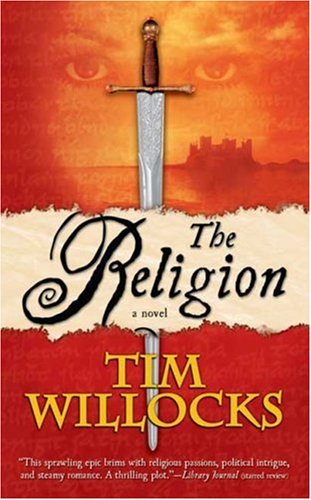
Another novel recommended to me by fellow online players and readers of historical fiction, The Religion is a powerful novel that has a lot of elements going for it that would not only make a fantastic movie, but provide a ton of fodder for a role playing game.
Looking at the very begining for instance, in which young Mattias life is changed forever but has some historical basis.
"Thus, in the year of 1540, Mattias the blacksmith's son became a devshirme: a Christian boy gathered in the Gathering and drafted for the Slaves of the Gate."
The young man in turn becomes a janissary, one of the elite soldiers. In and of themselves these might be minor things, but the weaving of the historical with the fiction with fine action sequences brings the book to life in its own way and provides a lot of depth that many settings are lacking.
On the other hand, the book doesn't focus extensively on this period of the main character's life. While those introduced here will play roles again, it doesn't go through each and every year that he endured his initial training. When next we see him, he's a grown man with his own allies and enemies.
In its own way, this is espoused by many. Let the character develop through game play. In some instances I've seen, it's more like the novel here in that there are things hinted at in his background that eventually come to light in the book, but they are not needed at the start of the book and indeed, a new character may have a germ of an idea for his background, but unless it's going to directly effect how the campaign runs, don't be afraid to hold back some of the rare gems of events that happened prior to play and see if the GM can work them into the campaign.
Tim Willock's book is one with a lot of elements going for it and I'll be hitting it with a few more footnotes for at least a few more entries.
Subscribe to:
Posts (Atom)


