Showing posts with label Fantasy. Show all posts

Monday, August 21, 2017

The Golden Naginata (The Tomoe Gozen Saga Book 2)


The Golden Naginata 
The Tomoe Gozen Saga Book 2)
Published by Open Road Media Sci-Fi & Fantasy
Written by Jessica Amanda Salmonson
Fantasy/Samurai Genre

When Amazon had their 'prime day', I went in on the Kindle Unlimited. I've been unimpressed by the navigation tools that Amazon offers to get the most bang for your buck with that subscription service. Having said that, I did discover an old series, The Tomoe Gozen Saga, where all three books were available in the Kindle Unlimited Library.

The second book, like the first, uses a new cover. Again, I'm a fan of the old school cover:

The writing is better than the first volume, but Jessica still does a lot of telling instead of showing, or telling and then showing. For example think, "Tomoe had a bad dream" and then the explanation of the bad dream itself. Tomoe continues to be a powerhouse with few rivals. She travels not only in the mortal world but into the depths of Hell itself. Her fighting skills and stances on various subjects are often brought directly into conflict with her samurai training.

The book includes numerous illustrations which are handy if you're unfamiliar with the genre or the topic. These are small black and white images that occur at certain points in the text.

Tomoe is not a fan of marriage. Even though for many, marriage isn't something done for love, Tomoe has more concern with it affecting her ability to enter the battlefield. She resists so much that her relationship with her family becomes strained and it's not until someone else points out the dishonor she's bringing herself and the family that she relents into marriage.

Like the previous book, indeed, like many older books, this is a collection of linked short stories that taken together tells Tomoe's tale. Her search for the Golden Naginata itself is to help her in Hell. She needs a weapon of this heavenly quality to ensure her ability to fight against those who dwell in Hell. The author doesn't just give Tomoe an automatic win either.She has to quest to get it, can only use it for so long, and has to battle a heavenly 'good' creature, a Ki-Rin, in order to claim it. Along the way, she has other adventures and encounters including running into a younger version of herself.

This sets up an interesting dissonance. Tomoe is willing to forgo much in order to continue her adventuring but she is reluctant to engage in a duel with her younger counterpart because Tomoe is reminded of herself. In some ways, it dishonors herself as Tomoe would not have tolerated such a behavior.

Another interesting theme is that despite her swordskill, Tomoe is not very sociable and indeed, even when her sword skills are unmatched, she often winds up failing at things.

My favorite of the adventurers is Tomoe meeting several other 'rogue' adventurers like herself through a hungry ghost that seeks to avenge the death of his family. This ghost is able to reach out to Tomoe and the others because of the sword she yields. The others all also yield blades by this smith. It's a nice change of pace in how the characters meet and why they meet.

In terms of opposition, Tomoe encounters enough mortal enemies to make her the rival of any warlord, but she also battles in Hell against oni, she even meets Emma and his kinder side which tries to help the children trapped in Hell. Jessica also throws some different lore into the mix as Tomoe angers the Namazu or Giant Catfish under Jessica's version of Japan.

Few figures get a 'clean' pass. We have people worshipping deities, people following Buddism, people following Shinto, people having little to no actual religion. It's all mixed in together in a strange mesh as all of them have a hand in the reality that Tomoe finds herself living in.

Another one of my favorite bits? Tomoe fighting a Tengu. It's not that the Tengu is such a frightening match for Tomoe, but rather the humor the author uses. Tomoe clips the Tengu's wings and it falls into a  vat of blue dye and the Tengu remains blue throughout the rest of the tale. The Tengu seeks to have its young nephews play pranks and test Tomoe's patience, but Tomoe manages to convince the youngsters to instead torment their uncle since the older Tengu can't fly after them to punish them. Children being children, they are delighted with the idea.

Jessica avoids the use of 'good' and 'evil' as signposts for Tomoe and her culture. Instead, we have traits like pride, ambition, and hope. Ambition, especially in this era and time, are high on the list and Tomoe rises and falls based not only on her own abilities but with those she's allied with so that the greater events surrounding her pitch her about like a cork on the open sea. 

Despite having the Golden Naginata, Tomoe's final fate in the book is downcast and things are looking grim. Hopefully, the Thousand Shrine Warrior brings Tomoe back to a place where her swordskills shine enough that her dour personality can take a backseat again.

If you're a fan of fantasy elements in your Samurai, The Golden Naginata, despite some uneven writing and a change of cover, is a great place to start. If you're a Kindle Unlimited member, it's even free to read.


Tuesday, July 4, 2017

Devlin's Luck by Patricia Bray


Devlin's Luck
The Sword of Change: Book 1
Written by Patricia Bray
Published by Spectra
434 pages
$7.99 Kindle
$7.99 Paperback

A great thing about having a Half-Price Books close by is their random and changing selection of $1 books. It's a lot easier to take a chance on an author you've never heard of when you're only out $1. Same is true of the old Kindle books when they hit the various sweet spots on sale.

Devlin's Luck is a solid fantasy book for someone just starting the genre. It uses a small cast, small kingdom, and easy missions to get the reader involved. If you're looking for 'popcorn' reading, Devlin's Luck has you covered.

At the end, the book looks to expand in size and complexity allowing the setting and scope to grow with the series.

Devlin's Luck is a perfect 4th edition Dungeons and Dragons book in many ways. The 4th edition D&D default setting was a points of light setting. A generic kingdom where things used to be better and the world was more dangerous than it should be. Devlin's Luck takes place in 'The once mighty kingdom of Jorsk is in decline, its borders beset by enemies, both worldly and otherworldly. The king has retreated to the capital, abandoning the far-flung provinces."

That's not only a 'points of light' setting, it's a fairly standard low-level setting in most instances. There are things that need to be taken care of and the heroes are the ones to do it!

The hero of the story, Devlin Stonehand, is a former farmer and metalsmith from a rugged frontier part of Jorsk, recently conquered by the superior militia of Jorsk. He's come to the capital city to become 'the Chosen One', an old institution where a champion fights for the people of the country. It's been so dangerous lately that the kingdom pays the new Chosen One and binds them with magic to only work for the safety of the kingdom.

In the 2nd edition Dungeons and Dragons, the idea of the Chosen One would have worked as a 'kit'. The profession initially doesn't seem to have a lot of character enhancing powers but does have a lot of social responsibility to it and does have a lot of social perks that go with it. The kits in 2nd edition were notorious for trying to use social issues in place of game balance.

For a small setting, the book throws the deities names out immediately. Part of being the Chosen is picking a patron deity. 4th edition Dungeons and Dragons introduced new deities in part by stealing them from other settings and by adding new ones like the Raven Queen.

Here we get:

Haakron, the Lord of Death.

Lady Geyra: Healers

Lady Sonja: The War Goddess.

Lady Tea: Mother Goddess. Patroness of those who worked the land.

Kanjti: The God of luck. A God with no temples or priests. Some called him the bastard god, the only one of the seven whose origin was a subject for hot debate. A god with no family. (pg 21-22)

Heavenly Pair: Father Teo and Mother Tea.

Another thing that Patricia Bray does, is not shy away from languages. Even though the setting is small, there are a variety of languages spoken by the people including older languages like High Jorsk. Even today in countries like China that are 'one country', there are multiple languages spoken. Never underestimate the value of languages in creating the setting that you're running.

Adventure Seeds:

One of the things I enjoyed about Devlin's Luck is it doesn't pretend that it's trying to rewrite and rework the fantasy genre or some of the simple things that can be done with it.

"There are reports of a band of marauders living in Astavard forest, who prey on travelers along the King's old highway." (pg 77)

"There was no invading army, no great battle in their future. Instead the Kingdom was dying for a thousand tiny pinpricks." (pg. 90).

Another example of how a potentially long campaign can be designed. It allows the players to pick and chose what incidents and events they will investigate and so move the campaign in a direction of their choosing.

How much more classic than bandit attack can you get?

Character Actions

If you want the players to be engaged with the setting, both in the dungeon and out, make sure that others are paying attention to what they do for both good and ill.

"His self-discipline was contagious, and she noticed that her own guards trained all the harder for his example." (pg. 249)

"As he tried to read t he mage's expression he realized that for the first time in their acquaintance Master Dreng's eyes w ere clear, and the hand that clasped his was steady. A remarkable change in one who was reputed to spend his entire life deep in his cups." (pg. 256)

Humans are social animals. We try to be like others, we try to make organizations and achievements with others. Seeing someone strive to be better may encourage us to be better. Seeing someone who needs us at our best may encourage us to be at our best.

If you show that the actions the players take off the battlefield have consequences in the setting, the players may decide to go with that. If you want to encourage that type of behavior and the player's don't normally do such, have the background be influenced by others. You can either act or be acted upon. When the players see people taking after X, Y, or Z instead of them, perhaps they'll be more motivated to be part of the setting as opposed to rogue loners. 

Culture:

"I trade with many, but always with Brigia deMor, daughter of Nesta of the Mountains. She has given me the blessing of her name," the woman said proudly.

A blessing was a powerful thing indeed. In the literal sense, it meant that Brigia deMore regarded this woman as a member of her family. It was rare for any outlander to receive such an honor." (pg. 35)

When designing an adventure, a setting, a character, or a quest, what role does the background of the people play in it? What are they known for? What are their codes of conduct? What makes one valued among them?

Culture doesn't have to be a whole society. It can be a part of the society.

'A copper armband lay on the workbench. Favored by soldiers as a luck token." (pg. 59) The history of an organization, of a society, or a group of individuals, can be telling in many ways. It can be tattoos, it can be slogans, it can be art. 


Points of Light


"Devlin's foot skidded across a slippery stone, and he flailed wildly before regaining his balance. At the start of his journey, this road had been paved with interlocking stones, with a raised crown that allowed water to run off into the ditches on the side. The farther he traveled from Kingsholm, the worse the road became. The stones showed signs of wear, than cracking, and then weeds had begun to appear. By now, nearly two weeks' journey from the capital, there were many places where the stones had vanished altogether. And the drainage ditches were choked with weeds and debris so that instead of draining the water, the roads were covered with mud washed won from the fields on either side. (pg. 95) 

That's a great example of how a point of light campaign can be described. What was one mighty has tumbled. What once was great, is not even standard. It shares themes with Bernard Cornwell's Saxon Tales where the Viking raiders are in awe of the Roman structures left behind in England. 

Taverns and Inns:

"The Singing Fish is in the old city, near the river. It's not fancy, but they have good food and a very fine cellar." (pg. 30).

Devlin is new to the city. He's new to this part of the country. Where better to hear how the common folk act that in a tavern in the old part of the city? Where the common folk mingle? It's an old trope to be sure but it's continued use showcases that it's still a viable way to gather information and to have a gathering place.

Weather:

'But then the rains had come. For the past three, days he had slogged on, ankle deep in muck.' (pg. 94)

Never forget that the sun may rise in the east but the players don't necessarily have to see it. Clouds, fog, mist, rain, humidity, the dew point! All of these things can make the setting seem more alive than just using standard sunny days when the characters are traveling from point A to point B.

Devlin's Luck by Patricia Bray is a solid fantasy story that contains many little nods to realism from numerous languages and social structures, to the evolution of Devlin Stonehand as the Chosen One. I look forward to eventually reading the next books in the series.


Sunday, February 12, 2017

The City by Stella Gemmell


The City
Written by Stella Gemmell
Paperback $16.00
Kindle $9.99

Stella Gemmell may be known to some as the co-author of Troy: Fall of Kings, but most people who have read fantasy will recognize her as the wife of David Gemmell, an author known for his action packed sequences.

The good news is that Stella Gemmell is a solid writer in her own right. I had not read Troy. I had no interest in the story. I was always more of a fan of David's other series, the Drenai.


I didn't know what to expect from the City. The description makes it sound intriguing, however.  An immortal lord, the emperor, has ruled the city forever. The City is engaged in wars against all comers, and the lands around have suffered from it. Where forests used to be, now it is barren. Where grass grew, now rock.

So several factions seek to bring down this immortal emperor. In some ways, it reminds me of a cross between a fantasy version of Warhammer 40K and the Elric series as we have these rare beings who mingled with humans and their descendants have vast psychic powers that can destroy any opposition in the blink of an eye.

Stella brings out the rare natural events. "There had never been a storm like it, in all the City's ten-thousand-year history. It swept in from the north-east one bright sunny morning, and by the evening, when the deluge mercifully stopped, thousands had been drowned by the waters, and tens of thousands were homeless."

These powerful events propel the action forward in ways that might not have otherwise occurred. It may sound forced to some, but history is littered with such events including a molasses deluge in 1919.

Stella also brings out little details that make the city come alive.  "The white cats of Lindo did not like to get their paws wet and had migrated to the upper levels - the roofs and upper stories, the bridges and buttresses which supported the crumbling buildings. They abandoned the damp streets and waterlogged cellars to the black rats, only coming down at night to feet.

"Many of the cats were still pure white. Over the centuries they had often mated with lower feline orders but their bloodline was strong, and when a deviation occurred - brown paws or a ginger mask - it would disappear again in later generations. They mated often amongst themselves, and raised their kits in the nooks and crevices of the crumbling chimney stacks and rotting leaves of the north side of Blue Duck Alley."


In between the ancient city and the vast events happening, we are introduced to numerous characters including Shuskara, a former general, as well as those Shuskara comes to care for and raise as his own, such as Emly. We see those who struggle against the emperor, as well as those who fight for him. It's a vast tale and takes over 500 pages in hardcover to tell.

The City doesn't dabble in high fantasy. There are no battles where wizards riding dragons come in to save the day. There are tough tattooed soldiers fighting on the front lines. There are odds and ends of a chaotic battlefield. There are a few strange beasts in the land, such as the gulon, a feline creature.

It's not the same as David's work. We don't see the same type of indestructible soldiers we do in say, Legend, but we do have heroism and heroics aplenty.

Thursday, September 15, 2016

Lair's Blade by Tim Pratt


Liar's Blade
Written  by Tim Pratt
Pathfinder Tales
Published by Paizo
$9.99 paperback
$6.99 Kindle
400 pages

The Pathfinder RPG is fortunate enough to have numerous New York Time Bestsellers writing for it. They've expanded the setting from its original roots with numerous entertaining tales including Liar's Blade, written by Tim Pratt.

You can check out his website here, http://www.timpratt.org/.

This is the first book I've read by Tim so I had no expectations going in. Liar's Blade introduces the reader to Rodrick, a bit of a rogue and con man, and his talking blade, Hrym, a long sword made of ice with command over numerous abilities related to ice.

Unlike two normal characters in a fantasy setting known for its heroes, as Pathfinder is, these two are, well, con men.

It's not that they can't fight. Rodrick is no Conan mind you, but he gets by. And the sword itself is very powerful, almost too powerful as one wonders why the characters often don't just do X or Y, but they'd prefer to take things easy and to do things the easy way.

As I read, I noticed that the titles of the chapters were an homage to Fritz Lieber, one of the founders of the whole sword and sorcery genre. Titles like "Sword and Ice Magic" for example. Several such to be found throughout the novel.

It's a great touch.

The story starts when the duo are hired by Zaqen, a sorcerer of inhuman tainted blood who works for a 'gillman', Obed. Rodrick and his blade find themselves doing a job where the payoff should be fantastic but the odds of successfully getting out alive keep getting worse and worse for them. They explore a lot of the setting that's not normally touched and the only reason I recognized so much of it, was from my time running the Adventure Path that took place in the River Kingdoms.

If you have a wide depth of knowledge on the setting, you'll see those nods as well.

Tim knows the setting well. He uses the historical information of the setting to put various pieces together that fit into how the setting itself was originally designed. He uses things that are a bit off the cuff so to speak, in that many of the characters in the book have their own unique abilities and their own view on things.

He makes the characters, like Zaqen, into believable entities as opposed to just copy paste villains who you'd look eager to see meet their end.

The best thing about the novel? I never felt the characters were stupid. Have you ever watched a movie, especially for some reason a horror movie, and been yelling at the screen? While you may be disappointed in how the characters chose to act, they never do so from a place that would baffle someone who hadn't read the novel.

Rodrick and his blade Hrym manage to pull off several fast ones in the novel and they do it in a way that makes sense for the setting and for them as characters. The other characters also get their moments to shine and even if you don't appreciate where it takes them, none do it leaving the reader scratching her head.

Liar's Blade is a very promising entry for Rodrick and Hrym into the Pathfinder setting and I look forward to reading their further adventures as Tim's already written several more books in the series.


Saturday, November 29, 2014

Fantasy and Historical Kindle Sales aka Cheap Reads!

I'm going to start off with some questions asking for any reader's opinions of these books that are on sale and then break out some recommendations. If you'd like to see a different format in future posts, please let me know!


The Alloy of Law by Brandon Sanderson. I read the original trilogy and thought the end was a nice twist on the whole hero of prophecy. Has anyone read the new series by Brandon? For $2.99 is it a good delve?


Ben Bova has several books in his Grand Tour series. Anyone read them and have any comments, concerns or recommendations on which are good and which to skip? I've read Ben Bova's Orion series and loved it. That was some great stuff but while Orion was a little more Science Fantasy these look to be more on the science fiction side of the genre.


Last one asking questions is The Knight by Gene Wolf. I've read some of his stuff decades ago and I've heard positives and negatives about this series. So for anyone whose read it, how does it stack up? Is it manageable?


Now for recommendations:

Both of these are by Steven Burst. Both in the same setting. I found them a little dry to be honest but thought that they were entertaining and the time lapse between the two books is nothing as these aren't short lived people. The Phoenix Guards is the first in this series and on sale while Five Hundred Years After takes up the mantle well, Five Hundred Years later! I've seen them described as fantasy based versions of the Three Musketeers.

Note only the first book in the series is on sale!


Lord of the Isles by David Drake. I've only read the first three books in between numerous things that were happening in the personal live at the time but it's on the scale and scope of other series like Robert Jordan's Wheel of Time and A Game of Thrones. There were some great characters that I'm looking forward to getting back into when time and attention span allow.


Anyone know Glen Cook? Did the Black Company series. It was a fantasy series that focused on a group of mercenaries. That series was grim and gritty and had characters dying left and right including the leadership of the company itself!

I've still found some of those books my most enjoyed fantasy bits and yanked whole campaign elements into my game from them. His Instrumentalities of the Night wasn't as good to me, but still worth reading and for $2.99 you can check out the first book in the series.


If I've missed any on the list that are great, give a shout out and a link! If I've missed any that are on sale but aren't on the list, throw those in too! It's a great time to be a fantasy reader!

Friday, September 28, 2012

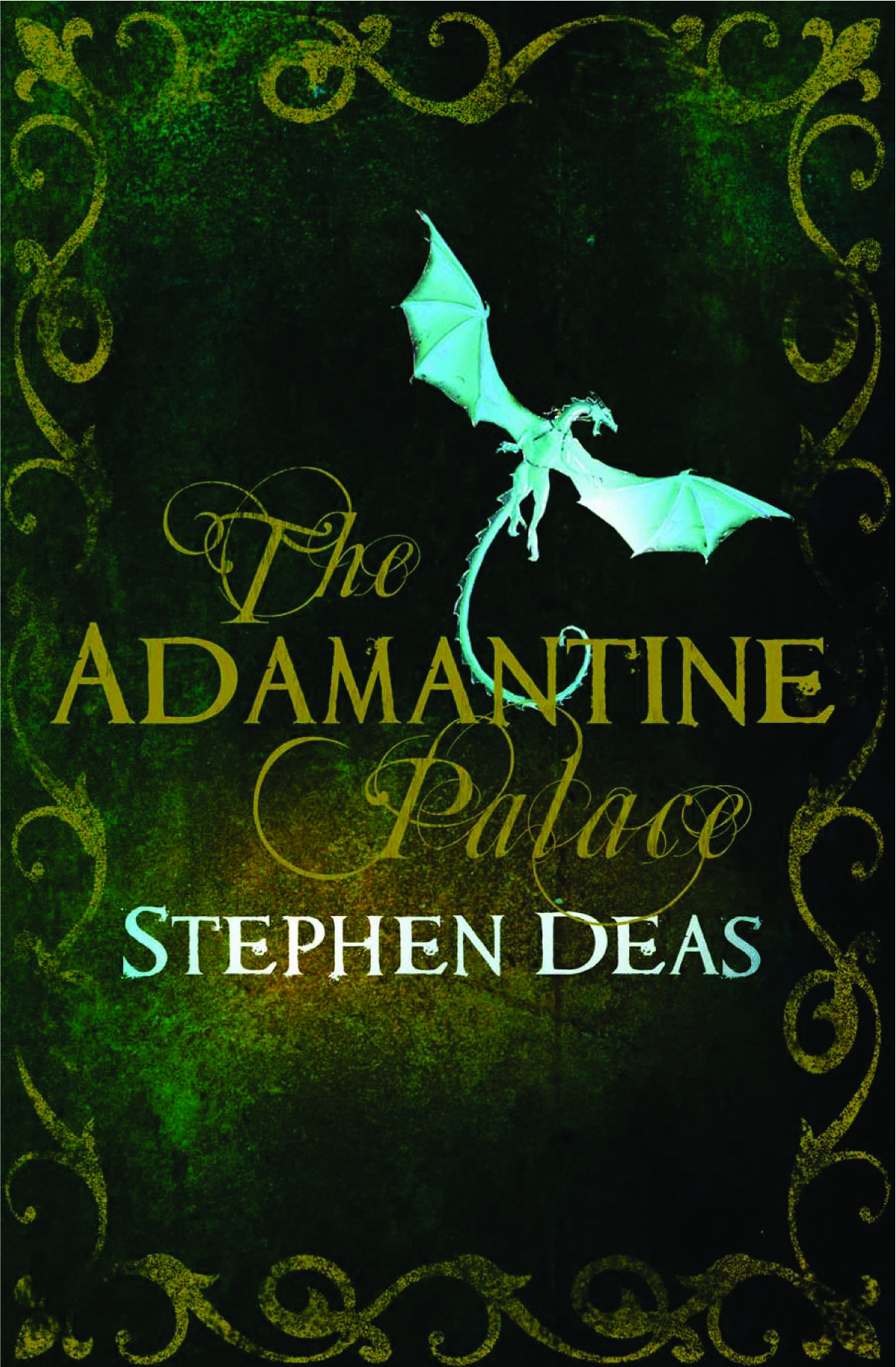
The Adamantine Palace by Stephen Deas

I know, another post without complaining about how late kickstarters are? That’s okay, October is right around the corner so I’ll tally up the process and see how things are going by then. If its based on anything like previous months, no change.
However, despite working six and seven days a week, I did manage to read another book. I had honestly forgotten how much I enjoy reading with all the beating my mind has taken at work and various dreaded ‘real life issues!’. Its good sometimes to sit back and read a book.
 
The Adamantine Palace by Stephen Deas is a fun romp into dragon territory. While TSR and then Wizards of the Coast has plowed the field with many standards that fit into a dragon society with Dragonlance and of course the revered grand dame of Science Fiction Anne Mccafre has Pern, Stephen still manages to make it an interesting and fast paced book.
From what I know, there are already other books by Stephen Deas in the series and if time and finances permit, I’ll be sure to hit them up as time allows. I’ll be doing my usual rambles below and that includes spoilers so if you want to avoid those, read no further.
One of the things I enjoyed about the Adamantine Palace, is that the author, much like George R. R. Martin, Glen Cook, and a few others, isn’t afraid to kill off, what to that point, had been main characters. It provides the setting with a quick slap in the face and makes the reader a bit unsure of the standing each character has. One of the problems with long running campaigns, is that unless the Game Master is willing to smash his toys, the players may feel like actors on a stage rather then adventurers in a deadly setting.
Another thing I enjoyed is the role of the dragons themselves. Like in some settings, they have their place for their role in society, including hunting, war, sports, and status, they have a darker origin. It seems, from the flashbacks, which are not complete yet, that the dragons were the rulers and that mankind uses alchemist to subvert their minds and free will so that they are slaves.
Yet strangely enough, it doesn’t take too much to knock one out of that stupor. Indeed, it seems shockingly easy but no sane person would want to do that. Initially I was highly skeptical of it. I thought, what society would dare try to harness something that could turn on them so easily? And then you look at the ‘real world’ and remember that during the first big old bomb testing they were worried it was going to ignite the sky.  But hey, test away right? That doesn’t count reliance on nuclear power and the price Japan paid for that during their recent issues or the myths that have grown up around Russia, mainly in the comics about their own incident.
So in the end, harnessing a power that can turn against you? Easily something man does all the time in both the real world and the of fiction. I’ll be curious to see where Stepehn Deas takes the ideas that he presents here as if one ‘accident’ involving a single dragon can cause so much potential harm, what the final resolution of this harnessed power will be.
In a role playing game, most creatures that are above animal intelligence will have their own motivations and means of working with or against the characters. In the Forgotten Realms, many of the main races already have their motivations lain out for them. For dragons, the elves use of making the dragons go into a rage and destroying their ability to work magic on a regular basis is what brought the elves into power while humanity’s numbers brought them into power.
But what if you were staging a game during that time when dragons ruled? What if instead of a temporary madness the initial plan was one that made the dragons creatures of mindless rage at all times? Or that ‘star’ mages or another type of magic was used to control dragons?
For those looking for a book where the heroes are all slick and happy, this is not the book for you. One of the main characters, Jehal, is a master manipulator. He manages to play all sides and still comes across, at least to me, as an interesting character. He has some internal conflict and that’s enough to make you wonder where he’s going. His arrogance and pride make him do things that put him in positions he may not be able to control, but that’s part of the ‘charm’ of the character. 
Others in the book range in their motivations and methodologies but many of them have an overriding motive that makes them easy to identify with or at least follow and that makes them good archetypes.  The interesting thing to me though, is that these goals and motivations are things that don’t necessarily fall into ‘alignment’ patterns that are familiar in games like Palladium and Dungeons and Dragons. If you’re main goal is to advance your family, murdering off a rival that stands in your way may not be good, but it is something that would be taken into consideration. Personal happiness goes to the side when planning out not only your future, but your family’s future, even if that means alliances that would normally be taboo.