Showing posts with label Culture. Show all posts

Wednesday, June 29, 2016

The Geography of Thought by Richard E. Nisbett

The Geography of Thought
How Asians and Westerners Think Differently…and Why
Richard E. Nisbett
Free Press
Published by Simon & Schuster New York
$15.99 
$12.19 from Amazon: http://amzn.to/28ZUfe9


As someone who's been a gamer master and tinkered with writing, the idea of HOW people think and what makes them think that way fascinates me. When I heard of the Geography of Thought, I figured “Hey, now I can know why that dude from Legend of the Five Rings thinks differently than that Paladin in 5th edition D&D.”

Let me start by saying that I don’t know if I agree with everything that Richard E. Nisbett puts forward. And that’s okay because he makes a lot of allowances. He points out that NOT everyone in the different regions thinks this way. He points out that “Asians” is a huge umbrella and that there are differences within that vast branch, just as there are with Westerners.

Nisbett also points out that things are changing more and more as the world continues to become flat. As more cultures cross pollinate, there are more and more examples of each one’s thinking on the other side.

To get the ball rolling, chapter one, The Syllogism and the Tao, breaks down some of the historical roots as follows:

Westerners: “The Greeks, more than any other ancient peoples, and in fact more tha most people on the planet today, had a remarkable sense of personal agency – the sense that they were in charge of their own lives and free to act as they chose.”

Asians: “The Chinese counterpart to Greek agency was harmony. Every Chinese was first and foremost a member of a collective, or rather of several collectives – the clan, the village, and especially the family. The individual was not, as for the Greeks, an encapsulated unit who maintained a unique identify across social settings. “

Nisbett goes into several more differences and his thinking as to why those are vital to understanding and he tries to make his case for it with illustrations, examples, modern testing, and other fun bits over the course of the next few chapters.

For example, comparing Greece and its city states, it’s maritime trading, it’s piracy, it’s connectivity to a greater world, it’s desire to prove something right, to China and it’s huge centrally located empire, it’s farming, it’s connectivity to itself, and its desire to compromise between two opposite.

The good news is that the book is written so that anyone should be able to understand it. The illustrations as testing are a quick way to see which path of thinking you may fall under. The ideas presented testable.

If you’re a fan of creating cultures, the Geography of Thought can force you to think about why those cultures act the way they do and what causes them to evolve.


Saturday, August 10, 2013

The Silver Call by Dennis L. McKiernan

Sometimes originality is overrated.

For all intents and purposes, the Silver Call by Dennis L. McKiernan is a sequel to Lord of the Rings.  The book was originally written as a single book but for publication broken up into two books, Trek To Kraggen-Cor and The Brega Path. Then republished as a single book. Strangely enough, The Silver Call is not available as a kindle book.

In Lord of the Rings, remember that old dwarf hold where they fought the balrog and ran from the kraken and it had magic doors? Yeah, turns out that sometime after the great battle where the enemy is killed the dwarves decide, you know, it's time to clean out the old dwarf home and end the goblin menace. And for the most part, it works.

Dennis uses a lot of description and a lot of backstory to fill in Mithgar. He uses a long overland trip to allow the characters to appreciate other bits of culture. Warrows, the Halfling substitute, for example, don't really appreciate the night sky and the stars contained within. The dwarves on the other hand... The dwarves also have a thing about a falling star representing fallen comrades. The culture building is good to crib notes for when designing your own bits and pieces for cultures.

Instead of halflings, we have warrows. Their kick is that they're a bit more fighty then halflings and have gem like eyes. Instead of the Shire, we have The Root. Instead of Sting, we get Bane. A lot of other similarities exist that I'm sure someone else has already documented but again, for the most part, if you ever wondered what would have happened...

And in terms of working with RPGs, that's often a good place to start. Have you ever seen a RPG that tried to reinvent the wheel? Sometimes you can get away with it like John Wick does with Wicked Fantasy and his 'heroic' take on Orks back in the day.

When looking at material that you drew the initial inspiration from, or even the rulebook, when the source showed X but what about Y? It's one of the reasons the Star Wars setting has so many variant settings as the authors explore different spots of the setting and bring different facets to live. Game Mastering can be much the same if you're working with source material that you want to expand beyond.

For example, in the revised Conan books from 'the hack', Conan winds up on a great last adventure where he sails beyond the mainland. What happened next? Who takes over the throne? Where did he go?

Even when looking at settings that appear new, crisp and original to new fans of the work, like Dark Sun, may have seemed to new players of 4th edition, when looking at some of the potential inspiration for it, like the various Planetary Romances, where can new threads be drawn from? What if there is some cosmic alignment and the various comings and goings from the different worlds are interrupted and the characters from different times and planets wind up on a new harsh world looking for heroes?


Thursday, May 23, 2013

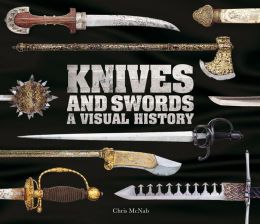
Knives and Swords: A Visual History

I was in Barnes and Noble last week waiting for the girlfriend to get off work. In the bargain book section, I happen to see this puppy. It's a little over priced I felt but what the hell. Looking up the picture online, I see it's 10% off the price I paid in the store. That pretty much insures I'll never buy another book in the store without doing a look up online first and getting the better price. Gee, I wonder why B&N could be having problems? Could it be selling products through your own damn store online cheaper than in the store? Nah.

Anyway, the book doesn't really start off with knives and swords, but talks about things in historic context. One of the things it shows are some of the weapons the royalty of Egypt might have used, like a dagger with a gold blade and scabbard with a hilt made of blue lapis lazuli. More impressive than that though, was as axe with the center part semi-hollow depicting a warrior on horseback design. It mentioned that axes were often the weapons of the nobility and the richer the person, the more decorative, more design oriented, more lavish, the weapons.

The fact that we're talking about axes here, as opposed to swords, reminded me of an anime I had seen a while ago in that the main character there was a wielder of a spear. In her country, the spear was the top weapon while in the country she was travelling in, it might not necessarily have been a peasant weapon but close enough.

When looking at the different parts of your campaign world, what does the weapon of choice say about the culture? What does it say about the metallurgy skills present? What does it say about the quality of the iron and steel?

While I haven't gone into detail in Knives and Swords, the visuals are nice and the writing, while I'm not sure of it's accuracy, did get me thinking of the value of weapons to culture in terms of status symbols again so that was well worth looking into.