Showing posts with label Character Motivations. Show all posts

Monday, July 3, 2017

Little Big Man by Thomas Berger


Little Big Man
Written by Thomas Berger
Published by The Dial Press
$17.00/$11.51 Amazon

One of the reasons I enjoy reading outside the 'fantasy ghetto' is that you never know what you'll stumble upon. I can't remember where I first read that Little Big Man was a classic of the Western Genre, indeed, of American literature itself, but I'm glad I dug into it.

After finishing the book, I was informed of the movie featuring Dustin Hoffman. He does a great job in a solid movie but man, if anyone from HBO or Showtime is listening, Little Big Man could use a truer to book edition in a season or limited edition format.


So what does Little Big Man bring that makes it worth reading for gamers?

First off, Thomas Berger is a great writer. If you're looking for one liners or other bits to throw into your game, Thomas has more than his share of them.

"However, I believe that when Wild Bill Hickok faced a man he looked at his opponent's eye as if it was a cork." (pg. 305)

Alien  Cultures

Jack Crabb spends a lot of time among the Indian Cheyenne tribe. During that time, he enjoys boiled dog as well as having four wives. He returns to the tribe several times and it contrasts the ways of the Cheyenne, who call themselves 'Human Beings' to the 'White Man'.

In terms of other nationalities, we get a brief taste of them. For example, while on a raid, Jack is ambushed and almost scalped when the ambusher realizes that he's actually a white man. That particular tribe is fond of the whites so lets Jack live. Jack promptly repays him with three arrows in the back.

When adding different cultures, much less different races,  think about why they are different, to begin with. If the only difference between humans and elves turns out to be the lifespan, might as well just get rid of one or the other.

Think about how the children are raised. Are they raised by the clan?

What roles do men and women play?

What foods are eaten? Even in the modern day world people in the United States tend to look in horror at southern China's holiday where they eat dog. Now never mind that the Cow is a sacred animal to millions of Indians...

How is history kept? How is the passage of time measured? The author gives us an event driven history that doesn't rely on days or dates but on seasons and events.

Are there common sayings?

'My son," says Old Lodge Skins, "if it cannot, then the sun will shine upon a good day to die." (pg. 220).

Culture can be a thousand things and none of them are easy to digest in one sitting. Don't hit the players over the head with things until they stop playing but feed into the differences a bit per session until the players can recognize weird words and phrases both in character in the real world.

Character Behavior

Behavior and motivation are separate things. Behavior depends on a series of actions that are necessary for a profession that may be technical or may be encouraged by other's behavior.

'This is a good example of the suspiciousness which warps the minds of gunfighters. I had fell into it right quick, just being in Wild Bill's proximity. You feel like your whole body is one live nerve. At that moment one of them cardplayers having just won a pot, let out a holler of triumpth, and both Hickok and myself come out of our chairs, going for our iron..." (pg. 285).

'Of course I could see he was a fanatic. You had to be, to get so absorbed in talk of holsters and cartridge loads and barrel length and filing down the seat to make a hair trigger and the technique of tying back the trigger and arming the hammer to fire, etc., etc...

"Now then, about that S & W you carry. It is a handsome weapon, but the shells have a bad habit of erupting and jamming the chambers. I'd lay the piece aside and get me something else: a Colt's with the Thuer conversion..." (pg 286-287)

Here, the profession of the Gun Fighter shows its professional side. It's the difference between a mercenary who picks up a weapon and is surprised when it jams and the professional who can disassemble and reassemble it. 

Character Motivation

'Course, he says, there's where the personality come in; whether fast or slow, there was one perfect shot for each occasion, and you killed or died according to how close you come to achieving it. Once arriving at your decision to fire upon a man, your mind becomes a blank, and your will, your body, and your pistol merged into one instrument with a single job.' (pg. 305)

One of the easiest motivations for adventurers in any genre is to find that moment. While Dragon Ball Z's main hero Goku is nearly silly in his desire to be the strongest there is and to fight great opponents, he's always earnest in his desire. Gunslingers have been portrayed as seeking to be the best, the same is true of swordsmen. 

Family

Jack Crabb comes from an interesting family and makes more along the way. His father a bit of an insane preacher. His sister a strong woman out of her time. His brother? A dealer of poisons.

But then there's his 'cousin' Amelia. Only turns out, Amelia, a former lady of the night, isn't actually his cousin and Jack knew that from the start. Rather, it's that Jack 'adopts' her into his family and their both okay with it.

The family you make as opposed to the one you're born with.

Jack is also the father to a son not his own. He also loses his wife Olga and son to an Indian attack and finds them long after they would recognize him as both they and he have undergone many changes. The transitional nature of family and the roots one sets are made in numerous contrasts.

History

"That still leaves the matter of the meat, and you can't escape the fact that there was awful waste in that area, whereas Indians generally consumed in one form or another every inch of a buffalo from his ears to the hoofs, including even the male part, from which they boiled up a glue." (pg 325).

Sometimes the world moves in a direction and no matter what some due, they can't stop the movement of the world. In this case, Jack is assuring future readers that in many instances, the slaughter of the buffalo wasn't done to intentionally harm the natives, but rather, simply to make money.

If you look at the environment in 2017 and see how laws have been enacted and repealed and worked for and against, the pursuit of profit against the manner in which humans live, like dumping coal ash into rivers, is still debated.

Elves may love their forests, but people need the wood for fuel, they need it for constructing weapons and buildings. They need the space cleared for crops and grazing. Sorry elves, nothing personal, but you got to go.

Dwarves? Dwarves in a gold-rich environment? I can't imagine the slaughter that would take place in any fantasy campaign that wanted to throw historical accuracy at it unless the dwarves were able to completely fight off the attackers. Problem is that doesn't count say the numerous horrors for the beneath the earth that the dwarves are usually dealing with.


Plot Seeds

Unappreciated Treasures

Towards the end of the novel, Custer and his cavalry, are on the move. To ensure that the Calvary stays focused on the mission, Custer hasn't paid the men. Instead, the money is kept separately from them. When Custer and his people are slaughtered, the money blows away in the wind.

Sometimes the opponents a group faces, don't have the same values as those they fight. While some of the Indians may have found a use for the money, most were happy to take other sorts of grisly trophies of their victory against Custer.

In a fantasy campaign, if dealing with an insect people that have no appreciation of gold, jewelry or man-made weapons and armor, because they craft everything they need from the corpses of their dead using hard chitin weapons and armor, perhaps the players stumble upon a huge treasure that the enemy may not appreciate, but appreciate the presence of the player's even less.

Range Dependent Magics

'I was born there, on the Rosebud Creek. Indeed, my medicine works only half-strength when I come below the Shell River." (pg. 220)

Games like Rifts use Ley Lines or 'Dragon Blood' or some manner indicating that a certain part of the earth is rich with magic. Are there specific parts of a campaign setting that are known to be that like? Does victory depend on getting the enemy away from such a land?

In the Forgotten Realms for example, after the age old Avatar Crisis, there were wild magic and dead magic zones. Mages wouldn't be caught dead in a dead magic zone if they could help it. 

Use variances in power level based on location and see how the players can turn it against their opposition.

Reputation

'Wild Bill Hickok was never himself a braggart. He didn't have to be. Others did it for him. When I say he was responsible for a ton of crap, I don't mean he ever spoke a word in his own behalf. He never said he put a head on Tom Custer, nor wiped out the McCanles gang, nor would he ever mention them ten shots inside the O. But others would be doing it incessantly, and blowing up the statistics and lengthening the yardage and diminishing the target." (pg. 284)

In a game where there are 'wild lands' or sparsely populated areas, 'badlands', a player's reputation can take him far. What's he known for? What's he been seen doing?

A bounty hunter that uses a particular weapon in a particular way may have a greater reputation than another bounty hunter that uses the same weapon ever other hunter uses.

A character that gets lucky in a big brawl or arrives at just the right time may find themselves with a great reputation.

The only problem? Wild Bill Hickok had to defend that reputation and in this book at least, his actions come back to haunt him the one time he doesn't sit with his back to the wall. Being known for something, especially something that involves violence, means that there will always be others out there trying to make their own reputation. 

Reputation can be public and private. 'Even as a remnant, the Seventh Cavalry lived up to its glorious traditions, linking arms in public while privately slandering one another.' (pg 438)

An organization may be known for its professionalism and its tactic, but those who know the 'real' organization may have different things to say about it. You often see this with people with terrible secrets. "Oh, Fred? I would never have suspected that he was a cannibal."

Senses

'But as we come closer, the marble-white was not clear, but streaked and sometimes drowned in red which the heat turned brown, and the smell was starting up too, attended by millions of flies, and the birds rose in great circles at our approach and coyotes scampered off to a safe range.' (pg. 424)

Berger puts the most obvious sense, sight to good use. But then he goes into smell. And then, the byproducts that often accompany death, the scavengers. If the players come across a slaughtered caravan, do you describe how ripe the smell is? Do you tell them that the ground is sticky with blood? Do you talk about the insect life making it's home in the corpses? The egg laying? The eye feasting? 


Weird Stuff

'And then, the summer of '74 billions of grasshoppers descended on the plains in a great blanket stretching from Arkansas to Canada...a Union Pacific train was stalled at Kearney, Nebraska, by a three-foot drift of them insects.' (pg. 338)

Sometimes something weird happens. Throw it in the campaign.

Little Big Man is an excellent book for both players and game masters of any genre. Character motivations and adventue seeds aplenty, NPCs and settings call to those who heed this book.


Monday, May 22, 2017

Elantris Appendix N Musings

When you read a beefy tome like Elantris, many elements may start to swirl around your brain and demand a place at your gaming table.

1. Take the most popular city in your setting and destroy it. Forgotten Realms? Waterdeep sent into the plane of Shadow. Eberron? Sharn collapses and is surrounded by a psionic energy barrier that flares with runes similar to the various house marks. Greyhawk? Well, of course, Greyhawk city!

You can either have it happen right at the start of the campaign or as something that has happened in the recent past. No one knows how or why it happened but it gives the players the chance to explore the ruins of a freshly destroyed city. They can hunt for survivors. They can hunt for lost lore. They can try and return the city to its former glory. The options are almost limitless when you're dealing with a subject as big as a lost city in a magical setting.

Players may also get caught up in the changes that are wrought by a major city falling. For example, if Waterdeep itself falls, what about the various farms outside of Waterdeep? What about the various towns outside the city? Will they rise and take over the maintenance of the roads leading north? Will they be destroyed by raids from nearby towns looking for plunder?

What about the political situation? Waterdeep, as a large city, an old city, as a trading city, has many alliances and enemies. Will those in the South use this as an excuse to invade their northern neighbors and become the new "Gateway to the North"? Will those in the north use this as an excuse to start an extermination of evil in order to safeguard their own lands and ensure that the same thing that happened to Waterdeep does not happen to them?

2. NPC Motivations: Some characters aren't necessarily evil but they have a goal. That goal can range in time and tune with the evolution of the campaign. In Elantris, Roial and Ahan are merchants that compete with one another. Roial always getting the better of Ahan. Under the promise that Roial would be imprisioned, Ahan betrays Roail and their friends. Thing spin rapidly out of that as the one Ahan betrayed the group to decides not to imprison Roail and the others, but to kill them. An event completely against the wishes of Ahan but outside his control once the ball started rolling. Things move as motivation directs them for a character, but when that motivation encounters other character's motivation, it can spin in a completely different fashion.

Are there secrets that friends of the characters know? Are there things that might make others jealous? Have the players learned something that is of vital consequence to others in the region but they themselves don't see it that way?

And motivation doesn't have to be used against the players. One of the main characters of Elantris, Hrathen, is the high priest of Fjordell and is in Arelon to convert the people. This is his goal. To convert the people.

When he learns that his church never had that as an intention, he turns against them. This is the classic case of organized religion versus a man's own interpretation of that religion and the organization fell short.

3. Secrets. During the course of the novel, prince Raoden uses two different aliases in order to move forward with his own plans. During the course of the novel, we learn that Raoden's father was a member of a cult that engaged in ritual sacrifice. As the novel unfolds, we learn of a hidden cult of killers within the religion that Krathen seeks to bring to the people of Arelon. At the end of the novel, there are still mysteries left to ponder. Keep some things hidden from the characters. Keep enough elements of the campaign that the characters may choose to follow a few of them without ever knowing what the others lead to.

Now mind you in a multi-year campaign where the players are playing the same characters and growing in tune with the campaign itself, that's a little harder to do but in many campaigns, especially shorter-lived ones, it gives the players something to look forward to the next time they come back to the campaign.

4. Minor Characters: In a dungeon crawl that's packed with monsters, Non-Player Characters aren't necessarily that important. Oh sure there might be a 'Meepo' in the waiting or something of that nature, but mainly, it's about the crawl.

In a city-based campaign, in a campaign that interacts with civilization, it's in part about the people. A Game of Thrones, one of the most popular of novel series, has dozens of characters. While Elantris in one book does not boast quite so many, it does have numerous individuals. For example, Sarene is married to Raoden. Raoden and Sarene both have fathers. Sarene also has an uncle. That uncle has children. Some of those children are married. Many of these characters have their own little niches about them.

The depth and details of the campaign can shine much greater when the players have an actual attachment to the campaign. Some of these can serve as mentors, as friends, as allies, as rivals, as enemies. The amount of swordplay or violence directly in a mirror to what the player's do.

5. Social Combat: One of the most interesting aspects of Elantris to me, from a gaming point, is the lack of fighting.

Hrathen vs Sarene: As a high priest, Hrathen is out and about preaching. He is intent on bringing the people into the fold. Sarene has seen the works of the church in other countries, sometimes resulting in bloody revolutions and is determined to stop it. So when Hrathen is out preaching, Sarene is there asking questions that undermine the church.

Sarene vs King Iadon: The King has no use for women in the court. He feels them useless and out of place among the political games that go on. Sarene is having none of that and at first, plays off as if she were too dumb to understand the problems that Iadon has with her being in the court. She does this once by pretending to paint and claiming it's part of her own courtly duties.

Raoden vs Sarene: During part of the novel, Raoden is in exile in Elantris and Sarene is bringing food to the people of the city. Raoden is in many ways the default ruler of the city but doesnt' control all of it and seeks to keep things are while at the same time trying to get more supplies to improve the lot of the people of Elantris. This leads to a list of goods needed by Raoden while Sarene not trusting him, provides corrupted versions of them. For example, instead of blocks of iron, bent nails or near transparent sheets of metal.

The use of social combat and the gaining and losing of status is often underlooked in roleplaying games. Most of the rules in games like Dungeons and Dragons are for spells and combat but social combat can be a little more involved and allows the players to occassionally lose without dying on the spot.

Are there any other parts of Elantris that you'd bring to your campaign or thought would make for some interesting bits in a game?


Wednesday, November 2, 2016

The Seventh Seal (1957)

The Criterion Collection is leaving +Hulu . The Halloween season is upon us.

So The Seventh Seal seemed an appropriate movie.

For those who've never seen it, you should. Highly recommended.

It's one of Ingmar Berman's masterpieces. A crusader, Antonius Block, returning home from 10 years of war in the Crusades, during the time of the Black Death, is weary of spirit and sees a personification of Death who has come for him. Here we see perhaps the first use of Death playing a game to delay the inevitable.

This methodology was put to great comedic effect in Bill & Ted's Bogus Journey. I'd forgotten when I saw Bill & Ted's Bogus Journey, that they cribbed even the look of Death from The Seventh Seal.


As a personification, Death here is, well, mild. He knows he has all the time in the world. He plays with Antonius and is in turned "played" by the crusader, but the viewer never knows if those plays by Antonius are successful or just Death allowing them to appear such.

As a personification, it could be "higher" than the Gods in a standard fantasy campaign. It doesn't need to be malicious like Bhaal or other Death Gods tend to be in the Forgotten Realms and Greyhawk. It's just something that happens.

Antonius Block is an interesting character if one were to look for inspiration for role-playing traits and motivations.

The later leads into the former.

Antonius is tired of NOT hearing God. He's always questioning. He's always seeking that big truth. He seeks it from Death, who remains silent on the matter. He seeks it from the Church, which provides no answers. He seeks it from fellow pilgrims and travelers. He is always questioning the overall purpose and arc of life itself, of his life itself. This questioning provides a tragic frame to Antonius, much like Warlock from Marvel Comics or Elric, seeking to fight his nature but being trapped in the world, must eventually yield to it.

His squire, Jons, is a man of the real world. He knows what life is and it's not happy. Described as a nihilist, he nonetheless isn't evil. He saves a woman from being raped and killed for example. He sees evil being done and would rise against it to another woman condemned to die as a witch. He merely sees things the way he thinks they are and is frank about it. This stoic nature makes him a great contrast to his seeking master.

There's also the setting. The Black Plague is everywhere. People die from it frequently. It's referenced as the end of the world. It sets the stage for a death that cannot be reasoned with. Cannot be bargained with. A death that strikes noble knight and lowly leper with equal ease.

Then there's the background of where the knight's coming from, the Crusades and 10 years of war. During the trip back to the knight's manor, Jon finds the priest who convinced his master to go to the Crusades in the middle of stealing from the dead and about to rape and murder a servant girl. Jon is not happy. His master's demeanor changed by the horrors of war and he lets the fallen priest know, should they meet again, Jon will mark the priest so others know what a liar and fiend he is.

These huge events, the Black Plague, and the Crusade, showcase how vast and uncaring the world is. There can be several things going on in your campaign at the same time and they should all have an impact to those that must experience them.

There is no raising one's hands and begging enough. There is no exception for already having suffered from one calamity. There is just life and the events that must be endured.

This is a movie I could watch again and again. The black and white filming, the nature of the questor and his stoic squire, the background characters, the threat of plague, the damnation of a man spent 10 years in war... it's all powerful stuff and well told.


Saturday, October 29, 2016

Scanners (1981)


I found out that the Criterion Collection. is leaving +Hulu.

It's also almost Halloween.

That means time to watch some appropriate holiday movies.

One of my favorites, one I saw in the theaters as a preteen at 10, was Scanners.

Scanners offer a lot to both Game Masters and Players.

For Game Masters


1. Plot Twists: Some of these are cliche, but they are cliche for a reason. That reason? Sometimes they work. For example, imagine having a mentor for your character that turns out is his father? Imagine an arch enemy that is your brother! What a shocker!

2. Organizations: The bit in the movie that quickly gets overlooked, is that the "Scanner" program was designed as a weapon program and during it's initial viewing many high-end buyers, six individuals killed, one quite spectacularly.


In almost any modern day setting, that would cause quite a stir. In the modern Marvel Universe setting, or any role playing super hero game using the modern setting, there would be a quick search into the matter.

How did this happen? What's the origin point? Are there more of them?

For Players

1. Character Outlook: When first found, the protagonist is living in the street. Unable to fend for himself. His powers are too strong and they cannot be shut off. Typical telepathic problem. But there are other "Scanners" and one of them, after trying to kill his family, has been "rehabilitated by art".

The art this scanner creates is dark and disturbing, often dealing with multiple entities around the skull or with thoughts exploding out of the brain.

What is the mind status of a non-normal character? If you're in a Dungeons and Dragons setting and are a psion, how do you perceive the world about you? Even if you're a lowly fighter, is it more of a Jason Bourne thing where as soon as you enter the room you've objectified everything into ways on escape or ways to kill?

2. Limitations: When first introduced, the protagonist HAS to have a drug to suppress his powers. This leaves him vulnerable. In some game systems like Champions and GURPS, you would buy advantages and disadvantages to represent this about your character. In other games, it becomes a GM ruling. What about limitations makes characters more interesting? It makes them vulnerable.

Even Superman has weaknesses after all.

Scanners isn't high art but as one oDavid Cronenberg's early films, 1981, it is worth watching.

3. Unlikley Powers: There's a scene in the movie where the hero of the movie connects his brain to the
"nervous system" of a computer. Well before hacking was a thing. But how would ESP or
telepathy in the normal sense of the word allow that to work? The Game Master or Player could
easily rationalize it that the powers Scanners have isn't based on telepathy. It's based on control
of reality and that their true limitations are that they only do what they do, because that is the
traditional use of their powers. Only when pushed or when something out of the range becomes
needed, do those powers actually come to a head. The old marvel character, Phoenix, after all,
could control reality with her powers.

For others looking at the Criterion Collection leaving, what movies do you recommend? I've
got the Samurai films on lockdown but am fortunate enough to own most in DVD/Blu-Ray format.

Thursday, May 7, 2015

Not The Bar

This is a transcription of some old written notes I stumbled across. When I was younger, it was a common theme that the only place characters meet initially was in a bar. So I decided to see if I could come up with anything.

1. Pilgrimage: A holy travel to purify the soul is in order. In a game system where characters gain power for a religious source, the characters may have to undergo an annual pilgrimage as part of their faith. In a game like AD&D, this would mean any spell casters with clerical powers. In Rolemaster, it would mean anyone with the channeling realm. Other characters could be guards, hisotrians, or also along for the spiritual side of the trip.

2. Marketplace: The characters could all be in one place at one time for a special holiday when the market is bristling with potential employers and victims.

3. Guild: If all of the players belong to one profession or all have the same abilities that overlap, they may all belong to a specialized guild. If there are crossovers they may belong to a mercenary group or adventuring group. Their own status in terms of power would be a good indicator of where they would stand in the guild.

4. In the Army: Similar to being in a mercenary guild but more focused.

5. Under Siege: The characters are performing their normal tasks when the area where they are staying comes under attack. If the characters are in a small town, they may be reknown as heroes or cowards. In a large city, they may have to guard a hidden entrance that leads out to where they area.

6. Open Season: Characters are all bounty hunters who are on the trail of a powerful foe.

7. The Quest: From searching to the Holy Gail to seeking magical swords, the characters have a specific quest that draws them together.

I can tell this is from the 80's as I mentioned AD&D there and Rolemaster. I was so into Rolemaster I had a few articles published in Grey Worlds back in the day, which were later incorporated into one of the compendiums.

Some of this has become fairly standard knowledge but might not have been so used back in the day! Hope it is of some use to the modern audiences.


Tuesday, April 7, 2015

E is For Empire


While I've been... 'enjoying' my forced time off with pinched nerves and bulging disks, over the course of several days I've managed to stream Empire from +Hulu .

Fantastic show.

It has many elements of a Shakespeare tragedy tied into neatly into the modern era and hits subject matter that the bard would have been unaware of.

At its heart, Empire is about family and legacy. About drive and ambition. About pride and making 'hard choices'.

It is the characters that allow Empire to be a fantastic resource for anyone looking to do a character study.

Fist, it's designed to appeal to a wide range of audience.

The cast members are modern royalty. They are members of an upper elite. The children are gifted. They are young. They are driven. They are loved. They have wealth. They are in great shape. They have status. They have power. This gives them an appeal beyond what a standard member of say, "All in the Family" may have. The stories are on a higher plateau, one that has bigger consequences.

For a Fox show, the amount of diversity at least acknowledged, is tremendous. Not all of it plays out well, and some of it may be harmful. But to its credit, it opens a door. Few traditional subjects are not put under a spotlight.

For the patriarch of the family, Lucious Lyons, played by actor Terrance Howard, his is in many ways a vile person. This is in part explained by his upbringings, growing up an orphan on the streets at the tender age of nine. Part of it is his ambition and drive, to leave something behind.

Part of it is his fear. Much like a true tragedy of the darkest era, Lucious is initially given a medical diagnosis that is a death sentence. That in and of itself drives him to push him family against itself in an effort to allow the most worthy heir to step forward.

Competition is one theory in terms of bringing the best goods and services to market. Having more water in the pool to lift all boats is another.

But in terms of how vile Lucious is, we have to look at how his 'standard' sins are. For example, he is a womanizer. This includes cheating on his soon to be wife, as well as his ex-wife.

He is a child beater.

He is a manipulator.

He is a murderer.

He is a drug dealer.

All of these things though, are put into his own perspective.

He is a child beater because his child does not confirm to what he thinks a child should be.

He is a manipulator for other people's benefit. He does it to make them better, according to what he thinks they should be.

He is a murderer because those who he has dealt with, according to him, needed to be dealt with. They were not some random shootings unneeded violence.

He is a drug dealer out of necessity.

Every action, ever step, ever move, one that is countered by his own belief, his own confidence, his own inability in his abilities.

And because he has so much of his own confidence, he manages to maintain a somewhat sympathetic nature.

First, above and beyond anything, he is under a medical no cure death sentence. People with that amount of pressure on them can be driven far beyond what normal people are.

Second, he is old school. He did come up from the streets. Unlike his children, some of who grew up in wealth unlike anything a young Lucious could even hope for, he has a hard edge. His street creed is beyond reproach or question. He has earned his respect.

Third, he does love his family. This may be a horrible love that pushes him to push them, but beyond his own ego, beyond his own ambition, he wants them to have exceeded what he has done. But not too soon.

Fourth is his talent. This is not some con artist. This is not some petty hustler. He carriers himself with earned talent that not only comes from his survival on the streets, but his ability with music, with his talent, with his gift, to rise above those streets. His survival is earned with gun and drug, his ability to leave it behind, with music and talent.

The soundtrack has a lot of variety to it. There are numerous genres represented here allowing people whose music taste vary tremendously, to enjoy it. For example, my 71 year old mother greatly enjoys the R&B styling while I enjoy the cover of Money For Nothing.

Empire deserves several more mentions just to hit on how it deals with homosexuality, mental disease, drug use, and other bits, but for the A to Z Challenge, E is for Empire and you should be watching.


Tuesday, February 17, 2015

Spartacus: Character Study: Ashur

I've been watching Spartacus on Netflix.

I consider it a guilty pleasure.

One of the things I thought interesting, was how the different relationships and the different characters play off of one another on numerous levels.

Let's look at one of the 'bad' guys, Ashur.

Ashur is an Assyrian brought in with another Assyrian, Dagan. Of the two, Dagan is the superior warrior, but Ashur has value in that Dagan doesn't speak the local tongue and Ashur does. This allows Ashur some measure of diplomacy between Dagan and others.

Initially Ashur seems eager to honestly be a part of the 'Brotherhood' where the Gladiators respect one another.

Problem is that he doesn't earn it the way the other gladiators earn theirs.

See Ashur and others follow their master, loyaly, and do things that Gladiators aren't normally a part of. Something evil and sly, assassination for their lord and master.

The reward? The brand of the gladiator and the scorn of those gladiators at the same time.

Ashur's use in translations continues to be useful but at the same time, because Dagan is the superior combatant, Ashur, who wasn't accepted in the first place, continues to fall further and further behind in estimation. This causes Ashur to make some decisions that don't please Dagan.

Things continue to go south when in a duel, Ashur 'cheats' and winds up blinding Dagan in one eye.

It goes further south when later, in a duel against another house's gladiators, Ashur suggests an alliance between himself and Crixus against the champion of their own house. Crixus responds by slashing Ashur's leg and pushing him into flames resulting in Ashur's status becoming even lower.

But somewhere during that low period, Ashur puts to use his wits and takes bets and controls money. He also spies for his lord while in the city and spreads disinformation and fakes alliances with those who seek to bring his house down.

At one point, his owner values him so much that he declares that Ashur is no mere gladiator but almost like one of his lord's hands.

Of course things come crumbling down with the whole Spartacus rebellion thing mind you...

But Ashur survives that as well! Using cunning, he escapes his fate by hiding among the dead and even helping another survive the fall of the house.

And in so doing, is rewarded with a new master who demands Ashur remove his old brand. Never mind that this requires cutting off a nice chunk of skin with that brand and takes forever to heal. It also requires Ashur to prove his point that one gladiator is worth three soldiers when he is forced to fight for his live against soldiers, but while winning, wisely holds back from killing those he fights.

His street connections enables him to gather a crew of unique mercenaries and to be a valuable asset but all is set to waste for poor Ashur when he is accused of a crime he didn't actually commit and he winds up proving his loyalty one last time taking a message to Spartacus where his overconfidence in battle leads to him being slain.

Interestingly enough, while the series Spartacus doesn't delve too deeply into racial relations, the fact that Ashur was Assyrian is enough to poison the thoughts of the slaves when they encounter another Assyrian later on. It's a subtle dig at how racism, either between Gaul and Thracian, or between Celt and Gault, is portrayed in the series.

In looking at his motivations overall, I would throw the following on him.

Petty Ambitions: While there are some in the Spartacus series that have grand overpowering ambitions, Ashur's are much simpler. An easy life, wine, food, women, and whatever else it takes to survive.

Respect: Perhaps even his number one ambition. Ashur seeks to be champion, even when he knows not capable of it. He seeks to return to the arena and win respect, even disappointed as his master tells him that he's far too valuable for such a position.

Vengeful: Much of what Ashur does that is vile, including his treatment of Naevia, is in part a result of the way others have treated him. Most think that because Ashur is the least physical among them in terms of fighting prowess alone, that he is not worthy of consideration only to learn later on that he is a master manipulator.

Loyal: While I list it last, it's important to note that Ashur had opportunity to escape his circumstances on more than one occasion and made the decision to stick with his master at the time, even thought in the end, this results in his death.

By making Ashur more than just a mustache twirling villain, the writers of Spartacus give us a character whose motivations may be easy to see, but there are motivations nonetheless.

Were there any characters that stood out for other views of Spartacus? Any villains where you were like, "Man, I can't wait to see this guy get his!" or surprised at how they went?

Monday, February 9, 2015

Moon and Sixpence by W Somerset Maugham

Have you ever gotten to something from a roundabout way?

On RPG.net, on a thread, "Are there any books of Advice for RPG Players?", user king_kaboom mentioned Stephen King's novel, On Writing. My mom is a huge fan of Stephen King so I raided her library and sure enough, she had a copy of the book.

I quickly devoured it. If you're a writer, a person who wants to write, or just want to read a quick moving first person narration, On Writing should be right up your alley. Highly recommended.

But then, how did I get to Moon and Sixpence?

Stephen King, much like the original Dungeon Master's Guide, has his own 'Appendix N', but his is "And Furthermore, Part II: A Booklist". I've cribbed a few of the books for my next trip to Half-Price Books and looked on Amazon.

One of the books was a free version, Moon and Sixpence.

It's an well written first person tale of art and obsession. The title of the book comes from a saying that goes something like if you look at the moon too long, you'll miss the sixpence at your feet, with the opposite, if you look at the sixpence at your feet, you'll miss the moon. It's not necessarily up everyone's alley, but W Somerset Maugham does a great job and its a very readable novel.

The obsession that Charles Strickland has for art, pushes him to leave his wife, to neglect his health, to neglect his housing, to neglect the woman who seeks to fill a void in his heart.

Charles methodology is an interesting look at how motivation can influence a character. Is your character willing to leave his home behind? Is he willing to leave his family behind? Is he willing to leave his country behind? Is he willing to sacrifice his health?

In some games like the Hero system, the level of obsession can be tracked with how high the character has to roll to be inflicted with the disadvantage. The harder the disadvantage is to resist, the more points the character gets for it.

In some older game systems like Dungeons and Dragons, even with the newer edition, the methodology tends to fall more into 'role' playing than roll playing. For example, the old Fighter Handbook had numerous archetypes included Doomed Champion. Such dedication to playing a character of that morbid nature doesn't necessarily require game mechanics to enforce but does require a player who wants to showcase such an obsession.

In other venues, like the manga Berserk, Guts decides to leave his leader, Griffith, behind, so that he can become the greatest swordsman he can be. To test himself. To push himself. Mind you that motivation changes later but the level of obsession does not.

Tuesday, May 13, 2014

Fist of The North Star: Rei

The anime based on the manga, Fist of the North Star, has two main schools initially. The one used by the protagonist, Kenshiro, is the Fist of the North Star. The other is the Southern Cross. The North Star is supposed to only have one practionioner while we discover later that the Southern Cross has no less then Six, and one of those Six, the General, has Six defenders who are also masters of martial arts.

Visually, I always liked the Southern Cross. It's a style that cuts its opponents to pieces whereas the North Star causes them to blow up. Of those who practice it, Rei was my personal favorite. His introduction is all over Youtube but this clip is as good as any other I suppose.

The thing about Rei that works, is initially, he's very much out to pursue a specific goal. In this case, finding the man with seven scars on his chest. (Kenshiro has seven on his chest by the way!) and killing that man. Apparently such an individual killed Rei's parents and enslaved his sister!

Of course it turns out NOT to be Ken and the two managed to join forces to kill those who've done these terrible things.

The thing I like about Rei though, is his change. He becomes concerned for other people. He sees the value in what Kenshiro is doing. He grows to care for Bat and Lin and others in a short time. He understands that its not just about doing only what he wants to do.

And that makes him a perfect example of how some players should fit into the game. Sure it's all fun to be the 'Wolverine' or if this was the 90's, the 'new' Ghost Rider, but in a role playing game that's not a solo game, you need to have hooks that fit in with the other players. You need to be able to engage them. Even if your initial concept is lone wolf, you need to be able to have hooks that go into the others.

For example, lone rogue whose only goal is wealth? Role playing an appreciation for what the other characters can do if only as a nod to the fact that a group can gather more wealth than an individual rogue can, is the way to go. "While I may not appreciate the noise that this armored buffon makes, I admit that his ability to destroy ogres and hill giants is quite useful in the liberation of their funds."

A wizard whose only purpose is to find more and greater magics to master? "While Amar is a fool for worshipping the gods instead of magic, I admire the fact that his ability to channel positive energy saved me the trouble of having to pull out real arcane power to destroy that lich and its minions."

You have to role with it to roll with it.


Wednesday, November 27, 2013

The Whiskey Rebels by David Liss

I would not say with absolute certainty that The Whiskey Rebels is the best book I've read in 2013. After all, there is still another month to go and there is a lot of potential in that last month. Having said that, The Whiskey Rebels is the best book I've read in 2013. David Liss is always worth a read and this book, a done in one historical look at America right after the Revolutionary War, is a fascinating take on how to use historical fiction and fact to weave a fantastic story together.

There are so many things that make it useful to a person running a role playing game that it's an important reminder why people should regularly read outside of their genre, why they should stretch their mental muscle past its comfort zone.


I'll be discussing some specific things below from the book and how they might be useful in role
playing games.


Money. One of the biggest focuses of the book is in the accumulation of money. Anyone whose lived in America in the last, oh, say ten years, has seen the financial institutions take the economy to the brink and had to be saved from themselves only to eagerly go back to the very same behaviors that lead to the issues to begin with because they know that the government will back them up again should the need arise. This is something that doesn't necessarily get touched on often in role playing games because it can not only be boring, but can be more complex and less violent than a good old dungeon crawl.


In terms of money, no matter what the era, no matter when the time, there will be conflicts. there will be opportunities. There will be potential. As the book picks up right after the Revolutionary War, there are people attempting to control the new banks that are coming along. To fund them, or at least fund a specific one, there is a Whiskey Tax. This tax, on one side, seems harmless but to the people making the Whiskey?

Well, the whiskey in and of itself doesn't bring in funds. Instead, it's used as a bartering tool. An object of trade. There may be those who do make money off it, but those are not the people hurt by the tax.

Imagine Star Wars. The Emperor probably has those who are friends and allies and he could easily let slip that the Empire is going to build not one, but two death stars. Think of the manpower, the funding, the technology in terms of engineers and machines, needed to build that. Now we could go all, "Well, it's the Empire. No one is getting paid." Corruption pays off much better than tyranny. Look no further than China where it's not necessarily illegal to be bribed, merely illegal to be caught doing so eh?

Information is power. In a fantasy setting, if the players learn that a group of merchants is going to buy all of the land on the waterfront and sell it to the lords of the city in exchange for vast sums of wealth because they know that the lords of the city need that land for building defenses or something of that nature, what happens if the players decide to be the ones who buy the property? What happens if they already own it and are then put under 'scare' tactics? Hunting down such things would be an excellent use of the Gumshoe engine for example.

Character Change. Ethan Saunders starts the book as a near useless alcoholic. His talents in spying, in gathering information, are secondary to the notoriety he faces for rumors of him and his best friend Fleet, being British Spies who merely weren't brought up on charges because the war was ending and people had better things to do. Through the course of the novel, David builds the things that tore Ethan down into things that slowly build him up. Ethan missed out on so much of his life due to failed perceptions and not wanting to do anything to disgrace the memory of Fleet, because he secretly feared that Fleet was indeed a spy, that when the novel keeps bringing the 'truth' to the surface, Ethan has no choice but to change into something still flawed, but better than he was at the start of it.

The same is also true of Joan, who starts off wanting to be a writer, but whose apparent uncontested understanding of how the financial system works, makes her into a near unbeatable foe whose goal, the destruction of the government, seems almost within her power to be stopped by sleight of hand as opposed to straight out skill. The changes characters go through should influence the direction the game takes.

The Frontier. Joan starts off living in 'civilization' but poor. An opportunity comes up to seek out a new live on the Frontier in exchange for the script that shows the government owes her husband money. But after the Revolution the funds don't appear right away so are traded away for a 'better' life. This life is one of hardship. One where the simple comforts of the city, even the city of that era, are not present. Where one must be self sufficient to survive. Well, perhaps not entirely self sufficient for Joan's husband, despite his carpentry skills, and the skills he mastered in the war, isn't a full wilderness master like those already tricked, and already living there are. This brands them together being out in the wilderness against those who would further harm them. It makes them united against 'outsiders' even though Joan and her husband are still the 'new' people who must earn their way into the trust of the group.

Big Concepts: Joan and Ethan are both patriots. Ethan fought in the war to be free from English rule. Joan's husband did the same. Joan harbors thoughts on what a true free society is worth and what shape it must take while Ethan wouldn't see chaos and government failure run through the streets if he can help it. Some ideas can have multiple views that are both right but both must come across one another. When designing a setting, are there certain aspects of it that people might find distasteful but would rather have than absolute chaos? Are there some things that would make people change their minds about the country if only they knew?

The Unseen: Ethan has a slave, Leonidas. Ethan is able to use Leonidas status and his race as a useful tool for gathering information several times throughout the novel. In many settings, there are those who are looked down on. In modern societies, this could be as simple as the ignoring the cleaning people or the delivery people. In ancient societies, slaves were not often well thought of and things may have been spoken of freely in front of them. Another group in almost any setting could be children. Most settings have that 'underclass' that is always around and no one pays attention to. Using those resources can give characters and edge up against those who don't.

The Whoseitcalled. I was surprised to see reference to Jeffersonits. Those who followed Thomas Jefferson. And Hamiltonist. People who have followers will find those followers called by their specific name. While perhaps not in as much use today for personal names, Communist is a label still thrown about for example, but Putinists? Perhaps not so much. But in a setting where characters can be larger than life? Where you may have served, fought for, or directly assisted the person who liberated the whole of the country? Where those who take up stances against new methods and manners are on one side and those who take the opposing ideas on the other? Then indeed, it would seem nature that naming conventions might be s thing that use the giants of the era.

A Large Cast: When I was a younger and perhaps more apt game master, I had a huge three hold punch of characters. Whenever I added a character to the game, a throw away merchant, a named dragon, a hidden dungeon, or anything that had a name, I jotted it down into the book. I organized the book by region and was able to expand upon it and call upon it when characters where in a certain location. David Liss maintains a huge cast of characters here and it makes the world feel more alive. He mixes fictional and historical characters with the ease of a master juggler and the reader is never certain if who they are reading at the time is one or the other. Keep a list of potential names and descriptions for use at any time with the understanding that those names and characters may never be used, but that you have them if they are needed.

The Whiskey Rebels is a powerful historical novel that has a personal touch and focus and by having two viewpoints, brings the reader even deeper into the action.

Sunday, July 21, 2013

The Four (Movie)

Based on the recommendation of +Gareth Skarka , I fired up the old Netflix to watch The Four. In short, if you enjoy Wuxia style films and always wondered what it would be like if the X-Men were in Ancient China, this movie is right up your alley. Indeed, there are elements of the plot that could easily be filed off and run as a whole adventure.

I'll be discussing some specifics below so if you'd rather avoid spoilers, read no further.

1. Source Material: When I did a quick search for the Four after watching the movie, I found manga but didn't see the novels. In addition, there is a television show. One piece of source material may lead to many different interpretations. Unless you're doing something strictly by one portion or interpretation steal as much as you can.

2. Mixing Genres: While I'm only half way kidding when I speak of X-Men in Ancient China, the main characters are essentially super heroes in terms of their powers. What if they were in the Wild West though or Victorian England? In such cases, how do you adjust the setting to account not only for the existence of such individuals, but their role in society? One of the things I enjoyed about The Four is that there isn't a lot of time spent on why and how of each person's special abilities. It's almost a "gimmie" in that "This person is trained and has mastery of X and is therefore quite powerful."

3. Main Foes Becoming Minions: I've mentioned this before, and some games like Mutants and Masterminds allow you to do so but having a foe that is almost unstoppable and then shows up in large numbers? Well, looking at the X-Men, we see that happen with things like the Sentinels all the time. Here it's a special type of zombie that can really only be stopped by a powerful blow to the skull. If your game system has rules to simulate the different stats for monsters you can make a creature into a minion just by changing it's type. Otherwise provide it a huge damage penalty to it's 'soft spot'.

4. Legal Immunity: There are two organizations here that seek to discover the villain in the show. While the rivalry does have it's potential problems, the political levels involved showcase how difficult it can be to take down someone whose in a favored position. This is probably more true in today's modern society with catch phrases such as "Too big to Jail" and "Too big to fail" tossed around. Think about it. Billions of dollars gone from the economy in a heartbeat and no one goes to jail for it? Think about how slow things move in terms of corruption cases as corporations go back and forth and laws themselves are changed around it. Depending on the nature of the game, you can tweak the players a bit by having their opponent so high up the food chain that unless all of their is are dotted and their ts crossed, or their can force their opponent into doing something  clearly illegal, that their efforts will require a lot of preplanning.

5. Rivals. There are several rivalries that move throughout the story. One is of the love interest and another on the group level. The interesting thing here, is the writer's didn't go for making one group bad and this makes it more difficult to have any permanent resolution in terms of just pulling the swords out and finishing off the other group. When two people are trying to do the same job, it can create extra levels of stress, especially if the rewards for success or failure, are high.

6. Subterfuge. While rivals are seeking to outdo each other and high placed merchants have their way, there are also double agents involved. While one of these double agents is essentially known from the start, there are others who are not. Having motivations that are below the surface for characters below your games can provide another layer of game play as the players seek to understand who is with them and who is against them. Depending on the ruthlessness of the opposition, their enemies may be willing to sacrifice those spies they have in order to show the surviving spies are 'really' on the character's side.

7. Multiple Motivations. In the original Star Wars trilogy, Darth Vader's ultimate motivations or drives aren't fully known until push comes to shove and instead of ruling the galaxy by the Emperor's side, he decides to essentially kill himself and save his son. His motivation to rule the galaxy, to serve, and to have his son at his side were all in conflict. Using a flow chart, you can map out several motivations for the non-player characters and draw their personal conflict into the game in such a fashion. In Dragonball Z, Piccolo is out to destroy Goku but when they discover there are bigger fish to fry, put aside their hostilities towards one another. During that time, while Piccolo and Goku don't necessarily become best friends, Piccolo's loyalty to Goku's son, Gohan does, which provides Piccolo a different set of motivations then he had previously. Character growth occurs when multiple desires come into conflict with one another.

Saturday, June 22, 2013

Lords of the Sky by Angus Wells

I read a few of Angus Wells books when I was a younger man going to Demon Dogs before it closed. There was a nearby library that I would snag books from and head off into the train station. Not too long ago at Half Priced books, I spied Lords of the Sky by Angus Wells and well, it was in my favorite spot, the dollar spinner rack.

I finished it today. It's a massive tome, some odd six hundred pages plus long. It took me a few days to read in between work, painting, and the other dreaded real life concerns going on. It was a nice, one shot book told well. It does some good world building and showcases some interesting moral questions I've often seen hit on in of all things, super hero comics with the old great power and great responsibility bits.

When I look at Amazon, and see that it's $11.99 for the Kindle edition, I shake my head.  Sure, there's no mass market paperback, and the regular trade is like almost thirty dollars before the Amazon sale price, but man, I think that the author is losing a lot of potential sales by his company keeping the price so high up there. And it's not just this book. Most of the ones written by Angus hit this price point. Oh well. It's not like there aren't plenty of others books out there on sale.

I'll be discussing some very specific spoilers below so if you'd know no more of the book, read no further.

One of the things I enjoyed about the book, is the motivation of the main character, Daviot who is always questioning things. Always asking the why not of things. Almost always seeking to do good for those about him. Notice I say almost always because there is a blind spot in his character and that is his love for his lady mage, Rwan . For her, he would sacrifice his duty, leave his country, and be hers alone. This motivation is powerful in him. His appreciation for his friends is also strong. It makes him a little more than just 'the hero'.

She on the other hand, is always about duty. But to her, it's not just duty to her cause, not just duty to her people, but duty to the greater future of the world. Her strength in this conviction leads her to move past his loyalty to family, kin, and country and battle all comers in an effort to bring about a new era of peace. She powerful and strong is her faith in this belief, she is able to convince others of the necessity of it through any means necessary.

The other players are friends of Daviot, and while I do not want to 'lessen' then status, it's of that friendship that I'd make mention. Too often the character motivations are of material possessions or of status. Rare, save for in perhaps the Lord of the Rings, are characters friends. Are characters entities that would sacrifice for one another.

I'm not talking about in game play. Foolish is the PC who would let another one die because he's annoyed at the other character. Such methods lead to retribution, anger, and well, a crappy game in some instances. I remember one game where two players kept making their characters specifically to kill the other one and since the GM enjoyed it, it continued well beyond the "that was funny phase."

But in having players have some loyalty to one another, that in their own personal life that they might suffer, the GM can create an interesting weave of possibilities. I understand that it may be too much to assume that another player should be reduced in role like that, but don't hesitate to use NPCs to fill those roles. Frodo and Samwise both have their part to play in the shaping of Middle Earth and one could not have performed to the point they did without the other.

Solid friendships need good foundations and the GM should strive to put forth those opportunities for the players to engage them.

Lords of the Sky provides an entertaining read while providing some thoughts about the nature of friendship, sacrifice, and motivation.

Sunday, June 2, 2013

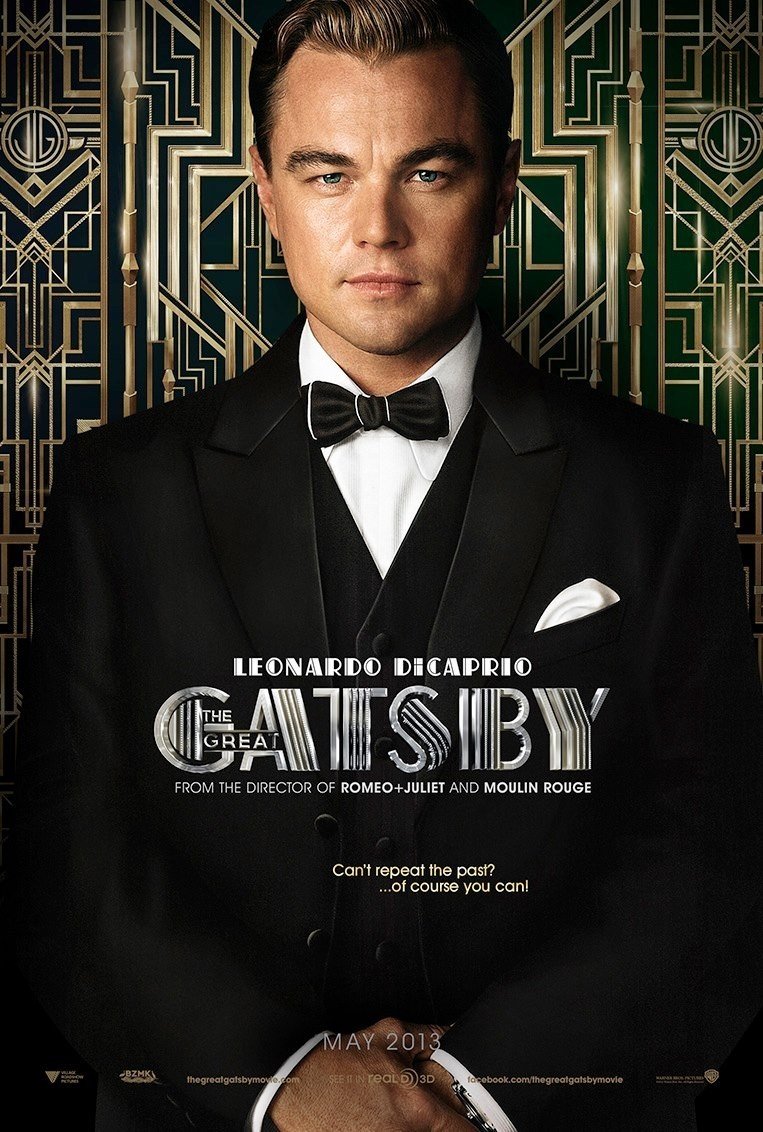
The Great Gatsby (2013)

While I've read the Great Gatsby a few times, it has been many years since my last reading. I would definitely not consider myself a scholar in any way, shape or form. I also have not seen the previous movie with Robert Redford in it so have no starting point to compare this one to.

I took my girlfriend to see it. Initially she didn't want to go. One of her friends specifically warned her away from it saying the only thing good about it was Leonardo's acting. However, she heard some music from the sound track and my girlfriend can easily tie the strength of a soundtrack to a movie. Not perhaps a good idea when judging films.

When arrived very early. She thought it started at 7:20 PM and it turns out that was 7:50 PM. Of course that means the movie didn't still till well after 8:00 PM thanks to the plethora of commercials the user is bombed with. Initially the crowd was very thin. I suspected it would stay that way with a new Star Trek movie, the hanging power of Iron Man 3, the new Fast and Furious Movie, and Will Smith's new flick in. I was wrong. By the time the movie was getting started proper, the only seats left were those directly in front. A fairly packed house. And one that for the most part, was very well behaved. I was pleasantly surprised. Normally you get a few fools in a public showing but the audience seemed enthralled.

For her, the movie was a disaster. She couldn't stand Gatsby himself. His language and manner just struck her as wrong. Mind you, she has read the book recently. She has seen the Redford version. She also was struck unaware by the numerous rap styling in the movie. It struck her a mighty discord to see the costumes and designs of a bygone era with such modern and distinct music being used. She actually fell asleep during part of it.

I suppose if you are a Gatsby purist, you may not enjoy the film.

I too was struck by the disharmony of the music and sights but that aspect was only in a small part of the movie and didn't ruin the whole of the cloth for me. The story, which tries very hard, to be a love story, of loss, or that unattainable object and perfection, is done well in my opinion even though the framing device feels a little heavy handed at times. If you are a fan of great scenery, of Leonard Dicaprio's acting, or just looking for some time to kill, the Great Gatsby might be for you.

I'll be discussing some specific spoilers from the movie below so if you wish to avoid those, read no further.

1. Character Motivation. There is a scene where Gatsby, living on a dirt farm, is starting at the sky and the wording is something like he makes himself into a better individual. He wills it to happen. He takes the actions necessary to do so. This drive for success, to be better than he is, is not something unique to Gatsby. Griffith, from the Berserk manga and anime, is a similar creature. One who is born with nothing and yet manages to work his way up among the highest peers of the land. When looking at a character's motivation, what brings them back to seek out loot? To risk life and limb? While for many OSR games, the money for ale and whores is a tempting bit, some may have something more in mind.

2. Social Structures: In many ways, Gatsby could be an adventurer. He engages in illegal activities to amass a fortune. He surrounds himself with items of great taste and importance. He holds onto his funds only through the continued use of illegal actions. His social circles include those who are reduced to those circles, and those who exploit them. The Sopranos dealt with this idea a bit too. That of 'old' or 'legitimate' money being inherently better than 'new' or 'found' money. Those in need often just go to those who have the money. In Japan part of the social turbulence in their history involves the rise of the merchant class and the end of wars requiring samurai.  These social circles though, can be shifting because in some scenes, especially those in 'the wasteland', we see that society doesn't break down along racial lines, it breaks down along financial lines.

In the slums of your cities, do half orcs rub shoulders with half elves? Do humans dream of a better life in an elf empire? Do outcast dwarves handle work that no one else will because it's the only way of earning a living that doesn't involve a life of crime? In such low ranking housing, powerful individuals can spring forth because what do they have to lose?

3. Everyone loves a party. Getting characters together is one of the oldest headaches in the book. The bar is an old standby as adventurers flock to it like lighting to rods. But what if instead of a bar, the characters are invited to a massively sized mansion to meet a new benefactor? While the rest of the guests are among those who casually show up, in the among the great scenes, the music, the dancing, the alcohol and other intoxicants, the characters are actually invited. To secure their work though, they have to find their host. While doing so, they may come across numerous merchants, politicians and criminals of all social spheres who make themselves at home in the fine manor. Perhaps they stop a minor robbery before it becomes something more? Perhaps they come across a couple of different social spheres whose activities, were they known to others, could cause scandal. Would the players seek to profit directly through blackmail or hold it in their back pocket for future use or just consider it a favor? By changing and enlarging the initial meeting place of the start, the characters can have a much larger canvas to walk through.

4. Be different. When running a game, especially if it's a classic adventure, some game masters may have a dread in their stomach. They've run it so many times they don't know what to do anymore. They can run it in their sleep. Be bold. Put some different creatures in the adventure. Throw some different treasures in there. Move the secret rooms around. This can prevent those who may have played the adventure under other GMs from thinking they know everything and can provide a surprising amount of satisfaction in doing so.

There are some other bits in the movie that viewers could take. I've mentioned the use of catch phrases before such as the Hulk and his famous, "Hulk Smash". Gatsby has one here himself but he uses it so much, it's a reminder that a catchphrase should be used only during those special occasions like the good old SDF-1 and "Fire the Main Gun!"

Other points may be the scenery. Can you engage the players in descriptions of the area? Can you tell them how one statue stands above the center of the park and seems to judge everyone and everything with it's ceaseless vigilance? Can you explain that due to the mining in the community, that everything is often covered in a thin layer of black powder? Can you relate the heat of a hot summer day when there is no automatically grabbing some ice or a cold drink to cool down?

Gatsby may not be a faithful reproduction of the novel but it has its own merits and those looking for inspiration could do worse than enjoy it.

Tuesday, April 16, 2013

Spears of the Dawn

Spears of the Dawn is a game with a bit of history to it.

First, it's funded through the Kickstarter process. This in and of itself might be enough to make some people shield their eyes and turn their heads. The thing about Spears of the Dawn though, is that it actually game out a little ahead of time.

Second, it challenges the reader to do better by the gaming community. The author talks about using Scribus, OneBookShelf, OGL material and asks that if you don't like the game, make something better. I don't get the vibe of "You ain't got no game" or nothing hostile like that. I get the vibe that the author is endorsing people to be creative and put their efforts out for the masses in a good way. Probably why he's released the art for the game as public use for gaming too eh?

In between different bits, like looking at apartments and waiting to see what's going on with where I currently live, I've been pinging between Spears and other PDFs. On my computer, the file comes across fine. On my Toshiba Android Thrive tablet, using something like ezPDF, the heading files lose almost all of the detail, leaving only the capital of each word.

While I haven't read the whole book yet, and will hopefully come back to it soon, I wanted to point out the in game mechanic of having the characters be Spears of the Dawn. In games where the culture doesn't default to noble knight, shifty rogue, enigmatic wizard and pious cleric in a pseudo Middle Age Europe, it can be difficult to get a group together. It can be difficult to have a starting point for the game. It can be difficult to know what the players are supposed to do.

Another game, long ago mind you, Legend of the Five Rings, saw this potential problem in its first edition and recommended that the players be Magistrates who must uphold the law, work together, solve problems, and do right not only by their clan but by the Emperor!

Spears of the Dawn is a calling, a caste, a title, but from what I've seen this far, it's not a game mechanic. The people of the Three Lands have come out of war only recently against a dark and evil force that has many pockets of malice behind them and it is up to the Spears of the Dawn to battle against those monsters.

It's a great plot device that allows a diverse group of characters to get together and take to the dungeons with a bit of a background. It's one that can be used for multiple characters. It can be as deep or as shallow as the game master wants to make it. For those who might not be interested in that venue though, there's a sourcebook/adventure out by Sine Nomine Publishing already, House of Bone and Amber.

I haven't read through enough of the game rules to determine what is new and what is old school in game mechanics. In many ways it seems at first glance to be lot of old school including some of the old stand by for gaming stats: Strength, Intelligence, Wisdom, Dexterity, Constitution, and Charisma, rolled 3d6 straight in line.  Bonuses are relatively small starting at +1 from 14-17 and +2 for 18. One of the nods to old school, or at least I consider it a nod, is the use of a silver standard. Many times one of the cries against the old Dungeons and Dragons is the sheer amount of wealth characters can accumulate.

In a non-campaign moment, one of the things I was looking at in terms of the stat generation, was either a nod to the old Rolemaster game system, or a case of parallel development. Many moons ago, in Rolemaster, if you didn't have at least a 90 in your prime stats, you could swap out your stat for a 90. Here, in your class, while you do roll 3d6 in order, you can put in a 14 for your prime score. While it's not going to be as awesome as an 18 in say, 3rd or 4th edition, or anything, especially in an OSR style game, it does provide some options for those players who have to have some better stats then the minimum eh?

Another non-standard bit, is rolling hit points. While it's a random roll, it's a random roll every level. It uses the lower end hit dice types, so fighters using d8 for example. The 'thing' though is that say at 3rd level, you can roll 3d8 for your hit points and take the better of the two, the new ones or your original ones. That's a bit of a strange system for me as it can have some flux in lower level characters who roll poorly but doesn't seem too useful as advancement happens and dice start to 'average' out on weight.

I hope to get back to Spears of the Dawn soon. It looks like a nice campaign setting that could easily be yanked out of the OSR system for exploration by characters from other systems or settings.

Thursday, February 7, 2013

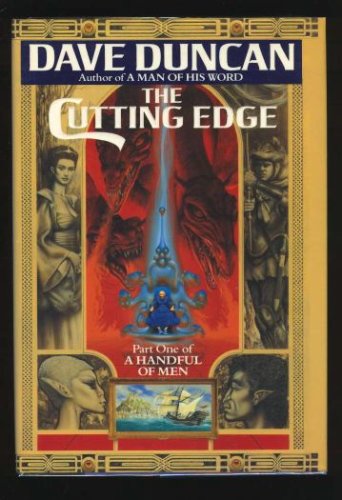
The Cutting Edge: Part One of A Handful of Men by Dave Duncan


Another victory for the dollar spinner rack from Half Price Books. Good thing too! I went to look at Amazon and see what it would run to pick up the material in e-book format and it's over $7 bones a pop. What's worse is it has a different cover and while I understand that art and graphic design and all that good stuff is a personal matter, and this cover isn't my favorite by far, the new version is made of fail. If you're going to charge premium prices, make sure you've covering all your bases eh? Mind you, this doesn't seem to be too far from how Dave himself thinks if you read his web page.

While I realize that no everyone has access to a local used book store, or a yard sale, or even that you can't find all the books you want in a particular series or setting, I have so many other books currently, and so many more I could buy for well under $7, that I'm afraid unless those books go on sale at some point, Dave Duncan or Tor, the publisher, will never see a penny of my reading his materials.

I've never read any of his books before mind you. That's one of the benefits of the dollar spinner rack. I can afford to pick up a book by an author, like Dave Duncan , who I've never read before and see if it's something I want to continue with.

Having never read any of the work here before, I will note that despite it being a sequel to a previous series, that I didn't have any problem reading it or following along with the characters. It does end on a massive cliffhanger though, so if that is a problem for you, you may want to avoid it.

Below I'll be discussing spoilers from the book so if you'd rather avoid those, read no further.

1. Magic Words. One of the interesting things about the 'magic system' in this series is that there are words of power. Many game systems go different routes to bring such magics to the game, including 3.5  which, like previous editions, had it's various "Word" spells. This doesn't count specific classes like the 3.5 version of Tome of Magic. Here, when you attend an older person, they may sound off their knowledge of a word of magic and if you have 'talent', it will grant you power.

For me, in D&D, that might be a good reason why mages go adventuring at all. Only by fighting and killing other mages can they learn these 'words of power.' Each would can be used to advance a spell level so that you could learn higher level spells. Sure, sitting in a tower may get you access to the material, but if you don't actually know the words of power to unlock the ability to learn a 2nd level spell, you'll never be able to cast it. Here to learn higher level spells you'd have to continue to earn new words of power.

2. The Future: There are a few bits that involve seeing the future here. One of them involves a scrying pool that when you put one foot in, shows you things you should move towards, and if you put the other foot in, it shows you things you should avoid. Another one showcases how a person who is always seeing the future might act. They often get confused with how things are and what is actually happening. It makes them less likely to be taken by surprise mind you but at the same time doesnt' put them in good standing in social situations.

3. A Mage By Any Other Name: The setting is populated by all manner of powerful spellcasters. The most powerful of which, are known as Warlocks. These 'titles' are a manner of honorific as it's revelead that of the 'four' traditional ones, there was a non-Warlock who was more powerful than all of them. It also doesn't account for other variables. This to me, reminds me of the older editions use of names for the different levels of the core classes. Instead of every cool sounding noun getting it's own core class or prestige class or paragon levels or whatever going on nowadays, the titles are ranks or honorifics.

4. It's A Small World After All. Despite the novels' length, it is only the start of the story and some of the.... I don't want to say secondary characters, but characters whose presence in the novel is under felt, have a way to go before their story impacts the core tale. These characters though are from a forgotten and/or lost race and aren't known, in general, to the outside world. Indeed, even among their own people they can hide from one another if they choose. One of the games the mages there play on outsiders is, when ot wiping them out entirely, is of making their journey go in circles. If there is a hidden race or society or group, there should be a sound reason why they're not known outside of, "Oh, no one goes down that street."

5. Love. There is a 'Roman' style society here in its glory. Their ruler is a good man. Not great in ll virtues mind you but a sound leader. His love for his wife however, is almost more of a matter of function and of her attractiveness. This leader's right hand man however, is a lover of the ladies and has already seen himself, in a scrying pool, with his lord's wife. But the way things are developing, you can tell the wife, who is treated more as an object as opposed to a person, isn't against such a potential future because it involves her making decisions. Her sense of values and what she wants out of life are also much different than what her husband wants. She would be content to learn to love her husband and their daughter if they could do so in solitude as opposed to being part of the court life. In many ways, it echoes another famous love story that went wrong show cased in many tales like the movie Excalibur. NPCs, subplots, themes of betrayal and tragedy, can all add deeper elements to a campaign that embraces them.

6. Duty. When good king Rap uses his magical abilities to see what is going on in the grander scheme of things, he is overcome with a sense of great evil preparing to come. He find that it's his duty, his solomon duty, to stand against this. It's an interesting thing because when he's asked if it's to save his own home, he answers that it's to save the world. Failure to save the world would be the same thing as failure to save that home. Characters that need motivation to take up arms or to get out of the tavern, can be motivated when they know that failure to do something, results in the end of the game.

I enjoyed the book and will look for other volumes in the series next time I'm at Half Price books. I like the way the writer is able to transition from deep personal moments to hand waving seasons in order to move characters closer to one another over large spans of land or to age the younger characters in the book without it seeming to be skipping important parts.

Dave Duncan handles a large cast and is able to bring them together to start the real struggle that won't occur till at least the next volume.