I like Super Heroes.
I like anime.
So a series about a preteen in a world of superheroes where something like 80% of the population has a super ability and he does not, but he wants to be an actual hero comes out, I'm interested.
So +Hulu has My Hero Academia season one available to stream.
And hey, Amazon had the first volume of the Manga on sale.
So for those who are curious, the manga and the anime follow each other pretty closely.
It also ties into the recent posts of legacy, of passing down values or taking values and bringing them to a new generation.
Midoriya is a youth in a world of 'quirks.' These 'quirks' tend to fall into the useful to the useless. They are similar to 'mutant' abilities in the Marvel Universe but are often highly augmented by technology. Much like the other series, Bunny & Tiger, there are heroes who do it for the money, those who do it for the popularity, and those, like All Might, the blonde United States Hero, the most powerful of them all, who does it because it's the right thing to do.
Now the thing about 'quirks' is like in DC or Marvel, there's the technology factor. When you get super smart people, for example, you get technology that goes way beyond anything available in the 'real' world. This means cloning, genetic modification, etc... So there's a bit of that going on as well.
Midoriya though, has no quirk. This is devastating for him because he grew up watching All Might and had a serious case of hero worship. Of doing the right thing. Of being an actual hero, not for the money, not for the popularity, not for the arrogant righteousness of it, but to help others.
Despite not having a quirk, and being teased relentlessly by former friend Bakugo, a youth with an impressive quirk who himself dreams of being a big hero, mainly for the popularity, to set new roads and records for himself, Midoryia keeps dreaming. He takes notes. He observes how super hero fights go, how tactics work.
And then he gets to met All Might. It's amusing to note that even the character recognizes that All Might is "drawn in a totally different style," a less than sublet nod to western comics.
Midoryia flat out asks All Might if he can be a hero. All Might tells him to not become a super hero but rather, become a police man or something that does help people.
And then he surprises All Might with his bravery and his actions, going to save Bakugo from a super villain.
All Might decides that Midoriya will be his pupil and that thanks to All Might's own unique quirk, "All For One", a quirk that can be passed down to others, Midoriya is back in action and has the potential to be one of the greatest heroes of all.
All Might does this because he is in Japan originally to find an appropriate heir. In a previous battle, All Might was badly injured and cannot stay in his quirk form for long and his powers are fading. His nonquirk form is less than flattering.
Midoriya, by being like All Might, inspired by All Might indeed, is just the type of hero that All Might is looking for. Even without quirks, with no thought to his own safety, Midoriya charged in to save someone else's life.
This impresses All Might.
And as a reader, I was impressed by how All Might works with Midoriya. How he gives him a plan to let Midoriya accept the All For One power without it destroying him. How he works with him in almost all things. It's great to see an actual mentor-apprentice relationship where
My Hero Academia is a fun title that like it's characters, has it's share of quirks. For example, if Midoriya never wept again, I'd be impressed. The kid has more tears than Steven from Steven Universe, which is damn impressive.
The art is solid. The storytelling solid. There are elements going on in the background that are building up. If you have Hulu, check it out, otherwise check out the manga it's based on. Fun stuff.
Showing posts with label Manga. Show all posts
Saturday, December 3, 2016
Thursday, April 9, 2015
F is For Full Metal Alchemist
Full Metal Alchemist is a story about two brothers trying to reclaim their lost humanity. Along the way they make numerous friends and enemies and wind up in a much larger scale of events than they had ever anticipated.
The series has proven very popular. There are two separate animes on it. While this is not unusual (see Gundam), the fact that they came out so close together is a little unusual. There is also a lengthy manga. I stopped reading a while ago as I had caught up to the series and after watching the new anime, will have to go back and catch up on it all over again.
One of the things that's great about Fullmetal Alchemist, is the world building. By making the characters Edward and Alphone, into specialist in a field of specialist, the viewers are able to have numerous favorites. There are different named characters like the 'Crimson Alchemist' or the 'Flame Alchemist'. Some very impressive sounding names.
These named characters also have named maneuvers and abilities. This puts them into a category that is above the standard soldier. In many ways, this makes them perfect classes with each type of class having a different specialization.
Because they work for the government, they also automatically have a patron. This prevents the Game Master from having to work too hard in order to get the characters involved with the adventure.
When a setting gives you an "in" like this, it can make running the campaign easier. In the classic game, Legend of the Five Rings, one of the suggestions is to make the characters Emerald Magistrates. This allows the game to get moving without the dreaded "You all meet in a bar" standard. In newer games, Spears of the Dawn has a similar option in that the title, Spears of the Dawn, is an actual title of those who fought against monsters and are well respected.
Ed and Al have their own motivations though. In this case, it is to get their bodies back. To do this, they need to do research. This involves them going to different research faculties and studying. While that could be boring, the writer showcases several small bits that are anything but ranging from a burned down library, to a random encounter with a former state alchemist who knows more than he's telling.
By having both options, player driven quests, and the ability to introduce patron level quests, the Game Master has the best of both worlds. Indeed, if the characters are having too easy a time of getting their own deeds, the Game Master can add complications through the patron. They may have to do some standard guard duty instead of hunting down that serial killer.
Of course players will seek to work around such restrictions but that's the point. The conflict of trying to do what they want against what others want them to do, is how the game creates a sense of tension.
The setting that Fullmetal takes place in, is one that has a variety of creatures that themselves can be different than one another. For example, Alphonse does not have a body, but rather, his soul is bonded to a suit of armor. During the series, we discover that there are others like this.
There are also combinations of men and animal known as chimeria. Each one potentially different than the others.
Then there are the Seven Sins. Some of these are 'standard' like Lust and Gluttony while others are a bit more friendly than you'd think.
The setting is large enough to weave numerous threats that the characters can't overcome just with punching or kicking.
Despite the grim overtones the series carries, the writer is able to weave quite a bit of humor into it. This should be something that a Game Master keeps in mind when prepping his own work. Even as plagues and zombies take over the land, there needs to be some genuinely funny things. Perhaps someone has a favorite cup that he dropped and is always talking about it. "My favorite cup!"
The humor helps break down the gruesome elements and gives the viewer a break and allows the reader to recharge her batteries.
Another element to note, is that there are changing alliances. One of the most popular characters here is Scar, named (originally!) after his scarred face. He's a tough loner who hates the heroes! This type of anti-hero is fairly common and the anime/manga Dragon Ball Z is littered with characters who once fought against Goku but now work alongside him.
When designing your NPCs, are there 'hooks' that the characters can use to turn them from enemies to friends? Are there deeds that the characters can perform to show these foes that the players are not the true enemies?
Have any other gamers used Fullmetal Alchemist as inspiration for their games? If so, how did it go? I have friends who are enamored of the art style in the series and love the animated suits of armor as well as some of the villains the characters face.
Labels:
A to Z Challenge,
Anime,
Character Design,
Full Metal Alchemist,
Manga
Thursday, June 5, 2014
Until Death Do Us Part Volume 1
I've heard noise in the 'Net that Amazon was trying to shake down a book publisher. Ironically, some of the things Amazon has been accused of, include NOT discounting the companies titles. You know, if you're relying on Amazon to discount your product to move it in the first place, you might be pricing it too high.
Anyway, I see that Barnes and Nobles and a few other companies are trying to 'take advantage' of this situation by offering huge discounts and other benefits like buy two, get one free. If they're not making profit from this maneuver, it's stupid. As has been shown, consumers who are buying online in the first place, don't have loyalty, they have price loyalty. If you're not making any money on the thought that these loss leaders will get people to stick with you online, you've already lost.
Again, anyway, one of the titles that Amazon in it's evilness does have on sale, is Until Death Do Us Part, volume 1. This is set in modern times that utilizes a lot of super tech and low psychic abilities, or at least the first volume does. For $2.99, I was more than willing to give it a read.
I dig the art style. I don't want to say 'standard manga', but well, it's not done in the humorous style and it's done in a manner that allows the high action to be told quickly and with lots of movement and energy so for me, it's fairly standard.
The story is also interesting. The wiki entry over here goes into it a bit more.
The main character, Mamoru Hijikata, is a modern day Zatoichi, a blind swordsman with his own sword cane. The writers make it a little more modern though, giving Mamoru glasses that allow him to 'see' things in grid patterns with no depth or detail but good enough to see people, buildings, and hell, even moving bullets. His katana? It's a mono-katana capable of cutting through almost anything with devastating precision. His initial purpose? He works for an organization of wealthy benefactors who themselves have suffered harm from criminal elements and have pooled their resources to fight crime with technology, but they are vigilantes.
By making the character blind, but competent with a katana, and limitations on his 'sight', the author creates a character with limitations but one whose martial appeal is strong. He's in part an underdog thanks to his limitations.
The whole benefactor angel makes for a great modern campaign. It allows for the Game Master to throw a variety of equipment into the campaign that shouldn't exist in the current era, but thanks to those advances funded with super wealth, are real toys for the characters.
The other main character, Haruka TÅyama, is a young woman who we initially see as a prisoner for a yakuza group that wants to exploit her psychic abilities. In this case, Haruka is able to see the future, or many futures, and find the path most likely to happen. When she meets Mamoru, she knows that he is the one who can free her from the Yakuza and that starts their relationship.
Mamoru's relationship with his organization puts him in contact with a lot of other people. Such a collective would be useful in role playing games as it could allow for new players and new characters to be brought in if old ones die or players have to leave the campaign for a while. The rotating cell nature allows for a lot of flexibility which is great for a campaign.
One of the twists on the villains in the series, is that the organization 'Plunderers', are not out for lofty ideals, political change, or wealth, but are out for intellectual property. They too are out for the high tech of this near future world and it makes them dangerous.
If the other volumes ever come down in price or I feel like making a physical purchase, which given my limited space, I might be tempted to take advantage of Barnes & Nobles sale as I see they have the first six volumes.
Anyway, I see that Barnes and Nobles and a few other companies are trying to 'take advantage' of this situation by offering huge discounts and other benefits like buy two, get one free. If they're not making profit from this maneuver, it's stupid. As has been shown, consumers who are buying online in the first place, don't have loyalty, they have price loyalty. If you're not making any money on the thought that these loss leaders will get people to stick with you online, you've already lost.
Again, anyway, one of the titles that Amazon in it's evilness does have on sale, is Until Death Do Us Part, volume 1. This is set in modern times that utilizes a lot of super tech and low psychic abilities, or at least the first volume does. For $2.99, I was more than willing to give it a read.
I dig the art style. I don't want to say 'standard manga', but well, it's not done in the humorous style and it's done in a manner that allows the high action to be told quickly and with lots of movement and energy so for me, it's fairly standard.
The story is also interesting. The wiki entry over here goes into it a bit more.
The main character, Mamoru Hijikata, is a modern day Zatoichi, a blind swordsman with his own sword cane. The writers make it a little more modern though, giving Mamoru glasses that allow him to 'see' things in grid patterns with no depth or detail but good enough to see people, buildings, and hell, even moving bullets. His katana? It's a mono-katana capable of cutting through almost anything with devastating precision. His initial purpose? He works for an organization of wealthy benefactors who themselves have suffered harm from criminal elements and have pooled their resources to fight crime with technology, but they are vigilantes.
By making the character blind, but competent with a katana, and limitations on his 'sight', the author creates a character with limitations but one whose martial appeal is strong. He's in part an underdog thanks to his limitations.
The whole benefactor angel makes for a great modern campaign. It allows for the Game Master to throw a variety of equipment into the campaign that shouldn't exist in the current era, but thanks to those advances funded with super wealth, are real toys for the characters.
The other main character, Haruka TÅyama, is a young woman who we initially see as a prisoner for a yakuza group that wants to exploit her psychic abilities. In this case, Haruka is able to see the future, or many futures, and find the path most likely to happen. When she meets Mamoru, she knows that he is the one who can free her from the Yakuza and that starts their relationship.
Mamoru's relationship with his organization puts him in contact with a lot of other people. Such a collective would be useful in role playing games as it could allow for new players and new characters to be brought in if old ones die or players have to leave the campaign for a while. The rotating cell nature allows for a lot of flexibility which is great for a campaign.
One of the twists on the villains in the series, is that the organization 'Plunderers', are not out for lofty ideals, political change, or wealth, but are out for intellectual property. They too are out for the high tech of this near future world and it makes them dangerous.
If the other volumes ever come down in price or I feel like making a physical purchase, which given my limited space, I might be tempted to take advantage of Barnes & Nobles sale as I see they have the first six volumes.
Tuesday, May 13, 2014
Fist of The North Star: Rei
The anime based on the manga, Fist of the North Star, has two main schools initially. The one used by the protagonist, Kenshiro, is the Fist of the North Star. The other is the Southern Cross. The North Star is supposed to only have one practionioner while we discover later that the Southern Cross has no less then Six, and one of those Six, the General, has Six defenders who are also masters of martial arts.
Visually, I always liked the Southern Cross. It's a style that cuts its opponents to pieces whereas the North Star causes them to blow up. Of those who practice it, Rei was my personal favorite. His introduction is all over Youtube but this clip is as good as any other I suppose.
The thing about Rei that works, is initially, he's very much out to pursue a specific goal. In this case, finding the man with seven scars on his chest. (Kenshiro has seven on his chest by the way!) and killing that man. Apparently such an individual killed Rei's parents and enslaved his sister!
Of course it turns out NOT to be Ken and the two managed to join forces to kill those who've done these terrible things.
The thing I like about Rei though, is his change. He becomes concerned for other people. He sees the value in what Kenshiro is doing. He grows to care for Bat and Lin and others in a short time. He understands that its not just about doing only what he wants to do.
And that makes him a perfect example of how some players should fit into the game. Sure it's all fun to be the 'Wolverine' or if this was the 90's, the 'new' Ghost Rider, but in a role playing game that's not a solo game, you need to have hooks that fit in with the other players. You need to be able to engage them. Even if your initial concept is lone wolf, you need to be able to have hooks that go into the others.
For example, lone rogue whose only goal is wealth? Role playing an appreciation for what the other characters can do if only as a nod to the fact that a group can gather more wealth than an individual rogue can, is the way to go. "While I may not appreciate the noise that this armored buffon makes, I admit that his ability to destroy ogres and hill giants is quite useful in the liberation of their funds."
A wizard whose only purpose is to find more and greater magics to master? "While Amar is a fool for worshipping the gods instead of magic, I admire the fact that his ability to channel positive energy saved me the trouble of having to pull out real arcane power to destroy that lich and its minions."
You have to role with it to roll with it.
The thing about Rei that works, is initially, he's very much out to pursue a specific goal. In this case, finding the man with seven scars on his chest. (Kenshiro has seven on his chest by the way!) and killing that man. Apparently such an individual killed Rei's parents and enslaved his sister!
Of course it turns out NOT to be Ken and the two managed to join forces to kill those who've done these terrible things.
The thing I like about Rei though, is his change. He becomes concerned for other people. He sees the value in what Kenshiro is doing. He grows to care for Bat and Lin and others in a short time. He understands that its not just about doing only what he wants to do.
And that makes him a perfect example of how some players should fit into the game. Sure it's all fun to be the 'Wolverine' or if this was the 90's, the 'new' Ghost Rider, but in a role playing game that's not a solo game, you need to have hooks that fit in with the other players. You need to be able to engage them. Even if your initial concept is lone wolf, you need to be able to have hooks that go into the others.
For example, lone rogue whose only goal is wealth? Role playing an appreciation for what the other characters can do if only as a nod to the fact that a group can gather more wealth than an individual rogue can, is the way to go. "While I may not appreciate the noise that this armored buffon makes, I admit that his ability to destroy ogres and hill giants is quite useful in the liberation of their funds."
A wizard whose only purpose is to find more and greater magics to master? "While Amar is a fool for worshipping the gods instead of magic, I admire the fact that his ability to channel positive energy saved me the trouble of having to pull out real arcane power to destroy that lich and its minions."
You have to role with it to roll with it.
Labels:
Anime,
Character Motivations,
Characters,
Fist of the North Star,
Manga
Monday, May 12, 2014
Fist of the North Star (Anime 1984)
It was the mid-80's when I went to the theater, the Music Box, and first saw the movie, Fist of the North Star.
It was an intense action movie with ultra levels of violence that brought two of my favorite things, anime and kung fu, together into a glorious feast for the eyes. I would later buy it on VHS and DVD while one of my friends owned it on laserdisk. The laserdisk version was a fantastic transfer while the VHS and DVD copies were terrible in color and quality.
Even back then though, the movie didn't make a lot of sense. It had so much going on that seemed to belong to something else.
So on +Hulu they have both seasons of the original anime from 1984 and it's like over 150 episodes.
And I see that Amazon has a few of them, but I'm not sure if that's the 'revised' one or the original ones.
It's one of the reasons I've been quite over here. I've been trying to plow my way through it. Back in the day, Viz comics was publishing the Fist of the North Star in monthly serials. They folded. Then another company was publishing master editions in full color that were graphic novel sized. They stopped production around seven or eight.
So I was always curious to know, "WTF was all that?"
Having seen it all, m'eh.
Part of this is just the age of it. The subtitles are terrible in some instances. Like flat out wrong. In addition, it was done in a time before widescreen so you've got the black bars common to those older shows. This shows up in the quality of the animation as well as the sound of the animation itself.
And remember how I said it was ultra violent? Like martial arts whose techniques involve cutting through people like katanas or making them blow up by hitting pressure points?
Censorship from Japan must have been weird in those days. If the character has blood on him, it's okay if it's red. If it's an explosion of blood, it's white. Which looks funny and in some instances "wrong" depending on where all the blood is splashing.
I enjoyed some of the characters. The designs on some of them are very 'super heroic' and at the same time, very 'Mad Max.'. It's certainly inspiring for anyone looking for visuals in a wasted world where strength is the only law. It's great for those who want names for special martial art maneuvers for whatever games their players.
For anyone who wants a coherent story? Ugh. The translations are terrible to start with, and more worrisome is the soap opera nature of things. Hidden brothers, hidden half brothers, hidden blood lines, hidden martial arts and a whole slew of things that just go straight into that soap opera realm.
In terms of themes, well, people are going to die, especially people you love. That seems to be one of the biggest themes. You may be the strongest fighter there, you may be able to come back from beatings that should have killed you, but if you have any loved ones, wish them good bye when you see them, often getting killed just as you arrive.
The other problem, and I'm pretty sure it's not just the anime, was the consistency of the character's in terms of their size. Ken is the main hero of the story. Everyone whose 'good' or 'non-monstrous', is drawn like Ken in terms of body type. In that aspect, it reminds me of how toys used to be designed. Every toy was the same damn toy just with different outfits and accessories.
But the 'monstrous' characters, like Raoh? In some sequences he's a little bigger then Ken, in others he's like three times Ken's size.
There's also the whole internal consistency of things. When Ken is angered and going into an all out attack, he often bursts straight out of his clothes. In the post apocalypse world, who is repairing those clothes?
And after watching the whole thing, I have to wonder, what the hell planet is this supposed to be? There are some bits that are like, "Well, maybe it's Earth in the future (from when it was done), but no one calls any of the places by their old names. The technology is a mix of motocycles, because they look cool, crossbows and arrows, and well, in some sequences, a city whose lights are powered by slave labor. Those things were just a little annoying, but paled in contrast to the whole drama of the series.
For example, we learn that Toki and Raoh are actual blood brothers. Toki takes Ken to graves for his parents and for himself and Raoh. All a big revelation at the time. But later on, when Ken crosses the sea to fight Raoh's older brother, we see in a flashback that Ken and Raoh talk about the later's older brother. And their mother died on that other shore so whose buried in the graves? Messes like that show up all over the place.
For a bigger example, Ken is supposed to be the sole heir to the martial art, Divine Fist of the North Star, because it's such a dangerous martial art. But there is Toki, Raoh, and well, a former teacher who decided not to pursue the art and I'm sure a few others I'm missing. But when Ken finally does decide to do something about Raoh, to "seal his fists", he's already let Roah kill hundreds if not thousands of people and it feels very forced.
These inconsistencies go on and on. The one that annoyed me personally is when we see Souther, a man who has a secret that makes him immune to the deadly martial art that Ken pratices. Because of that, Ken is beaten like a dog and hung out to drain of his blood. While Ken recovers, another martial artist fights Souther and is killed. In the meanwhile, turns out Toki knew the weakness. Good work Toki, you managed to get more people killed by not telling anyone ahead of time.
Again, ugh!
The thing I'll give Fist of the North Star over say, Dragonball Z, is that the battles are relatively quick. In some episodes of Dragonball Z you could leave and come back four episodes later and the same fight is still going on. Here that may happen once or twice with the biggest villains of the series but for the most part, the fights against one specific individual are done in one while the battles against that person's minions may take a while, which in and of itself is actually more boring. "Oh, fifteen people that are all freakishly large with giant mohawks. I wonder how long it'll take to kill them."
And then that gets me thinking about how stupid everyone is in the series. Raoh takes over territories and gives them to people who aren't 'super villain' evil, but 'stupid villain evil'. "Ah, in this desolate time of no food and water, I villain A will waste all of the food, while villain B wastes all the water!"
I can see the whole series being a touch different if written today.
"Roah, come out and face me!"
"What, what is it Kenshiro!"
"I've come to seal your fists!"
"Didn't we already do this whole fight thing?"
"Yes, but now I'm possessed by justice!"
"Ken, you're like the most honest guy I know. Turns out these warlords I've been using are stupid as hell, How about being an agent of good and going around killing the corrupt and incompetent idots out there so that we can get some work done eh?"
"Raoh, you want to conqueror the heavens!
"Turns out they don't care. I took my big ass horse to the biggest mountain and hey, it was cold up there and the air was thin. Seems that I should actually you know, prepare for the invasion of the other land. Maybe give Falco and a few other people a call and see if they're looking for jobs. Some good people that aren't getting properly used."
"I hate you Roah."
"I love you Ken."
No, seriously, like 90% or more of the villains of the series would've been normal people if they just had some normal conversations with people before they were on the verge of death.
Anyway, I'll probably have more to say about the anime in terms of inspiration. When I was a young man, that experience at the Music Box opened my eyes to how powerful and ridiculous you can make martial arts and that served me well in many games ranging from Champions to Rifts. As an older man, know that I already know that, the storylines here make me cringe, but some of the names and visual executions of the moves are still popcorn worthy.
Long live the Fist of the North Star!
It was an intense action movie with ultra levels of violence that brought two of my favorite things, anime and kung fu, together into a glorious feast for the eyes. I would later buy it on VHS and DVD while one of my friends owned it on laserdisk. The laserdisk version was a fantastic transfer while the VHS and DVD copies were terrible in color and quality.
Even back then though, the movie didn't make a lot of sense. It had so much going on that seemed to belong to something else.
So on +Hulu they have both seasons of the original anime from 1984 and it's like over 150 episodes.
And I see that Amazon has a few of them, but I'm not sure if that's the 'revised' one or the original ones.
It's one of the reasons I've been quite over here. I've been trying to plow my way through it. Back in the day, Viz comics was publishing the Fist of the North Star in monthly serials. They folded. Then another company was publishing master editions in full color that were graphic novel sized. They stopped production around seven or eight.
So I was always curious to know, "WTF was all that?"
Having seen it all, m'eh.
Part of this is just the age of it. The subtitles are terrible in some instances. Like flat out wrong. In addition, it was done in a time before widescreen so you've got the black bars common to those older shows. This shows up in the quality of the animation as well as the sound of the animation itself.
And remember how I said it was ultra violent? Like martial arts whose techniques involve cutting through people like katanas or making them blow up by hitting pressure points?
Censorship from Japan must have been weird in those days. If the character has blood on him, it's okay if it's red. If it's an explosion of blood, it's white. Which looks funny and in some instances "wrong" depending on where all the blood is splashing.
I enjoyed some of the characters. The designs on some of them are very 'super heroic' and at the same time, very 'Mad Max.'. It's certainly inspiring for anyone looking for visuals in a wasted world where strength is the only law. It's great for those who want names for special martial art maneuvers for whatever games their players.
For anyone who wants a coherent story? Ugh. The translations are terrible to start with, and more worrisome is the soap opera nature of things. Hidden brothers, hidden half brothers, hidden blood lines, hidden martial arts and a whole slew of things that just go straight into that soap opera realm.
In terms of themes, well, people are going to die, especially people you love. That seems to be one of the biggest themes. You may be the strongest fighter there, you may be able to come back from beatings that should have killed you, but if you have any loved ones, wish them good bye when you see them, often getting killed just as you arrive.
The other problem, and I'm pretty sure it's not just the anime, was the consistency of the character's in terms of their size. Ken is the main hero of the story. Everyone whose 'good' or 'non-monstrous', is drawn like Ken in terms of body type. In that aspect, it reminds me of how toys used to be designed. Every toy was the same damn toy just with different outfits and accessories.
But the 'monstrous' characters, like Raoh? In some sequences he's a little bigger then Ken, in others he's like three times Ken's size.
There's also the whole internal consistency of things. When Ken is angered and going into an all out attack, he often bursts straight out of his clothes. In the post apocalypse world, who is repairing those clothes?
And after watching the whole thing, I have to wonder, what the hell planet is this supposed to be? There are some bits that are like, "Well, maybe it's Earth in the future (from when it was done), but no one calls any of the places by their old names. The technology is a mix of motocycles, because they look cool, crossbows and arrows, and well, in some sequences, a city whose lights are powered by slave labor. Those things were just a little annoying, but paled in contrast to the whole drama of the series.
For example, we learn that Toki and Raoh are actual blood brothers. Toki takes Ken to graves for his parents and for himself and Raoh. All a big revelation at the time. But later on, when Ken crosses the sea to fight Raoh's older brother, we see in a flashback that Ken and Raoh talk about the later's older brother. And their mother died on that other shore so whose buried in the graves? Messes like that show up all over the place.
For a bigger example, Ken is supposed to be the sole heir to the martial art, Divine Fist of the North Star, because it's such a dangerous martial art. But there is Toki, Raoh, and well, a former teacher who decided not to pursue the art and I'm sure a few others I'm missing. But when Ken finally does decide to do something about Raoh, to "seal his fists", he's already let Roah kill hundreds if not thousands of people and it feels very forced.
These inconsistencies go on and on. The one that annoyed me personally is when we see Souther, a man who has a secret that makes him immune to the deadly martial art that Ken pratices. Because of that, Ken is beaten like a dog and hung out to drain of his blood. While Ken recovers, another martial artist fights Souther and is killed. In the meanwhile, turns out Toki knew the weakness. Good work Toki, you managed to get more people killed by not telling anyone ahead of time.
Again, ugh!
The thing I'll give Fist of the North Star over say, Dragonball Z, is that the battles are relatively quick. In some episodes of Dragonball Z you could leave and come back four episodes later and the same fight is still going on. Here that may happen once or twice with the biggest villains of the series but for the most part, the fights against one specific individual are done in one while the battles against that person's minions may take a while, which in and of itself is actually more boring. "Oh, fifteen people that are all freakishly large with giant mohawks. I wonder how long it'll take to kill them."
And then that gets me thinking about how stupid everyone is in the series. Raoh takes over territories and gives them to people who aren't 'super villain' evil, but 'stupid villain evil'. "Ah, in this desolate time of no food and water, I villain A will waste all of the food, while villain B wastes all the water!"
I can see the whole series being a touch different if written today.
"Roah, come out and face me!"
"What, what is it Kenshiro!"
"I've come to seal your fists!"
"Didn't we already do this whole fight thing?"
"Yes, but now I'm possessed by justice!"
"Ken, you're like the most honest guy I know. Turns out these warlords I've been using are stupid as hell, How about being an agent of good and going around killing the corrupt and incompetent idots out there so that we can get some work done eh?"
"Raoh, you want to conqueror the heavens!
"Turns out they don't care. I took my big ass horse to the biggest mountain and hey, it was cold up there and the air was thin. Seems that I should actually you know, prepare for the invasion of the other land. Maybe give Falco and a few other people a call and see if they're looking for jobs. Some good people that aren't getting properly used."
"I hate you Roah."
"I love you Ken."
No, seriously, like 90% or more of the villains of the series would've been normal people if they just had some normal conversations with people before they were on the verge of death.
Anyway, I'll probably have more to say about the anime in terms of inspiration. When I was a young man, that experience at the Music Box opened my eyes to how powerful and ridiculous you can make martial arts and that served me well in many games ranging from Champions to Rifts. As an older man, know that I already know that, the storylines here make me cringe, but some of the names and visual executions of the moves are still popcorn worthy.
Long live the Fist of the North Star!
Labels:
Anime,
Fist of the North Star,
Ken,
Manga,
Martial Arts
Sunday, November 24, 2013
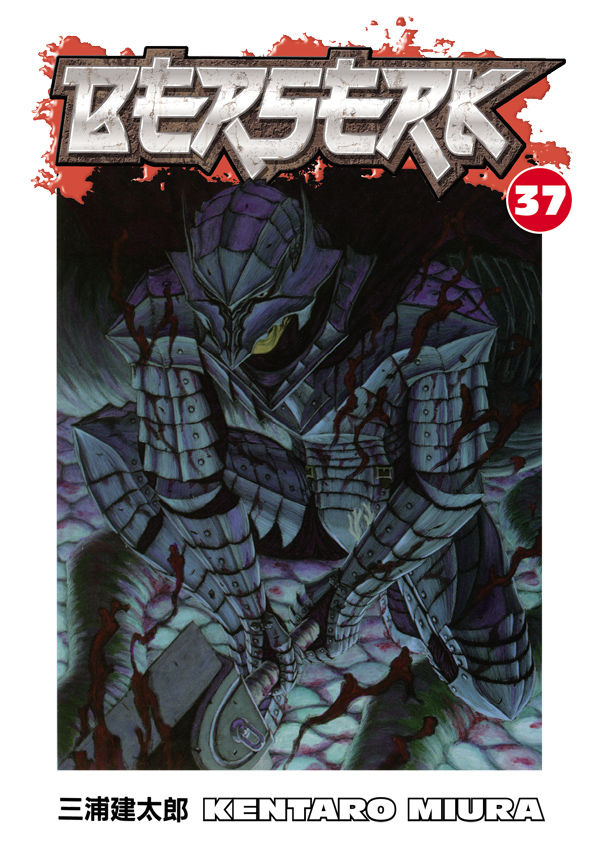
Berserk 37 by Kentaro Miura
While Berserk by Kentaro Miura has not come to an end in the manga version, it has slowed considerably. This volume, afaik, is the last one we'll see in a while. Ironically enough, the movies have been moving forward. Hopefully we'll see more Berserk and of Guts in that field while the manga lays fallow.
This volume concludes the 'Sea God' story and brings in more magic and more visibility to the changes that have rocked the world since "the Wind" event where a strange wind blew through the land and heralded the age of magic and monsters returning to the world.
The art is up to Kentaro Miura's usual high standards. He, George Pereze and John Buscema all have a great timeless talent and I hope that if Berserk is on hold for a while that we'll be seeing his work in some other forms. Perhaps even an art book or something.
In terms of gaming?
1. Judge not by size. When Guts is 'fighting' the Sea God, he's fighting an island. Like several other similar situations where the character's size is of such insignificance, Guts is able to deal damage based on a weak point of the creature, in this case, it's heart. Designing such an opponent is like designing a dungeon. There are 'anti-bodies', various monsters that make their home there, there are parasites, there are creatures too small for the entity to notice. There are also natural hazards like stomach acid, drowning in blood and other unpleasant bits.
2. Red herrings: Guts is aided in this volume by Merrow and by a magical child. It's strongly been hinted, or at least argued online, that the child is Guts and Caska's child that is only able to reach the mortal world during the period of the full moon. This volume throws a wrench into that theory though as we're given two other options. The first is that the character seeking the elves to restore Caska, have been given a guide. The other is that the boy is a manifestation of King Hanafubuku. I'm sticking with it being Gut's and Caska's child.
3. Blow up the Outside World: Because Guts is at sea on a voyage, he doesn't know what's happened to the mainland. With all of the magic and monsters roaming freely through the land, man has retreated to shelter under Griffith's new country. Growing from outside the country are huge arcs of crystal called "Wing Stones" due to their appearance like wings. These keep out the 'wild' monsters and keep the humans and the Apostles, demonic creatures that serve Griffith, 'safe'. The real question is are the humans safe from the Apostles long term?
In addition to these Wing Stones, there is also the World Spiral Tree, an object so huge that it casts its branches over mountains and its visible against the moon when it first rises.
Lastly, we have the newly raised, in whole through magic and ritual, city of Falconia, a city where harvest season never ends, allowing people to continue to survive as well, people. Food and shelter are now not issues and they can continue to bring in outsiders.
These elements are a far cry from where the series has been prior to the Wind incident. In the past there were elements of ancient India and the Dark Ages of Europe. All that is potentially washed away but what it's replaced with is not certain. Only by effecting HUGE change can this be done.
Now I can hear some people saying, "I could swear that you didn't like it when WoTC blew up the Forgotten Realms." and yes, that is true but that's because of the manner in which it happened. There was no opportunity for the players to experience the events as they happened but rather, they get to play in the aftermath of that, and in many cases, the setting, at least in the novels I read, read much the same with a few nods to the vast changes. And when I say nods, that's what I mean. For example, Dragonborn? Not in the novels I read. Real effects to magic and the Spellplague? Again, nods to it, but effectively no. The whole point of putting the setting in that far reach having little impact on the characters.
Putting the characters IN the middle of that action however? Completely different beast.
Berserk 37 may be a temporary close to the story of Guts, but it's visual impact remains long after the last page is turned.
This volume concludes the 'Sea God' story and brings in more magic and more visibility to the changes that have rocked the world since "the Wind" event where a strange wind blew through the land and heralded the age of magic and monsters returning to the world.
The art is up to Kentaro Miura's usual high standards. He, George Pereze and John Buscema all have a great timeless talent and I hope that if Berserk is on hold for a while that we'll be seeing his work in some other forms. Perhaps even an art book or something.
In terms of gaming?
1. Judge not by size. When Guts is 'fighting' the Sea God, he's fighting an island. Like several other similar situations where the character's size is of such insignificance, Guts is able to deal damage based on a weak point of the creature, in this case, it's heart. Designing such an opponent is like designing a dungeon. There are 'anti-bodies', various monsters that make their home there, there are parasites, there are creatures too small for the entity to notice. There are also natural hazards like stomach acid, drowning in blood and other unpleasant bits.
2. Red herrings: Guts is aided in this volume by Merrow and by a magical child. It's strongly been hinted, or at least argued online, that the child is Guts and Caska's child that is only able to reach the mortal world during the period of the full moon. This volume throws a wrench into that theory though as we're given two other options. The first is that the character seeking the elves to restore Caska, have been given a guide. The other is that the boy is a manifestation of King Hanafubuku. I'm sticking with it being Gut's and Caska's child.
3. Blow up the Outside World: Because Guts is at sea on a voyage, he doesn't know what's happened to the mainland. With all of the magic and monsters roaming freely through the land, man has retreated to shelter under Griffith's new country. Growing from outside the country are huge arcs of crystal called "Wing Stones" due to their appearance like wings. These keep out the 'wild' monsters and keep the humans and the Apostles, demonic creatures that serve Griffith, 'safe'. The real question is are the humans safe from the Apostles long term?
In addition to these Wing Stones, there is also the World Spiral Tree, an object so huge that it casts its branches over mountains and its visible against the moon when it first rises.
Lastly, we have the newly raised, in whole through magic and ritual, city of Falconia, a city where harvest season never ends, allowing people to continue to survive as well, people. Food and shelter are now not issues and they can continue to bring in outsiders.
These elements are a far cry from where the series has been prior to the Wind incident. In the past there were elements of ancient India and the Dark Ages of Europe. All that is potentially washed away but what it's replaced with is not certain. Only by effecting HUGE change can this be done.
Now I can hear some people saying, "I could swear that you didn't like it when WoTC blew up the Forgotten Realms." and yes, that is true but that's because of the manner in which it happened. There was no opportunity for the players to experience the events as they happened but rather, they get to play in the aftermath of that, and in many cases, the setting, at least in the novels I read, read much the same with a few nods to the vast changes. And when I say nods, that's what I mean. For example, Dragonborn? Not in the novels I read. Real effects to magic and the Spellplague? Again, nods to it, but effectively no. The whole point of putting the setting in that far reach having little impact on the characters.
Putting the characters IN the middle of that action however? Completely different beast.
Berserk 37 may be a temporary close to the story of Guts, but it's visual impact remains long after the last page is turned.
Labels:
Berserk,
Campaign Settings,
Dark Horse,
Guts,
Kentaro Miura,
Manga
Sunday, February 3, 2013
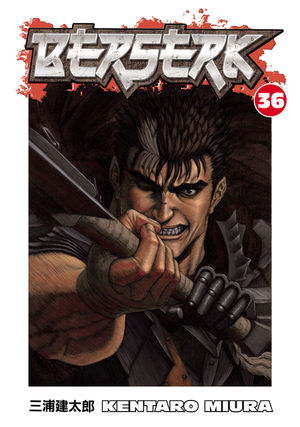
Berserk 36 by Kentaro Miura
I'm out of touch. I didn't even know the new Berserk came out until I saw that a new animate 'movie' came out. Immediately bought both. Don't know if I'll be talking about the movie outside of "m'eh" and yet it's a "m'eh" with potential if they cover the core story elements cut out like Puck and Skullknight and actually, you know continue it.
Anyway, Berserk 36 was like visiting an angry old friend. Kentaro's art reminds me of Goerge Perez or Jim Lee in that his detailed line work is awesome. I still refer to my art book despite the fact that the text is all in Japanese. I figure it's an art book right?
The book continues to make use of some elements that I find would be right at home in most campaigns.
1. Curse Magic Items. Elric had Stormbringer. Guts has the Berserk Armor. With it pain and injuries that don't outright kill him are... well, not healed by the armor, but modified enough that he keeps fighting. Bad news is that in this state he makes a frenzied berserker look sane. Still, unlike Elric, Guts has at least one comrade wo can pull him out of the frenzy.
2. Ritual Magic is very powerful. Despite the limited knowledge of magic that Lady Farnese has, she is able to do a ritual magic that prevents magical entities from entry. A mystical barrier if you will to prevent fully monstrous magical creatures from entering it. While it's use is somewhat limited and it doesn't stop those things that are hybrids of magic, it's powerful enough to stop those that are fully of 'the other world'. Many games use some type of this effort but often have such long casting times or high material component costs that they're not very practical. Here the same is true but they do have the time and knowledge to use it.
3. The Foe Too Big To Face! Many times a character will encounter something that they just shouldn't be able to defeat. In Star Wars, A New Hope, the rebels have no chance against the death star but it does have a certain famous weakness. In How To Train Your Dragon, Toothless, as powerful and unique as he is, is not where near powerful enough to battle 'the Red Death'. Here, Guts comes face to face with 'The Sea God'. It's so enormous that the ship sized creatures that he has been fighting with the ship he's taken passage on, are essentially it's whisker's and decides the only way to kill it is by going to it's heart!
This is old hat as they say. I've seen Thor do it with Celestials and other heroes with Ego the living planet and I'm sure other people could point out numerous instances of the foe too powerful to simply beat down. In 4e, it might be possible to use a Skill Challenge to model how best to overcome this entity. In another game, it might be possible to just model many of the 'antibodies' or other efforts of the host body to repel the invaders. Make the players realize what a do or die situation they're in and don't hold back!
4. New Character Bring It. Isma has just joined the crew but already in this new world, she's shown that she fits right in as she is capable of turning into a mermaid. In traditional games, the power level of the core group may grow and grow to such a point that a fresh character starting at the recommended baseline power level wouldn't have a chance to survive much less contribute to the game. There are numerous ways around this including splitting the party or the focus of the campaign and giving the lower level characters appropriate enemies and side liens and goals and then they're the way Kentaro takes and that's to make the new character have a 'hook' or a unique ability that lets them jump right into the fray.
The only problem with Berserk 36 is that despite it's hefty length, we're left with essentially a very long high level fight which means that we've got to wait until the next issue to get resolution. Damn you Kentaro!
Anyway, Berserk 36 was like visiting an angry old friend. Kentaro's art reminds me of Goerge Perez or Jim Lee in that his detailed line work is awesome. I still refer to my art book despite the fact that the text is all in Japanese. I figure it's an art book right?
The book continues to make use of some elements that I find would be right at home in most campaigns.
1. Curse Magic Items. Elric had Stormbringer. Guts has the Berserk Armor. With it pain and injuries that don't outright kill him are... well, not healed by the armor, but modified enough that he keeps fighting. Bad news is that in this state he makes a frenzied berserker look sane. Still, unlike Elric, Guts has at least one comrade wo can pull him out of the frenzy.
2. Ritual Magic is very powerful. Despite the limited knowledge of magic that Lady Farnese has, she is able to do a ritual magic that prevents magical entities from entry. A mystical barrier if you will to prevent fully monstrous magical creatures from entering it. While it's use is somewhat limited and it doesn't stop those things that are hybrids of magic, it's powerful enough to stop those that are fully of 'the other world'. Many games use some type of this effort but often have such long casting times or high material component costs that they're not very practical. Here the same is true but they do have the time and knowledge to use it.
3. The Foe Too Big To Face! Many times a character will encounter something that they just shouldn't be able to defeat. In Star Wars, A New Hope, the rebels have no chance against the death star but it does have a certain famous weakness. In How To Train Your Dragon, Toothless, as powerful and unique as he is, is not where near powerful enough to battle 'the Red Death'. Here, Guts comes face to face with 'The Sea God'. It's so enormous that the ship sized creatures that he has been fighting with the ship he's taken passage on, are essentially it's whisker's and decides the only way to kill it is by going to it's heart!
This is old hat as they say. I've seen Thor do it with Celestials and other heroes with Ego the living planet and I'm sure other people could point out numerous instances of the foe too powerful to simply beat down. In 4e, it might be possible to use a Skill Challenge to model how best to overcome this entity. In another game, it might be possible to just model many of the 'antibodies' or other efforts of the host body to repel the invaders. Make the players realize what a do or die situation they're in and don't hold back!
4. New Character Bring It. Isma has just joined the crew but already in this new world, she's shown that she fits right in as she is capable of turning into a mermaid. In traditional games, the power level of the core group may grow and grow to such a point that a fresh character starting at the recommended baseline power level wouldn't have a chance to survive much less contribute to the game. There are numerous ways around this including splitting the party or the focus of the campaign and giving the lower level characters appropriate enemies and side liens and goals and then they're the way Kentaro takes and that's to make the new character have a 'hook' or a unique ability that lets them jump right into the fray.
The only problem with Berserk 36 is that despite it's hefty length, we're left with essentially a very long high level fight which means that we've got to wait until the next issue to get resolution. Damn you Kentaro!
Labels:
Anime,
Berserk,
Cursed Magic Items,
Guts,
Kentaro Miura,
Manga,
New Characters,
Ritual Magic,
Skill Challenge
Sunday, December 13, 2009
The Enemy Of My Enemy
Berserk 32 picks up with Zodd, an old 'friend' of Guts, literally crashing into him as he's recovering on a dock ward after being knocked out of the sky by the Kushan Emperor.
Guts needs Zodd's wings. Zodd needs Guts sword. Together, they fight crime! Well, not quite but you get the picture. By acting together, the two are able to do what one alone could not and disperse the Emperor's astral being.
In thanks, Zodd allows Guts to walk away from the situation so that he can take care of Casca. This is part of Zodd's personality at times. The willingness to let others recover so that he can face them at full strength. So that the blood thirst he has can be meet at full. This has been shown before, such as when the Skull Knight first dragged Guts out of the Eclipse.
Mind you, this is far different than a healthy opponent fighting Zodd and being injured. Zodd doesn't stop once it gets going.
By having a rich campaign world with multiple elements in it, the Game Master can sometimes put the players in the unenviable position of having to ally with something that they may normally want to attack, in order to overcome something even worse. For example, orcs are probably better to have around than undead. The undead on the other hand, may be better to have around then say demons.
This volume also showcases the benefits of high level characters fighting against minons. While possible for the minions to deal some damage, the higher level characters will often have numerous ways of recovering from minor damage quickly. This is another reason why high level wizards, no, not even wizards, spellcasters in previous editions of Dungeons and Dragons (pre 4e), were a force to be feared. A fireball isn't all that impressive against a large enough force. Control Weather, Earthquake, and other spells being cast that a normal enemy can't really fight against?
It's one of the reasons why pseudo Middle Ages armies tend to be on the low end of the steak against anything 'weird' in the Dungeons and Dragons game. An army versus a dragon for example, probably isn't going to go to well for the army, especially if the dragon has some immunity to non-magical weapons or some innate regeneration. Then yo uget into the whole make up of the army. Are there spellcasters? Are there clerics? Are they psions? When you start peeling back the layers of a fantasy campaign's army, be careful how far you peel. Too far and it's not longer psuedo history.
The volume ends with a show case of Griffith's long term planning coming to a head. After Griffith's Band of the Hawk overcomes a force that was essentially surrounding the city and preparing to destroy it, Griffith plays down his cards.
1. He's a hero of the common people.
2. He's the one who rescued the blood Princess.
3. He's the one with the divine revelation of being the Hawk of Light and is honored as such by the highest of the holy, the pontiff.
Some of these elements have been set up volumes ago and come to fruition here. If the party smartly plans out their actions well in advance and has the proper allies and methodology, the Game Master should give them the fruits of their labor. Nothing is more frustrating then dotting all of your is and crossing all of your ts only to be told that it doesn't work and there's no good reason why it doesn't work.
Allow the players the benefits of their planning. Allow them to reap as they sow. Allow the players to make alliances with those they need to in order to get the job done. Everything should not be smooth as silk, but everything should be possible.
Labels:
Berserk,
dak,
Dungeons and Dragons,
Game Master,
Manga
The Spirit of the City
Berserk 31 starts off with the group still trying to get that boat. Surrounded by an invading monstrous force there to lay siege to the various knightly orders of the Holy See brought in from numerous countries.
Guts manages to hold the curse of the Berserk armor off of him for much of the initial fight, giving his witch time to summon up a spirit of the city. Initially, Schierke noted that spirits were harder to reach in the city because most people there looked past magic.
But the city has a spirit of its own, the Burning Wheel. Not, not the RPG, but a spirit of fire that manages to cook all of the enemies about them. She's able to summon this spirit because she's gained experience dealing with these higher level entities while travelling with Guts and his friends.
When that in and of itself doesn't prove enough though, she manages to focus that Burning Wheel spirit right into Guts sword in order to take out another powerful entity. During that fight, the villain screams out, "You've shortened your life!"
In such a situation where the characters can draw upon great power but at a personal cost, think about what you're potentially setting up. If the characters are going to be killed unless they use this power, why wouldn't they use it? At worse they use it and die, just as they would even if they had never used it! At best, they use it, gain some experience with it, and surprise the enemy.
I know in older editions of Dungeons and Dragons, when the haste spell could age you a year per casting, most people in the party didn't want it used on them every fight but they enjoyed having a scroll of it around just in case. The trade off of power versus age was one they were willing to take for the 'big fights'.
Towards the end of this volume, Guts meets the Great Emperor of the Kushan lands. Noting that Guts is human and branded, he offers Guts the opportunity to work for him. Offering a player an opportunity to work with a bad guy can be an interesting opportunity, but at the same time, can present the campaign with its own set of limitations if it's just restricted to a single character. What happens if the player does decide to have the character go off? Do the other players follow? Does the character become an NPC? Does the GM solo that player on a different day and session?
Offering players temptation is always an interesting way to judge their character development but be sure to have a plan B in case the players take that temptation.
Labels:
Berserk,
Dark Horse,
Dungeons and Dragons,
Game Master,
Manga
Saturday, December 12, 2009
Power Seeks Power
In Berserk 30, we start off with a little intra-party conflict that doesn't result in anyone's death, but does showcase some more of the inner personalities of the characters. For example, Isidro, a youth who strives to become a swordsman, doesn't think that Guts and Serpico are fighitng 'for real' but when it turns out they are, he takes a moment of self reflection, perhaps pondering if this is what he really wants.
This is behavior that has been touched on in previous volumes where he has no problem fighting against monsters and stealing from people, but did have a problem with a 'killer instinct' against humans.
We see Serpico worried that Guts and his berserk armor will get his own ward killed.
And we see Guts who perhaps could have killed Serpico instead use the flat of his blade to knock him down.
In several role playing games, one often has the option to do subdual damage to knock an enemy out as opposed to killing them. When players wage war against one another, try and subtly remind them of this option. While there are no laws against players killing one another, it can lead to hurt feelings among the members engaged in the fight and if the group isn't mature about it, then the group has to worry about the new character coming in being out for revenge even though the new character had nothing to do with the old one.
When the group catches up with Farnese, they are surrounded by nobility. In this meeting of nobles, the nobles come under attack and are saved only by Guts and his comrades. When possible, the party members will always try to take the brain out. The enemy should be no different. If power is gathering in one spot, power will be sent to deal with it.
Guts and his crew manage to fight through numerous obstacles and we see new characters come to light. The Holy See is lead by a pontiff, referred to as his holiness. Like many before him, he too had the dream of the hawk of light. And Griffith has sent along Sonia and her duck protector in order to show the holy pontiff the light. This further sets up the stage of the world as a larger and larger place while at the same time, being a power play that doesn't come into the light until later.
As time allows, continue to expand the world the players occupy by expanding the people they know and the people who know the people they know. If a player is a cleric of Tempus, who does he report to in church? Who does that church report to? Is there an overall grand marshal? Are there divine angels who serve the sword of Tempus that the players may one day run into while travelling the planes? Religion often plays a small role in the games despite it playing such a huge role in the era many of these games are based around. While one doesn't necessarily have to 'keep it real' by burning witches and having faiths splinter into numerous cults and sub cults, having more details, titles, rankings, and other mundane information on what memebers of the church actually do can only be helpful if the players ever want that information.
When the players have their gatherings and are of a power in and unto themselves, don't have them forget that bringing together the lord of thieves, the master of blades, the holy hand of the three blind gods, and the last caster of Albion makes them a tempting target for anyone who'd like to proceed with their own plans.
Labels:
Berserk,
Dark Horse,
Dungeons and Dragons,
Game Master,
Manga
Wednesday, December 9, 2009
To Protect or to Contend?
Berserk 28 brings Guts face to face with the Skull Knight again. The readers at this point know a little more than Guts does at who or what the Skull Knight is. This mysteriousness allows Kentaro to use the Skull Knight in various ways and while Guts thanks him at this point, he, much like the reader, doesnt' know what the Skull Knight's end game is.
Here, the Skull Knight warns Guts that continuing to wear the armor will continue to have greater and greater consequences. "Color fades from the eyes, the tongue loses teaste, shivering plagues the fingertips... Each time you wear that armor and fight as the berserk, light, voice, warmth, you will come to lose many things."
And the ole Skull Knight knows all of this because he once wore the armor. Still in his role as Guide, the Skull Knight informs Guts that there will be apostles soon and they may be lead by Griffith but Guts will be unable to take the fight to Griffith if he wants to heal Casca, whose still insane after her ordeal many volumes ago.
This is where the title of the column comes from this time. The Skull Knight notes that to protect or to contend comes from. Guts can either follow his heart's desire to fight Griffith or to fight that desire and do what many would consider the right thing and protect Casca. But it's even more as Guts learns that it's not just protection, but if he gets her to Puck's elf land home, she can be cured of her insanity. But that may not be all that Guts wants as if cured, her desire may not be the same as his own...
Here, one of the character's own background as a herald of arms comes into his own as the group enters Vritannis, a leading trade city, Serpico throws down some quick information on no less than five different countries troops that all have the Holy See in their lands. The Holy See would most resemble some fantasy version of Christianity with the religion being in several different countries, all of whom might not always be on friendly terms, but when invaded by an outside force with an outside religion, are capable of pulling together.
Guts on the other hand, acts as a guide as to how mercenaries gather their troops. By having the leader make a direct 'sales pitch', the mercenaries get to see what shape the leader is in. Guts throws out the following observations.
Does he look dependable?
Does he look wealthy?
Does he get on well with the soldiers?
"Mercenaries aren't patriots or chapions of some great cause. It's all about earning enough to eat. Strength is the rule for a mercenary band, but first you gotta see if the boss if on your side or the employer's."
Here the book stumbles a little. Some recall Griffith, but no one recalls Guts, the captain of the Raider's? Even more ironic is Isidro being inspired by Gut's hundred man kill, but not knowing Guts name. It's a little flub in that it seems everyone would know but if pressed, it's understandable. Years have passed, Guts was never seen enjoying the limelight but rather enjoying training, and the kingdom in which he earned his nick name is in shambles.
The book also showcases a few things in brief. The spirits of the dead, invisible to all those who are used to the hustle and bustle of city live, are trapped here. Condemed because they were slaves of the wrong race when war broke out, their spirits linger.
Next, it showcases that despite having magic laws, that there is not just one way for magic to work. Schierke encounters Sonia who is able to sense things like souls, the strange nature of the apostles, and other things that border on well, psychic as opposed to magic.
This works well in a role playing game environment. For example, the old Rolemaster was traditionally broken into three methods of magic;
Channelling: Taking divine energy and well, channelling it through you.
Psychic: Magic based psionics.
Essence: Essentially gathering the flow of energy, much like the force, and turning it into say, Lightning Bolts.
As the game line expanded, there were other bits.
Psionic: Taken straight out of good old Space Master.
Elementalism: Energy from the elemental realms.
Arcane: Prior to the split of magic into the three original forms, magic was more raw, perhaps more powerful, and perhaps more difficult to use.
In other words, if it can fit into the campaign and isn't overbalancing, why not say yes? Different methods of magic can work great in making one culture different from another just as spell selection within a magic school can work to make one branch of study different than another.
Keep the options open and allow the players to have multiple paths but don't be afraid to remind them that they may not be able to master all the paths they seek to.
Labels:
Berserk,
Dark Horse,
Dungeons and Dragons,
Game Master,
Manga
Curse of the Berserk Armor
Berserk 27 showcases what a cursed item can be. First off, look at the cover here. Notice that the experience of using it has given Guts a white streak.
Inside, Guts is essentially consumed by the armor's persona, becoming an engine of rage and carnage. Defense? No needed. Defending others who can't fight the same foes? Not needed.
Guts is pulled out of this trap by his new comrade, a young female witch known as Schierke. She sends her astral self into the armor and it's a place of pain and anguish. It showcases how Gut's ego is almost dissipated into the armor's curse.
This gives the reader a first hand visual of what is going on in the cursed item.
If in your campaign you're using a cursed magic item, what does it feel like when the curse takes place? Is the user trapped in his own head like Kyle was during his episode as Parallax? Is the person's personality destroyed as Gut's almost is? Does the person have no memory of the actions done as Elric when he accidentally slays his friends while in a feeding frenzy for his soul stealing sword Stormbringer?
What about the visual of the item? Guts Berserk armor initially does not resemble it's final form. This form is an combination of the initial Berserk armor and Gut's own personal hell hound that's been haunting him for several issues. The helm looks like a wolf's face with sharp teeth and the arm is
Another defining point of the armor, is that it doesn't stop. As Guts is walking along the beach, he notices a trembling of his hand. More powers of the armor?
Next up, villain motivation. With Griffith back to the real world, it would seem all of the Apostles follow him. Wrong. There is one, conviently, the leader of the Kushan army invading Midland, who figures, "To hell with him. I've got the largest empire in the world and he's going to have to fight me for domination of the world." It's a good show case that not all bad guys get along together even if they're from the same race and breed. There's always someone who wants more and is willing to fight for it.
It also showcases that even for those who serve, there may be a turning point. A young price of an exiled clan of assassins is shown that his ruler, the emperor of the Kushan empire, is breeding demonic forces in a manner that no human could endorse. Since this young exiled prince is human, it calls into question his future loyalty. Will he continue to serve in some vain attempt to please this mad demon king emperor or ?
Keep things moving in the game. Don't be afraid to showcase the power and peril of magic items and how they can continue to effect the user long after he thinks the item's worst spells are over.
Labels:
Berserk,
Dark Horse,
Dungeons and Dragons,
Manga
Sunday, December 6, 2009
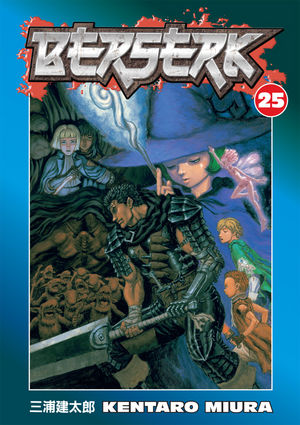
Berserk 25 puts the newly empowered group that has gathered around Guts with their new items against trolls.
These trolls are not like standard trolls we see in games like Dungeons and Dragons. For one, they are short. Perhaps as tall as a teen. But they're bulky, like dwarves. And fur covered. And... and... and...
In short, nothing like standard Dungeons and Dragons trolls.
There is also an ogre. Once again, nothing like the standard Dungeons and Dragons ogre. Not a big hairy stupid looking man, but a monstrous entity whose bone proportions are way off and whose head is completely inhuman in it's shape and use.
If you're using a home brew setting, you can do stuff like this all the time. You can customize the world to your characters and setting. If you're running the standard rules though, make sure to inform the players that you've made a lot of changes to the campaign setting and not to expect the same old thing. That you, as the Game Master, will tell them what their players know of opposition meet.
This can be useful in that it cuts down the players who already know everything from playing the game for years, if not decades. However, as useful as it is to the Game Master to leverage surprise and newness among the group, it can be frustrating for those who've spent years gathering this lore to have it suddenly rendered useless. Try to gauge how the party members are reacting to the world.
Readers also learn a bit about the cosmology of the setting. Like the dreaded real world, the mainland church here has managed to incorporate many bits of older religions into itself. Doing so has essentially muted those old names and powers and requires efforts to gather those resources back. Divine lords of the elements become archangles for example. Churchs are built atop old religious sites in order to deny them to the 'pagans'. This shows a richness of history that runs parallel to the real world and showcases how events in the real world can be mirrored in your fantasy setting.
One of the things that 4e brought a little more back into focus is how the Fey Realms overlap the world. What if they're not the only ones? In this volume, with Casca and Farnese both captured by trolls, the party has to search for them. During that time, as they descend into caves, the caves become stranger and stranger and the insects and animals that might be found in such a spot more and more bizzare. Turns out that due to the event of Griffith coming back, the barriers between worlds are thin and all it takes is a wrong turn to end up in a place like Qliphoth.
This is "The Astral World's Region of Darkness." The spellcaster here notes that ethereal bodies tend to gravitate toward ods of the same nature. In essence, like attracks like. It makes a lot of sense in most Dungeons and Dragons settings too as that's usually what happens in the different planes.
It's hard to describe the bizzar nature of Qliphoth and it's inhabitants as visualized here. This is another huge benefit to Berserk being in a manga form. The artists, Kentaro Miura, is top notch. In the old western comics, I'd compare his style to George Perez. Seeing the weirdness that pours of of Kentaro's mind on paper makes it a lot easier to describe to your players by simply using the old copy machine for personal use.
Finally, the book ends off on a cliff hanger. This is a good reminder that the end of a campaign session should accomplish something in and of itself. For example, at the end of a massive battle where everyone is tired and weary, having the characters safety reach home is one option. For another, having the party be out on the road and have an encounter and ending it there? That's another option.
Labels:
Berserk,
Dark Horse,
Dungeons and Dragons,
Game Master,
Manga
Saturday, December 5, 2009
Power Up
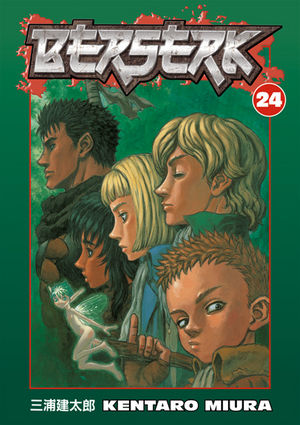
Berserk 24 brings us to a different point in the series. While there has been a lot of 'evil' magic and monsters roaming about the world, there hasn't been any counter point to them. It might be a question that a noisy player asks, "why haven't the monsters taken over everything?"
To be fair though, the monsters do have a lot of power in this setting. In the first few volumes, the ones Guts was fighting were nobles, rulers even.
But still, why not? It might be that there are magic users but as in many forms of sword and sorcery, they tend to rely on ritualized magic and they tend to remain hidden away from a world that at times fears and shuns them and at other times demands their services.
In this installment, we have another guide for Guts. Like the Skull Knight, this is an individual whose experiences with magic and history we don't know, but based on the information here, it comes out that the witch has almost sage like capacity to answer questions.
Sages are a long used method of getting players particular information. At times they are also useful for spurring the party onto new quests.
In this instance, because Guts ans his allies are going to be helping the witch, the witch in turn provides them with a few items of power tied into the elements. Guts ironically enough, declines, wishing to stay with his dragon slayer blade. He finds it easier to use.
This is another thing to think about when playing. Are the players prepared for what's coming around the corner? By giving them a boost in power, the game master could be saying a few things.
1. I've screwed up. You guys are only alive because of excellent team work and power selection.
2. It's time. The campaign has reached a point where you'll need these standard items to move on.
3. It's really time. The campaign has reached a point where you'll need these above standard items to move on and possibly survive.
The latter is a bit of a 'no guts no glory' thing but it's fairly common, especially in older editions of Dungeons and Dragons where a low to mid level party may stumble across something like Black Razor, a soul devouring sword, in their travels.
When possible, make the items something that can advance with the players. In some systems like Hero, that might be as simple as adding more points to the item at a latter date. In others like Dungeons and Dragons, you may want to allow the item to grow in power with the players, changing the item's level as the character levels goes up. If you do that, keep in mind that you've increased this item's level and ability and to take that away from future magic item treasure drops.
Magic items can add a lot of personality to a campaign and the types of items you provide can make the game more unique or make it more of the same. Choose wisely.
Labels:
Dark Horse,
Dungeons and Dragons,
Game Master,
Manga
Killing Armies and Taking Names
Berserk 23 is a nice showcase into how much of a basket case Guts actually is. Not that this should be surprising to anyone whose read this far mind you.
It does provide fertile ground though, for having that 'other voice', the one that subtly nudges a character to do things that might not exactly be heroic in the name of getting the job done.
It also showcases the strain of trying to achieve two goals at one time. In Guts case, it's protecting Casca or going after Griffith. He's bound to Casca but oh does he want to get Griffith.
There are also things going on outside of Guts that influence him. For example, in this series, incubi haunt dreams. They take the mind and twist it into things that it probably shouldn't be. Take the most extreme things and force themselves into the forefront of the mind.
And because of the Brand itself, Guts is under constant attack. And sometimes that attack is not just a physical attack. The spirits and hosts of undead can also possess an individual and make them do horrible things. Was it the spirits? Was it the dark dreams? Was it just lack of self control?
Another battle showcases a group of the new Band of the Hawk. They're all high level apostles but here, in human form, they're like heroes. No, more like super heroes. They spur through an army like a hurricane. In many ways, this is what a high level group of adventurers is like when facing lower level opposition. The enemy can't hit the characters. When they do hit, it's for relatively minor damage. The characters can pull tricks out of their bag that these low level entities may never have even heard of.
And... if the characters have earned their power honestly, then this is the way it should be. Even in a game like Warhammer where it's a bit more grim and gritty, a character on his fourth career, especially with several other allies on their fourth careers, is going to mow through most standard opposition like orcs, goblins, and even humans. It's just the nature of the beast of increased toughness, attacks, and strength. These factors allow one hit kills. Mind you the open ended nature of damage may turn that around but in the meantime....
Lastly, when recruiting armies, think about how its done. In this volume, there are two methods given note. The first is that captured prisoners are turned against their former countrymen. This is a demoralizing tactic but could easily backfire. Espeically if the players are part of the captured. The second is captured prisoners in a similiar manner, but if they survive three engagements, they can either go free of join the army and earn promotion and rank like anyone. This works well when fighting against rival armies that are composed from many different nations and may not have a single unifying leader for the entire army. Perhaps some of those from one nation hate another so much that they'd be willing to join another army.
Lastly, don't forget the common folk for bringing characters more information. In this case, the group learns from a shepherd provides the group details as he tends his flock.
Allow the characters to claim as much action as they want but remember that they'll never know everything and may still have to rely on the common folk for the coming and goings of various events.
Labels:
Dark Horse,
Dungeons and Dragons,
Game Master,
Manga
Friday, December 4, 2009
Stealing Names and History
Berserk 22 starts off with Guts and Griffith having a meeting atop a hill. Ricket, under the guidance of Gordo, fashioned swords for practice and used them as grave markers for this hill of swords.
A site like this lends itself up to a few possibilities. First off, there is the creation of the site itself. A single man honoring his comrades has a resonance that can be felt wither the event just happened or happened hundreds of years ago.
Second, it's a potentially dangerous place to fight. Guts, not really happy to see Griffith again, charges at his old leader only to be stopped by Zodd. As the two fight on the hill, through the swords about them, Guts uses his old infamous Sunder attack on Zodd's sword, just as he did when they first meet, only to have Zodd reach down and grab one of the nearby swords to augment his fighting style, which is countered by Guts kicked up one of the swords managing to wound Zodd.
This maze of swords can be used as something like a skill challenge where you can inflict an extra dice of damage on the enemy or replace a broken weapon.
The thing I was thinking of though, would be what if you were a wounded soldier holding a magical sword and needed a place to hide it? Now I know it's a bit of a cheat since players can always use detect magic or other means, but placing the sword among the other swords already out could at least slow down just yanking it off of the soldier.
Another element here is that of the Nemesis. While the word initially has a mythological context to it, depending on its context, it can mean a long term enemy. Zodd and Guts have crossed swords before and as the end of this fight showcases, may do so again.
In a fantasy RPG, especially one like Dungeons and Dragons or Rolemaster, where almost everything earned in terms of experience to gain levels, is a direct result of killing things and taking their stuff, it can be hard to have a single nemesis. On the other hand, there are things that can be done to make a 'feel' for a Nemesis.
One, the foe is just that much stronger than the player. This allows the first fight to be one in which the player probably won't win and perhaps even in the second fight.
Two, the foe is actually an organization. This can be a family that has a grudge against the players or can be a cult that the players have thwarted. To give it a personal feel, the GM should have someone at the head of the organization or family that the players know is in charge and is continuously putting them in danger, but can't actually do anything to physically harm that individual. It might make them think of ways outside the box to harm the individual such as pooling their money and trying their hand at the game of finances, trying to bring ruin to the individual in that manner, or for those groups which have bards or other social types such as nobles, using a slow and sure methodology of destroying that person's reptuation.
Three, the foe is essentially immortal. In Marvel comics, Ultron is a robot that returns again and again and unlike many comic book foes, each time he's defeated, it's apparently permanent. But by being a robot in the first place, the writers are able to use any old excuse around to bring him back. In a game like Dungeons and Dragons where there are spells like Wish, Clone, Reincarnate, and now in 4e, rituals, not to mention the various templates and ideas that can be applied to a dead individual, such as coming back undead, demonic, etc..., it could be easy to bring someone back from the dead in some form or another. Heck, have the players meet a warrior they thought dead come back as a half-golem!
The trick though, is to make the nemesis someone the players want to fight again even if their characters don't necessarily want to fight again. A lame nemesis can be good in a game like say Paranoia but unless the group is enjoying it, just brings down the mood. In addition, the appearance of the nemesis should count for something. When first introduced, Zodd is the herald that the world is not normal. That there are things larger and more monstrous beyond the ken of mortal men. In his second apperance, it's just before the Eclipse where Griffith sacrifices the band of the hawk. In his third apperance, it's to prevent Guts from attacking Griffith. This indicates to Guts at least, that there are things going on that he has no clue about. Note that these apperances are as they pretain to what the character, Guts knows.
Next up, powerful Non-Player Characters. There are times when reading online forums, I have to wonder why the players are even bothering to play. They try and nit pick apart all things at all times. In this volume, Griffith leads... well, is present at a counter attack as the invading army of Midland learns that the Apostles are not to be trifled with. Each one of these aposltes appears as a great warrior, some of them of some reknown. But we as the readers haven't seen any of them before.
This can easily happen in a RPG. The scope of the game, as in the scope of the comic, has to be on the here and now and can be expanded. To continuously question why the character's wouldn't know of this 'Dragon Knight' or Locus, the Moonlight Knight. And the short answer is that they didn't exist before. The long answer, depending on the circumstance, is that they were thought dead, retired, from another country, etc.. etc... etc... This is another case where the longer and more forward thinking the Game Master can be in terms of whose who in the campaign, and introduce at least the names and deeds of those individuals, that they appear as more than just upstarts when they first make their apperance.
However, the Game Master must keep that door open for the players as well. For example, in this volume we get some more background information on Lady Farnese and Serpico. In many ways, these two might be players. Why then after they've been introduced do we need this background now? Where did it come from?
As a player, I'd be lying if I didn't say sometimes I just want to play and think of the background latter if at all. I like to see how the character evolves through paly. On the other hand, there are times when I have a definitive idea for my character and write out a brief background on it. If a character presents background details that don't clash with the campaign, or if he presents information that can be incorporated into the campaign and actually make it a fuller, more weighty campaign, then the Game Master should allow it.
Even if it's the exact same thing that the players are crying about, history and characters bursting forth into the scene that didn't exist before, it has the same effect in making the game fuller.
Keep the locations interesting. Use the nemesis sparringly. Keep ideas of long term character introductions at the start of the game and be prepared for the players to ambush you with background at any time.
Labels:
Berserk,
Dark Horse,
Dungeons and Dragons,
Game Master,
Manga
And That's Why The Players Are the Heroes
Berserk 21 brings Guts more conflict with a wide array of foes and a resurrection of the one who tried to sacrifice him.
But more importantly than that, Guts has a few scenes where he's showcasing some important differences between those that do and those that wish. Between those that take that action and initative, and those that want others to take that action.
"All they do is pray. Every last one of them. When the fire's under their own ass all any of them do is bow down. Tens of thousands of people shouldn't cling to just one woman."
Kentaro writes.. He stands without retreating in the midsts of this overwhelming nightmare. The one and only thing that is certain.
These two bits illustrate one of the things I've tried to mention about how players might be preceived. They're the ones that do things. While they don't control the world, while they have nemesis and enemies and allies, it is the player's actions which should stand out to the players.
The scenarios and situations that the Game Master designs should be based around the actions of the players. If the players are asking why the NPC isn't doing it, why are they asking? Is the NPC so obviously capable? Is the mission so far beneath them? Try to build bits out of what the characters have done and the players won't have to worry about getting jobs from patrons in low key taverns but will instead be seeking out NPCs in order to further their own goals.
Labels:
Berserk,
Dark Horse,
Dungeons and Dragons,
Game Master,
Manga
Wednesday, December 2, 2009
Go Big or Go Home
Berserk 20 is the image of previous events, the great eclipse from the old volumes 12-14 happening again in a similiar manner.
This means bad things for a lot of people but it does it in a big way.
For example, Guts normally has to fight one apostale at a time. But during that original configuration that wasn't true and here, it's also not true. Lots of big bads coming from left and right.
The tower itself falls pray to the "current of causality" as it crumbles due to internal battles and external forces and comes to resemble the God Hand's initial launching point of a huge five fingered hand.
The people who sought shelter within? Fodded for the maddness about.
And Guts? The hero strives on, as he did previously, but once again, seemingly helpless to prevent the sacrifice.
Here we see huge things happening in the scope of the series. An ancient tower falling, a whole city worth of people devoured by darkness, and the plot line for future stories that won't start taking place till say... volume 33 and up, coming to fruition.
When the players are of a high level, make the scope of the game larger and make their actions have direct impact on it.
Labels:
Berserk,
Dark Horse,
Dungeons and Dragons,
Game Master,
Manga
Try and Try and Try Again
Berserk 19 reminds me of the old Billy Joel Shaver song, "Try and Try Again."
Guts is out to save Caska.
He starts off by interrupting a whipping about to take place. Once again playing the part of the lone stranger.
Then has to deal with cultists. And this time, due to Casca's presence and nightfall, where here brand acts up, the Cultists get a signifcant power boost. Remember what I've mentioned about having those templates ready for skinning purposes.
When reunited with Casca, he doesn't have time to enjoy it and must rely on others to take care of her... which leads to Casca being captured by the Holy Chain Knights and to the next arc where Guts must prevent her from being burned at the steak.
But what does that mean for the game?
In terms of the background, the characters, continuing to have them act towards the players based on the players actions and have them continue to absorb new facts about the players. For example, when Guts last met the Holy Iron Knights, he was in no shape to fight and they took him down with relative ease. They try to repeat this tactic with expected results.
In addition, things that are unknown, people will try to explain with the known. When the cultists come under the possession of demons thanks to Casca's brand, no one jumps to the conclussion that it's a supernatural posession. No, rather, they would all prefer to believe that it's a cultists drug they take that augments their strength and endurance to monstrous levels. Sound familiar? It should. It's the same reasoning that the old Arnold movie where he's featured as a mechanical assassin was used. Something along the lines of "yeah, cocaine is a hell of a drug."
People prefer to believe in what they know and won't take in new facts until they are explained again and again to them. When they have a plausible expalantion, they'll cling to it. If the players are on the know and can convince others what's going on, those NPCs may come to rely on the players for their ability to see things as they truly are, not how they wish them to be.
Lastly, let the players take advantage of situations that they come across. Here, Guts winds up fighting a swordsman whose skill, perhaps not as skilled as Guts, but who uses terrain in a huge way to prevent Guts from using his sword. If the players, or the monsters for that matter, can put the terrain to good use, such as on crumbling ledges, or icy floors, allow them to do so. It allows the combats to be more organic and keeps things moving.
Labels:
Berserk,
Dark Horse,
Dungeons and Dragons,
Game Master,
Manga
Tuesday, December 1, 2009
The Not So Innocent Bystander
Berserk 18 starts off by using an old stand by of role playing games and fantasy novels (and probably Westerns as well.)
Guts comes into conflict with an invading force by merely being in the wrong place at the wrong time and we the readers, are introduced by Isidro, a youth whose skills apparently include stealing and wishing to be the world's strongest swordsman.
Guts saves Isidro and this is a common method of introducing new plot points or quests in a game. How often have we seen the old man on the side of the road being attacked or having the heroes approaching home only to notice fires in the distance?
It's old hat but it works and if not overused, it shouldn't strain the players to take the bait.
The series also continues to showcase how evil people can be... 'good'. For example, the clerics in this particular setting are some of the dark examples of heretic hunters, putting many to the rack and death. Several of these individuals that follow the Father, are unique in apperance, 'freaks' in some people's eyes. But the Father has taken them in and given them food, shelter, and at the very least, the comarderie of each other. This binds them to the Father like iron chains in a bond that will not be broken , regardless of what they do in that service even though when not punishing heretics, they don't seem to be of the "enjoying evil for evil's own sake".
If the game master can find a way to show case individual elements that are normal, things that everyone does, such as enjoying time with a pet or telling tales around a table, it gives the players another dimension of those they battle to consider.
Next up, how about some cult action? Here we see a few things at work. First off, is the use of drugs and sex to act as binding agents of loyalty to those who are in the cult. Those who won't partake of these 'joys' are not members. It's an old trick of sorts where you make everyone take part of the guilt. By doing this, you bind those who are in your cause to you with the same guilt. It's similiar to say, how a movie like Lord of War has Cage's character become closer to an arms buyer who does him a favor and has Cage kill a man whose killed one of Cage's family. The ties that bind...
But beyond the physical, there is the potential spiritual. During the rituals of drugs and sex, there is a vision of a goddess with fiery wings in the flames. She bears a remarkable resemblance to one of the God Hand, indicating that there is more than just the standard events going on here.
Another old stand by used here is the fall from a great height that "no one could survive!" It's been used at least once before in Berserk and it's one of the classics, good for both players and non-player characters. No body may mean that they're not dead. Something that players, especially seasoned ones, will well be aware of so don't overuse it.
Lastly... bait and switch. The cover is a clear indication of Guts getting ready to battle the Immortal God of the Battlefield, Zodd, with Griffith behind him. Nothing of that sort appears in the actual tale. A clear case of bait and switch. Player's often don't like it, so use the old bait and switch with care if at all.
Labels:
Berserk,
Dark Horse,
Dungeons and Dragons,
Game Master,
Manga
Subscribe to:
Posts (Atom)