Showing posts with label Warhammer. Show all posts

Saturday, June 28, 2014

The Thousand Thrones: A Sobering Game

I wasn't supposed to be at the game yesterday. It was the birthday of one of my former work amigos whose moved on to bigger and better things, and we and a few others were going to go to watch the Cubs. Heck, looks like they even won the game.

I did not go though. My gout was acting up. This means much medication for inflammation and pain and no drinking. No drinking = no Cubs. Sorry Cub fans but for me, baseball is about hanging with the amigos and making fun of the Cubs because they are such a wretched team. Well, no wretched but pitiful? When they haven't won the big game in 100+ years there is a problem.

So sober, I went to game. Bad news there is the alcohol was flowing freely as one of my amigos brought some Modelo. But alas, I resisted. I had brought spicy chips that were 'mild spicy' as well as some cheese dip and some snacks.

 Got to have something if it can't be the alcohol right?

The game resulted in more investigations with our discovering the identity of 'The Vengeance of Sigmar'. The problem with this whole set up though? We spent much of last week learning what a fierce and dangerous man this was, and we find him as a pitiful mutant in his own apartment on the verge of death.

How could that have been different? How could we have found him? Well, he could still be on the verge of death for example, but if you wanted to follow up on how awesome he was, have a few other corpses be there with him. Give the players more reinforcement in terms of who their actual enemies are by the corpses left behind. Or even drag marks in blood showing that the guy didn't go down like a punk after being described as the Punisher/Batman of the Warhammer world.

After some more exploration of the city, we found what we assumed were the last clues and were on the way out of the city when we were attacked by thieves. We managed to quickly incapacitate the 'human agents' when the vampires came out. We learned that a magical bird who'd been spying on us that we killed with a great shot by the wood elf archer, was actually a comrade of ours. It was very "didn't see that coming".

I suppose we could have fought and probably got our asses handed to us as these vampires were soaking up some good damage relatively quickly and had high stats all around, but we'd already learned what we needed to and let the vampires have a tome that provided more information about some magical items that the cultists of Papa Nurgle were trying to use to control the mutant child with his powers.

All in all a satisfying game with a good mix of exploration and fighting and a reminder that there are many factions in the Warhammer setting and not all of them that are you enemies are each other's friends.

Hope everyone else had a good weekend of gaming!


Sunday, June 15, 2014

The Thousand Thrones: Once More Unto The Breach!

Last Friday, I managed to get in on another game of the 2nd edition of the Warhammer Fantasy Role Playing Game aka Warhammer FRPG. The Thousand Thrones is a massive book that details out rise of Karl, 'Sigmar Reborn' in the Empire and the various events that happen around the lad as well as the general terribleness of the Warhammer world.

In this setting, I'm playing a Troll Slayer.

I finally came into some coin in the campaign. I don't want to say it was overdue because I understand that the Warhammer FRPG isn't like Dungeons and Dragons 3rd or 4th edition where X amount of coin and equipment is assumed to be in the player's possession on a level by level basis.  I'll say though, that it was good to have some coin.

Now with the Troll Slayer, the only thing I need, in terms of 'gear' for my advanced career, Giant Slayer, is my great axe. Well, that's not quite true. I also need to kill a giant. The GM has assured me that when the time comes that won't be a problem even though there are no giants within the campaign itself.

This week's session found the group continuing our quest to discover the traitors and assassins within Karl's massive procession. There are those seeking to kill and or capture the boy. This means killing a whole bunch of people around the lad.

This time it would seem that we were against cultists of Papa Nurgle, the ruinous power of plague and disease. Someone trying to poison the soup!

Again, the efforts to find information and discover what is going on, are far more at the front of the game then they are in the big D&D. The game doesn't rely solely on combat or treasure as a method of advancement so those things aren't the focus on most games I've been in.

Mind you, I'm a Troll Slayer and well, I play the character as one whose easily bored with the various gatherings of information, often testing the sharpness of my blade against my thumb. My fellow players have joked that I've done it so many times that my whole thumb is a giant scar at this point.

But in the two combats we had this sessions, they were glad to have the giant orange mohawk there.

Our first encounter was one we essentially knew was going to end in violence as we sought out 'the Butcherer'. This individual was working with others in the camp to poison people with a magical stew of Papa's. We quickly disposed of him and brought our efforts to Karl and tried to beat some information out of the 'rat' in the nest but Karl was distraught with our methodologies and banished us!

The Game Master did note though, that despite our banishment, we were still devoted to the Karl. For those who've never played, that's because Karl is a mutant whose power is inspiring devotion to him. I made my initial Will Power roll to avoid falling under the trap initially a few sessions ago but missed it this time so I too was now planning how best to serve.

Mind you that's what I'd been doing before because the boy hired us to watch out for him and our original mission involved that anyway.

I asked the GM is we would have to sneak back into the giant encampment and work our way from there or if there were things that could happen outside that, as we were in the city of Aldorf. I can't remember if that's our final destination or not but I do know that it's a huge city and we were able to explore a bit including some shopping.

The GM even broke out the Old World Armoury because our newfound apprentice mage in the party kept looking for darts. Not in the core book and not in the Armoury. GM said, "Don't worry about it. It's a non-expensed resource, you just have to make sure you renew your supply every so often." Seemed a good solution to me.

Now again, I have all the 'trappings' I need for my next career. I did struggle with how much armor to buy. A troll slayer starts with a leather shirt, 1 armor point, and mine was destroyed by a critical hit earlier in the campaign. I'd been going shirtless since then. I weighed the whole suicidal urges of the Troll Slayer against the practicality of playing the character. In art, I'd seen Troll Slayers garbed in chain armor before and there isn't really any restriction to it.

But I stuck with leather and gave a lot of my gold to another player who fully armored himself up with it. The other players sought out leads and information unto becoming their next advanced careers and went about buying the trappings to help make that happen.

When you have a character concept, how far will you go against the grain of that concept to insure some level of survivability? Would anyone have bought the chain shirt and said screw the leather? Should I have just went without any armor?

The good news, is that the leather soon proved it's use as agents of caravan from various factions where in the city and a fight broke out between some of them. We assisted those we thought were the 'good' guys based on our previous research, although this being Warhammer, it's possible all of them were chaos cultists.

After that fight we gathered a bit more information and the GM called a halt to the session. We still haven't finished the chapter though, so no XP! Argh! That's okay, one of the 'swing' parts of Warhammer and it's random character creation, is as a Troll Slayer, I have a LOT of advances to take. Most of the other players? Not so much.

Looking forward to the next session.

Saturday, May 31, 2014

And a Fifth Horseman Shall Appear and his name shall be Next

I'm going to admit it right up front, I haven't been paying much attention to what's going on with Dungeons and Dragons. When they dropped 4th edition and dropped Dungeon and dropped Dragon, neither of which I'd been subscribing to for a while, I pretty much lost interest.

But lo and behold, the internets are ablaze with the new information about 5th edition. The obvious news? It'll be at Gen Con, or at least, one of the books will. That strikes me as odd since AFAIK, the books are not printed in the United States and any changes that need to be made aren't going to get incorporated into the later books anyway. Live by the China, die by the China.

In addition, the price point for the core set is too high. Mind you, let me be clear, that's my opinion. I also don't think it will hurt initial sales at all. I think that there is every possibility of a sell through at Gen Con. Right now Amazon has the Player's Handbook for just under $30 bones. That's $10 more, at Amazon, than 4th edition.


For those that find that too expensive, there's even a starter box set that's under $13 right now. There are supposed to be some online rules to complement that which allow some further play than just the boxed set itself.


Let me be clear. It's not that I think these are bad values mind you. For $150, if you're only getting the core three books, you can probably get many moons of game play from.

But well, that $150 can buy a tablet. It can buy a few board games. It can buy dozens of supplements for free rule sets of the OSR that are readily available right now.

Mind you, some will point out that Amazon discount brings that down to $90 if you get them all at a heavy discount. But that's now. What happens if Amazon tells Hasbro they want more money like Amazon has done with a different publisher and cuts their deep discounts out? Companies need to stop pricing their books to account for the Amazon discount if they don't want to be beholden to Amazon's pricing.

Anyway...

It's not that it's a bad price, I just think it's a bad price for the core books for Dungeons and Dragons. Pathfinder has a core book that is the Player's Handbook and Dungeon Master's Guide combined. If $100 for two books is great value, what does that put the Pathfinder system at? Awesome value?

In addition, there is some weirdness going on. Let's look at the adventurers. For many people, the adventurers of a system are what a system lives and dies by. People talk about great campaigns for decades after the games have been run. It doesn't matter what system either. Talk about Warhammer and people will instantly pipe up with The Enemy Within and their favorite parts of that, or even smaller adventurers like The Three Feathers. Others will mention things like the Orient Express for Call of Cthulhu.

Both third and fourth edition didn't necessarily have a lot of great adventures in that vein. Wizards of the Coast has a real weakness when it comes to doing adventure paths. When they lost Paizo, the former caretakers of the print magazines Dungeon and Dragon, they lost the ability to do well regarded adventure paths, which for better or worse, are a standard for Dungeons and Dragons or D&D like games these days.

But the new edition has some starting adventures. In this instance, done by Kobold Press, a company that has supported Pathfinder, 3rd edition and even 4th edition of Dungeons and Dragons. The first I believe is Hoard of the Dragon Queen, but that strange Amazon pricing comes through as this book is over $25 dollars and only has an 11% discount. Are you going to pay almost as much for a single adventure as you are a core book, with discount?

Strangely enough, despite being done by a third party and published by Wizards of the Coast, indications seem to be that any OGL will not be immediate.

That makes me wonder why then they picked Kobold Press. Let me be clear. It's not that Kobold Press is a bad publisher. They have a wide range of products and a wide range of materials ranging across different editions.

But not everything has gone smoothly.

Take their recent book Deep Magic for example, is a weighty tome available in hardcover and PDF. But right after it came out, there was an addendium. That's not a good sign.

Or how about some of the material that's currently late for their Kickstarter projects? For example, if you backed their adventure anthology, Midgard Tales,  you've been waiting for Freeing Nethus for over a year.

If you backed the kickstarter for the miniatures for the Midgard setting, those were due either a year ago, or just under a year ago.

And Wizards of the Coast chooses them?

I'm sure that they'll pull through and that the various issues that Kobold Press is having with those different aspects are aberrants and of course, not standard practice, but if you've been waiting for either of those and you see their name associated with the new D&D that may not give you the warm fuzzies.

I think that not supporting an OGL right off the bat is potentially disastrous for Wizards of the Coast in terms of longevity of Dungeons and Dragons. Mind you, if they have their character creation software so heavily integrated, it might not matter anyway as that more than the limited third party support 4th edition received, keep players I know from buying material that wasn't in the software.

Why buy Goodman Games or other material that you would have to manually tally when everything else was so fairly well done within the system itself?

If you're a new player and you see Dungeons and Dragons and limited support only through Wizards of the Coast, and you see Paizo and Pathfinder and you see dozens of publishers being actively supported by Paizo, on the companies home page and receiving high praise from many of the people who make Paizo the community it currently is, which company are you going to buy from?

Mind you, there are some people who dropped buying things from Wizards of the Coast when WoTC stopped printing physical copies of Dungeons and Dragons magazines. There are some that stopped when WoTC pulled down the PDF's. There are some who stopped when WoTC dumped 4e and went with Essentials editions. There are some who stopped when WoTC took their character generation from a downloaded software to an online only software.

Here's the thing. Many of those players are NEVER coming back. Either they've fond something that met their fantasy need, ranging from Pathfinder or 13th Age for 'new school' players, or any one of the many OSR products already out and fairly compatible with the hundreds of 1st and 2nd edition products already out in the wild.

Me? I've got the boxed set and Player's Handbook preordered. I'm not a 'D&D' player do or die or anything like that. Those reading the blog on a regular basis know I'm a player in a Warhammer 2nd edition fantasy campaign. And if you look at that, an old system that's not supported and was replaced by Fantasy Flight Games with weird dice and an expensive core book, you might see some potential futures for a new edition of Dungeons and Dragons that doesn't' take into account that not only are they not the only fish in the pond in terms of what people can spend their money, and more importantly, their time on, their not the only Dungeons and Dragons game that people can spend their money and time on.

Saturday, October 26, 2013

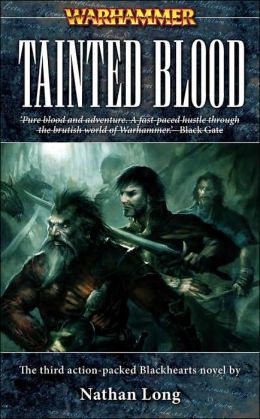
Tainted Blood by Nathan Long: The Blackhearts Omnibus book 3

Nathan Long brings the conclusion to the Blackhearts trilogy with all the flavor you'd come to expect from a good popcorn read. We have dark elves, skaven, and other vile creatures doing their best to take out the anti-heroes known as the Blackhearts whose interest isn't necessarily in saving the Empire so much as in saving their own skin.

It has a good flow for the most part and is an easy read and brings the series to a nice conclusion while at the same time leaving it open for future volumes. This novel even has the appearance of a certain high elf mage from the pages of the Warhammer tabletop version which is always a nice touch. If you're a fan of the Warhammer setting, this will be a nice novel to read over while prepping to wipe out your players.

Onward to spoilers!

One of the things I've mentioned before, is that if you're using a specific setting that has its own things that are famous and familiar to those who enjoy the setting either through video games, board games, or table top games, is that you should check the waters and see if the players enjoy it when you bring in those iconic elements.

Tainted Blood not only has the character meet the Skaven again, but learn of their lust for the dreaded Warpstone and that they are willing to try and 'fix' things when it is to their advantage. We have multiple groups of chaos worshippers trying to trust one another but due to their intrinsic nature, are easy to manipulate into fighting one another. We have Telcis, one of the most powerful magic users of the setting here.

The good news is that since this isn't a book about Telcis, but rather, one about the Blackhearts, the author does what any good author should and takes that character out of the action immediately. This allows the Blackhearts to have to strive even harder because hey, if this guy could take out that guy, what's he going to do to us?

The solution is great though in that it's one the author set up earlier in the novel with one of the thieves/assassins talking about a set up he performed where it looked like he murdered his target, but rather just had the appearance of murder and not actual death. This comes back in later and allows the characters to have a friendly ace in the hole later on and works quite well. It goes back to my thing of if the players have a great idea, let them run with it. Let their inventiveness provide success when possible. It'll make them know that you're rewarding them for it.

The other big thing? The Blackhearts are freed of their service. This does have the odd thing of "what now" though as at the end, the character don't necessarily know what their going to do with their lives and wonder if they can go back to their old profession but without the coercion this time. It's an important thing to have an end game in mind if the characters are starting out with some type of limitation.

I'm not saying the campaign has to end or anything like that mind you. But if the whole campaign revolves around killing X, if the players kill X, what then? It can be as easy as kill Y or as complex as moving onto a new campaign with new characters and new genres. Try to have an end game in mind when you start if you're putting those things in place at the start of the campaign.

Blackhearts is a nice omnibus and I haven't mentioned the two short stories included in the book which augments it's value and provides more insights into the characters and the dire situation they find themselves in as agents of the Empire. If you want to run a Dirty Dozen or Inglorious Bastards style campaign, Blackhearts by Nathan Long provides a lot of fodder for the fire.

Sunday, October 20, 2013

The Broken Lance by Nathan Long

The Blackhearts Omnibus by Nathan Long contains a few short stories as well as three full length novels. The second novel in the series is The Broken Lance. Here we see the Suicide Squad of the Warhammer setting given a new mission. With this new mission comes new comrades to replace those that have fallen as well as to keep an eye on the soldiers. After all, these Blackhearts are not the standard soldiers. They are bound by magic to their lord to do his bidding all in the name of the Empire mind you.

The Broken Lance features a lot of the setting bits. This can be important in keeping the reader entertained. If you're reading a book in the Warhammer setting, there are certain expectations. For instance, you'd want to see the forces of Chaos, as were present last book. You'd want to see the failings of humanity in the form of say, bandits, which while not ever present, are here and there though the series. You'd also want to feature one of the other more iconic creatures in the series, and that would be Skaven which Nathan Long brings us in droves in this volume.

In short, the Broken Lance brings good writing and an entertaining story to the reader that fans of the Warhammer world will especially enjoy.

But what about gaming purposes?

More specific spoilers follow so for those who don't want more than an overlook, read no further.

One of the things I find interesting about the whole idea of the Blackhearts, is that due to their nature, that of a Thunderbolts or Dirty Dozen group, that some of them will die. Some of them will try to betray the group. Some of these betrayals aren't even intended to be specific to the idea of treachery, just that the group is saddled with psychopaths who aren't necessarily interested in killing the group, it's just they have no self control.

On one hand, this could be an excellent way to test out new players. You have the group have a collection of characters that are used for such suicide runs. These characters aren't the main characters but rather, characters that get broken out when a new player joins the group. This way you can see how the new players interacts with the characters. If it's a good fit, the group that never could gets another mission done successfully.

If the player is a flake? If the player doesn't work well with the others? If it's a play style that is obviously going to cause friction within the group? The potential for a good game is there but the penalty of having long term characters and possibly entire campaigns thrown off the tracks is minimized.

Now mind you that only works if the longer term players understand that this secondary group of characters is there specifically for this reason and could get snuffed at any time. Heck, they might play in ways and manners that they don't normally do.

In addition, because characters are going to die by the nature of the set up, it allows the GM to set up some spectacular death scenes. For instance, there is a mercenary here who hates the Skaven. His parents and indeed, his village was devoured by them. This is hard to get across to men of the Empire who "know" that there are no Skaven. Mind you that whole concept is entirely stupid and hard to believe even in the slightest now due to their  various interactions with numerous characters and events but anyway....

This character, Giano, sacrifices his life to set up an explosion. It kills a lot of the enemy and it makes sense for his character to do. In some game systems he may have had to do it if the restrictions or pulls on his character were strong enough. In a role playing session where say, you know player X is going to be leaving next week? Getting a new job or moving? It allows you to talk to the player before hand and find out how he would like his character to go. It allows you to set up a specific death scene that plays up the character's strengths and provide some resolution to that long running background element. In Giano's case, it's the desire to kill Skaven which he gets to fulfill.

If you can bring together the iconic elements of a campaign and do so in a manner that encourages the players to make bits and pieces of those elements part of their own background, you've got a magic formula for a solid game.

Saturday, October 5, 2013

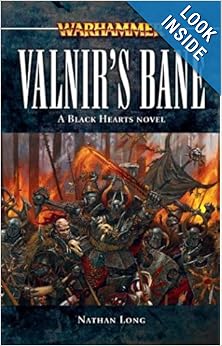
Valnir's Bane by Nathan Long

The idea of the people on the wrong side of the law doing good things because they're forced into it, is not a new concept. The group I'm most familiar with in this regard is the Suicide Squad.That group of super villains, often C listers or not very important characters, are used in death defying missions that allow the writers to occasionally kill off a member or two. The Thunderbolts by Marvel did something similar for a while although I'm not sure of their current status. My first encounter with such a concept though, goes way back into my child hood with the movie, The Dirty Dozen and other similar concepts have crept into modern cinema with say Quentin Tarantino  doing the movie Inglorious Bastards.

Here the characters are a group of military men who for various reasons are sentenced to death and given a brand of 'The Hammer', a visual signifier to anyone in 'The Empire' that these are men sentenced to death. Most have their own story and in a short story included in the omnibus Blackhearts, Nathan Long provides a more detailed account of the leader, Reiner Hetzau's fall from grace.

Valnir's Bane could very easily be a standard adventure. It hits many bits and Nathan Long isn't short on the action. Because of the nature of the group, Nathan doesn't provide complete script immunity to the cast an author might in a more standard fantasy setting.

If you're looking for a good pulpy fantasy read, Valnir's Bane has you covered. Below I'll be discussing some specifics of the book, spoilers, and how I might snag something out of the novel for my own games.

In any game, why would convicted felons help out those who've damned them to die?

In war scenarios, it might be for patriotism. A thief or a murderer may still have a great deal of patriotism for their home country. They may not be able to stand the whole idea of another race, alien or monstrous, invading their country. This works pretty well in any setting that has multiple factions to it. Even Chaos may have its champions for a particular faction as opposed to unified.

Another problem may be loved ones held hostage to insure good behavior. This one only works if the players are going to work with you though. If the players are all 'lone wolf' types who care nothing for no one and no body, then this method is doomed to failure.

Branded. Depending on the level of technology, the characters may be branded and can't find social acceptance anywhere that civilization, or at least civilization that supports their home, is found. Only in certain confined spaces, perhaps with others of their ilk, can they enjoy all of the comforts of home.

They Like the new work. In some instances, it may simply be a matter that in their prior life, they were not putting their skills to the uses they would have enjoyed. A swordsman who starts brawls to collect money from another man for killing someone else may find that he enjoys the ability to cut lose on certain enemies of the stage.

An honest repentance. Even rarer, there may come a time when some characters decide that they've been doing the wrong thing prior to this point and that its time to turn over a new leaf. This one can be tied into other elements such as patriotism or love of someone else or just deciding to make the best of a terrible situation.

The honest spy. What if not everyone in the group is actually working under a death threat? What if one, or more of the individuals there, are there honestly and there to keep tabs on the others? In some cases this person may be known to everyone at the start. It could be a commanding leader who is well known and gives the characters some legitimacy among other factions.

The death trap. In high fantasy, super hero, cyber punk, or other advanced technology games, the characters are implanted or branded or geased or quested so that they must serve. There may be terms that allow them some freedom in terms of how they provide this service but overall? They must serve and do so again and again until the curse is broken.

The idea of running a Suicide Squad type of set up is one that can be applied to almost any genre depending on the set up and can provide some different assumptions about the characters. It can allow some odd 'evil' style characters to be played while still directing that style of game play against something other than the party.

Anyone ever run a game like that? How'd it go?

Sunday, January 8, 2012

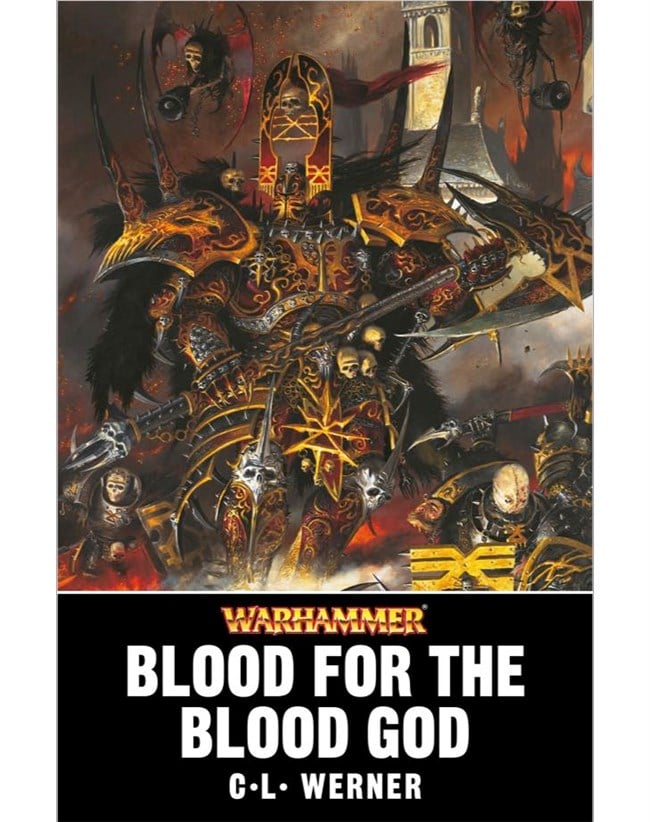
Blood For The Blood God by C. L. Werner

I have the omnibus edition of House of Serpents by Lisa Smedman and had started on Venom's Taste. I don't know why, but it wasn't grabbing me. So I put it down to pick up a stand alone book by an author whose work I've enjoyed in the past; Blood For The Blood God by C. L. Werner.

I'll be pinging some spoilers from the book below. For those who want a brief review, this is a stand alone book where the warriors of chaos find themselves hard pressed to battle a legendary entity known as the Skulltaker. It's very pulpy sword and sorcery fare and if this is the type of material you enjoy, then this book is for you.

Now onto the spoilers.

One, if you ever wonder how to run an evil campaign, this book might provide some solid foundations. There are no heroes here, nor even anti-heroes. There are barbarous murderers who fight among each other for survival and each tribe has its own tricks. The threat of an outside menace is what brings a few of these tribesmen together so that they can attempt to cheat destiny.

By providing an outside force for players to gather against, the GM can provide some reason for such players to travel together. This may not solve all of the problems of an evil campaign, but it does take care of at least the first issue; why should they trust each other.

The next thing, is use the setting elements. C. L. Werner, no stranger to the Warhammer setting, provides us with characters who often suffer the mutating touch of chaos with some of the protagonist having a tentacle for an arm or iron nodes poking through their skin.

Werner unleashes not only flesh hounds, but also blood letters. The weapons that many of the characters use, are demonic in nature and destroy both body and soul. These are standards in the world of Warhammer and by not shying away from them, Werner firmly places his tale of carnage into the setting.

Don't be afraid of the one shot. At the end of the story, the realm that the 'heroes' fought to save is destroyed. Everyone the main character knows is dead. Khorne has had his vengeance. But there is still war to be waged and battles to be fought and the book ends as another epic duel is about to begin.

Perhaps you don't want to run an entire evil campaign. Perhaps you just want to test out Dark Sun and see how those rules mesh with 4e. Perhaps you only want to dip your toe into Savage Worlds. A one shot allows you to up the stakes and push the characters to and past their limits as you are only running a one shot and the fate of worlds can be up for grabs. And if you enjoyed the game, you can run a separate game at a latter time.

My only issue with the book is the name of the villain of the piece; Skulltaker. For those who don't play the tabletop, this is skulltaker;

That massive figure above? He's not at all what is described in the book and the editors should have axed that name right away. When your game setting has dozens of slogans and mottos and you mix the material up, it does the reader and the fan no benefit. Keep the material clean, seperated, and easy to understand. It would be like having a new Forgotten Realms novel feature Elminster, a heroic blade troll who hunts down rogue tornadoes. It might be a great story, but anyone looking for Elminster is not going to be happy.

Friday, November 18, 2011

Season of the Witch


Season of the Witch falls into one of those rare movie spots for me. As a 'regular' movie, I'm not that impressed with it. As a gaming movie, I don't want to say its pure gold, but I could easily see a GM stealing everything from the movie itself.

I'm going to be hitting the spoilers for the movie below so if you wish to avoid such for the movie, read no more!

The plot of Season of the Witch is relatively simple. A young woman that is accused of being a witch that has brought the plague to the lands must be taken to a specific temple so that the priest there may use a special book of exorcism to break the back of the plague.

That's pretty simple no? It's a get someone from here to there bit.

Now the characters add a little something to the story mind you, but not overly. We have Nicolas Cage and his friend, two templars that have left the holy war. We get a third knight whose lost many to the plague. We get a priest whose a little shall we say, zealous in his work, and another priest who wishes to become a knight. And of course, the witch herself.

Now mind you, in almost any game I've run or seen, if the players were trying to keep things running smoothly, unless they were paid, or quested, or on their word of honor or other really pushing it factor, the witch would not have lived to see the light of day because the witch here is obviously an actual witch. Or at least she appears to be.

Because this is where the movie makes for a perfectly good Warhammer of Dark Ages Call of Cthulhu mix because of the switch. You see, at climax of the movie, if you will, when they arrive at the church, and find that place already decimated by plague, they discover that all of the priests there were making copies of that one sacred text. The witch? Turns out she's actually a demon that, for some reason, needed to be taken to the church so that she could destroy this last full copy of the sacred texts as it's actually one of the few things that can banish demons.

This leads to a battle against the animated corpses of the priests and the demon itself. It also only leaves one survivor and the young woman whose soul is saved from demonic possession. But the plague is broken and the world itself saved.

That little switch made the whole movie for me in terms of role playing elements because to be honest, I didn't see it coming. It just seemed to be a kinda m'eh movie, a no-brainer or sorts, and that took it to another level.

In terms of gaming, as I mentioned upthread, Dark Ages Cthulhu or a similar variant would be good for a one shot. The 'witch' is able to summon wolves and use illusions. She knows things that she's not supposed to but never lets out exactly how much more she knows until the end. She displays great strength as well as stamina and is able to shake off the effects of sedative drugs as well as hold a man above a yawning chasm with one arm.

The ending of the movie, also showcases that in true Cthulhu fashion, not everyone needs to survive for the mission itself to be a success.

In terms of game mechanics, the possessed priest at the end showcase something I've done with minions and one hit wonders in the past. I stat up the creature as a regular creature with a weakness and when the players discover the weakness, I break then down to minion status. If you've ever read an X-Man comic book, there are enemies they battle, like the Brood or Sentinels, where the initial one is almost a match for the whole team, but then when they fight groups of them, they mow through them. That's how I try to model it. Not easy but...

In terms of the exorcism itself, I think you could run that a few ways. You might have the players making some type of skill check and have to hit so many numbers, or that they have to hit a certain level of success or that they have to actually be reading it for so many rounds. Something that can't just be a single dice roll has to be initiated to represent the time needed for the ritual.

Season of the Witch is available for instant viewing on Netflix and if you're a gamer who wants a quick steal of a movie, this might do it for you.

Thursday, November 3, 2011

Brunner: Equipment Evolution

One of the interesting things about Brunner, the bounty hunter from the Warhammer series of books, is that unlike a lot of fantasy characters, he tends to accumulate some toys along the way.

Don't misunderstand me, there's a lot of cash he's collected. Somehow we never see him spend it. I suspect that like the manga Lone Wolf and Cub, we'll see he's been saving these coins for a very special rainy day.

But that's not what I'm talking about. I'm not even talking about how he names his large serrated cutting knife because that's what he uses to lop the heads off his bounties or his horse or his pony that he carries various items. I'm not even talking about the 'standard' weapons he starts with, which include some expensive ones like a highly polished gun that works almost every time he needs it to.

Rather, I'm talking about loot!

In one of the stories, he 'liberates' a sword from a false noble. The blade is of a special magical  variety against those of chaos.

In another, he earns a repeating crossbow from an encounter with Skaven.

These items in and of their own, become a bit of a signature thing with Brunner.

This is something that happens in movies and books and comics all the time. A nifty weapon makes an appearance and then everyone wants one! Admit it, how long after the Phantom Menace came out and we saw Double Light Sabers did you see one at the game?

Signature weapons can be useful and fun if used correctly. In level based games like Rolemaster or Dungeons and Dragons, they can be a little more difficult to efficiently fit in the actual game as unless you allow the player to upgrade the item, no matter how signature the Blade of the Family Blood is, it's it's +1 +2 versus Undead and the character gets an opportunity to get a +3 weapon... well, we can all see that old blade hanging on the shelf right?

Another thing about signature weapons and items is that they may have history and significance that showcases some aspect of the character's own background. For example, some weapons may only work for individuals of a specific race or a specific family line. Others may take rites and rituals to activate. Others may just look so unique that they are known wherever they go. One of the fun things to do is allow these items to provide hooks into the game, but not dominate it.

Use and reward players with special items that fit into their own goals and background and don't forget to use them against them when the players are trying to sneak around. "The Dagger of St. McMac! No lowly acolyte would have that item! Arrest them!'

Good times.

Wednesday, October 26, 2011

Warhammer Religions Versus Brunner by C. L. Werner

In the Warhammer setting, there are many deities that are followed. The general ones or the popular ones, would probably be Sigmar, the patron of the Empire, the White Wolf 'cult' in the north, and the Ruinous Powers of Chaos.

While Brunner himself is not given over to active worship, or at least, does not appear to acknowledge it, he does have several incidents or encounters with religion and those who are religious, or at least pay lip service to it that span a bit differently than the standard gods of the Warhammer setting.

Shallya: While Brunner does wind up crossing blades with a worshipper of Uncle Nurgle, the interesting thing was the prespective it puts on that worship. Tear down hospitals not because the help the injured, but because they cure the sick. This in and of itself could easily become a mini-campaign with one faction trying to wipe the other one's forces out. Brunner appreciates the healing but doesn't feel he owes anyone here anything because he earns his keep.

Solkan: I remember when I first bought my Warhammer FRPG book. It wasn't the hardcover first edition, but it was a great edition by Hogshead. Nonetheless, one of the interesting things I remember reading about in those early days, was deities of law. Not as known or as active in the world as those of Chaos, nonetheless, they were there. One of my friends ran a campaign where we were trying to free one of the trapped gods, the Lady of Law or something like that.

In one of the stories, Brunner is visiting a city state where Solkan is ascendant and his worshippers, while not the only faction, do have a lot of leeway in how they deal with sinners. The unfortunate thing is that they essentially come off like flagellants or other heavy handed worshippers of Sigmar so with a little name change, I wasn't seeing a lot of difference.

Ranald: The patron god of thieves and someone one of Brunner's bounties gives lip service to often.

When using a setting that has a lot of deities, try to focus on some that may not be receiving a lot of attention. It may force the players to pay a little more attention. If in a game where there are special toys different deities provide their worshippers, or different methods of worship are known, use them. Make the game a little different in aspects so that you can get away from the whole Ruinous Powers and Sigmar association that tie up so much of the Warhammer setting.

Keep it fresh and keep the players guessing.

Sunday, October 23, 2011

Brunner the Bounty Hunter by C. L. Werner


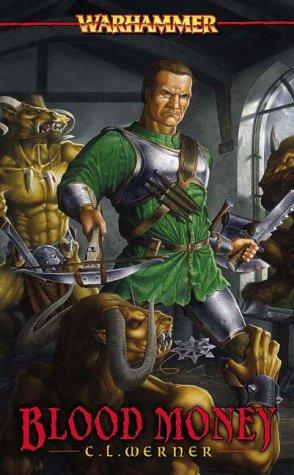
Brunner the Bounty Hunter is a collection of a trilogy of books; Blood & Steel, Blood Money and Blood of the Dragon. I'm not quite sure what the actual break down is in each book as most of the tales are short stores, framed by an author in the fantasy Warhammer setting who knows Brunner and sells tales that Brunner tells him.

C. L. Werner's work is solid here but may suffer a little from the length of the stories. With most of the contents being short, there isn't a lot of room for character development, and while the overall story continues to build and change and evolve and we see everything in previous tales move forward, it's a much different feel than reading a standard trilogy where there might be dozens of characters with their own goals and motivations.

On one hand, this allows C. L. Werner to put Brunner into a lot of situations and brings a lot of action to the reader. In many ways Brunner would be perfect for a weekly cliff hanger style show where Brunner continues to hunt down bounties and we continue to learn a little more about him.

On the other hand, there's not a lot of supporting cast and well, I can only read about how fierce Brunner looks a dozen times before yawning at his bad assery so to speak.

I think overall I enjoyed C. L. Werner's Witch Hunter series a little more but know that in many ways, Brunner is far more appropriate for gaming inspiration thanks to its shorter tales providing more material to a potential GM.

I've often mentioned that bounty hunters are my favorite type of character in games. They have a quick and easy hook that the GM can use to bait the campaign with a variety of bounties, rival hunters, and organizations that make use of such individuals. The ring of details that can be included varies from informants, bars to gather information in, and the law men who sit back and allow the hunters to do the leg work.

These law men may vary tremendously in terms of their authority and their need. In the standard, Brunner receives many of his 'quests' from a judge. On some of his travels while getting those bounties though, Brunner comes across situations that are tasked of him that come from a different authority. In one instance, he's invited by a noble to kill a were wolf. Normally a man of Brunner's status wouldn't even be allowed near the man, but due to the noble's need of seeing the creature captured or killed, Brunner is allowed into the inner circle.

A short job like this allow the character to brush up against society he might not normally be involved with. Unlike the manga Berserk, where initially Griffin is able to rise in rank and ascend to the highest political levels, the jobs Brunner does are so quick that he's not around long enough to necessarily rise or want to. Staying in one place limits the type of jobs he could take after all.

One of the things that Werner does well, is provides a larger backdrop to the setting. For example, when discussing Brunner. "It was said that the bounty hunter had spirited a buccaneer captain from the sanctuary of the pirate stronghold of Sartosa, that he had brought down a traitor to the King of Bretonnia in the court of an Arabyan sheik, and that he had pursued one notorious smuggler to the depths of Black Crag and returned with his prey from the bowels of the goblin fortress."

In that bit alone we get a brief flare of how large the setting is, and how fierce Brunner is. It's a nice bit of reputation and the GM should allow players to craft their own reputations and incorporate things they've down, as well as things that might sound like things they've done. Exaggeration is always a useful tool to have.

Another bit to consider when running characters who thirst for bounties, is that they will be spending a lot of their time in places knights, nobles, and other aristrocrat races, like elves, would probably avoid. They would need to do this in order to gather information, and it allows the GM to occasionally throw them a small bone in that they may recognize a bandit, a mugger, or a smuggler with a bounty on his head. Of course the players need to be secure in their own prowess least they fall prey to ambush or trap themselves...

When looking at where the enemy might flee to, try to incorporate already existing bits of the setting into it. For example, in one story, Brunner has to hunt down a man known as Bertolucci. Turns out their family, like many, owned villas in the country, but waves of beastmen and orcs drove the nobles out of those homes. But sometimes better the unknown then the sure death that waits if you stay... These little bits allow the players, especially those who are already familiar with a setting with a large fan base, such as Warhammer, Greyhawk, or the Forgotten Realms, a chance to enjoy it.


Collecting bounties may provide some challenges to characters. For one thing, if they are employed as more than just assassins, a lot of their victims may have to come back alive. This is something the GM can play on the characters with by providing bounties of various costs that may be worth less than half, or even a fourth dead. Keeping the characters on their toes, and actually providing them with a sound reason for keeping an enemy they've defeated alive.

Another benefit of having a setting like Warhammer, is that little things can be done to customize it further that incorporate the already existing elements. For example, "Farmers in Bretonnia would train hogs to hunt truffles and they held that the noses of their hogs were sharper than any hound. He was counting that the snouts of the Empire's swine were no less keen. If there was one thing a pig enjoyed eating more than a truffle it was a snotling."

Snotlings are a race of goblinoid in the Warhammer setting and by putting that little touch of character there, it provides just a touch more of being somewhere that isn't Earth in a dark ages setting.

Another benefit of running a bounty hunter style campaign, is that the players should be on the alert for the unusual. Brunner is often noted for having a great memory and always examining his surroundings. "I have both three-toe and the one with the clubbed foot here. There can't be two orcs with feet like that rampaging about in your father's domain.'.

A fine example of knowing what to look for and where to look for it.

In terms of these unique elements though, Werner doesn't pause when detailing out monsters, bandits, dragons, vampires, or others. His vivid imagery showcases an interesting bit though when compared to gaming. There are several enemies Brunner quickly bowls through thanks to the use of his crossbow pistols, his actual pistol, and other weapons he's mastered. But from a quick read, you might not know which foe was supposed to be which. Treat every enemy the players face as if it was the preordained winner in the fight when describing it. The players won't know who is a minion and who is the real deal.

Werner is also entertaining. The Warhammer setting is strange in its use of fire arms and dueling and knights and wizards. There are often unspoken honorable agreements about how such things are to be used. But he does manage to capture what I'd call an Indiana Jones moment here when a famous duelist challenges Brunner, the bounty hunter goes outside and shots the man. It's entertaining but also gets the point across that most often, unless restricted by some limitation, Brunner, like many players, will do what he needs to win.

Keep that in mind when coming up with adversaries and foe men. The players might not be bound by the same rules of honor. They might be so slipper on the morale chart that those around them keep a wide distance.

But at the same time, unless you've completely changed the fantasy setting you're running, this should have the occasional benefit allowing them to get the drop on a knight, on a noble, on an elf, or another variant whose honor is held in such high regard that they would never think the players would sink to some dastardly level.

At the same time, the players, engaged in bounty hunting, may be involved in locations that only the most vile murderers and scum may call home. For example, "Will you be needing more salt, master?' the boy asked, a tone of eagerness in his voice. Even at his tender age, he had witnessed death often enough, and heads of criminals adorning pikes set before the town's main gate were commonplace." Remember that no matter how shinny the armor of a knight, that knight is still probably ruling over peasants and dispensing harsh justice that may take the form of entertainment for the common folk. No television, no radio, and no form of instant communication with people around the world makes for some people who in their limited experience have already seen a lot of things that others would consider truly horrid but to them is mild entertainment.

There are some more bits I'll pull from Brunner, but I'll leave off with the recommendation to pick it up in trade paperback as the individual books run quite a bit higher.

Saturday, October 22, 2011

The Problem With Brunner

As I'm getting ready to finish off Brunner, a collection of short stories set in the Warhammer Fantasy setting that features Brunner, a bounty hunter of no small prowess, I decided to do a quick snoop around the Black Library site to see if this was offered as an ebook.

No such luck.

I did however, look around at another series by the same author, the one about the Witch Hunter. Now when I read the series, I read it in a collected format that I bought either at Amazon.com for something like $11 or at Half-Price for something like $7.50 plus tax. So how does the Black Library decide to sell the series?

In individual book form only for $7.99.

So... buy all three books and pay more than you would if you bought the print collection at a brand new price with zero discount, or, well don't.

I think publishers still have a long way to go in terms of figuring out where they want to be, what they think the customer will pay, and how the customers behavior will influence them.

For myself, I would never buy an ebook for more than the price of the printed book, and this includes collected editions. If as a publisher you've already made enough money from the series that you decide to get another round of dollars from it by collecting the books into a collection and don't sell that in the same format as an ebook, you, as a publisher, are effectively telling your fans to buy the print version.

There is nothing wrong with that, but considering unless its a direct sale that most of the profits from sales of print books go to the various middlemen there as opposed to the ebook, that might not be the best way to make the money.

Ah well, let me finish off Brunner here and post some actual inspiration material as opposed to yet another ebook price rant.

Friday, August 12, 2011

100 Fantasy Adventure Seeds

One of the books I picked up for my demoing was 100 Fantasy adventure Seeds by James 'Grim' Desborough. I love the cover which features an undead warrior standing over an injured warrior while it appears that a wizard prepares to blast him as a female with a mace, I'm assuming a cleric, watches over the fallen fighter. The cover is done by Andrew Hepworth. It's eye catching.

I don't mention too many RPG based books on my blog here because when I do review such materials, its often on a dedicated channel, and that remains true here as well. I just wanted to talk a little about how the sum of what I've read tends to interact with what I'm reading.

Anyway, adventure seed seven is 'Plague of Permutations'. the idea is that the inhabitants of the river town Oakreach, are suffering mutations and the mutations are effecting everyone. The source is alchemical waste. It's a solid idea in and of itself that could present the players with all sorts of strange mutated monsters to fight.

But there are certain settings where such a twist of a possible innocent action, can take on a more sinister nature. For example, in the Warhammer setting, the mutation effects could be caused by warpstone. Imagine a lone alchemist doing his standard deeds who happens to come under the watchful eye of the Skaven who make him perform various rituals using the Warpstone? A situation that people who've read C. L. Werner's Witch Hunter series will find familiar.

But what if instead of Skaven, the alchemist is indeed a villain and is using the warpstone to spread chaos for his patron demon deity, Nurgle?

It's not that the book doesn't have a few twists of its own and doesn't offer some follow up adventure potential, it does, but when you can look at the material and adapt it.

The greater pool of material you have access to, the great the possible mash ups you can see in sample adventure seeds and the easier time you'll have flushing them to match your home campaign.

Monday, July 25, 2011

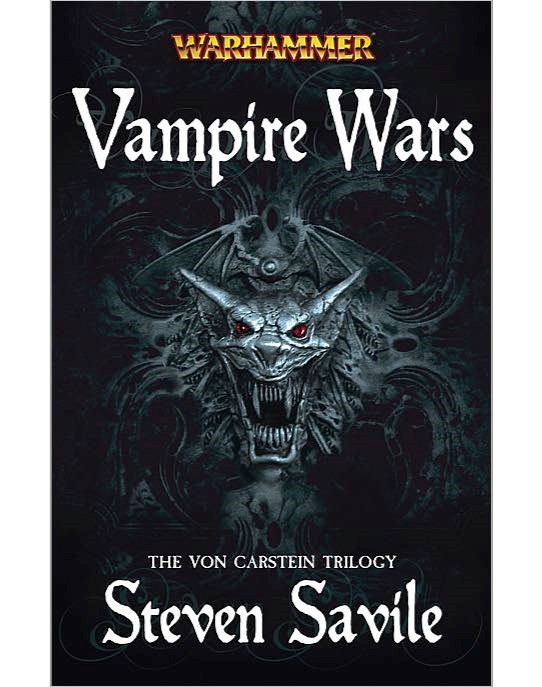
Vampire Wars by Steven Savile

Onto some rambling now about the actual book as opposed to the evolution of the beasts in the Warhammer setting eh? Spoilers will follow so those who aren't interested in Steven Savile being spoiled for them, read no further.

There were monsters. Real monsters. he had grown numb to fear. A life of seclusion in the temple, of births and naming days, marriages and funeral rites, such mundane things they somehow combined to turn the monsters into lesser evils and eventually into nothing more than stories. He had forgotten that the stories were real.

One of the themes of many fantasy books is an old evil returning. Something that showcases the old adage about those who forget history being doomed to repeat it. And often, it is the shorter lived races, such as humans, that are the cause of this conflict. When you have races that can live for hundreds, if not thousands of years, if not in fact, effectively immortal, the burden of being the most populous race also seems to come with the tag of being the most ignorant. Try to switch things up every now and again. Have it be the elves who long for a return to their former glory. Have it be the dragons who decide that they've given humans long enough to get their act together and are unimpressed with them. Don't have it be humans being stupid doing stupid things unleash the great evil. More to a different venue to unleash it.

Would that it was otherwise, but I am not the law-maker. By accident of birth you came out... female. With no sons your father's line ends, and mine, as eldest surviving male begins. With your betrothed coming to such an... untimely end... well, that is just the way it is. You can't tamper with tradition, after all it becomes tradition for a reason.

The above statement may be true for the background characters. It may be true for the characters who've come before. But say in this instance the character being spoken to was a female player who was a character of no small power herself? Yeah, be prepared for players to do things that go against tradition and roll with it. If the characters are high charisma, good looking engines of social marvel in addition to being powerful figures in their own right, or at least have numerous friends who are powerful figures, their ability to directly impact a setting should be much higher than some traditional princess.


Isabella joined him at the broken window, linking her fingers with his, slick with her uncle's blood. But for the blood the gesture might have been mistaken for an intimate one. Instead it hinted at the darkness inside her: by taking his hand she was claiming him and the life he offered every bit as much as he was claiming her and the power her heritage represented.

Adventurers are a funny lot. I've mentioned it a few times, but in essence, many adventurers are like the main characters from the movie, "Hobo With a Shotgun.", dangerous, homeless wanderers out to set what they see wrongs to right. Individuals with few hesitations about using their physical power to effect the world about them, even if the higher social powers aren't too crazy about that.

But what happens if they marriage into politics? Into the higher social realms? Do they change their ways or use that as a stepping stone?

"The loss of anyone so young is a tragedy we can ill afford to bear. It was only a token, and it cost me nothing."
"Truly, but few would have taken the time to pay their respects to a stranger. It is the way of the world, I fear. We forget the suffering of others all too easily, especially those left behind."

By providing the players some set scenes, encounters where the things going on around them do not involve combat, you can see how they react to more mundane conditions. This allows you to customize further encounters more suited for their behaviors and attitudes. What do they do when they see a wedding? What do they do when they come across a funeral? What do they do when it's a holy day and celebration is full on? These events don't have to have thieves or strange events at them to see the stuff the characters are made of, they just need to present them opportunities to flex their roleplaying muscles should they chose to do so.


The pair had been in Leicheberg for a week. They had rented a small room in a seedy tavern off the central square called The Traitor's Head. The name more than suited the establishment. It was a den filled with iniquities galore making it the perfect place to gather rumors. People's lips loosened when they drank. They talked out of turn. Spilled secrets. Skellan was not about listening to the drunken ramblings of braggarts and the pillow talk of prostitutes.

One of the standards of most fantasy games is the bar as a place to gather information and to gain work. The above passage shows why even in a setting like Warhammer, where the streets run with rats and grime, the tavern is still a useful place of employment. While some struggle mightily against the tavern as a gathering ground for adventurers, don't be afraid to embrace it when its useful. When the players are in a new town and need to know what's going on. When the players are looking for a place to get out of the rain. When the players are looking to lay low in the seedier parts of town. These are opportunities for the tavern to shine with its host of myriad characters.


'Always...too late...' Fischer spat bitterly. He was trembling as the adrenaline fled from his body.
'Not always,' Skellan

The old one too punch relies on the setup that the players have done their absolute best to save someone, but have failed. And then the second punch is that even though they may have failed at what they thought they were doing, they have helped others, perhaps others not as fortunate, out. It sets up the down beat, and then follows it with an up beat.


The further north they travelled the worse the condition of the roads became.

It's a simple sentence, but it carriers weight. Roads and other public concerns, like waystations or road markers, are kept up by taxes. If the taxes are not being used to keep the roads in standard fare, what then are happening to the taxes?

There are more bits I'll quote later but that's a good start. Vampire Wars starts off with a viewpoint of normal characters who are striving to avenge an old wound done to their families by seeking that vengance but in doing so, move onto something far worse. If you're looking for some light popcorn reading about Vampires in the Old World, Vampire Wars is a good palce to start.

Sunday, July 24, 2011

Vampire Wars: The Von Carstein Trilogy by Steven Savile


As long as I can remember, Vampires have been part of the role playing game. Mind you, back in first edition they would level drain you instead of sucking your blood. TSR was quick to put out their own take on the classic version of the vampire through the old Ravenloft module that has spawned its own setting and various updates on the adventure. White Wolf has several brands of Vampire to investigate. The media loves Vampires and TV loves them through such shows as the Vampire Diaries and True Blood.

Warhammer has its own history with the vampire. I'm not real familiar with it mind you as I generally only toe dip into the tabletop side where much of the RPG side originated from. For example, one of the first books I  recall with Vampires in it isn't Vampire Counts, its Undead. Vampires were just another monster that could be added. Vampires seemed to go the White Wolf route with the first Vampire Counts book where  various bloodlines were introduced;  Lahmians, Von Carsteins, Blood Dragons, Strigoi, and Necrarchs. The latest batch focuses on the Von Carsteins but still allows variety.

So far I've blathered on quite a bit about Vampires and mentioned their evolution and current status in the Warhammer setting but what about the book Vampire Wars? Well, my copy has a price of $13.99 on the back and I picked it up at Half-Price for less than the cost of a single paperback. The book features three eras of Vampires from the Von Carstein line and does a fair job of showcasing the strengths of the vampires as well as how hard they can be to fight. For someone looking to see the Vampire as a military leader and vastly powerful spellcaster in the Warhammer setting, its a good read with a lot of potential for adventure ideas.

I'll point out some specifics but note that if you find a series in the Warhammer fiction line that looks good, its probably best to wait on the collections before plunking down the cash. At $13.99, it's a steal.

Sunday, January 23, 2011

Agincourt: Nicholas Hook

Hook held few things dear beyond his brother and whatever affection he felt for whichever girl was in his arms, yet archers were special. Archers were Hook's heroes. England, for Hook, was not protected by men in shining armor, mounted on trapper-decked horses, but by archers.

He had been warned not to walk the streets by himself, but the people of Soissons left him alone, perhaps scared of his height and size, or perhaps because they knew he was the one archer who prayed regularly and so tolerated him.

Remind me why you were outlawed, Hook?
"Because I hit a priest, sir John," Hook admitted.
"that priest?" Sir John asked, jerking a thumb toward the retreating horsemen.
"Yes, Sir John."
Sir John shook his head. "You did wrong, Hook, you did very wrong. You shouldn't have hit him."
"No, Sir John," Hook said humbly.
"You should have slit the goddamn bastard's putrid bowels open and ripped his heart out through his stinking arse," Sir John said, looking at Father christopher as if hoping his words might offten the priest, but Father christopher merely smiled.

I've picked a few quotes out of Agincourt to point out some of the bits about Nicholas Hook.

He is an archer.

He prays.

He is an outlaw in his home.

He has friends and allies as well as enemies and rivals.

These things keep him an interesting character and make him a good focal point for the novel.

While he starts off as a groundskeeper for one lord, one whose job is to eliminate poachers on his lords land, his failed attempted to assassinate an ancient family rival, as well as his direct assault against a murderous priest, make him an outlaw in his own land and he joins the military where his woodsmen skills and impressive physical strength allow him fairly quick advancement.

His character has different takes such as hearing voices ranging from the lord above to various saints. He hears two saints in particular, the of Soissons. This makes him seem a little strange to others, but the advice given to him is generaly sound and he manages to thrive with it.

In terms of hearing the saints, one interesting thing that can be used for role playing games, is that it allows the GM to throw in some 'common' sense for players that may be new to the game and not sure how exactly things may play out.  Without having a 'pet' NPC around, the GM can provide some standard advice that would be useless to more experienced characters.

His love interest, a nun who also survived the sack of Soissons, has a French father who is a leader of the enemy. This foeman even takes a finger from the archer, but leaves him with enough fingers to use the bow in order to keep his daughter safe.

Despite that foeman though, his true enemies are the family rivals he has. In keeping with themes of family rivals, his own brother is well liked by many, but becomes involved in the difficulties with the families.

In the book Hook manages to wind through the setting and more importantly, grow. In some role playing games, the different encounters and dungeons may not require actual character growth. In many different dungeon crawls, there isn't really a need for characters to change or to note how their environments effect them. In a full fledged setting where cities and travel and other bits that involve actual characters as opposed to traps and monsters, the characters have opportunity to take in new data points and either use them to reinforce their current behaviors or to actually take into account this new information and change.

Nicholas Hook, while starting off as a fairly skilled character, nontheless, manages to grow in both his travels and experiences, as well as his expectations of how the world works. Those looking to model a new Warhammer character in say 2nd edition may wish to look at him for ideas on how a former road warden may have left his old life behind.

Saturday, January 15, 2011

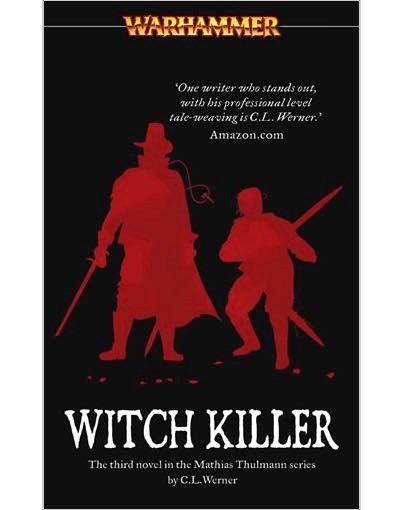
Witch Killer by C. L. Werner


Witch Killer, while it stands as the third book in the omnibus Mathias Thulmann Witch Hunter, isn't necessarilty the close of the story started in the first book. Indeed, it almost seems like one of those old serial movies that keeps going and going and going.

C. L. Werner brings back most of the characters from previous books including Mathias, his loyal yet troubling henchman Streng,some loathsome ratmen, the necromancer, his new ally, the vampire Gregor, first introduced in book one, as well as more of the internal politics and signature setting material that indicates this is a Warhammer book and not a generic fantasy book.

1. The Never Ending Battle: As I mentioned, C. L. Werner brings a lot of the previous cast back, even when that previous casts interaction with the main characters here is minimal. On one hand, if you're writing a series that has to be kept open ended because you don't know what the next novel, indeed, if even there will be a
next novel, will bring, keeping things open and 'breezy' allows you to bring those fan favorite elements back at a later date.

This works well, to a point, in super hero comics. Superman, is noted as fighting a never ending battle for truth, justice, and the American way. Comics are often fighting a battle for readership and utilizing old elements to appeal to older fans. Even game systems aren't above this, rehashing old names and ideas.

But in a role playing game, you have to keep your direct audience in mind. How well are the adventurers going to link together and how closely will they be tied together. Paizo speeds out twelve modules a year in two adventure paths. In my early days of playing, anything purchased would rarely have any direct ties or lead ins to anything else purchased in terms of 'story'. There were exceptions but I didn't pick up one adventure or issue of Dungeon expecting that adventure to be continued next week so to say.

Know your audience. If they're getitng tired of the same cast of characters and the same subplots, move on. You as the GM are not writing a novel or a comic. Your ability to react to the players is immediate.

2. The henchman.  Once again, back in 'the day', many characters would have allies and henchmen who might be greater than the other rift raft out there, but not as awesome as the main character. Comics tended to do this by introducing younger versions of the heroes, Captain America and Bucky, Human Torch and Toro, Batman and Robin, Superman and Supergirl... but in novels, you had Elric and Moonglum, as well as Michael Moorcock's other Eternal Champions and the Eternal Companion.

The henchman had a unique set of rules tied into Charisma back in the day. Later editions have kind of gone away from that idea. One of the reasons why is probably character complexity. Another reason is that the literature that the game is based on tends to focus on characters as equals.

The nich thing about having 'lessers' around though, is you can use them to cast a nice contrast to the characters they follow. While Streng has no blessings of Sigmar upon him and no magical silver sword, he is a brute and a loyal ally. He is a quick thinker able to use his dishevelled looks to his own advantage. While Mathias is pious and tried and true and enjoys his work, Streng enjoys getting paid, enjoys getting the better of someone else, enjoys bringing pain to others... in many ways, the dark reflection of Mathias work given flesh and enjoyment in that work.

3. The Turnaround: I've mentioned before that failure should not necessarily be the end of the game. If the characters have to make a skill check to beat a monster and fail, perhaps that just results in them being captured by a trap. If they have to overcome a particular foe, perhaps they are held hostage in hopes of exchange for funds or future assistance. Part of this will depend on how much the characters want to fight against the dice and how much they want to go with the story. If the players are outmanned left right and sideways because of poor decesions they have made and you offer them the chance to surrender and they want to fight it out, take off the kid gloves and play the monsters as intelligently as possible.

This doesn't mean that opportunities for survival aren't there. For example, if the players are surrounded by ogres and trolls, perhaps the side that suffers the worst of the player's initial attack decides to help the players out and wipe out their enemies. After all, they can always take care of the players later right?

4. The Intelligent Magic Item: Game books are filled with intelligent magic items. Fiction abounds with them. Elric's black blade, Stormbringer, is probably one of the more famous. In the three books of Mathias Thulmann, Das Buch die Unholden, speaks not a word, but its actions make clear that it is alive in its own way, possessing its own malevolvent intelligence and purpose. One of the problems with 4th edition D&D, and to a lesser extent, 3rd edition, is that they are games with hard written rules. Without spelling everything out, there may be room open for different interpetations of how powers and abilities work. Run with those possibilities. Describe a sword of berserking as seaking to leap out of the blade, of rattling around in the scabbard. Describe a vorpal blade as always pulling to the neck of the opponent. Describe a weapon of unholy magic as emiting an atmosphere of toxic unholy energy.

These things don't need game stats. Atmosphere and feeling are there to cater and create just that, atmosphere and feeling. If you want to reward a player for doing the description and taking advantage of those things in specific skill checks, go for it. "Listen friend, the sword of berserking is about to shatter my scabbard so either you start talking or I feed you to it." might warrant a +2 bonus on bluff or intimidate but shouldn't be an excuse to give character access to abilities they don't have.

While Witch Killer is a good popcorn novel, it is the weakest of the three but still worthy of ideas to pillage.

Tuesday, January 11, 2011

Witch Finder by C. L. Werner

A brief synopsis: Many threads are woven together as new complications make life more than interesting for Mathias Thulmann and his hencman Streng. C. L. Werner throws politics, city adventuring, and other elements into a book that is distinctively Warhammer in nature.

For those who want to avoid spoilers, read no further.

1. City Life

Mathias and his comrade Streng return to Wurtbad in order to hunt down a book that was not found at the end of their previous adventure. In doing so, Mathias becomes involved with several churches of the city, including Morr, god of death, as well as the goddess of mercy. This does not count his involvement with the politics of his own witch hunter temple, those of the ruler of the city, or those of the lawmaker of the city.

In short, there are a lot of things going on here and it makes life more interesting for Mathias because no sooner has one ball hit the hand than the other one is in the air. This is part of the lure of the city for me. You can have several, if not outright dozens of things happening that may involve the character and may be things that they can become involved with.

2. Plauge

What makes city life more interesting? Why, city life under the plague. C. L. Werner goes to town in a setting with a plague god, mad doctors and skaven and does with with a plague. The role of the priestess of mercy come clearer here, as they try to give succor and healing to those who need it, while those of Morr, the god of death, provide sanctity to the dead. This is a very real threat to the setting as the undead are not an unknown menace so making sure the dead stay at peace is indeed a vital part of the duties. Why they would not simply burn the bodies on the other hand...

Anyway, plague makes for some great elements in a setting. It can create mass change, depopulate whole regions, take out allies and enemies alike. However, the one thing that C. L. Werner does, as I've tried to do myself when running such situation, is avoid taking it out on the main characters. Mathias and Strength, despite being deep down in the plague ridden areas the most, are untouched by it. When you make the disease more about how its effecting the region around the characters, the effects on the character's shouldn't be some penalty to an ability score or the use of wealth to purchase a cure disease. It should be shops closing because the owners are dead. It should be the city being held in quarantine until things are cleared. It should be social breakdown as even those in the higher reaches of society fall victim to plague.

3. Signature Setting Elements

On one hand, the Warhammer setting is generic. Armored knights ride around using great weapons to cleave into the undead or trolls or goblins. Wizards engage themselves in the art of magic. Clerics tend to the flocks but really, they smash the heathens and often have the blessings of the god and a different type of magic. Could be D&D right?

On the other hand, Warhammer is one of the first, if not the first setting to codify ratmen as anything other than lycanthropes with their Skaven who worship the Horned God, use Warpstone, have strange technology powered by sorcerery as well as Rat Ogres and dozens of other unique elements about them.

While they do have pagan gods and cults, the Four Ruinous Powers that serve as the setting's Chaos Gods have their own chants such as "Blood for the Blood God, Skulls for the Skull Throne", in addition to signature creatures of other sorts.

It is in these fields, even when describing the different types of vampires and their strengths and abilities, that C. L. Werner makes this a Warhammer novel and not some generic fantasy adventure. By playing off the vast material and the huge scope of the Warhammer setting, even as things change and the table top moves away from Vampires being several subbranches to other variants, and the Undead have moved from being a generic undead army to Vampire Counts and Tomb Kings to begin with, the fact that a setting has all of this information waiting to be used allows the setting to sing with its signature strengths.

And at the same time, remain all purpose enough to plunder from. A mad noble whose transformation into a thing of horror and chaos would fit well in most fantasy settings. A vampire sorcerer looking for his book of spells that were bound in his own skin? A mad doctor using magical elements to warp humanity about him? These elements could be applied to most fantasy settings, or indeed, even more modern or steam punk settings, with little difficulty.

In Privateer Press own setting, perhaps the mad doctor uses dragon blight instead of warpstone. Perhaps in the Forgotten Realms, it is a Shade who is a Shadovar seeking an ancient tome from the time of Nethril's prime.

The general ideas can be crafted into specific points for your own campaign if you're willing to put the polish into them.

4. Timing

Here, C. L. Werner may have pushed his luck. While I don't have any problem with the way things all came together in the end, the various threads, plots, characters, and events may be so crammed in a game, that the GM tries to resolve them in one big party.

If you are comfortable with this, if you can quickly change the scene, if you can quickly take action from one character to the next, to the next to the next with little pause between, then go for it.

If you cannot handle the quick pace of multiple elements coming together, if the issue of making multiple enemies from different factions come out, if the resolution of several plots might be more than you want to run, the goods news is you don't have to. Allow the players to try and set the tone and the pace and if necessary, throw a red herring or two at them in order to keep the pace of the game one you're comfortable with.

C. L. Werner provides a lot of material in the second book of Witch Hunter for the reader who wants a little variety.

Sunday, January 9, 2011

Witch Hunter by C. L. Werner

It's been busy around here. At work we're moving almost a thousand parts from downstairs to the second floor and this requires someone to do the moves in the system while someone else physically does the moves. Thankfully I'm one of the few left who knows how to do the system stuff so the slave labor went to others. On the other hand, it means I've already started working on the weekends again so my reading, painting, gaming and most importantly, drinking, have all suffered.

Nontheless, I have managed to finish the first book in the Witch Hunter trilogy of Mathias Thulman by C. L. Werner. If you're looking for a good read that's set in the Warhammer setting and is loyal to the setting with some strong character archetypes, it fits the bill.

For gaming, I didn't write down as much this time for a few reasons, the first being that I lost my stupid transparent bookmarkers. Argh. Anyway, quotes are taken from the trade trilogy edition.

Character Knowledge Default

While on a wagon, the witch hunter, his hencman, and others are taken to a ruin of Slyvania. For those who are familiar with the Warhammer setting, this is a vampire kingdom plagued by the undead. Mathias, the start of the series, knows what it is.

Sometimes GMs are so intent on focusing on making everything new and wonderful and unique for the players, that they forget some of them are experienced old hands or more importantly, that their characters are and common knowledge and lore, even uncommon bits of information, may already be in their possession. When possible, allow the players to take the lead in sharing that information with the other players so that it showcases the breath and depth of those characters. Not everyone is a farmer that can only shoot big rats with impressive accuracy. Some are already seasoned knights.

Resource Management

During their encounters with ghouls in the ruins of the dead, one of the characters Mathias has met, a dwarf, reveals that he has explosives in the wagon they've left behind. Not explicitly mentioned earlier, it reminded me of a game I played, which I believe is Trail of Cthulhu, where you can make resource rolls to see if you have specific equipment need to overcome challenges as they crop up. Instead of following all recommended guidelines in the game in terms of magic items and abilities, think about allowing the players to pull out extras in exchange for giving up parcel drops. It will add a lot more random elements and creativity to the game then allowing them to pay for bonus fortune cards.

Signature Items

Mathias has a slver blade blessed by the highest source of religious power in the land. This blade serves him well in many instances. However, he didn't get it from an ancient tome. He didn't travel the planes to prevent someone else from getting it. He didn't pull it from a stone. It's part and parcel of his job essentially. Not every weapon has to be Stormbringer or Caliburn to be potent. Sometimes having friends in the right places and times can make all the difference.

Change it Up

If there was an annoyance with reading the first book, it was that every time Mathias spoke, the author described it as silky. Pay attention to how you talk and how you describe things. If you find yourself going over and over the same material time and time again, get a thesaurus. Try out different catch phrases. Watch different movies. Do something to shake yourself out of repeating yourself over and over again.

Family Matters

In the first novel, Mathias is charged with finding out about varous murders in a land ruled by a retired Witch Hunter. C. L. Werner introduces the retired witch hunter, his wife, two sons, and the history of witch hunting that spans some odd five hundred years. The characters in the faimly are different and unique in their ways and this helps the exploration of Mathias into the history complelling and drives the reader forward. If the GM can showcase that the settings are populated by people, he can try to engage the characters with these people for both good and bad consquences. The more rich and diverse the cast of NPCs are, the larger their list of contacts are, the more the characters will feel that they are engaging a real setting as opposed to a point and click event.

C. L. Werner does a good job of brining Mathias to life and those looking to expand their lore of Witch Hunters in the Warhammer setting should pick up the omnibus.

Monday, January 3, 2011

Witch Hunter by C. L. Werner


Started reading the old Witch Hunter. The prose style is easy to read and the Warhammer world is well described here. The book falls under my 'popcorn' reading. Below are some quotes taken from the first short story in the book so beware of spoilers for those who detest such things.

On The Use of Holidays:

"The Festival of Wilhelmsag brought many travellers to Kleinsdorf... Gustav again sipped at his wine, silently toasting Wilhelm Hoess and the minotaur lord which had been kind enough to let itself and its horde of Chaos spawn by slaughtered in the streets of Kleinsdorf two centures passed." (pg 18 of the Witch Hunter Omnibus)

With the recent passing of Thanksgiving, Christmas, and of course New Year, I've mentioned a few times that creating holidays, holy dates, and festivity days can be an important part of world building. One thing I didn't hit on, which C. L. Werner does here, is that the scope of the holidays do not have to be all emcompassing. In the dark and standard fantasy settings most D&D style games takep lace in, a lone village that defends itself from an advancing army is going to celebrate that victory.

In terms of connecting it to the campaign, make it not an army of goblins or orcs, but an army of invaders from a nearby neighboring lord that wanted the resources of the land. Beaten back, every year those intruders have to hear of the victory dances and celebrations held one town over. Perhaps they eventually decide to do something about it...

Where Ever You Go, There You Are

"It was Gerhardt Knauf...He was afraid you had come.. seeking him." (pg. 28).

I've mentioned it before, but adventure, action, or events, happen where the characters are because of who the characters are. When a Witch Hunter comes into town, those not prepared for it may panic and do things that normally they'd be more cool-headed and avoid. Same thing for bounty hunters or press gangs or military come recruiting.

Whatever the players make and how they interact with the world, they may be known by things as simple as their garb, choice of weapons, or holy symbols. And when you need to kick start an adventure, just decide that someone where they're going doesn't particularly like that.

The Little Touches

"the grimoire of a centuries-dead Bretonnian witch;p the abhorred Ninth Canticle of Tzeentch, its mad author's name lost to the ages;" (pg. 29)

I hate coming up with names for libraries but the players are always asking what the titles of the books are. Try to keep a list of book names and other useful references nearby so that when they go seeking out knowledge or come across that lich's library, you've got some space covered. And then whatever the players don't inquire about on the list, move it to a new list.

Keep The Action Moving

"The monster crashed into Thulmann sending both man and fiend plumeeting down the stairs." (pg 33)

Authors have to keep the reader's attention on the page. Despite complaints or critcism, R A Salvator has managed to keep Drizzt on the market for decades and one of the things his fans clamor about are the fight scenes. While the fight against this pink horror isn't so long, it does involve a lot of movement from room to room in the manor. Let the monster take a few attacks of opportunity as it bodily hurls the character down the stars. Let the monster take some damage from landing under the character if they make an agility test to put it on the bottom. Keep the action dynamic.

Player Restraint

"If we meet again I may not be so restrained." (pg 37)

Mathias has the opportunity to take out an enemy, but it is one driven by lose of love, not greed, chaos, or any of the other potential reasons a witch hunter might strike someone dead. Well, at least a righteous witch hunter.

Recently, Dragon magazine on the DDI, had an article basically about cripplining and maming your enemies instead of killing them. In the above instance, Mathias has not done that but he has won. think about asking the playersi f they are going for a 'fatal' blow. Allow the damage and other factors to be calculated normally but if the enemy goes down, ask them if they're out for blood. Sometimes their response may surprise you.

C. L. Werner keeps the action moving and provides the little touches that tell you this isn't the Forgotten Realms, it's the world of Warhammer.