Showing posts with label 4e. Show all posts

Friday, April 10, 2015

Fourthcore Alphabet: Dark & Deadly Dungeon Design From Altars To The Zodiac


So +Lulu.com Self-Publishing is doing another sale. Something like 30% off till April 12th with the code APRIL30.

I just received some goods from the last sale they had. Thought I'd ping a review of Fourthcore Alphabet real quick so people who were interested or sitting on the fence have an idea of what the product is.

Weighing in at 66 black and white pages, Fourthcore Alphabet is an almost system free group of tables using the A to Z method to list the tables.Before it gets to those tables, it goes into a little detail about the default assumptions of a Fourthcore setting. For the players used to 4th edition and high survivability rates, well, you're screwed. The whole idea is bringing old school lethality and randomness and weirdness to 4th edition.

Written by Sersa Victory with art by d20 Monkey scribe +Brian Patterson , the book has a bit too much white space for my taste. While as I've grown older I fully appreciate a book that isn't afraid to let the reader's eyes rest, there are numerous half pages of blank text. It either needs more art, better table design, or more tables. Maybe mini-tables to go with the regular tables. For example, under O is For Overlords, on that half page, how about some random attributes of henchmen for that Overlord?

In terms of dialing it up a notch, Fourthcore takes things like the default setting in 4e, a Points of Light setting, and makes it points of light, plus oh yeah, it's really really really bad out there. There are numerous other little attitude tweaks that go a long way in establishing this isn't meant for 4th edition standard players.

In terms of the random tables, we have the following:

A is for Altars.
B is for Beasts
C is for Corpses
D is for Dungeons
E is for Echoes
F is for Fountains
G is for Gods
H is for Hellscapes
I is for Idols
J is for Jingoism
K is for Keepsakes
L is for Lairs
M is for Mysteries
N is for the Netherworld
O is for Overlords
P is for Puzzles
Q is for Quests
R is for Rewards
S is for Secrets
T is for Traps
U is for Undead
V is for Violence
W is for Weird
X Marks the Spot
Y is for YOu're Doomed
Z is for Zodiac

The tables are there to add some random fun to the game.

For example, let's take F is for Fountains.It's a d20 roll with headers of Fluids, Adornments, and Properties. You roll once on the fluids column, twice on the adornments column, and once on the properties column.

You could get a fountain flowing with liquid mithril where the fountain is etched with demonic runes that glow brightly when the crusaders draw near and a corpse lies near this fountain and those who make a blood offering to the fountain may cast a single ritual the GM determines beforehand. The crusader is considered to be trained in the ritual's key skill for the purpose of this effect. This boon functions only once.

Simple right? The tables are mostly about description and not game mechanics. This allows the book to be useful for almost any edition of the game. On the few cases when it does call for game mechanics, those are 4th edition. Again though, minimum amount of game rules here.

There's also the 'Chaos Deck', which requires you to have a Deck of Many Things. It notes that there were two, one from Dungeon 177 and another from Madness at Gardmore Abbey. At the end of each extended rest, you pull a card. This helps motivate players to maybe not make too much camping.

So over there, Fourthcore Alphabet in PDF is 99 cents. What's the one guy always saying? "Come on." Seriously guys, for 99 cents you cannot go wrong.

In print, with the discount I'd say it's worth it. It's nice to have a physical copy. The layout and design strikes a nerve with me because of all the white space and I'm sure this is actually like a 48 page product, but it's not a bad product. It's just laid out bad. (Cue Jessica Rabbit)

Monday, January 7, 2013

Random Observations on 4e

Over on RPG.net, there's some talk about Paizo Pathfinder and WoTC 4e.
http://forum.rpg.net/showthread.php?670531-Comparing-the-D-amp-D-and-Pathfinder-Product-Lines-to-Discern-Why-4E-Failed

Here's what I posted there and my take on it.

Why 4e 'failed'? Well, it failed WoTC that's for sure. For anyone else it would probably have been like Nirvana but here's my 'gamer' theories.

1. Reputation. Firings every X-Mas. Taking down the DDI and claiming about 6 different reasons why but boiling it down to "thieves in the temple!", calling your consumers thieves on the PDF front and taking your toys and going home with them. Minor things but...

2. PDF Consumption. While we can say that the DDI takes the place of PDF that's not quite true. After WoTC sold out of PHB2 they claimed to have suffered damages by PDF files that were released into the wild that were legally bought and cancelled that line of revenue NEVER to replace it directly.

3. Adventure Support. There was one print adventure path and it was not viewed well. There was Dungeon online and it's one adventure path... also not viewed well. In print adventurers, especially towards the tail end?

4. OGL. While Paizo is the big dog, they've done a lot of enhance the OGL and have been very friendly towards 3rd party publishers. This includes putting their products on the front page of their own web site and talking them up. WoTC took interest in the GLS out back and shot it in the face. When Necromancer Games goes, "I will support 4e or nothing at all" and it turns out to be nothing at all? You know WoTC done fucked up.

5. Setting Support: That solution they had of fire and forget wasn't going to make a lot of people happy.

6. Setting Support 2: Trashing the Forgotten Realms YET AGAIN did nothing to help convince older players that may be coming back that this is what was needed.

7. Rule Mastery Failure. The first printings of the first few books are compatible with later books but there are a ton of errata's and updates and the monster math changed greatly from the original MM to MM2 to MM3. People felt robbed. It's been a while but I also believe there was some flubbing with the new introductory boxed set with the Larry Elmore cover of classic days.

8. Essentials or "Which way am I walking?" Initially announced the changing of product lines to smaller books that lasted for about ten seconds.

9. Release Schedule Panic: People like some steady releases and like to know when they're coming out. Cancelling books left and right and reshuffling them looks like something a small third party company would do, not the leader of the pack.

10. Novel/Tie in Support. The comics weren't bad but not huge sellers. Their book selection has bounced a bit and while there were a few series set after the Spellplauge, it was nothing like it was when it was at its peak.

11. Dungeon and Dragon Utility = m'eh: When they took the DDI off the download, I still had like two months on it. I was NOT impressed with it as it lost a lot of utility it used to have. I understand that came back but in the meanwhile, for a while Dragon and Dungeon were simply put, not good values in and of themselves. The adventurers were okay, the format kept changing, the focus keept changing, the magazines had articles late, and hey by the way, for "your convenience" we've gotten rid of the compiled issue and you have to download articles individual one by one. I think they've back pedaled on that one too.

12. DDI Misses: I went to an interview with the guys doing the DDI before 4e launched. You can read about it on EN World from back in the day. But there were a ton of things that were supposed to be there at ground zero that I think are only NOW starting to pop up like the VTT.

13. Miniature Mishaps: Hey, we're going to introduce two brand new races to the game and make almost all the miniatures for at least one of them super hard to get. Sure, you can sub for them but really, is that what the consumer wants to do? What? They don't want to pay inflated prices for repaints? What? They're not happy with the massive drop in quality that accompanied several price increases? They want to know why the adventurers never have miniatures to go with them and that those miniatures come out months or years later? Foolish mortals! It's hard keeping communication lines open in a big company. We have no idea what games are being written or what core races are in the book.

14. Holding back material to boost further sales. In the 3.5 era, the PHB2 was a massive seller. MM2 and others... not quite so much. In order to boost sales of future core books, Gnomes, barbarians, frost giants, and a host of other material was deliberately split from the 'normal' core material and put into future volumes. Nothing like forcing people to pay for a few monsters more eh? Anyone remember the old 1st edition Monster Manual where you had Orcus and Asmoedus? Dispather and Demogorgon? Stop holding back the goodies dudes.


WoTC as a company has been handicapped in competitng in what is a niche industry. Their main benefits are useless when the main competition has access to all the same resources as you. Wayne Reynods? Monte Cook? Other fan favorites? Being the people who saved D&D only gets you so far when you showcase that hey, you're not a niche industry provider, you're a corporate entity that must met X, Y, and Z goals and your lengths gone to to protect your IP are hurting you among the people in the niche fandom. You know, the very same people you're trying to sell to? Yeah, them!

But again, those are gut shots from a fan, nothing more.

Saturday, November 20, 2010

The Chronicles of Rus (A tale of my D&D character!)

This is just my weekly recap of the game. I'll throw some 'meta' comments in there as well. For those who find it boring, let me know. For those who find it interesting, let me know. I always encourage the players to take notes when I run a game. It makes for some interesting observations seeing how people write things down according to their own perceptions. Unfortunately, while everyone comes up with some great background in the group I play with, I'm the only one whose has a chronicle so to speak.

We play every Friday, or almost every Friday, at Black Sun Games. The game moved from one GM to another. My initial character didn't have background or much to him because the first GM was a more or less 'popcorn' style guy who I knew wouldn't run long and the game probably wouldn't be very serious. In his kuddos though, he did keep a much better Obsidian Portal account then our new GM.

Anyone looking for more background on my character can hit out the messages boards or the game store or go here for my background.

The initial style of the character was based on my appreciation for the dreaded 'two handed sword' aka in 3rd and 4th ed, the greatsword. that probably started with Elric, but characters like Guts from Berserk and various Manga probably didn't hurt either.

Our GM tends to have us fight small groups or solos so most of my abilities tend to focus on dishing out as much damage as possible. He's also not real tight with magic items or wealth, but getting to find a place where one can get magic items or spend the wealth is another subject.

I'm 12th level now. I've been playing him since 4th level.. I've been playing this character in some form or another since 4th ed started. One guy ran a few sessions of Keep on the Shadwofell when 4e first game out, stopped. Another guy started a homebrew, stopped... so I've run the same concept through again. Of course with the various options and abilities out now, it's not like it's exaclty the same character, but it is the same concept; a guy with a big sword who chops things up.

Our group is currently trapped in Ravenloft. I know several GMs who love its atmosphere and other bits. Never been a huge fan of it myself, but I do get the appeal. We were sent on a mission to kill a hag in order to speak the language of the land. We're in Sithicus, the domain of Lord Soth, which is being run by a badger lycanthrope whose already robbed us. This is what happens after we get back to the Vishanti, Ravenloft Gypsy take, after killing the hag...


After hours of celebration, I decide its time to retire. For the first time since we’ve been here, in this strange and dark land, I feel almost at ease. In the morning, I feel the pain of drinking too much. I go outside and try to ease my muscles up in the morning with some quick katas.

As I get used to the sun, which doesn’t shine here as it does even in murky Mulmaster, I decide that it’s time to payback some of the hospitality I’ve enjoyed here. I prepare to offer my services to the camp, cutting firewood or gathering logs or other such activities.

But a scream cuts through the silence.

Grabbing the Great Leveler,I rush towards the sound. In one of the wagons, the hacked and pale remains of the war priest, Torque, the dog brother remain. No blood either. I suspect the vampire blade. It too left no blood for its wounds. On the other hand, as someone who has dealt death and been on the receiving end more than once, these wounds don’t look like that. They look too crude in nature, as if dealt with by a hand axe in some hacking fashion.

The Avenger and remaining dog brother, Tor, does not take the news well. We gather the bits and pieces of Torque and proceed to burn them. There are far too many undead in this land for me to not take this precaution.

The dead war priest was one of the other party members who seems to insist on making a new character every time something catches his eye. His first one was a swordmage, which he thought too weak. His next one was the war priest, who crossed over a little with our current priest. His fourth one was a bard whose skill sets made him an asset, but whose combat ability... and well, then it was back to the war priest. But recently the Hex Blade, in 4e, a 'build' for the warlock came out and well, his Character Attention Deficiancy picked up again and so he allowed his character to die to build suspense and prepare the way for his new character. Out of character the game I even said, "Oh, X must be making a new character." which meet with many guffs.

After this grueling work and enduring the stench of the dog brother’s burning flesh and organs and bones, I decide its time to eat. All of this manual labor has built up an appetite. Tor heads off to seek some answers. I wish him luck on that quest.

That night, the gypsies throw a celebration for Torque. It’s loud and obnoxious and wild. Tor is the center of attention that night. The ladies console him, the men wish him good cheer. The tales are told of the deceased dog brother, some of them so bawdy they would make a bard blush. Even Pela the bard and Brother Johnathon drink to honor him. Tor moves the celebration more into the realm of Tempus with a wrestling matches. I do as well but hold back. I'm not here to break bones or set us against these people.

The gypsies bid us farewell the next day. The paladin still bemoans the lack of magical might. Her old sword was formidable but cursed. Her new one, an oatblade, has a minor enchantment so its better than nothing. Tor seeks a map of the lands and more information but is only given general directions as to where we need to go. Some elf city, one of the few cities and one of the few elf settlements of all.

We hit the road. Once again, almost as soon as we’re out of sight of the gypsy camp, the rain and frost and fog come. Lousy weather seems to be nothing new here. At our lunch break, we are meet by Dorian, the deva evoker, who travels the land in the form of a large raven. He speaks briefly of the elves, a race unlike those from where we come from. He tells us that they reflect the land and that this is a dire land indeed. As if to prove his point, the rain increases its tempo with the storm sending down sheets of water and hail against us.

The paladin leads us uphill. She hopes that the greater elevation will enable us to keep an eye out for any potential problems. I dread having to take a night watch. I’ll have to use the stone. The stone which requires me to kill least it become angered with me. I clench my fists wondering about the eventual consequences of using such an item. It’s not that I mind the murder, it’s that I mind the potential betrayal of the jet black stone.

I clean off the mithril scale armor, and insure that the blade is firm in the scarlet scabbard.

I wake up to Dorian shaking me. “The dog brother is in trouble.” I blink out the sleep and can make out Tor fighting some woman covered in wooden spikes that she’s using to impale him. “How lovely” I mutter under my breath as I reach for the Great Leveler. No time for armor but then again, between my stance and the blade, even the finest armor doesn't tend to do me much good anyway.

We charge forward. She manages to knock out, or possibly dead. She cackles madly and throws a small forest at the priest of the moon and the paladin. They don’t take it well. I charge past that and using the flat of my blade, smash her face, knocking her to the ground. She doesn’t look pleased. The paladin and priest struggle with the forest.

She rises hissing at me. She essentially throws the forest at me and the red haired rogue. I struggle to break free but the woods hold me tight, piercing my flesh. She doesn’t bother to try and finish me off. Rather she moves closer to the paladin and the priest and begins rending them with wooden spikes and razor sharp talons.

Dorian decides to make an appearance and casts flames upon the woods pinning my comrades. The stench of burning hair and flesh is never a pleasant experience but I’m thankful that its not me. Then more surprises. Torque shows up in a haze of grey and green ghostly translucent magnificence and waves at her and she seems in write in pain.

She moves forward to attack the ghost and as she does so, I feel necromantic energies seeping into me. She continues to wreak havoc on the group as they struggle free from the burning branches. Dorian decides to return the favor for me as well and I also burn. The burns also handle the vines.

I move forward and bring down the Great Leveler but miss. I move around her and swing again. The blow is a glancing one, but my first strike set her up for the second and she staggers under the onslaught.

She moves away from us and I slash into her again. She grabs our local red head and leaps into the trees, appearing somewhere else and they both look alike. I charge both and with an overhead strike hit both of them. The hag decides to drop the disguise and punctures red with more vines and prepares to move away. I slash at her again and she’s not expecting it and moves away from me back to the rest of the group.

I reach on down and roll out the bandages. The group is so used to magical healing that I almost forget the basics of banding the wounds. My own blow against red wasn’t too bad, a fairly shallow but long cut. The burning and other wounds she’s suffered though…

I turn back to see the group engaged and notice that somehow the dog brother is in the midst of combat again. I didn’t even realize he was still alive. I suppose that yell of Tempus didn’t come from my lips this time.
I move back into the fray. The blade runes begin to flare and I grind my feet into the ground to get a better grip on my handle and increase the force of my blows. Her necromantic aura clashes against the ruins flaring on the blade and I laugh and laugh and laugh even as I’m bringing the blade down upon her and pinning her to the floor as she writhes underneath it. The others, the ants, the fleas, those with no heart, begin moving around trying to live through the necromantic aura.

We joke at the table that when I use my stance and my daily berserk ability from the sword that I go 'Super Sayian'. With the power attack and other bonuses, I'm probably doing as much damage as a strikerer every round. In addition, because I use a fullblade and I managed to crit her twice, even though it was on opportunity attacks, she wound up taking most of the damage in this fight from me.

This dry tree lady doesn’t appreciate the fleas running from her and raises a hand, exploding more vines laced with dark necromantic energies from Pela. Poor paladin. Ever since she gave up her dark long sword that drank blood, she just hasn’t been the same. But in doing so, she’s opened herself up to attack by not only myself, but by the dog brother and Dorian. Our attacks hack away the withered gray bark surrounding her.


Because our games tend to have only a fight or two in them, I always wind up using my dailies. No point in not doing so. Ditto for the action point. I have an ability called Bone Crusher that provides a vulernability 10 to weapons so I use that and then do an action point and make another attack. Very potent bit there.


Well, there's a taste of my character at the 4e game I'm playing in. I'll leave off with my stats from the old, downloaded Character Builder that I paid for during many years of service and if I start hearing good things about the online one, despite Black Sun not having wi-fi, may have to pick up again. I iz lazy!

====== Created Using Wizards of the Coast D&D Character Builder ======

Rus Connor Norach, level 12
Human, Fighter, Kensei
Build: Great Weapon Fighter
Fighter: Combat Agility
Fighter Talents: Two-handed Weapon Talent
Kensei Focus: Kensei Focus Fullblade
Human Power Selection: Bonus At-Will Power
Background: Occupation - Military

FINAL ABILITY SCORES
Str 23, Con 17, Dex 11, Int 11, Wis 12, Cha 9.

STARTING ABILITY SCORES
Str 18, Con 14, Dex 10, Int 10, Wis 11, Cha 8.

AC: 30 Fort: 28 Reflex: 20 Will: 21

HP: 108 Surges: 12 Surge Value: 27

TRAINED SKILLS
Endurance +14, Streetwise +10, Intimidate +10, Heal +12

UNTRAINED SKILLS
Acrobatics +6, Arcana +6, Bluff +5, Diplomacy +5, Dungeoneering +7, History +6, Insight +7, Nature +7, Perception +7, Religion +6, Stealth +6, Thievery +6, Athletics +14


FEATS
Human: Toughness
Level 1: Fighter Weapon Specialization
Level 2: Weapon Proficiency (Fullblade)
Level 4: Weapon Focus (Heavy Blade)
Level 6: Power Attack
Level 8: Powerful Charge
Level 10: Weapon Expertise (Heavy Blade)
Level 11: Blood Thirst
Level 12: Marked Scourge

POWERS
Bonus At-Will Power: Wicked Strike
Fighter at-will 1: Sure Strike
Fighter at-will 1: Knockdown Assault
Fighter encounter 1: Steel Serpent Strike
Fighter daily 1: Savage Advance
Fighter utility 2: Battle Fury Stance
Fighter encounter 3: Dance of Steel
Fighter daily 5: Nimble Bladestorm
Fighter utility 6: Unbreakable
Fighter encounter 7: Reckless Strike
Fighter daily 9: Bone Crusher
Fighter utility 10: Mighty Surge

ITEMS

Adventurer's Kit, Javelin, Climber's Kit, Journeybreads (10), Longbow, Potion of Vitality (paragon tier) (2), Jet Black Ioun Stone, Berserker Fullblade +4, Tattoo of Bloodied Chains (paragon tier), Mithral Scale Armor +4, Belt of Giant Strength (paragon tier), Amulet of Life +3, Sapphire Scabbard (paragon tier)


====== Copy to Clipboard and Press the Import Button on the Summary Tab ======

Saturday, July 17, 2010

Sukiyaki Western Django Part 2!

One of the things I wanted to talk about in Sukiyaki Western Django was the last fight. It's a huge fight involving multiple factions and even people you wouldn't think would become involved do so with a huge cost to the town and all of the people that the viewer has been introduced to.

But it's also a long fight.

With the gunslingers, there are several moments when they are forced to seek shelter and reload and gather new weapons.

How would that work in a game like 4e?

In 4e, this could be done as a series of combat encounters and skill checks. The combat encounters should be fairly simple. The GM would allow several groups of enemies access to the players untill they are overcome or the players retreat. The GM can allow the players the ability to retreat earlier by introducing a skill check.

In this last big fight, the leader of the red gang is running around with a chain machine gun and a heavy suit of armor that protects him from non-specifically aimed shots. If the players want to move out, they can make a skill check to avoid the chain gun and allow the chain gun fool to shoot into the other enemies.

Now that may seem like a cop out, but it's actually something used with some frequency. For example, in the Dungeon Siege 2 game, when fighting the big bad, there is actually no way to damage him outside of activating an ancient technology that does damage to him. Would that be attacking the big bad or a skill check? Probably skill check.

The other problem becomes the mapping. The GM should have several generic maps set up of the battlefield ahead of time and be ready to run those maps over and over and provide variety by changing the positions of the maps by reversing them or holding them upside down. The only exceptions to this should be specific monuments or other unique locations in the town.

A long running battle can be exhausting to run and can take a lot of time but with 4e, the characters innate ability to recover their abilities, outside of their dailies, makes it more worth looking into than in previous editions where most characters with special abilities like spells, are not going to benefit from a fifteen minute rest.

Sunday, February 28, 2010

Dissolution: More historical mystery

Dissolution by C. J. Sansom is the first book in the Shardlake historical series. After I read Dark Fire, I managed to score a copy of the first book at Half Priced, the old british version published by Panmillan.


Quotes will be taken from that version.


In the book, one of the most important aspects of the historical setting of England is religion. This takes all manner of aspects in the book. This ranges from the personal, introspection of the main character Shardlake, a man who once wished to be a member of the clergy and was denied due to his hunchback, to churches owning land, trying to pass laws, selling beer, and having vast sums of treasure that make them a target for others.

“The skull of St. Barbara,” Cromwell said, slapping the casket with his palm. ‘A young virgin murdered by her pagan father in Roman times. Form the Cluniac Priority of Leeds . A most holy relic. ‘ He bent over and picked up a silver casket set with what looked like opals. “And here- the skull of St. Barbara., from Boxgrove nunnery in Lancashie.’ He gave a harsh laugh. ‘They say there are two-headed dragons in the Indies. Well we have two headed saints.’

Human remains of the famous and the holy were often assumed to have power that could be granted to those that would go and see them. Fakery of such objects were not uncommon during the Dark Ages and in other eras. The Game Master could easily give such items minor powers for a campaign that only work for those who are of the same religion or could easily send the characters on a hunt for ‘true’ relics as opposed to those that are fake.

The real trick would be to discover which ones are real and which ones are fake. Depending on how robust the skill system is, for example, 3rd edition had a few skills that might work with some different skill checks. 4e might make it into a skill challenge or even a minor ritual, “Divine the Relic” or something of that nature. Other editions can be hit or miss, but the fun in those cases is in having the players hunt down the information when they can’t solve things with just a skill roll.


In terms of the main character’s lack of acceptance by the church, his deformity is noted as a restriction. If all men are made in God’s Image, having one who is not a whole specimen stands against that theory and none who suffer any physical deformity were allowed into that church where Shardlake studied.

“To the left , against the far wall, stood the usual outbuildings- stables, mason’s workshop, brewery.” Pg 40

A church, especially a monastery that may not be inside of a city, is not necessarily one building nor it is necessarily only occupied with those of the church. In this example, the church actually sells beer by exclusive contract to the town. They have more employees than actual church members. These little touches can add a lot to a campaign when dealing with the role of religion.

For example, a fighter may not actually be a member of the church, but may still believe. A rogue may have done work for a church in past, selling their liquors and perhaps developing a taste for their special brand of liquor.

Like the sequel Dark Fire, I strongly suspect that Dissolution will contain more strong writing invocative of the era.

Friday, January 8, 2010

It's Evolution Baby


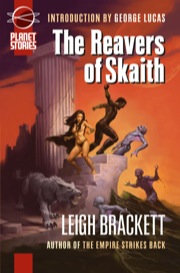
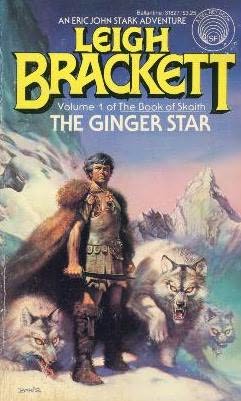
The Reavers of Skaith, published by Paizo, written by Leigh Brackett, is the third book in a series following The Ginger Star and The Hounds of Skaith. Below I'll be discussing some ideas that floated through my brain as I read it. This includes spoilers so if you insist on knowing nothing of the book, do not read on.
First off, the cover. Here, Eric John Stark is fighting off Children of the Sea. These are people who in the long ago past were changed at a genetic level so that they should thrive under the waters.
When looking at the origins of the races in your campaign, what if you throw a touch of some of the old school in there. In several campaigns that span the earliest time of the RPG origins, the past was not always one of swords and spells. Both Blackmoor and the Wilderlands, as well as Arduin and even parts of Greyhawk, have their nods to technology in one form or another.
In 4e, this would almost make more sense. Suppose that Dragonborn and Tielflings are NOT the results of devilish bargains and dragons making martial guardians. Suppose instead they have one common origin and were supposed to guard the land against all others and the other races were put into place as servants and guides for their perspective duties. Most would say that elves, still being elves, still being known for their forest lore, have succeeded. Ditto for dwarves and perhaps even plausible for halflings. But Tielflings and Dragonborn who've never had a strong root in gaming history?
In the core of 4e background, they each had a mighty empire and both were destroyed in a clash. What if that mighty empire's origin lies in genetic engineering and super science? What if they were one empire at a time until a race divide seperated the two and eventually lead to war? It provides a lot of opportunities to expalin with genetic engineering some of the strange races and monsters in the game as opposed to merely hand waving everything away as magic or some crazy deity.
The other thing that comes clear from The Reavers of Skaith is the powerful place of religion. There are several different sects with various followers here. Many of them with fanatics willing to die for the cause. If the Game Master can impress upon the players the importance of religion, not necessarily to the characters, but to certain factions within the campaign, it can act as a guide for what to expect if those factions ever come into conflict with the players.
For example, there are several instances here where the fantatics fight to the death. In the real world, even with all the advanced secruity and technology we have, unfortunately, we've learned the power of a man determined to die who has explosives with him. The point being it's hard to reason with someone whose already determined that if they're going to die, they're taking you with them.
Lastly, there is Halk. A broad shouldered swordsman who wishes to kill Eric John Stark, but keeps finding reasons not to. If the players do a good job at their various duties, if they treat the NPC's with respect, if they work out their differences, show that it has an effect on the game by changing the way that the Non-Player Characters react to them. At times the reader isn't sure if Halk is going to go for that vengance, but at the end with the characters have their last verbal confrontation, we know that Stark has Halk's grudging admiration.
Keep in mind the various points of origin of your world. Keep the role of religion and the various things it can make a man do in mind. Keep in mind that the players can effect real change in the campaign and have the world react to it.

Tuesday, December 29, 2009

Actions Lead To Consequences Which Lead to Actions...


Legacy Volume 4 brings two things to mind for me.
The first is that action begets action. There is a bit of rebellion and it leads to the Sith lord declaring genocide. This of course is an action and reaction bit, but it has further consequences down the road.
Next up, is that to be as stupid as the Sith are, you have to be really powerful. Much like Vader from the original trilogy of movies, the Sith here have no problem in killing high ranking military officers.
This would be a tremendous lack of motivation but yet, they keep coming.
In such cases, if the players ask why, the Game Master should have some reasons.
1. Overwhelming arrogance. How many bad guys think that they aren't the guano? How many top teir villains are going, "Man, I'm so happy at rank three, I hope this goes on forever." Most of the time it's an arrangement of failures by multiple tiers that cause the top bad guy to fail in the first place, but hey, I won't have that problem right?
2. They had it coming. Similiar to the arrogance factor, these individuals may not think of themselves as being better as being top bad ass, but may think of themselves as being better in that they and they alone are surely indespensible and nothing would ever happen to change that.
3. No other option. When you're the number two man and the number one gets axed for failing to live up to his job, what do you think they'll say if you go, "No, I'm good here." These types of organizations tend to be move up or move out.
There are other bits here and there. The former Emperor, a military man with a touch of force training and a carde of elite knights, also with their own force training, is still in rebellion against the Sith Emperor. This leads them to an alliance with the old Alliance... It's just about as classic as curse you for your inevitable betrayal but as I've mentioned in other posts, it's a classic for a reason. The immediate needs of the many take priority over the urge to kick the snot out of that foe whose done you a personal wrong.
Of course not all players may see things that way so be aware that when trying to set up such an alliance that things may not work out as you envision them. In a purely mercenary game or one with highly driven plots determined by the players, all of whom might not be on the side of angels, one of them taking the time for some personal sweet revenge isn't that far out of the line. There's more than one classic story of the 'hero' winning through his initial plot only to go back for seconds because of someone that did him a personal wrong in order to finish it. Sometimes the hero doesn't make it out of those situations...
Star Wars Legacy continues to build on the previous issues by expanding the scope and range of the universe with new characters and different viewpoints. Keep the plots of the game wide and far reaching and allow the players to pick their own paths.

Friday, December 11, 2009

Stealing Stealing Everywhere

Sometimes it's important to note why something has impacted us the way it has. Sometimes we can take positive lessons from it and sometimes ways to avoid negative lessons.

I've mentioned before that I think crafting a good story is important in writing a good adventure. Mind you a dungeon crawl can be an excuse to throw the min-maxed characters into the dank darkness and have at thee so to speak, but even big dungeon crawls like Pyramid of Shadow try to throw character, plot, and other 'writing' elements into the mix.

But what does that have to do with the title? While this blog entry here isn't meant for a role playing game, I'd be a little surprised if a Game Master didn't agree with the majority of it.

Sunday, December 6, 2009

Do You Have What It Takes to be a Ninja Assassin?

Below I'll be discussing Ninja Assassin and this will include spoilers so if you want not spoilers for this movie, read no further!

Weapons with style: The Kyoketsu shoge is a blade attached to a chain. With it, the main character, Raizo, is essentially, what 4e would call a martial controller with a secondary roll of striker. The weapon gives him range, enables him to target multiple foes at one time, and its most masterful utility is that it looks impressive.

Much like Bruce Lee did with Nunchucks back in his day, Raizo does with the Kyoketsu shoge in this film.

It's about having the characters, both good and bad, have weapons that can quickly identify them to the players and to each other. When they see the soldiers with the broad swords and hilts resembling wings, they know what army they're fighting. When the players see a shadowy figure launch out with the spiked cahin, they know most likely it's their old ally. Keeping things on a visual medium allows a quick connection between material and player.

In terms of motive, at first, it may seem that it's all about revenge, but it is? Raizo endured a hellish training. He endured watching the woman he loves leave him. He endured watching her murdered in front of him. He took his first mission with well, vigor might be best to describe it. It's only when he's put in a situation identical to the one that cost his love her life, that he decides to turn against his 'family'.

This could be seen about being pushed too far and finally, pushing back. And it's not just a murderous streak either. He wants the authorities to take them down, and he wants to save people while doing it. This is a bit more than the loner out only for revenge.

Next up, turning assumptions on their head. During the movie, Raizo is captured by the authorities and warns them of the impending ninja attack. Suffice it to say, it goes down much like the Aliens versus the Marines at first with the soldiers being hindered by a black out and by the narrow space they fight in. Having lots of firepower in an enclosed space against a team highly trained to use melee and short ranged weapons? Not a good combination.

However, it turns the invicible ninja theory on its head when latter on the government forces, who when they stay out in the open, are able to use superior firepower to mow down the enemy.

This also showcases another old problem with many genres and mediums. Alone, a ninja seems invicible. In groups? They die in droves. In Marvel Comics, depending on number, brand, and who they're righting, the X-Men's old foes, the Sentinels are exactly the same one. One may tackle the whole team but as a group? Pitiful. They go down like dominos. In 4e, this can easily be represented by the minion rules. In earlier editions, these weak ones are just different monsters with the same apperance. A little more leg work for say, 3rd edition, but not that hard if you're reskinning things by now.

The enemy organization; In this case, the ninja clan of the black sand uses a sealed envelope of black sand that is sent to the target. They consider themselves one family. The members are rasied by the 'father' and are all orphans. This allows any thing that falls outside what the father wants to be against the family and tends to destroy individualism in these groups. They also, of course, have unique clothing, weapons, and ninja powers, such as the ability to move in shadows and apparently teleport form shadow to shadow.

There is also the use of foreshadowing here. The start of the movie shows a group of, perhaps yakuza thugs, with the leader getting a tattoo. The tattoo artists notes that when the thug opens up a package of black sand, that they will all die, and the he should already be dead, but his heart is on the wrong side. This whacky science comes back at the end of the film when one of the main character's whose been stabbed fatally in the heart... yes, has her heart on the wrong side.

In terms of the main character, he showcases a lot of similiarites to the hero Guts from Berserk in some ways. For one, he's almost more interested in killing his enemy then he is in preserving his own life. In two of his big fights with the clan, he's decimated. These encounters, and his harsh training, have left Raizo a man criss crossed with scars. In addition, when he gets into fights, he's not some untouchable phantom, but rather, is slashed and cut like anyone else, adding more scars to him. The character, especially during the last scenes, exudes a sense of grim determination that is reinforced by his grizzled apperance.

Ninja Assassin is far from an art flick. It's razor thin on plot and story. It is however a stylish film whose action sequences you'll want to incorporate into your own game and curse when a rules heavy engine prevents things from moving as smoothly as they do in the film.

Sunday, November 29, 2009

No Children's Tales Here


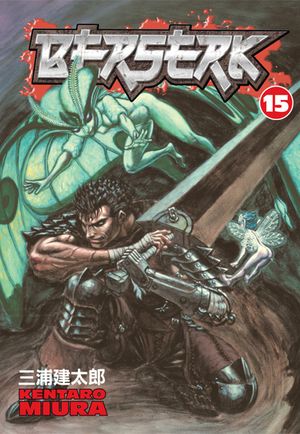
At this point in the manga, Dark Horse has moved well beyond the cartoon.
The series continues to showcase things that every good game master should involve themselves in.
First off, world building. Here we learn the story of Peekaf, a child with strange ears and red eyes who teased as a youth, runs away to find the elves only to discover that the elves cured him as a baby and left side effects. He runs home only to discover that time flows differently in the fey lands and his parents are long dead.
This is a small tale but showcases some common themes of loss and regret, of giving up what you already have for something you may never acheive. In addition, it showcases that things don't work the way we think they do in terms of setting. Just because time flows one way in one place doesn't mean it flows the same way in another place.
The material also makes me want to mention 'skinning'. THis is where you take the game mechanics or effects of one thing and apply them to something else. Because Guts is cursed, he's always fighting ghosts that possess nearby things. While entertaining perhaps to stat up possessed hounds, humans, and other bits, it's perhaps not the best use of one's time. Having a set of stats that represent the creatures base powers that can be easily modified on the fly is a useful ability for a Game Master to have. In some game systems, like GURPS and Hero, it's essentially expected for each player and Game Master to customize their abilities based not on what the ability does, but what it's 'effect' is. For example, in Hero, a d6 for damage is a d6 for damage regardless if it's a punch, a fire blast, an ice blast, a sonic blast or some other type of damage. Having an ability to quickly guage what something does and 'skin' it on the fly is useful for when you want to keep the game moving.
Don't forget the holy men. Even in small villages and towns, there should be a priest or three to take care of the spiritual needs of the people and to act as a contact point for any religious orders, pilgrims or religious events that need interpetation. Even here in a dark and dismal world where few survive, the small town that Guts is travelling through has a priest who speaks with the holy knights moving through and on Guts trail.
Lastly, don't forget about the characters actions. If the characters are having an effect on the game world, this should be something that is noticed. In this volume, the holy knights trailing Guts are doing so because in his persona as the Black Swordman, he's continuously killing things that are not meant to be, causing quite an upstir. The knights seek to understand what this means for their religion and what is going on in the larger scheme of things and if Guts is involved.
Keep the setting real by telling the players stories that take place in the setting. Let the players know their actions are felt by having their own stories enter the legends of the campaign.

Sunday, November 22, 2009

Party Focus In The Big Picture


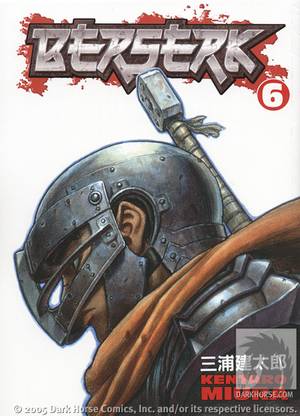
So over here is a summary, preview, and other details about Berserk 6.
What can you take away from it for your own campaign?
Introducing NPCs. Give the NPCs some quick quirks that the players will notice. For example, we're introduced to Princess Charlotte this volume and she takes to Griffith like a moth to flame.
We also see how many parts of the setting work in between noble and 'commoner'. Julius is the brother to the king and a general of his own army. But that army isn't doing it which is why Griffith is needed in the first place.
Many of the nobles in Midland have huge issues with a group of commoners being lead by a man with no noble blood moving up the ranks so quickly.
Some of them, like Minister Foss, can be more dangerous than the monsters and mercenaries faced in the field.
For example, while taking no part in it himself, Foss convinces Julius that the best way to take care of Griffith, is a hunting 'accident' during the king's hunt where Griffith's forces will be the escort for the nobles.
The hunt itself is another good example of making the campaign setting larger than merely the dungeon. What do the people do when they're not going on adventurers? In this case, the nobles enjoy hunting, they enjoy having horses, fine armor and fine weapons with the land in which to do so safely.
Continue the use of foreshadowing. If you've had a campaign running for a while and things are continuing to go in the same vein, keep up the good work. Here, Griffith is apparently assassinated with a well poisoned arrow but it's actually blocked by the egg of the king, introduced before this and a device that's saved his life before. It continues to showcase it's vitality.
In addition, Griffith's knowledge base continues to grow while Guts continues to train. This makes the former more apt and able in the new circles he travels, but it makes the latter far more dangerous on the field of battle.
Next, make sure to be prepared to allow the players to figure things out. Griffith's assassin initially makes away with no problem but there are numerous clues that point to the person responsible. If the players are smart enough to figure out things and move forward with those well laid out plans, allow them to succeed.
But some may be asking, what's with the title?
Towards the end of this volume, there is a massive battle where whole armies are put to the field. Guts and Caska, another commander, become seperated from the main group and the story then shifts focus and attention to them.
If your stories aren't in a dungeon and are more freeform, it can seem to be difficult to allow the players the focus of attention they deserve as they are the players, whle putting them in a larger context.
There are numerous ways to do this. In an army battle, the players handle the hot spots. In a city siege, the party becomes seperated from the main army through collapsed streets, fallen buildings, or other natural disaster.

By keeping the focus on the party as opposed to the world, you allow the party to influence what happens in the world as it effecs the party. Perhaps in a city siege the party is seperated from the main body of soldiers but in doing so, gets access to information that is vitally needed. Perhaps they are able to use old sewer systems to launch an assassination attack at the commander of the enemy forces. Perhaps in the forest the party discovers a group of stones that when activated, allows the party to cover vast distances quickly, allowing them to act as a vanguard for an army invasion.
The game requires the party to be the focus of the campaign in that the party, and what the party learns and how they react to it, define the world.

Friday, November 20, 2009

Swords, Sorcery, and Supernatural Horror: Nosferatu Zodd


When you first start reading Berserk, you might wonder what's going on. The introduction show cases Guts fighting enemies that are the exception to humanity, using a variety of weapons that he does not possess in the 'origin' arc that follows.
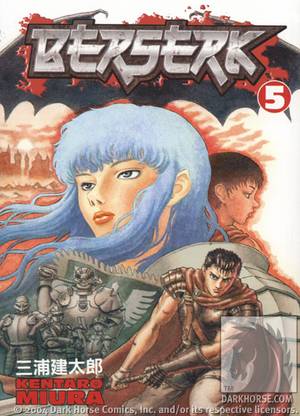
But Berserk 5 starts to showcase the depth of the world. In another mission for the enigmatic and charismatic Griffith, Guts winds up fighting Nosferatu Zodd. "Among mercenaries Nosferatu Zodd is a legendary sowrdsman. They say he's killed hundreds, even thousands on the battlefield." and another mercenary notes "There are some mercenaries who reverse Zodd as a battlefield God!!"
So far that doesn't sound good.
Follow up with a up close Guts talking with the soldiers under his command, the Raiders. "We sent almost fifty men in thee and no one's come out...!!" Guts shouts.
But then someone does come out. Torn up and weakling whispering the name Zodd.... Nosferatu Zodd before dying.
Guts investigation leads him through slaughter where his men are strewn about like broken and shattered rag dolls until he encounters Zodd. At first, Guts does what any sword swinger might who doesn't realize what's going on. He charges.
Until Zodd whips the corpse on his oversized sword at Guts and smashes him into the wall at which point Guts thinks... "What the hell is this?! This overpowering sense that's got me tied up?!"
Note that Guts doesn't actual sit there and whimper. He realizes that there's something supernatural about Zodd. He knows that there's no chance based merely on his own strength that he's going to win. He takes a gamble and wins that one but alas, it's not to be and Guts winds up being saved by Griffith, both being injured by Zodd who leaves an enigmatic message behind.
So a few things to think about.
1. Supernatural Horror can be used in a standard fantasy game. Amp up the description of what's going on. If you've got a good group, the atmosphere you create will be picked up by the players and they'll go with it. If your group is of one mind and that's hack and slash, nothing less than full fledged insanity and horror rules are going to make them role play it out anyway so move onto a system that supports that.
2. There are more things in heaven and earth than are dreamt of in your philosiphy. Just because the players may be experienced with certain types of foes doesn't mean that the GM can't throw in some new enemies when the opportunity arises.
3. You don't always win. The players may decide at 3rd level to take on that elder worm. Sure, let 'em. If you've got a long term plan for them and that worm at a higher level is part of it, the worm may wind up doing some significant damage to the players but isn't necessarily out to kill them because...
4. Long term planning can pay off. Griffith in a previous volume has shown Guts the 'egg of the king', a charm on a necklace that resmbles a crimson face in disarray. When Zodd sees it, he stops his rampage and gives Guts a dire prophecy of the future.
After the fighting's all said and done, and perhaps even before that though, we can see somethings happening. In games like Hero, GURPS, and D&D 3.5, if you didn't follow a certain 'proper' path, you could wind up with a very well rounded character that could easily fall to enemies of the appropriate 'level' because you weren't following the standard.
Here, we see Griffith taking his place with the nobles while Guts? Guts is out practicing with his weapons. After the fight with Zodd, we see Griffith, whose at this point a war hero, speaking with the nobles while he recovers. Guts... yeah, he's continuing his mastery of the blade.
Long term planning continuing to take its seeds here, but what usually happens when one person continues to pursue a single mastery at the risk of all else while others continue to spread their focus about?

GMNPC: Thy Name is Griffith


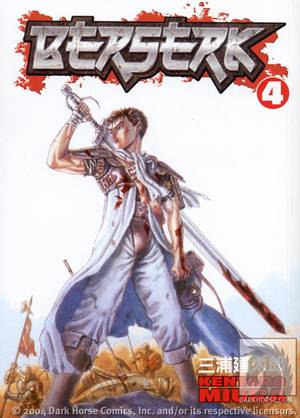
Over at the ole Dark Horse website, we've got the cover, summary, and preview for Berserk #4.
Here we get a lot of background on Guts. We learn that as a chid he continued to use weapons larger than he could handle because the mercenary company he was a part of didn't carry 'child' weapons and so he overcompensated for it.
We see some horrific things happen to him.
We see the fickle nature of mercenaries as they go from mocking Gut's adoptive father and both hating him and fearing him to hating Guts for being born from his mother's corpse under a hanging tree and brought back from near death by Gambino, Gut's adoptive father's woman, Shisu, a prostitude who recently miscarried.
But more than any of that, we meet Griffith. To put it in short, he's a GMNPC. This is a Game Master Non Player Character. Now in theory, every character that's not being controlled by a player, is a NPC. A GMNPC however, is special.
In Griffith's case, he's handsome. He's charismatic. He's a military genius. The biggest 'sin' though of Griffith, is that he's a better swordsman than Guts.
Or at least those would be Griffith's sins in a role playing game where the players have no patience for a long term and told story and don't want to have to share the spotlight at any time.
For example, in future volumes, Griffith's abilities rarely come into play as far as they interact with Guts. It's a campaign tool that allows Griffith to move Guts into positions and 'missions' that Guts is best suited for.
A good fiction example with potential similarity is the Lady from the Black Company. Far too powerful for the Company to even think of fighting until they believe she's betrayed them, the Lady is the one who provides the Black Comapny with employement.
The thing about NPCs though, unlike the players, is that they are capable of changes in many fields ranging not only from attitudes and outlooks, but in power levels. Those who've read far along in the Berserk Manga or the Black Company series know that the Wheel of Fortune is often not kind to those it keeps at the top for a long time.
When thinking about patrons for the players, be aware of their own personal likes and dislikes. If they have an intense hatred of GMNPCs, even if those characters are merely used to provide opportunity for further advancement of the player's own goals, there's a good chance the players will walk away from that NPC and perhaps even from the campaign. Some players have no problem accepting a fantasy society where technology has stayed the same for ten thousand years but get up in arms when asked to do a mission for a high powered NPC who they feel should just "do it themselves."
Keep that in mind and use when and where appropriate.

Tuesday, November 17, 2009

Letting the Lyrics Work For You Via Alice in Chains: Last of My Kind

I listen to a lot of music. I don't have the longest commute in the world and I listen to a lot of public radio. However, I have no interest in sports and often public radio repeats itself so it's a flick of the dial to power on the old CD player.

I've been listening to Alice in Chain's newest release, Black Gives Way to Blue, and the first three tracks, All Secrets Known, Check My Brian, and Last of My Kind are very solid tunes. The lyrics in that last one especially seem appropriate for a fantasy or science fiction based game.

A Wolf Alone Upon the Hillside
I live on what they throw away
I go to sleep behind the eight ball
I live to fight one more day

One of the most overused origin stories for heroes is that of the loner but perhaps just as used is the humble origin. In this case, we get both. Sounds like the background for many an assassin who dwells in the lower reaches of society.

Take What I Wanted, and
Break all the lies and
Defeat the f****ing liars...
Smash all the temples, and
Crawl through the rubble, and
Cry to the Fallen

Adventurers are notorious for doing things their own way. They are willing to cut through the lies that civilized men tell one another in order to keep the peace. I recall a Conan bit where Conan doesn't turn in one of his friends and just goes wild in the court room. Something about keeping a civil mouth of well, let swords handle it.

Players are quite adept at taking their own abilities and driving those who stand against them to the wall.

The name of the song itself though, also brings to mind something a lot of players want for their characters. To be the last of their kind. No, not necessarily the last elf or the last of a particular race, although as Superman has proven, that does have it's own affinity. Rather, they want to be the masters of something that no one else is. This could involve having a powerful magic item, a set of abilities that no one else has access to, special background or titles. Something that makes them stand out from the other characters including characters the player has run in the past.

Keep the players in the spotlight and let them be the last of their kind.

Sunday, November 15, 2009

How Important Communication in Your Campaign?

I recently received an e-mail whose contents I thought should have been delivered in person. It got me thinking, how do communications work in your fantasy setting?

In many standard fantasy settings, for those with the wealth to afford it, magic is the ultimate utility in terms of communication. It can be used to send messages or with the right power, people straight to where they need to go.

Communication has the same limitations as many other elements that involve travel. In most fantasy settings, it's a fairly dangerous world once you step outside the safety of a town or city. Once in the wilderness, anything goes.

In Kate Elliot's series, Crown of Stars, the King had Eagles, specialized messengers. In various Thor comics from Marvel, the old Odin often relied on his ravens to spy on others and rely what they had seen to him.

Thinking about how to use communication can add some elements to the campaign that you may not have thought of.

Letters, being perhaps the most mundane, would probably be the most common, especially if attached to messenger birds as was common with homing pigeions. The problem with that though it is takes a lot of birds to hopefully get one message though. In addition, does the right message get through. Piegions aren't very tough and can easily be replaced.

But what it a message does get through? How long can it be? How much cramped writing can be put onto a small piece of parchement to be pinned to a bird's leg? Not much.

Letters will not contain the hand gestures, the tone, posture, or other signs that another form of communication may. Indeed, letters can provide little more than words that the user at the other end has to assemble into something of meaning.

For other messages, kingdoms might develop a series of towers, each one using mirrors, fires or other markers bright enough that another tower can see it. The problem with such a signal though is that it's visible to everyone. Something to be used only in the most dire of circumstances, such as when say, calling on another kingdom for aid.

In some campaigns, the kingdoms of old had various gates or pockets into another dimension where travel was much quicker. In the 'modern' fantasy setting, often these gates are greatly reduced in number. They may not function as they once did. There may be problems using them. Those other dimensions may now be haunted by dire monsters. The other dimensions may not be suitible for life as the characters know it. The other dimensions may have bleed over into still other dimensions and there is a chance that those who go into such places may never come out again.

When thinking of how news gets from one part of the kingdom to another, think about both the mundane and magical methods needed to get that news out.

Friday, November 13, 2009

The Limits of Temptation in Berserk

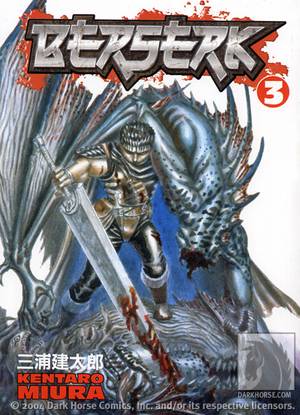
So over here at Dark Horse Comics, we have a summary of Berserk volume 3, cover, and some sample pages. Below are some ideas that you might think of when doing Non-Player Character design.

One of the reasons I keep coming back to non-player character design is that it's one of the key elements you can add to a campaign. I was going to say one of the few things, but any Game Master worth his salt has come up with new traps, monsters, magic items, and other bits.

But with Non-Player Characters, as a Game Master, you've got a chance to showcase how the world works for people other than the characters. You've got a chance to put some characters on display in a non-dungeon setting.

Last volume, the audience was told that the count changed seven years ago. His daughter provides a story of how heretics killed the count's wife and this hardened the count's heart and how his daughter is his only prized possession.

In the fight with Guts, the count becomes so injured that on the point of death, he summons entities of such power that they are essentially gods or demon gods or well, things so powerful that stats are meaningless. In this time of need, they agree to raise the count to his full power, to restore him and kill the count's foe... in exchange for the life of his daughter.

During this time, the reader learns that no, it was not heretics that killed the count's wife, rather, the count's wife was a member of a cult of heretics and engaged in an orgy to depraved deities. Seeing this drove the count into a rage but he couldn't kill his wife. Rather, he offered her as a sacrifice to the demon lords, the Godhand. They offer the count the same exchange here, but this time, he fails and dies.

Having lines that the NPC's won't cross no matter how tempting or how useful or how much they would gain by doing so, shows the players that they're not the only ones who have rules in place. That there are ways they can fight against those who pester them that don't necessarily involve putting everything to the sword.

Not a perfect example in this volume, but here, Guts uses the daughter as a shield. The count won't attack while she's in danger. In other volumes, incidents happen that may not be 'heroic', but in Dungeons and Dragons 4th edition, with it's unaligned alignment being a prime choice, it may beat having to kill dozens in order to acheive a goal.

Thursday, November 12, 2009

Berserk #2: Not Patrons But...


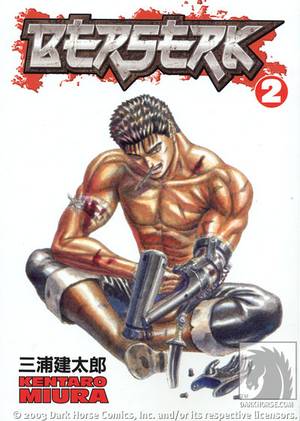
Another look at how Berserk, the Manga by Kentaro Miura, can be useful in stiring the stew of inspiration! There will be spoilers and other bits below so beware those who want to remain virigin in terms of what Berserk is all about. For those curious about it, there's a preview of this issue right over here at the Dark Horse site.
Berserk #2 starts off with Guts on the run from the city's militia after he insults the ruler. Yeah, he's got PC written all over him.
The person whose assisted Guts on his escape though is another unique character. Not rich, not powerful, but rather, weak, crippled, and scared and frightened. Certainly not the traits of a patron.
However, he doesp rovide Guts with an up close and personal bit of information about the person Guts has some to battle. This weak creature, Vargas, provides some key bits of information including the time when the Count changed. Including the fact that the count isn't human. In addition, Vargas owns a few things.
These are minor trinkets overall in terms of their influence on a campaign, but they showcase that even a poor NPC may have items that the players may be interested in or that the Game Master can utilize to showcase a larger world. For example, one of the items Vargas owns is a pickled elf. In this setting, elves are like faeiries in that they have wings and fly around. For Vargas to have one indicates that while they are rare, they're not that rare. The Game Master could also use such an individual as to showcase specific things. For example, what if the game was set in the Forgotten Realms and there was an arquebus there? What would old Vargas care if the PCs wanted it and his limited supply of smoke powder?
The thing about Vargas though, is that while he possesses no money, his motivation, revenge, is very strong and very easy to recognize. When plotting the use of NPCs, try to tie them into the player's own motivations.
For example, while Guts plays off his superior strength, it's important to remember what Guts already looks like. He's covered in scars. He's missing an eye and an arm. While Vargas is worse off and can't fight at all, Guts has a lot of similarities to him that fuel his rage.
By playing off of the similiarities that an NPC has to a character, the player's may be more motivated to help them if alignment itself isn't enough.

Wednesday, November 4, 2009

An Ending to Crown of Stars by Kate Elliott

This seven series book, Crown of Stars, was one I've taken two pauses in. The first was because I only owned the first three books in science fiction book club edition. The second because I waited and purchased the second two books at Half Price and then finally used some of the old e-mail coupons to buy the last two at Borders.

While not a challenging tale in and of itself, it does illustrate that people have options. In a fantasy campaign, it's important to keep those options in mind when designing encounters not because you want to put a clamp on them, but because the more aware you are of what the characters can do and how your players think, the more likely you'll have results ready for anything they try to do. You don't do this to pin them down to a predetermined course, but rather, so that you can keep the game itself moving. When the game slows down because the game master wasn't prepared for something the players didn, everyone loses.

Anyway, onto some thoughts on Crown of Stars.

"I am puzzled," said Rosvita, "by what he meant by men with animal faces." (p.19)

Description without explanation is a mysterious thing. A large humanoid can be any number of things. In the case above, the men with animal faces are actually primitive elves who wear animal masks. Coming to the people third source however, it may craft images of a far different manner. Think about how the players learn about the campaign setting. If they're willing to play with the background details you've given them, while they won't experience that first rush of discovery at an orc as they may have once, it will prevent things from being same old same old.

"No one would ever know the whole, now that Anne was dead, and even Anne could not have comprehended everything because in many ways she had also been their pawn, their creation." (p.163)

Often I hear bitter complains about the evils of railroading.

Let me tell you something.

If you're doing a good job running things, the players not only won't know if and when they've been railroaded, they'll enjoy the story as it moves along like a thing of destiny. This isn't saying put up massive impenetrable forests if they move off the road or to have a quest spell laid on them to get a certain item but if the events require a certain way to do things, run it to the players fun as much as possible and they'll go with it, often not even knowing it was a rail road.

"Or she could stay in the Eagles, like Hathui, always and forever, because she loved being an Eagle even after all this, even after everything. Here she felt at home, standing watch in the middle of the wilderness with enemies all around and a few stout friends at her back, all in service to the regnant. Here she felt a measure of peace, perched on the wall with the damp air and the spattering of rain and the night wind breathing on her. Not knowing what the next day would bring and aching with the misery of wondering what has happened to the ones she loves." (p.184)

Why do the characters do what they do? Sometimes it could be easier to show them through an NPC. A ranger or other wilderness styled individual who still owes alliegance to those in power can be a showcase of how one can be rugged and on the outside, yet still serving a greater cause. The old post over here on Grongnardia offers some interesting thoughts on that.

"Laws are silent in the presence of arms, so it is said." (p.206)

In America, most of us are very fortunate in that we live in a world of laws that are not necessarily enforced by strength of arms. In most fantasy campaigns, that's not true. The further from civilization with its many layers of protection the characters are, the more likely they are to discover the value of the presence of arms.

Game Masters can work this contrast between safety and civilization and the wilds and danger. Using the times the players are in the city to highlight the various options they have to them ranging from different types of food, clothing, and even companionship and past times to what they have to make do with on the frontier and how a well forged sword may be worth someone's life.

Of course civilization, especially in a fantasy setting, doesn't necessarily only have to showcase how things stay together. But that's a topic for another post.

"Hugh had no power of his own except what he could wreak against others, a man armed wit ha sword who must stand on the field against disciplined ranks of archers and cavalry. This made him no less dangerous. A man with a sword can still kill anyone who comes within arm's reach. As long as Hugh could twist others to do his will, he could and would, harm his enemies and every innocent soul who got in his way." (p.235)

In a civilized land, it's all about who you know. After all, if you know the captain of the guard and he's one of the greatest warriors around, whose going to mess with you? The ability to confuse men and make them serve causes not necessarily their own has been showcased in many classic characters including one Gríma Wormtongue of Lord of the Rings fame.

"The ancient law?"

"Stil lheld to in Alba, I might add, and in much of Varre. The identity of a woman's children is always known, since they have sprung from her womb. That of a man's offspring-- well, no matter what anyone says, i nthe end it is always a matter of faith."

In dealing with the laws of succession in a kingdom, how does it fall? Does it fall to the eldest son? Does it fall to a woman who can prove her fertility and thus worth of carrying on the bloodline? Most fantasy settings assume the eldest male with young men going into church or other forms of service but don't be afraid to mix it up.

"We hear rumors of reavers with poisoned arrows harrying travelers along the roads leading east into Fesse." (p.267)

I've mentioned it before but always keep the rumor mill flying. Things should always be happening, even if the player's don't follow up on them. The larger the setting feels to the players, the larger it effectively is.

On the other hand, "reavers with poisoned arrows" is just a damn fine encounter. How dangerous is the poison? Where is the supply coming from? Can the supply be cut off? Is there a common cure? Is there a anti-toxin that adventurers can take before hand to minimize the threat? Foes who have methods of dealing great death and destruction always get a player's respect right out of the box and make them think more than mere numbers.

"Henry should have killed Sabella after the first revolt!" said Liutgard. "He was too lenient!"
"Wendish do not murder their kinfolk, not even to the pursuit of power," said Sanglant mildly. "We are not Salians, Liutgard. Thank God." (p.350)

I've mentioned it before, but trying to prevent a group of players from being men men reavers who kill all they encounter can be a difficult thing. Most fantasy engines are designed to reward the defeat of the enemy and keeping an enemy alive is often more problem than its worth.

But what about family? What about family that may be redeemed? What about family that's very close to the character, a direct relative as opposed to a distant one? Is it still loot the dungeon and let the deities know their own? Kinslayers can have a nasty reputation that could easily mar the reputation for the whole party if they are known associates of such an individual.

"Liutgard smiled tinly. "There is no traitor's gate, Cousin."

So named in the book as a crawling spaced where a small group of men could creep in to surprise the defenders of a castle. Sound like a job for adventurers or what?

"It was Hugh of Austra who murdered her, when she was sleeping and helpless, and for no better reason than that he wanted no apprentice of Meriam's to challenge his knowledge of the magical arts." (p. 379)

When looking for motivation for the bad guys, one simple thing may be that they like their toys so much they don't want anyone they don't directly control to have them. Liches and other ancient undead can horde power by killing those who may know their arts or similiar arts. Great warriors may hunt down those who know their style in order to maximize the effectiveness of their own murderous arts. Always look at what the players can do and think who doesn't want them to have that ability. In some instances, it may be a whole race. For example, what if the elves so regret teaching humans the magic arts that they send out highly trained assassins to kill all human mages?

"Ai, God," whispered Alain... "He is a good man. Can you not fly after him and bring him back?"
"Why should I?"
"Because Heribert loved him." (p.455)

A good villain may not be well rounded but it should have something to it that the players can understand and that the players can work against them. In the above instance, Sanglant is essentially unkillable by man or woman but this entity Alain speaks with is essentially a other planar entity that rips his soul out, leaving his body souless. The thing does this looking for Heribert, whom the entity loves above all others thinking Sanglant is hiding him. By appealing to the thing's love of Heribert and that motivation of doing what the one he loved would want down, Alain manages a victory without combat. In D&D and Burning Wheel, among other games, skill checks can be a great way of engaging this types of challenges without rolling for damage.

"Despite the trappings- the primitive standard, the gaudy lacework that gridled his hips and thighs, the jewels drilled into his teeth, and the bare chest painted in spirals and crosshatches- he was not what he seemed. He might appear savage, but far more dangerous current surged within." (p.477)

Appearance isn't everything. One easy way to shake things up is to pit the characters against an enemy who seems to be one type of thing but is actually far beyond those humble origins and in fact holds a far different role than the players may assume.

"it was the king of grunt made by a person who has just realized that, in fact, he will have to haul those damned logs all the way back up the hill and that there is no use complaining because the master is harsh." (p.484)

If you have a gaming group and they're always complaining about the way the game is going, it might be time to find a new gaming group. There is a massive difference between grumping in character because things aren't working the way you'd like and grumping that the game sucks, that the magic item ratio is too low, that the game master is against you, etc... Engage the characters when possible but don't waste your time as a game master on people who are only there to complain.

There are numerous other parts of a Crown of Stars I could quote, but instead I'll do a dreaded summary.

The Crown of Stars itself. This item is found late in the series, the old artifact of the old emperor. At the end, instead of using it as a symbol of old power, they return it to the original statue where the old king is buried and forge ahead on new paths of unity.

The ending. I'll admit, it didn't do it for me. It took a generational look at a character I just didn't care about. However, it also had a small "what happened to" section on a character I did care about and that part redeemed the ending. When ending a campaign, it might be better to do a fade out shot of the characters, especially if they're reached the upper tiers of the campaign, as opposed to having the players hear some wish washy NPC they never liked speak of the deeds of their children.

The length. Try to maintain a sense of the campaign for the long run. A series like Crown of Stars runs thousands of pages and can be a beast to devour all at once. Don't be afraid to take side journeys on that path as long as you return to the road.

Last but not least, make sure that you as the Game Master, are enjoying the road you are on. There is no point in making the group happy if you're misearable because sooner or latter that misery will make itself manifest!

Wednesday, October 28, 2009

The Ginger Star by Leigh Brackett


The Ginger Star is another book I've plucked from the Paizo Planet Stories line. It's part of my 'back to basics' in terms of trying to catch up on the older books I've missed. Material which may or may not have had an influence on the progression of role playing games, but which should have been known in those early eras.


Leigh Brackett's main character here, Eric John Stark, is a man of a setting that's somewhat space opera. Technology exists in many fashions including planet to planet travel, but it's more of a background element as Start often solves things not with lasers or ship to ship combat, but through his own barbaric nature.


For those who haven't had a chance to read any of the Eric John Stark books, unlike today's mammoth beasts, they're fairly easy to digest and they have the benefit of already being 'done' as opposed to some other mega series which are impressive in scope and depth but never seem to end.


Anyway, below are some thoughts I had that I'll try to keep in mind when I'm running my Dungeons and Dragons 4th edition game. Page quote numbers come straight from the Paizo edition.


"He was, as the old phrase had it, a wolf's-head- a totally masterless man in a society where reveryone respectable belonged to something. He bestowed his allegiance only where he chose, usually for pay. He was mercenary by trade, and there were enough little wars going on both in and out of the Union, enough remote peoples calling on him for the use of his talents, so that he was able to make a reasonable living doing what he did best. Fighting." (p.16)


In terms of character motivation, sometimes it's a natural talent that brings the character to their chosen profession. It's not a matter of being raised proper, it's not a thing for pondering why, it's a life style determined by the character's raw ability and how best they use it. It's a popular theme and one of Marvel Comic's most popular characters, Wolverine, has his own line, "I'm the best there is at what I do." If the characters are struggling for motivation, having them take pride in their own physical prowess isn't a bad thing.


He let the city flow around him, absorbing it through all the senses, including one that civilized men have largely lost." (p.21)


Try to engage the players on multiple levels with the setting: How does the road they walk on feel? What does it look like? What scent is carried on the air? What background noises are standard and which don't belong? Is there a sense of wrongness in the air? By bringing all of a character's senses into play, it makes it potentially easier for a player to get into character. The setting is more real the more they can relate to it.


"He is the Dark Man of the prophecy." (p. 27)


When looking at oracles and divination, the more vague they are from the Game Master's point of view, the more wiggle room the players and Game Master have in what actually happens next. Some prophecies may be so open to interpetation that it applies to everyone. In the comic Nexus, there is a sequence when Nexus and his good friend are teamed with the insane Badger, a martial artists of questionable sanity, and the three come to a village where they are hailed as saviors, or at least better then the three that came before and Nexus and his allies are smart enough to head out even as the next three of prophecy come along.


"Start sprang like a wild beast for Gelmar and bore him into the sea." (p.28)


Expect the unexpected from the players. If the characters are on a mountain and driven to the edge over a sea, don't be surprised if they jump into it and try to take some of the enemy with them.


At the same time, if the Game Master can think of things that the players can use in the environment to augment any encounters, all the better. Building different elements into an encounter that may or may not be used can be aggrevating in terms of work lost by the Game Master, but it can all be worth it when the players take advantage of it.


"You took him into the sea. Don't you know that it is forbidden, absolutely forbidden on pain of death, to lay hands upon or interfere with a Wandsman in any way?"


"I was already under pain of death, and it seemed to me that in any case, Gelmar needed a lesson in manners." (p. 37)


When you push the players, the players push back. The game master must keep note of any potential campaign elements that can derail the game if the players push too hard against those elements and more importantly, why the players wouldn't push in that direction if the game master is herding them in that manner.


If the game master has a nobel and his loyal followers meet the party on the road and has it in his mind that the party will take the absuse of the noble because after all, the character is a noble, the game master may be in for a rude awakening.


When such potential issues come up though, the game master should work with what the players have actually done and why they've done it and incorporate that into future game sessions not only in how they've effected the world, but in building future encounters that don't encourage the behavior that the Game Master may have issue with.


"Killing is a solemn matter," Mordach said, "and salutary. It ought not to be wasted." (p.56)


In terms of taking the players alive, depending on who the players are fighting, their deaths and more importantly, the manner of those deaths, may be more useful in keeping the campaign going then in merely killing them out of hand. For example, in the campaign I'm currently running, the players are on a section entitled, "The Well of Demons". There are numerous gnolls practicing dark arts here and that provides a great opportunity to allow any defeated players to be captured and taken for future sacrifice, allowing the other players a chance to rescue the player or the downed players to showcase some of his skills. The end doesn't necessarily have to be the end if there is a good reason for it not to be.


"One is born on a world. It may not be perfect, but it's the world one knows, the only world. One adjusts, one survives. Then suddenly it appears that there is no need to struggle because one has a choice of many worlds. It's confusing. It shakes the whole foundations of life. Why do we need it?"


"It isn't a question of whether or not you need it," said Stark. "It's there. You can use it or not, as you please." (p.100)


In most fantasy games, there are other worlds beyond that the players live on. In some cases, the players may actually come from those other worlds. What do normal people think of these old worlds? Do they close themselves off form it? Do they try to ally themselves with it? In 4th edition, right from character creation, there is evidence of multiple worlds with tielflings having pacts with ancient and dark powers and eladrin coming from a fey home. Do people seek to recreate those pacts that made the original tielflings? Do they seek to exploit the eladrin's home land? What trade opportunities are there? What long term ramifications for such vast span to the world?


"We live all our lives in a state of siege. Anyone, anything, may come. Sotmetimes the great snow-dragons, with the frost white on their wings and their hungry teeth showing. Sometimes a band of Outdwellers who run demented across the world and take whatever they can lay claws on. And there are creatures who wait, hidden just out of sight, smelling the warm food that walks and hoping they can snatch it." (p.124)


Keep the players on their toes. Let them know that it's not merely a matter of a kobold cave or a wild bear or a single dragon. The world is filled with danger and anything that the players are unaware of is merely that, their own foolishness in thinking that things are normal and safe. There is an air of caution in a setting where anything can happen. The brave and the bold may take powerful stakes in such a setting by fighting through these terrors.


It also allows the Game Master to lay down the footwork of future encounters. Just because the player's haven't encountered the snow-dragons doesn't mean the snow dragons don't exist. Just that the players havent' encountered them.


"In the time of the Great Wandering we were the free plunderers who fed on the roof-dwellers."


Stark thought that probably she meant that quite literally." (p.135)


Foreign cultures do things differently. They think differently. Their whole morale compass may be so alien to the players that they seem monstrous. Keeping the differences of those the player's don't know in mind and showcasing those differences can send some strange thoughts into the character's thinking when they see the foreigners do the same things that the characters do in terms of how they relate to their friends and allies.


The Ginger Star showcases an alien world that would fit into most D&D games with some of the humanoid monsters being the result of ancient genetic engineering that the modern survivors couldn't replicate. It has the old masters, things of such power that they cannot be replicated in today's standards, but in this case, it's from a technological mastery. Readers looking for a quick read could will be in for a surprising ride.

Monday, October 26, 2009

Don't Forget the Lyrics

The music group Slipknot has some interesting visuals to go with some of their lyrics.

For example, take the song Snuff.

Bury all your secrets in my skin, Come away with innocence, and leave me with my sins, The air around me still feels like a cage, And love is just a camouflage for what resembles rage again...

Burying secrets in skin can be done a few ways. Tattoos are the most obvious one can think of but depending on the genre and the setting...

For example, in Marvel Comics, one of their iconic 'good' characters, the Silver Surfer has such a pure soul that Mephisto is always seeking it. Imagine the Surfer's surprise when he discovers that instead of being so pure that Galactus has actually hidden those horrific things that he has done from himself so that he, for all intents and purposes, is clean and pure.

This is a fairly common theme when dealing with memory loss. The killer becomes the saint. The real question is once the killer knows its true nature, where does it go from there.

Another line...

So if you love me, Let me go, And run away before I know, My heart is just to dark to care, I can't destroy what isn't there,

One of the most reknown tragic fantasy heroes of modern fiction is probably Elric of Melniboné who even when is not trying to live up to his ancestors evil, inflicts horrific casualties among his friends due to his cursed items and his failure to pull free from his bloodlines. In the D&D 4e game, there is an epic class that follows this thinking. That the character, through no direct fault of his own perhaps, still brings doom and death to those closest to him.

And another round of lyrics...

I only wish you wern't my friend. Then I could hurt you in the end.I never claimed to be a saint...

In the anime Gun Grave, Brandon Heat is betrayed by his best friend and is hunting him down through the series. At the end though, he and his best friend fight together against all odds. Showcasing a level of friendship that allows friends to make such huge mistakes and still maintain the friendship is difficult but can be a milestone of a campaign.

Betryal takes many forms. It doesn't necessarily have to be in the heat of combat. One of the greatest traitors to the cause comes right from the Knights of the Round Table where Lancelot's affair with King Arthur's wife causes the whole kingdom to fail.

Gaming inspiration can be where you find it. Always keep an open mind not only as to what the actual medium you're listening to, watching, drawing, etc... is actively trying to do, but how that can be twisted and turned along with the other bits in your own mind and experiences to enhance your own game.