"There are three things that are beyond my control: the rapids of the Kamo river, the dice at gambling, and the monks of the mountain." ex-emperor Go Shirakawa-In.
I'm a fan of Legend of the Five Rings. I'm a fan of the old Oriental Adventurers 1st edition and the attempts to bring it up to date in various methods. In terms of history though, I don't know a lot about the various cultures that make up the far east in terms of Japan and China even though some of the timelines and events are somewhat known to me.
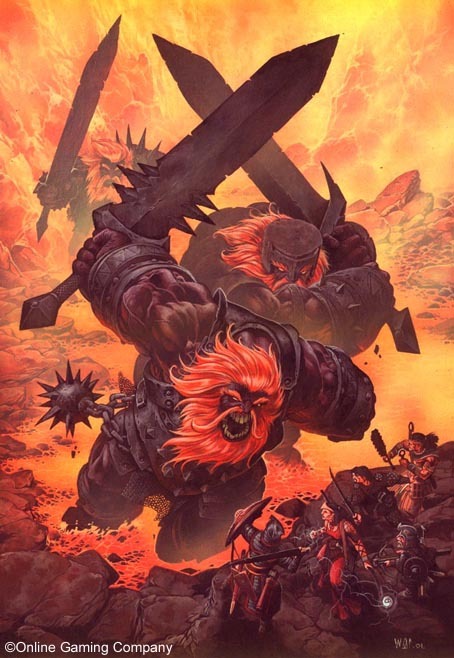
And the book is illustrated by Wayne Reynolds. You see, while I'm afraid some of his fantasy art is a little overplayed for me, between his numerous works for Wizards of the Coast and Paizo, and his shortening of the forearms in some of his illustrations, I do find his work in this book solid.
Anyway, the first thing I'd note is that the forces in Japan here, despite being monks, their initial battles and fights are not religion based. Rather, they are based on the world of politics. Various appointments are made that the monks don't agree with and they march!
To me, this is yet another powerful indicator that despite the 'secular' nature of religion, and most religions at their root tend to be of the do onto others bits, we find time and time again that in order to advance the cause if you will, that the religion must engage itself with the corporal. That the etheral ideas must be planted firmly in reality.
These politics go a long way in many of the early examples here, and they are not only all about the monks, but rather how those around the monks use politics to get there way, or how those who fall out of favor of the current politics have to watch their step or also fall out themselves.
When looking at the religious forces in the setting, how do they interact with the other parts of the setting? In campaigns like Greyhawk and the Forgotten Realms, those questions are semi-answered. Some of the more militant gods have churches. Some of the arcane gods have spellcasters as worshippers. Some of the shadier gods have rogues and assassins.
But the types of worshippers don't necessarily bring out what those forces actually do. The Japanese Warrior Monks, in many ways, are a standing army and served as such in several battles. While priest of Tempus are of the war god, do they have a standing army that is at the beck and call of whatever city they are in or is it an independent unit that is beholden only to the church? Do worshippers of Kord has a massive monestary they go to in order to train and learn their craft while preparing to showcase their strength and prowess?
The warrior monks also have a very distinctive weapon; the naginata. The naginata, as shown here, is a pole arm weapon with a massive blade that had a lot of variety. Wayne illustrates three of them in the book including a wide bladed one, a shobuzuri where the blade and shaft are almost of equal length, and a short bladed style with a heavy iron butt end.
The utility though, in a role playing game, would be the recognition that a whole unit or a whole style of enemy using a specific weapon brings. Some foes are known for their chaotic choice of weapons, others for their orderly methodology. By giving an army a specific weapon and a specific style, you give it definition and provide the players easy latch points.