Showing posts with label Kentaro Miura. Show all posts

Sunday, November 24, 2013

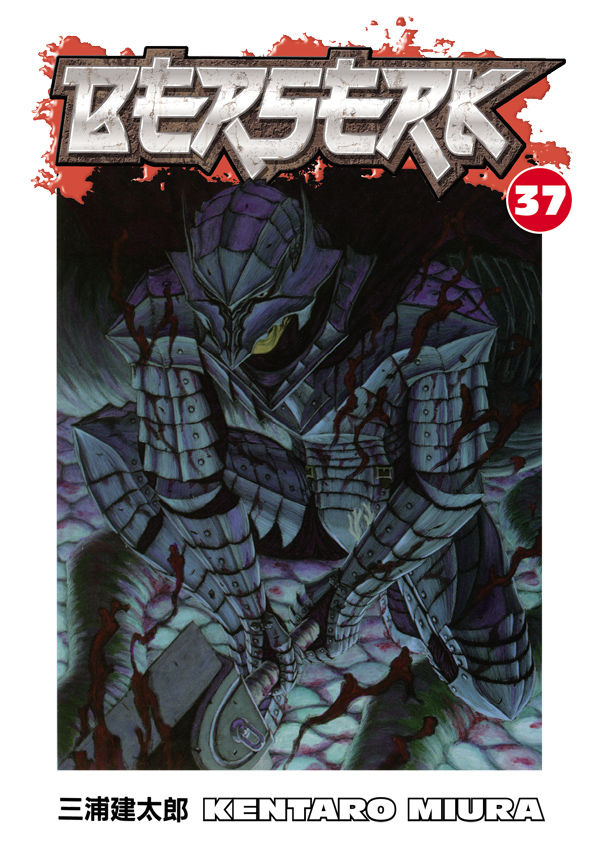
Berserk 37 by Kentaro Miura

While Berserk by Kentaro Miura has not come to an end in the manga version, it has slowed considerably. This volume, afaik, is the last one we'll see in a while. Ironically enough, the movies have been moving forward. Hopefully we'll see more Berserk and of Guts in that field while the manga lays fallow.

This volume concludes the 'Sea God' story and brings in more magic and more visibility to the changes that have rocked the world since "the Wind" event where a strange wind blew through the land and heralded the age of magic and monsters returning to the world.

The art is up to Kentaro Miura's usual high standards. He, George Pereze and John Buscema all have a great timeless talent and I hope that if Berserk is on hold for a while that we'll be seeing his work in some other forms. Perhaps even an art book or something.

In terms of gaming?

1. Judge not by size. When Guts is 'fighting' the Sea God, he's fighting an island. Like several other similar situations where the character's size is of such insignificance, Guts is able to deal damage based on a weak point of the creature, in this case, it's heart. Designing such an opponent is like designing a dungeon. There are 'anti-bodies', various monsters that make their home there, there are parasites, there are creatures too small for the entity to notice. There are also natural hazards like stomach acid, drowning in blood and other unpleasant bits.

2. Red herrings: Guts is aided in this volume by Merrow and by a magical child. It's strongly been hinted, or at least argued online, that the child is Guts and Caska's child that is only able to reach the mortal world during the period of the full moon. This volume throws a wrench into that theory though as we're given two other options. The first is that the character seeking the elves to restore Caska, have been given a guide. The other is that the boy is a manifestation of King Hanafubuku. I'm sticking with it being Gut's and Caska's child.

3. Blow up the Outside World: Because Guts is at sea on a voyage, he doesn't know what's happened to the mainland. With all of the magic and monsters roaming freely through the land, man has retreated to shelter under Griffith's new country. Growing from outside the country are huge arcs of crystal called "Wing Stones" due to their appearance like wings. These keep out the 'wild' monsters and keep the humans and the Apostles, demonic creatures that serve Griffith, 'safe'. The real question is are the humans safe from the Apostles long term?

In addition to these Wing Stones, there is also the World Spiral Tree, an object so huge that it casts its branches over mountains and its visible against the moon when it first rises.

Lastly, we have the newly raised, in whole through magic and ritual, city of Falconia, a city where harvest season never ends, allowing people to continue to survive as well, people. Food and shelter are now not issues and they can continue to bring in outsiders.

These elements are a far cry from where the series has been prior to the Wind incident. In the past there were elements of ancient India and the Dark Ages of Europe. All that is potentially washed away but what it's replaced with is not certain. Only by effecting HUGE change can this be done.

Now I can hear some people saying, "I could swear that you didn't like it when WoTC blew up the Forgotten Realms." and yes, that is true but that's because of the manner in which it happened. There was no opportunity for the players to experience the events as they happened but rather, they get to play in the aftermath of that, and in many cases, the setting, at least in the novels I read, read much the same with a few nods to the vast changes. And when I say nods, that's what I mean. For example, Dragonborn? Not in the novels I read. Real effects to magic and the Spellplague? Again, nods to it, but effectively no. The whole point of putting the setting in that far reach having little impact on the characters.

Putting the characters IN the middle of that action however? Completely different beast.

Berserk 37 may be a temporary close to the story of Guts, but it's visual impact remains long after the last page is turned.

Sunday, February 3, 2013

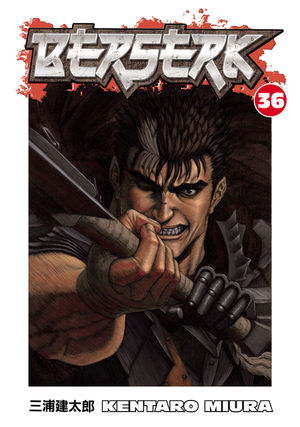
Berserk 36 by Kentaro Miura

I'm out of touch. I didn't even know the new Berserk came out until I saw that a new animate 'movie' came out. Immediately bought both. Don't know if I'll be talking about the movie outside of "m'eh" and yet it's a "m'eh" with potential if they cover the core story elements cut out like Puck and Skullknight and actually, you know continue it.

Anyway, Berserk 36 was like visiting an angry old friend. Kentaro's art reminds me of Goerge Perez or Jim Lee in that his detailed line work is awesome. I still refer to my art book despite the fact that the text is all in Japanese. I figure it's an art book right?

The book continues to make use of some elements that I find would be right at home in most campaigns.

1. Curse Magic Items. Elric had Stormbringer. Guts has the Berserk Armor. With it pain and injuries that don't outright kill him are... well, not healed by the armor, but modified enough that he keeps fighting. Bad news is that in this state he makes a frenzied berserker look sane. Still, unlike Elric, Guts has at least one comrade wo can pull him out of the frenzy.

2. Ritual Magic is very powerful. Despite the limited knowledge of magic that Lady Farnese has, she is able to do a ritual magic that prevents magical entities from entry. A mystical barrier if you will to prevent fully monstrous magical creatures from entering it. While it's use is somewhat limited and it doesn't stop those things that are hybrids of magic, it's powerful enough to stop those that are fully of 'the other world'. Many games use some type of this effort but often have such long casting times or high material component costs that they're not very practical. Here the same is true but they do have the time and knowledge to use it.

3. The Foe Too Big To Face! Many times a character will encounter something that they just shouldn't be able to defeat. In Star Wars, A New Hope, the rebels have no chance against the death star but it does have a certain famous weakness. In How To Train Your Dragon, Toothless, as powerful and unique as he is, is not where near powerful enough to battle 'the Red Death'. Here, Guts comes face to face with 'The Sea God'. It's so enormous that the ship sized creatures that he has been fighting with the ship he's taken passage on, are essentially it's whisker's and decides the only way to kill it is by going to it's heart!

This is old hat as they say. I've seen Thor do it with Celestials and other heroes with Ego the living planet and I'm sure other people could point out numerous instances of the foe too powerful to simply beat down. In 4e, it might be possible to use a Skill Challenge to model how best to overcome this entity. In another game, it might be possible to just model many of the 'antibodies' or other efforts of the host body to repel the invaders. Make the players realize what a do or die situation they're in and don't hold back!

4. New Character Bring It. Isma has just joined the crew but already in this new world, she's shown that she fits right in as she is capable of turning into a mermaid. In traditional games, the power level of the core group may grow and grow to such a point that a fresh character starting at the recommended baseline power level wouldn't have a chance to survive much less contribute to the game. There are numerous ways around this including splitting the party or the focus of the campaign and giving the lower level characters appropriate enemies and side liens and goals and then they're the way Kentaro takes and that's to make the new character have a 'hook' or a unique ability that lets them jump right into the fray.

The only problem with Berserk 36 is that despite it's hefty length, we're left with essentially a very long high level fight which means that we've got to wait until the next issue to get resolution. Damn you Kentaro!

Saturday, October 8, 2011

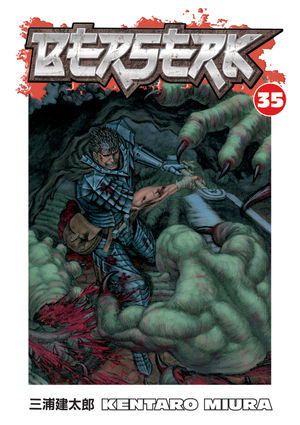
Berserk 35 by Kentaro Miura

Dark Horse comics continues to support my type of manga as Berserk collection 35 hits the United States. While the series is a little further according to my research, it looks like it'll be some time before volume 36 hits the streets.

When I read Berserk, the high energy of Miura's art inspires me. For me, his style is similar to another favorite of mine on the Super Hero comics shores, George Perez. It has a ton of detail and a lot of movement to it.

In this volume, we see further ramifications of past events continue to unfold. This provides some good ground work for those who run episodic adventures with an other all theme or arc. In this instance, Guts efforts to save Caska by taking her to the isle of the fey comes under complication when a pirate ship falls pray to the new madness and in turn becomes an enormous threat. In D&D 3rd edition, this could easily be done through the addition of templates, class levels, or other such goods. In other versions of the game, depending on how serious the GM is taking it, he might just rewrite the material and hand wave the reasoning.

In addition, since the ship takes some damage in their battle with the monster ship, the group is forced to make landfall on an island.

Islands are great bits for fantasy games for several reasons.

1. They can be isolated. This allows the GM to throw in things that are older than the standard setting in terms of dress, eating, religion, weapons, attitudes and outlook.

2. They can be isolated physically. Sure, the weird natives might be giving off a Wicker Man vibe and setting up all sorts of unpleasant events, but the real problem is that there's no damn way off an island outside of repairing the wreck you came in.

Movies like Cast Away or television shows like Lost showcase some of the other problems with an island. Equipment may be hard to come by for example. Isolation from the mainland may cause strange mental illness to forment on those isolated too long.

But in a fantasy game, there could be other issues.

For one, the island itself could be alive.

For another, the island could be slowly moving through the planes.

For another, the island could be at a center of power that attracts all sorts of weirdness to it as individuals try to harness this energy in ritualistic manner.

Another useful thing about islands, is that if you're not making them a continuous stop or part of the setting, it's not that big a deal to wipe out the inhabitants to showcase how vile a particular monster is. In this case, the creature that's coming after Guts and his party has destroyed the village and absorbed them, making them new monsters that come against the party.

Another thing to note about islands though, in all this talk of flesh eating and isolation, is that they make a good point in a sea campaign to introduce new players. In this instance, Isma, a native to the island whose mother is supposedly a mermaid and whose life is outside the town, showcases how to introduce a new character that has reason to trust the party (isolated from the other inhabitants of the island) and is full of the desire to explore and leave the small town behind. It works well in this instance and provides more fuel for the unusual side of the Berserk saga.

Berserk 35 isn't going to bring in any new fans to the series but it doesn't disappoint the old fans. The kinetic art and action provide a lot of fodder for the imagination and the new character brings more complications to the young 'ens of the cast.