I had finished reading this some time last week, but was prevented from posting due to internet connection problems due to having no electricity. Ah, the perils of modern day life in America in the wretched hive of scum and villainy that is Chicago.
The short review is that Silver Pigs is a little rougher around the edges than the second book in the series, which I happened to read first, but hey, this is an award winning book and a little rougher around the edges for Lindsey Davis is like how I would hope to be able to write one day.
Readers are presented with a Rome that's just come out of a civil war and not everyone is happy with the victor. To that end, there are some seeking to fund another round of rebellions using silver stolen from Britain.
Our hero, Falco, has bad memories of Britain. Turns out he was in Britain for one of the larger revolutions, one involving one Boudica. More of which can be found here:
Falco was in the units that well, didnt' fare well due to poor intelligence so he wasn't too keen to go back but to find out who and why the silver is being stolen, he does, even enduring some time as a slave in the silver mines.
The novel is full of characters and relationships. This is the novel that introduces Falco and Helena and how they first meet and fall in love and shows the vast gulf between them in terms of social standing but how for a little while, even that doesn't deter their love.
Reading this first novel by Lindsey Davis, it's clear to see that she would become even better as time went on, and as she's done well over twenty books, apparently I'm not the only one who thinks so.
In terms of gaming, reading mystery books puts me in a different mind than the standard Dungeons and Dragons.
For example, while Falco does become engaged in a few brawls and does have to fight for his life at times, the majority of the book deals with Falco solving mysteries, with Falco forming links between people, events, and times so that he can discover why things have happened in the manner in which they have.
Such efforts might seem an odd fit for Dungeons and Dragons or Pathfinder, but Lorefinder, a supplement for Pathfinder that could be adapted to 3.5, shows that it can be done. I hope one day that WoTC gets off their ass in this electronic everything now era and puts out a license so we can see Peregrine Press make a similar book for Dungeons and Dragons 5th edition.
The overall plot can be easily dragged into any role playing game though.
1. Characters see girl being chased by thugs.
2. Girl tells character she has a secret.
3. Secret is inkling of vast conspiracy against current government.
4. Characters are caught up in their own plots for moment and girl dies.
5. Characters follow threads of mystery to another country with ties to their own where they may not be well liked.
6. Characters encounter other natives of their land that must accompany them back to their home but those NPCs have complications of their own which then become tied up with the characters. To make matters worse, one of these NPCs is related to the dead girl and blames the characters for her death.
7. Characters uncover conspiracy goes all the way to the top and will be rewarded, but must keep silent on how far up the chain the conspiracy goes.
8. Characters have to decide how to move on with the knowledge that the current government hides its own corruption that would allow innocent youth to die while at the same time trying to bridge the gulf between it and themselves.
If you're looking for ideas of what life, travel, food, and the difficulties of climbing social ranks were in ancient Rome, Silver Pigs is for you.
Showing posts with label Mystery. Show all posts
Monday, January 12, 2015
Wednesday, January 7, 2015
Silver Pigs by Lindsey Davis: Home is where the Heart Is!
Fortune smiled on me! I managed to find a copy of Silver Pigs, the first book in the detective novels in Ancient Rome, for $1 off of the spinner rack at Half-Priced books.
This one is smaller than the second one I read, but the writing is still fantastic. Still reading it so this isn't a full on review of the book, but if you like a little humor and sarcasm in your first person mysteries, this is a solid novel.
No, rather, I wanted to quickly note that one of the things I enjoy about Lindsey's writing, is how Falco, the hero of the story, has a home and it's well, a slum. He frequently doesn't pay the rent and often makes an escape out of neighbors apartments of which he has an 'arrangement' with them.
The apartment itself though, does have a nice view of the neihborhood and can be advantageous when looking at the city as a whole. Since it's in a bad part of town, this also lends some ambience to the character of Falco.
It's also where his family is and it allows him to mentor his nephew since his brother died in service to the Empire.
These touches provide more 'touches' if you will to the character of Falco.
In your own campaigns, where do the characters live when they're not in dungeons? Where do the characters go when they're not on the road? Do they have family and loved ones waiting for them in a prime city?
Things like this, these little touches of the bakers and sellers on the street, are reasons why I enjoy city sourcebooks like Waterdeep and the City State of the Invincible Overlord. When you can get the characters to invest in the city, to enjoy the city, to miss the view, to miss specific people, to wonder what's happening there right now, you've got them.
Make your cities interesting and the players will return to them. Make the players invest in them, and the players will fight to save them, even if they are saving the city from itself.
Labels:
Cities,
Historicals,
Lindsey Davis,
Marcus Didius Falco,
Mystery,
Silver Pigs
Sunday, October 6, 2013
The Shining by Stephen King
My mom has owned the Shining for decades. Yesterday I finally got around to reading it. Mind you I've seen the movie adaptation with Jack Nicolas and parts of the television version but never read the book.
Recently Stephen King decided to write a sequel to this book, a new novel called Doctor Sleep. That prompted my mom to get the Kindle edition while it was on sale and I figured I'd get the Kindle version of the Shining while it was on sale.
Wow. What a great book. I'll would say I'm throwing spoilers out left and right but there wasn't that much I'd take from the novel to a game in terms of the characters. There are some bits that are fantastic, but really it's the strength of King's writing to get us inside the heads of the characters, in a very small cast, that carries the novel forward. Now I'll be very curious to see how the sequel is. When we write things decades apart, they may not have the same flow, tone, or 'voice'. I'll be curious to see how Danny compares now to how Stephen first wrote him.
But there are some things I like about the novel that would make for great bits.
For example, how about the hedge monsters? In the hotel, there are several hedge animals, lions, dogs, and others, that at times seem to move, to encircle the watcher, to advance only when they are not watched. At the end of the novel, they are definitely on the attack and there is no assumption that the character in question is hallucinating.
The Overlook, the hotel that in and of itself is a character in the Shining, has a few parts that make great role playing tools or at least the inspiration for them.
For example, the hotel feeds on psychic energy. For most people, it's just a normal hotel. But when Danny, a powerful psychic enters it, the hotel comes to life and does things its never done before. This can be anything from say, having a user of arcane magic enter the hotel, to any type of energy, like a psionic or a divine spell user enter it.
The GM could also just pull a Castle Amber or the Vanishing Tower, where the Overlook only comes into contact with the real world at certain points and certain times and that those who enter rarely leave.
In addition, the hotel is able to pull things from the entirety of its history. It does this without problem with Jack is losing his mind and does so in such a powerful way, that Wendy and Danny are aware of what's happening. These ghosts are even able to influence the real world such as freeing Jack from the temporary location his wife has placed him.
Imagine that the characters need a clue, a bit of information from another time. They've spoken with the elves, dwarves, and other long lived races but the bit they need is said to be known only to a particular sadist who died in your version of the Overlook. Imagine that there are those who might have their own agendas that may wish to escape from the Overlook and offer assistance to the players in exchange for such assistance?
The GM may have to determine if these are just ghosts, echoes of the real people or if they are actually able to escape. Or perhaps there is a mix? Previous adventurers who have become trapped in the overlook, some of them gone mad and others desperate to escape from the insanity?
The Shining was well written. It allowed the reader to delve deep into the characters heads. If your players give you enough back ground information that you can tweak them, give them 'alternative' versions of the history they wrote down, things seen as they might be from a twisted point of view, you'll be able to get them shaking their fist at the evil GM in no time.
Labels:
Adventure Locations,
Horror,
Mystery,
Stephen King,
The Shining
Friday, September 21, 2012
Heartstone by C. J. Sansom
Heartstone is the fifth book in the Shardlake lawyer series set in the 1500s. This one involves Shardlake going to unravel a mystery that involves many a party interested in him not finding out the root cause of the problem against the backdrop of war. I'll be discussing the book in full below so if you're eager to avoid any spoilers read no further. A quick review would be that C. J. Sansom is a solid writer and if you want to bring something like mystery to your games, you could do worse then read some of the Shardlake series for inspiration.
War is often written in fantasy genres as something that the main characters are themselves involved in. That they are at the forefront of. But sometimes the material fails to bring home some of the common practices of war preparation. For example, England has a rich history of archery. I've spoken of archery in the past and some of the battles England was involved with that were turned by the skilled English longbow man thanks to another writer of historical material, Bernard Cornwell, but there are still some differences.
For example, in Bernard Cornwell's archery books, the main characters are consummately skilled archers. They are at the forefront of things. Here not so much. Shardlake's servant, Barak, is almost recruited to the war effort because of his backtalk to a recruiter. Well, recruit is too kind a word. Drafted is more accurate.
And these soldiers are supposed to keep their own gear and weaponry. Many people didn't have them. So of the fees they earn, they have to pay back the crown. And those who are supposed to provide those equipment? Well, if you can charge a premium price for something and provide something old that's already paid for? You can pocket quite a penny in the process.
Another venue of war, is how much it takes. I'm not just talking about the manpower fighting in the war, but the manpower not fighting in the war. Depending on the length and duration of the war, the farming back home may not go well. Farming in these times is heavily labor dependant. In addition, the manpower recruited for the war may not be all that useful if it's made up of individuals not suited for such a life. Mind you it can be fun to have a campaign staring a 'Dirty Dozen' type of individual but that's not necessarily on a large scale such as portrayed here.
A third venue of war is the scope. On a huge ship with some odd five hundred people, Shardlake almost drowns when the ship sinks. The root cause of the ship's issue's aren't made known but could include incompetence. In the anima and manga series Berserk, one of the reasons Griffith, a charismatic and effective commander is able to rise so rapidly, is that most of the people at the top are grossly incompetent. Being wealthy and a noble does not provide some magical and mythical ability to rule wisely not command smartly. Too many people in this battle on both sides prove to be useless in terms of winning.
The size of the ship, with five hundred people, may not be that impressive if you think of something like the Death Star that had to have thousands and thousands of people on it, or indeed of the first planet destroyed by the Death Star where millions of people were. Imagine players being in those situations where something like a flying citadel is under attack and is going down regardless of what the player's do. It can provide them with an experience that actually repelling the attack may not.
Another bit about war and the resources it consumes, is how much money it all consumes and what it does to the economy. In his time here, the King has literally debased the money to pay for the war effort. Currency takes on a new name. Funds take on new values. People can tell the difference based not only on the look, but the feel of the coins. Players may come across silver and gold coins that aren't what they are supposed to be. Will people in the town accept them? Will they have to accept a lesser amount for them? Are they worthless? In the modern edition, coins like electrum and brass pieces have been given the boot to keep things simple. It's a worthy goal.
But in a long term campaign that isn't dependent on gold coins to be some type of magic fuel, it can be fun to throw a wrench into the works. "No lads, I'm sorry, these are Mulgin Silver. The darker red color means there's a lot of copper mixed in there. Takes three Mulgin to make a standard." Or something along those lines.
Of course the opposite can also be true. In most games. the age of the coins isn't a deciding factor but when talking about the purity of the coins, the older coins may be more pure or have more face value due to people having better ideas about what those coins are actually made of. All of the sudden a few hundred silver might be worth a few thousand silver.
For characters, both in terms of character development and the sign of the times, the notion of a woman's empowerment during these times is a theme that crops up at the end. Some find that its easier to pretend to be a man during these times and take advantage of the strengths that men have, not in terms of physical power, but in terms of social movement.
Mind you, in most fantasy games, there is a passing effort to make such issues moot to begin with but when actually looking at the setting, if you're not seeing stripper ninjas or what not, the social structure upon anything resembling a closer inspection tends to be based on the same old same old. This can be fun to play against if its something the group wants to explore.
For character growth, having a family will change a body. Barak for instance, has gone from a street smart agent of Cromwell to a husband and in this book, to a father. He is not quite so quick to put his life on the line. In a role playing game, that can be a difficult role to get a player to embrace and some Game Masters abuse the whole thing by giving the players contacts only to have them brutally taken away and then putting the min the position of vengeance seeker.
In terms of gaming inspiration, there is a investigative book out for Pathfinder called Lorefinder. It's a well done short book but in my experience, running a game as a mystery can be a little harder than just throwing some monsters into the balance. C. J. Sansom does a good job of providing a lot of characters, which is what makes a good mystery, into a very detailed setting, which helps cement where the mystery is taking place. If you're looking for something to add details to your campaign in the little things, this is a good book to read about the various events in a setting that could easily be a fantasy one.
Labels:
C. J. Sansom,
Game Master,
Historicals,
Matthew Shardlake,
Mystery
Sunday, August 14, 2011
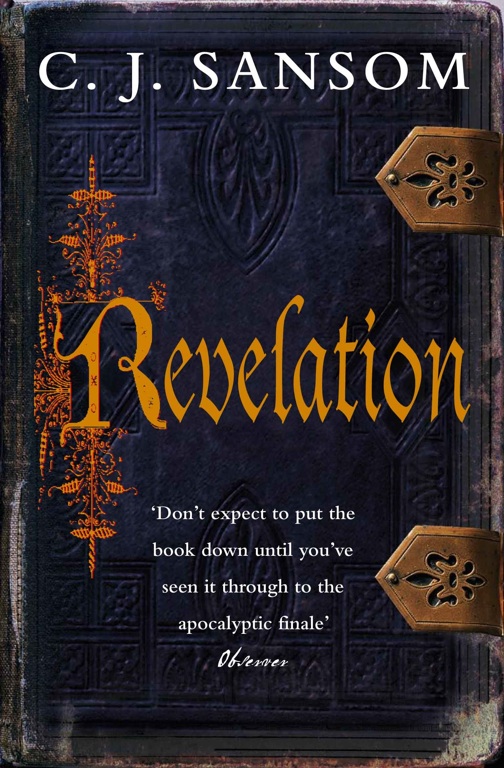
Revelation by C. J. Sansom
C. J. Sansom's lawyer, Matthew Shardlake, continues his tour with the authorities of his time in this novel by the author of Winter in Madrid and Sovereign. This time around, the author pits Matthew's keen mind against a serial killer. It's an interesting twist of how things can be worked in an different setting, and while most fantasy games have a lot of elements of magic to them, there are a few bits that might prove of use to someone attempting to run an adventure with murder mystery elements to it.
The first, is a wide cast of characters. Sansom isn't afraid to throw characters into the mix and then murder them off. I've heard it said before that GM's must be ready to murder their children. This is a truism that needs to be followed. While some of the characters you create may have some untold stories, keep those stories in mind and transfer them over and let the characters wonder what's going on as some of their favorites die off.
The next thing, is keep the plot moving. If the character run up against some walls or issues or, well, let's be honest, just stink at investigating, throw them a bone or two. Perhaps the villain isn't as clever as he though and leaves some evidence out to torture the players with just how smart he thinks he is? Perhaps someone the players have helped in the past has seen something and wishes to provide some assistance in compensation for the player's aid in the past?
Another factor to keep in mind, is bodies rot. In the novel, the villain leaves the windows open during winter so that the cold air will slow down the rot. In a game where blasts of ice might not be that hard to summon up, or even where magical means of completely destroying a body might be applicable, players may not discover murder has been done in a timely fashion or at all unless they use their own divination magics.
For the old school gamers, remember poisons are bad. In most old school games, if you fail a saving throw versus poison, you're dead. On the other hand, an interesting thing used here, is a poison that provide not death, but a pleasant feeling so that when the corpses are found, they seem to be in a state of bliss. Poisons and drugs can do more than kill, then can alter perception, alter reality, and without some type of anti-venom or cure-all, there isn't much that can be done outside of making a save and noting that the poison didn't enter the old blood stream.
Another aspect of the book that takes place is omens and con men. A few big fish wash up on shore from the Thames and people claim that they are Leviathan. Of course as soon as some religious significance is attached to the fish, the snake oil sellers are out selling various unguents, oils, and potions that they claim are made from the fish with various abilities to heal, cure, and do other things. Small incidents can help showcase the reality of the setting so to speak, and provide players with some interaction with the background that isn't necessarily of the violent nature. GMs feeling generous might even allow the players to make some knowledge or skill checks to see if any of the snake oil is real or might have properties that the seller's are unaware of. Its okay to let the players occasionally cheat a con man out of something he doesn't know he has.
For campaign seeds, it can be difficult to provide advice that means anything unless its specific to a campaign. For example, one of the characters here, Guy, is a doctor. He is reading a book that focuses on medicine in a whole new way. A manner that proves older books, books that have been used for decades if not longer, are false. While the same fervor is not attached to them as might be a religious text, old ideas can be hard to change. But if none of the people in the group are interested in medicine, its a moot point. It's a possible background element you might be able to introduce.
The same is true of false teeth. Here doctors are buying people's teeth for the creation of false teeth, apparently a fad that was popular in France during this time that made its way among the English. Little elements that provide a touch of, in this case, strangeness.
Having said all of that though, when you're running a game, it's not the same thing as reading a book at all. The players may simply be smarter then you or may get lucky. In a novel, the author can keep the audience and the hero guessing for quite a while. In a role playing game, the players may just stumble onto the main villain in the first act.
Go with it. Few things are more annoying than having the players do this as it's happened to me. It happens in written modules all the time. While I love the concept of the Witch Fire trilogy for the Iron Kingdoms Game, originally just for fantasy d20 in many ways, I don't think I ever saw a group have a hard time figuring out what was going on in the mystery portion of the game. Just run with it. Keep the rest of the stuff, characters, encounters, details, and other important bits, for another game or another sesson.
C. J. Sansom provides a wide cast of characters and events to keep the story going and someone looking for how an investigation might have happened during this darker days should pick up a copy of Revelation today.
The first, is a wide cast of characters. Sansom isn't afraid to throw characters into the mix and then murder them off. I've heard it said before that GM's must be ready to murder their children. This is a truism that needs to be followed. While some of the characters you create may have some untold stories, keep those stories in mind and transfer them over and let the characters wonder what's going on as some of their favorites die off.
The next thing, is keep the plot moving. If the character run up against some walls or issues or, well, let's be honest, just stink at investigating, throw them a bone or two. Perhaps the villain isn't as clever as he though and leaves some evidence out to torture the players with just how smart he thinks he is? Perhaps someone the players have helped in the past has seen something and wishes to provide some assistance in compensation for the player's aid in the past?
Another factor to keep in mind, is bodies rot. In the novel, the villain leaves the windows open during winter so that the cold air will slow down the rot. In a game where blasts of ice might not be that hard to summon up, or even where magical means of completely destroying a body might be applicable, players may not discover murder has been done in a timely fashion or at all unless they use their own divination magics.
For the old school gamers, remember poisons are bad. In most old school games, if you fail a saving throw versus poison, you're dead. On the other hand, an interesting thing used here, is a poison that provide not death, but a pleasant feeling so that when the corpses are found, they seem to be in a state of bliss. Poisons and drugs can do more than kill, then can alter perception, alter reality, and without some type of anti-venom or cure-all, there isn't much that can be done outside of making a save and noting that the poison didn't enter the old blood stream.
Another aspect of the book that takes place is omens and con men. A few big fish wash up on shore from the Thames and people claim that they are Leviathan. Of course as soon as some religious significance is attached to the fish, the snake oil sellers are out selling various unguents, oils, and potions that they claim are made from the fish with various abilities to heal, cure, and do other things. Small incidents can help showcase the reality of the setting so to speak, and provide players with some interaction with the background that isn't necessarily of the violent nature. GMs feeling generous might even allow the players to make some knowledge or skill checks to see if any of the snake oil is real or might have properties that the seller's are unaware of. Its okay to let the players occasionally cheat a con man out of something he doesn't know he has.
For campaign seeds, it can be difficult to provide advice that means anything unless its specific to a campaign. For example, one of the characters here, Guy, is a doctor. He is reading a book that focuses on medicine in a whole new way. A manner that proves older books, books that have been used for decades if not longer, are false. While the same fervor is not attached to them as might be a religious text, old ideas can be hard to change. But if none of the people in the group are interested in medicine, its a moot point. It's a possible background element you might be able to introduce.
The same is true of false teeth. Here doctors are buying people's teeth for the creation of false teeth, apparently a fad that was popular in France during this time that made its way among the English. Little elements that provide a touch of, in this case, strangeness.
Having said all of that though, when you're running a game, it's not the same thing as reading a book at all. The players may simply be smarter then you or may get lucky. In a novel, the author can keep the audience and the hero guessing for quite a while. In a role playing game, the players may just stumble onto the main villain in the first act.
Go with it. Few things are more annoying than having the players do this as it's happened to me. It happens in written modules all the time. While I love the concept of the Witch Fire trilogy for the Iron Kingdoms Game, originally just for fantasy d20 in many ways, I don't think I ever saw a group have a hard time figuring out what was going on in the mystery portion of the game. Just run with it. Keep the rest of the stuff, characters, encounters, details, and other important bits, for another game or another sesson.
C. J. Sansom provides a wide cast of characters and events to keep the story going and someone looking for how an investigation might have happened during this darker days should pick up a copy of Revelation today.
Labels:
C. J. Sansom,
Matthew Shardlake,
Mystery,
Omens,
Religion
Subscribe to:
Posts (Atom)