Showing posts with label Bernard Cornwell. Show all posts

Sunday, March 26, 2017

The Flame Bearer (Saxon Tales Book 10) by Bernard Cornwell


The Flame Bearer
Saxon Tales Book 10
Written by Bernard Cornwell
$13.99 at Amazon (Hardcover)
304 pages

The Saxon Tales, also known as The Last Kingdom Series,  reaches its conclusion in a fast paced tale that I finished in a few hours of morning reading.

As with many books by Bernard Cornwell, he captures the period regarding plausible events, characters, and overall mood through the description of the people and places that our main viewpoint character, Uthred.

In this novel, seeds were sown so long ago, bear fruit as the main thrust of the tale is Uthred and his final battle against his cousin, also named Uthred.

If you enjoy books in this era of Viking savagery upon English shores, this will be a quick read.

But what can you pull from it for your games?

Religion Matters: Uthred is a pagan. He worships the gods of the Vikings. Most of those in England? The Saxons who themselves were once pagans? They worship the 'Nailed God'. The clashes between forces are not merely over land and titles but over religious strength and culture.

Stories Matter: The title of the book, The Flame Bearer, originates with one of Uthred's ancestors who came from across the sea and took over the castle that Uthred would, hundreds of years later, grows up in. The parallels between what has happened and what will happen, are clear and meant to inspire Uthred's men even as it demoralizes his enemies.

Languages Matter: Uthred is a man with friends all over the world and knowing a few languages helps him avoid situations he might not be able to otherwise. While some fantasy settings overcome this with 'Common Tongue', there are often options that are inherent in the game that players don't necessarily take advantage of. In the Forgotten Realms, for example, the Common in Kara-Tur is different than the common in Al-Qadim is different than the Common in the more common part of the realms. Old editions used to give special languages like alignment tongue as well as thieves cant among others. Players should never underestimate the power of having a unique or near unique style of communication including sign language.

On the other hand, the GM shouldn't hesitate to have NPC's have their own methods of communication. Drow have their own 'common' tongue and others from different planes may have their own manner of communication. Star Trek the Next Generation did a fantastic episode where the geist of merely trying to communicate lasted the whole episode.


Factions Matter: Uthred has made more than his fair share of enemies and allies through the ten books in the series. This sometimes involves his enemies coming together against him. The good news? Sometimes there are foes outside of that original circle who attack each other. Having factions that don't necessarily make their presence known every game session and every encounter make the world larger and more dangerous, more random than it normally is. Sometimes these elements should work in the players' favor and sometimes against them. The enemy of the enemy is not always your friend after all.

Time Moves On: Uthred has been fortunate to live through numerous enemies and unfortunate enough to watch allies and even dearly loved ones pass on. His religious upbringing gives him pause when a foe is about to die, to ensure that if a warrior, he dies with a weapon in his hand.

As time moves on, though, the world changes. If your campaigns consist of more than dungeon crawls, how is time moving on effecting the world? Uthred has children, one deceased, one married to a former enemy now an ally, and one about to be married to the daughter of an enemy.

England itself, once almost entirely overcome by the Danes, has struggled back from the brink of being overcome to being almost entirely run by the Saxons and uniting under one 'England' banner.

The players can be the center point of the campaign, but the world itself will continue to move on in ways outside their direct control, outside their direct influence. And they should want to be a part of that.

The Flame Bearer has a lot going for it and it is a fitting end to Uthred's sage. Now if only Benard will continue that with Uthred's son also named Uthred...


Monday, August 1, 2016

Vagabond: Gaming Edition Version

Welcome to Vagabond Gaming edition! I debated including some ideas on how I’d use Vagabond in my previous post but decided I wanted that to just sit as its own post as a review of the book. Any opinions on that or is it better to just keep review and inspiration ideas all together? Sound off in the comments!

Note, a lot of what I pull from most sources, isn’t necessarily for dungeon crawl games. It’s not that I have anything against such games, far from it. It’s also some advice that you may have read before. Perhaps even here on this very blog!

But when reading books, most don’t involve dungeons at all. Most involve characters and locations and when you enjoy a book and can bring the elements of the book you enjoy to the table? That’s a win.

Names: “As well as Hellgiver and Widowmaker, thee was Stone-Hurler, Crusher, Gravedigger, Stonewhip, Spiteful, Destroyer and Hand of God.” In the book these are the names given to siege weapons but damn, don’t they sound powerful? They give each siege weapon their own identity outside of siege weapons one through nine.

Names can also be descriptive in terms of the person they belong to. Beggar for example. “…but Beggar was an enormous man, a shambling giant with a face so bearded that his nose and eyes alone could be see through the tangled, crusted hair beneath the brim of the rusted iron cap that served as a helmet.”

Languages: I appreciate that almost every fantasy and science fiction setting includes a “common” tongue or a “trade” language. But it the real world that’s such nonsense eh? Even if you give players a “trade” tongue, keep an eye out for how you can use other languages in your game. At this point in England’s history, the French language is seen as a “noble” language. Latin is a “scholar” language. English itself may be a common tongue but it’s the vulgar one if so.

Give ethnicities their own languages and have them use it to communicate amongst themselves in front of the players. Give one culture historical reasons why it doesn’t like speaking another culture’s languages.

Holidays: There are numerous named days for various saints. These peppering of saints’ names throughout the book act in a few manners, but one of them is to tell the passage of time.  Other holidays may be very localized. For example, in Thomas’ old village, they used to drown rats on ships at high tide from boats weighed down with stones and those rats that sought escape, it would be similar to the old Simpson’s “Snake Whacking Day”. Hey, there was no television back in those days!


Freedom of Choice and Consequences From Freedom of Choice: I’m sure there’s a better way to say this so sound off in the comments if you have one.
At the start of Vagabond, Thomas is on a mission to retrieve information on the Grail from an elderly priest. He decides instead that he’s going to hang around and fight and sends his lover and friend to get that information. 


By not choosing to go, Thomas unintentionally gets his lover and friend killed. See, in a “living” setting, the bad guys are doing things too.

The villains of the campaign, especially one that’s not a dungeon crawl, should never be sitting around sighing that their bored waiting for the hero to come and kill them. They should be doing their own things and these things should be on a set schedule that can change as the setting changes.

For example, if Thomas has gone, the book would have taken a much different turn as Thomas would lose half his motivation for the rest of the book and might actually be done in about a third of the pages!

In your own campaigns, are there situations that require the players to be in two places at once? If they don’t go to both, what happens? A lot of the older adventurers set up adventures with rumor wheels but often, nothing happened regardless of which order the players took the challenges.

If you have time, don’t do that. Update the rumors. Change things up. Make sure the players know that the world is not waiting on them to do things.

Destroy Your Village: The small village Thomas comes from is an overgrown ruin. It was destroyed in a raid. Animals have taken over. How many times has a traditional Dungeons and Dragons campaign started in a small village that couldn’t handle a wild owlbear much less a powerful foe? When the players leave the village and if they ever return, have it destroyed. Showcase the power of something like a dragon or wizard who were something for something the characters were rumored to have left there in the past.

Places changes. People change. Settings change. Sink Waterdeep and think about how that changes the power structure in the north. Do the sea elves and merfolk take over the drowned ruins? Do aquatic dragons guard the still shielded libraries? Modern ruins are much more relevant to characters than ancient ones because there is a personal connection to them.


Vagabond has a lot going for it. If you’re one of those who picks up on different bits when you’re reading, it’s well worth the read.

Sunday, July 31, 2016

Vagabond by Bernard Cornwell


Vagabond
Book Two in the Grail Quest Trilogy
Bernard Cornwell
416 pages
Historical Fiction

Vagabond is book two in the Grail Quest series. It follows on the Archer’s Tale, and continues the chronicles of Thomas the Archer and his quest to find the Holy Grail.

A well detailed historical adventure bouncing between England and France and various places within and about, Vagabond is a solid read that fans of the English wars that Bernard Cornwell writes about in his various historical fiction series will enjoy.

Thomas is an interesting viewpoint character not only because he is likeable, but because despite his charm and skills, he’s failable. He suffers loss after loss but continues to strive against the darkness and to seek redress against those who’ve wronged him.

In so doing, he encounters many interesting characters. These characters, makes Vagabond a entertaining read. There are those who stand against Thomas, like fellow Englishman the "Scarecrow" who rules over his own band of thugs including the enormous footpad known simply as “the Beggar”. These unique names give the characters their own life.

It’s not just the villains that give Thomas’s world such color. His Jewish doctor friend Mordecai for example, provides an entirely different viewpoint to the times that Thomas is living in. At one point, Mordecai mentions his son is going to be a doctor and Thomas feels that Mordecai is going to compare the righteousness of being a healer against Thomas' own cause or being an archer. In this case, that’s not it at all. As a Jew, Mordecai’s son isn’t allowed the right to use weapons. The inherent discrimination, the systematic discrimination, is palpable.

And Thomas himself? He's raised with a great degree of education. He speaks English well enough, but also Latin and French. He can write. He is knowledge of nobility but isn't of "pure" noble blood but rather a bastard. This limits him but allows him to mix circles. One of his friends is even a captured enemy from another country and the two grow to become close friends.

Bernard Cornwell doesn't shy away from the absurdities of things. Multiple nations shouting out to the same God to strike down their foe. Class discrimination abounds in both the attitudes of nobles against commoners and even against half-blood bastards like Thomas himself. The plight of women against an entrenched society that literally rapes them almost at will.

The author manages to keep the reader interested in numerous little things. One of my favorite, is how the giant siege weapons are all named. It gives them a sense of personality. The advancement of the story through the seasons also shows time passing, further entangling the reader into the believability of the tale.

Bernard Cornwell wraps things up at the end with justice delivered to some of Thomas' foes, but not all. No, for that, future adventurers await in the next tale, Heretic, but for now, there is peace.


If you want an action packed blockbuster style novel, Vagabond is your next read.

Saturday, February 20, 2016

Sharpe's Tiger by Bernard Cornwell

Sharpe's Tiger pits a young Richard Sharpe against the Muslim ruler, the Tippoo, of Mysore. It's another strong entry in the series and for me, was a bit different in that this Sharpe is a little more raw, a little more untested, a little more friendless. While his skill set isn't in question, his lack of fine allies like the giant Harper in later volumes, does set the stage differently.

Bernard Cornwell makes India a fascinating and terrifying place. A land of different religions which the British use to their own advantage. In this it is different than other entries in the Sharpe's series as most often, the British are seen fighting fellow Christians.

Hero, the Tippo is a Muslim ruling over an Indian country. But he is a 'bad' Muslim in the novel in that he still pays heed to dreams and has soothsayers on staff in order to provide meanings to signs and portents.

As chronologically, this novel is set before ever other Sharpe novel I read, it was interesting to see Richard evolve. He's seen at heart as a 'good' person, but has a ruthlessness at his core that enables him to act in ways that the 'proper' officers and other individuals would not.

Colorful characters abound in the story. One of Shapre's foes, Hakeswell, had the honor of not dying from being hung and claims that he cannot die! He's also described as 'twitchy' from a disease that was cured with mercury. He's also always claiming "It's in the Scriptures!" for his foul behaviors.

These distinguishing features allow the cast to be more than just backdrops that Sharpe interacts with. They help give him direction and even when in opposition, help set the direction of the tale.

If you're looking for action filled historical adventure, Sharpe's Tiger hits the spot.

Now onto the ramblings!

One of the reasons I'm always advocating reading more, is that it increases your baseline of information. It allows you to enjoy connections that other people simply aren't going to see.

For example, the Tippo employees jetti. "The jettis were Hindus, and their strength, which was remarkable, was devoted to their religion."In the manga Berserk, there is a fantasy analog to parts of the middle east, like India, called Kushan. Among those in the ranks? Individuals that would be the jetti under any other name.


Having that reference allowed me to get an idea of what the jetti were capable of, and the Tippo here uses them as executioners in a horrific manner including breaking the necks of people like chicken's and driving nails into skulls and brains.

It's why, even as life gets busier and things at work get more hectic, I try to keep reading and try to keep reading a bit of a variety of materials. The larger your circle of reference points, the more interconnected things can be in your own mind if nowhere else.

The Tippo is also a 'tiger' man in motif and theme. Take for example, his unclaimed throne, the tiger throne. "...his throne, which was a canopied platform eight feet wide, five foot deep, and held four feet above the tiled floor by a model of a snarling tiger that supported the platform's center and was flanked on each side by four carved tiger legs. Two silver gilt ladders gave access to the throne's platform which was made of ebony wood on which a sheet of gold, thick as a prayer mat, had been fixed with silver nails. The edge of the platform was carved with quotations form the Koran, the Arabic letters picked out in gold, which above each of the throne's eight legs was a finial in the form of a tiger's head. The tiger heads were each the size of a pineapple, cast from solid gold and studded with rubies, emeralds, and diamonds...."

It's a long and glorious description of a truly masterwork of a throne. As a symbol, it's a powerful image. Much like George R. R. Martin and his now famed Game of Thrones and it's bladed throne. The imagery of tigers prevades the novel and gives this particular foe a specific theme.

When building enemies in your own games, or when making characters, think about having a particular motif. Is there a visual cue that your characters rely on that goes along with a name? Unique weapons and items?

Sharpe's Tiger also bring a different type of goal into the picture: Rescuing a well placed individual and delivering information back to the army.

In many ways, such a rescue is as old as a fairy tale: Rescuing a princess. Change the princess to a specific character with their own goals, motivations and other high end utility and well, you've got Sharpe's mission.

Having to recon the area and gather information is another part of the game.

Having goals that might be different than the standard, and having the opportunity to act on that information, can provide a bit more variety to a campaign that going into a dungeon and killing off all the monsters. You can go into the dungeon and kill off all the monsters for a specific cause!

Sharpe's Tiger is a solid historical adventure book and well worth a read if you're looking for something other than Sharpe fighting the French.


Thursday, February 18, 2016

Sharpe's Eagles by Bernard Cornwell

Sharpe's Eagles by Bernard Cornwell is listed as the second book in the series. As I've been buying the books from various sources, I've never read them in the correct order.

I can say that those looking for a quick book review, that Bernard Cornwell knows his era. He's able to pull language and scenery that the reader could easily imagine being accurate. His voice for Richard Sharpe and the rest of the cast ring sincere and the pages quickly turn in order to find out what the end result of Sharpe's latest adventure will be.

Sharpe is very much in a 'Conan' or other adventurer in that he is called on for a wide variety of missions, called on to be better than his station should permit, but not quite so good that he easily rises in their ranks. He often finds himself at odds with his 'civilized' superiors and in many aspects, would be much better off in an older world that only rewarded cunning and physical prowess.

Sharpe is in fine shape in this novel. His unusual weapon in play, a saber, among his regular riflemen. It helps him stand out form the regular soldiers. His friend and ally, Harper is also unusual in that he's an Irishman fighting in a English army.  Not to mention Harper's massive size and skill with archaic weapons...

Sharpe also knows how to read. Something that many soldiers in the time do not know how to do.

There are others that have little things about them. Sharpe notes an American... a young lad notable for his very youth, a few others who are notorious pickpockets or other little characteristics that allow the author to quickly ping the character.

These little unusual details help the characters stand out and it's always a good thing to nick for characters in your own game. Imagine if you're playing a group of Chaos Warriors in a Warhammer Fantasy setting and you go against type with a White Blade that never bears any stains? There are others who fall into the 'beautiful' campaign, but they are often on the side of a specific chaos god as opposed to Chaos Undivided.

Sharpe's numerous tales are also filled with a variety of characters who both help and hinder him.

In terms of both, as Sharpe is a soldier, these often include his superior officers.

There is contrast drawn in how promotions are handled. In the British military, payment is often the single greatest indicator of advancement.

Sharpe being an ordinary soldier, often doesn't have that type of money.

On the other hand, looting is a real thing and Sharpe does okay for himself.

But looking again at those promotions, when they are handed out for wealth, this is not an indicator for skill. It is this lack of skill, that puts Sharpe against his superior, a superior officer who does so poorly that to cover his own mistakes, he writes a letter condemning Sharpe for Sharpe's failure in an attack against the French.

So Sharpe has to do something spectacular to overcome this damnation.

This gets to another potential plot point.

Symbols.

The British lose their one of their flags.

Flags are powerful symbols.

Look at war games.

Look at America and the rules and regulations on how flags must be handled.

Think about what losing such a symbol might mean to an army, a nation, or even the characters themselves.

Sharpe resolves that if he can't get his country's flag back, the better thing to do, is to steal an 'Eagle', which is what the French often use as Flags.

If anyone's seen the old show Rome, you might remember there was an episode with an Eagle involved. Again, symbols, and their place, perhaps even if they are not financially valuable, are things of great significance.

In a fantasy setting, such flags may actually have power. They may embolden men against fear (allow people to reroll a failed saving throw) or even make them immune to magical fear. They may protect against mind control or mind reading. The options are limitless.

In a more standard setting, one that might take itself too seriously, characters could be tasked with recovering a flag or making sure it doesn't fall into enemy hands. The value of their pay depending on which option they succeed at.

Of course there's always the opposite. Taking away a flag from an enemy. If the enemy is known to have great reverence for a specific flag, perhaps one flown in the capital city, it may fall to the players as renowned murder hobos, to take this flag from the enemy and teach them their place!

Sunday, May 17, 2015

The Empty Throne: Saxon Tales Volume Eight by Bernard Cornwell


The Empty Throne is volume eight in the first person series The Saxon Tales by Bernard Cornwell. The series follows the adventures of a pre-united England through the eyes of pagan raised Uthred.

For those who've read the previous volumes, I'm sad to say, this will be a quick read. The writing flows smoothly with one event flowing into the next until the book is over and you're looking for the next chapter. It's like visiting old friends who may have a few new things to say but whose general personality and demeanor you're going to understand right away.

Uthred continues to make a great person to tell the tale. As a native of England captured as a young age and raised as a pagan, he worships Thor and knows the lore of the 'heathens' but he fights to protect the idea of England, of a united England, from these invaders.

Even as he does that, his very nature and demeanor make him an outcast among those he protects.

Other aspects of Uthred that are well done, include his level of competency. While he's a great swordsman, he's getting older, slower. While he's a great tactician and has cunning far above what his foes usually bring to the table, he doesn't allow for others to be as smart as he and sometimes falls prey to his own overconfidence.

Uthred starts off the novel still in pain from a wound inflicted upon him previously, but uses it to his own advantage, letting others think him weaker and closer to death then he actually is. It's cleverly done but Bernard Cornwell doesn't drag the recovery process out to the end of the novel.

Another unusual thing, is that Uthred is, among his other accomplishments, a father. His 'favorite' son is Uthred. If this wasn't a first person novel that might get a little confusing with two characters having the same name. His daughter, Stiorra, is someone he doesn't know.

Sadly, the reader's don't know her either because she quickly turns out to be quite an interesting character. Sent to a nunnery initially to learn the ways of the Christian God in order to better fit into the evolving society about her, Stiorra instead is much like her father, a pagan and one who is not afraid to get her hands bloody.

I say sadly the reader's don't get to know her because her role in this novel is relatively short and her future unknown to the reader in future volumes. Still, Bernard Cornwell has taken many threads of previous books and continued to weave them through current ones, including some methods of fighting that bring things full circle.

The book includes many of the hallmarks of a Bernard Cornwell book. There is conspiracy, alliances forged and broken, exploration of foreign lands, last minute saves and plans that go horribly awry. The action is fierce, The mood of another era.

If you're a fan of the History Channel's Vikings, The Saxon Tales should be right up your alley.


Monday, May 5, 2014

The Pagan Lord by Bernard Cornwell

Bernard Cornwell has been writing the Warrior Chronicles, also called the Saxon stories since 2004. Seems every two years he comes out with another one. I was inspired this time around to purchase the book well ahead of the trades which I usually get, in Kindle format, due to the History Chanel's showing of Vikings. Love that show and with the recent season two end, I wanted something more.

And The Pagan Lord delivers. Bernard Cornwell tells a first person account very well. It makes this book an easy page turner and a book I finished in less than a day.  The story chronicles the account of Uthred, a noble raised by Danes who worships the old gods, Thor and Odin among others, but finds himself fighting for the Christians who often turn against him as soon as they're able. The constant struggle for a place of his own in a land where Thor and Christianity have little tolerance for one another is well told.

Uthred, despite his advancing age, despite his military mind, despite his own previous experiences, still finds himself in trouble with the Church of England. Still finds himself with treachery on all sides. Still finds himself tried and tested at every opportunity. And he does not emerge from these contests whole and undamaged. He does not win every engagement.

It's these tests, these throws of the dice, these moments of doubt, that make Uthred such a great character. Sure, he has a solid cast about him. Certainly he has worthy friends and a growing family. But it's his own intrinsic character that isn't always right, that brings the book into a higher place than just an action historical tale.

Bernard has a great command of language. When Uthred sails for examples, you can feel the freedom that Uthred feels. You can see the joy he takes in the voyage itself. When he speaks of his foes and their fighting prowess, even when he's weary of them, you still get that feel of distinct confidence that Uthred tends to radiate.

If you, like me, have enjoyed Vikings and want a little more, start off with The Last Kingdom which runs for $9.27 in trade paperback format or $8.81 in Kindle format.

Below I'll be discussing several bits from The Pagan Lord that might be useful for role playing games. Some of this will probably hit themes and tones I've mentioned before because Bernard Cornwell does reinforce themes and mood with repetition throughout the novels. It creates a sense of returning home after not reading one of the novels for a while.

1. Family: Uthred has two sons. One of them, the eldest, decides to become a priest. Due to Uthred's hatred of Christianity, he disowns his son, calling him instead 'Judas'. At the end of the book, Judas comes along to help Uthred in a battle that helps set the tone of England from that day forward. His younger son however, displays more traits similar to Uthred including a thirst for battle and extraordinary skills in combat. Family is more than just characters to be taken prisoner or killed off to encourage a mood or theme. They should be used as their own characters that have their own motives and goals.

2. Action-Reaction: In Uthred's disgust at his eldest son's priesthood, in the scuffle against the priests there, he kills one of them. This leads to the villagers destroying Uthred's property and being an outcast. For every action, there is a reaction.

3. Misinformation: One of the things I appreciate about Bernard Cornwell's writing, is that he does an excellent job of showcasing how slowly information moves. By providing misinformation in several areas, enemies can become powerful. By countering that with his own misinformation and sleight of hand, Uthred is able to sow confusion and disorder against his foes. This is a bigger problem in high-fantasy games where the essence of them is taken mainly from modern day eras in terms of near instant communication or ability to discover facts quickly. Use misinformation where possible and don't automatically counter the player's attempts at doing so.

4. The Glory of Rome: Britain is saturated with old stone and marble ruins from the time of Rome. The natives generally don't like them, melting the marble down to make lime and using the stone to build other types of fortifications when possible. Uthred sees the glory of these ancient statues and bridges and wonders what the hell happened. How did the world descend so far from that glory? While I'm actually pretty tired of ancient empires having greater technology, magic, and well, everything than their modern counter parts, it is refreshing to see how the people living in those times might react to those remnants when they're not discussing super powered magic swords and magic.

5. Historical Accuracy: Despite the skill and knowledge base that Bernard Cornwell has in terms of the Vikings and their era, he isn't afraid to change historical events in order to tell a better story. Unless you are playing some weird game where outside agencies are enforcing documented events, don't be afraid to let the players influence what happens and how things move around the world. The History Channel's show Vikings for example, is full of things that are historically wrong but it's a fine piece of entertainment.

6. Failure: Uthred's initial plan is to conquer his homeland, a mighty fortress with stealth and surprise. That fails. He does manage to capture his nephew and said nephew's mother mind you and they come in handy at other junctures, but the initial raid itself is a failure and it is not the only failure that Uthred suffers. Having a "what if" mentality in terms of designing your scenarios can help you quickly keep the game moving. Don't let the game stall when the characters fail but rather have something else for them to quickly move to.

The Pagan Lord is well told and provides a lot of inspiration for those who want to take their reading a Viking. The Pagan Lord is currently $7.99 in Kindle format and a little under $22 in hardcover.


Saturday, September 28, 2013

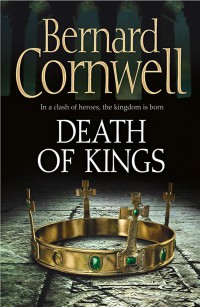
Death of Kings by Bernard Cornwell

I picked this puppy up in hardcover from Barnes & Nobles a while ago and promptly forgot about it. Then I noticed that Bernard Cornwell has the Pagan Lord coming out, another volume in the series and promptly sat down and finished this book in a manner of hours.

Told in first person, this tale of the Danes and Saxons is an enjoyable read that is like visiting old friends that have new tales to share with the reader. I'm always amused when I enjoy a Cornwell book because my first experience with Bernard's writing was Stonehenge and I hated that book. I thought it too long, didn't like the main characters, and didn't think the book went anywhere. Almost everything else I've really enjoyed. The Saxon Stories really appeal to me and I think part of that is the whole first person view point we get from Uhtred. One of the interesting things to me, is that Uhtred is growing old. Rare is the 'action' hero who can claim to be 45 and still standing in a shield wall.

By allowing Uhtred to grow older, it allows time to pass. Which in historical terms is a good thing as it allows change to happen as well, kings die of old age eh? Hence the title of the book and all that. But it also fits in with the theme of much of 'older' times in that campaigning during off seasons was challenging and dangerous. One of the reasons the Mongols were so dangerous after all is that they didn't seem to have a problem with it.

If you're looking for a good read, Death of Kings is up there on the list. I'd recommend the other books in the Saxon Stories prior to this as they build up a lot of background and detail and show how friends emerge from enemies and how allies fall to the wayside.

Now let me muse about things I might steal for a role playing game eh?

Subterfuge: Uhtred is a bit smarter than most of those around him in a number of ways. One of those is that he has longer planning abilities than those about him and sees things in a bigger picture. There are two instances of Uhtred being clever here. The first is when he stages a fight with one of his followers. This leads to his follower eventually coming back with a ton of information on what the people he's been spying on have been doing. This is a fairly standard operation in faking a fight with a friend and having that friend do some undercover work.

The second one though is a nice little bit. Earlier in the book, Uhtred seeks out an Oracle who tells the future. This oracle is why the Saxons are so fearless in their assaults. Their victory has been preordained. Uhtred then sets up a Christian miracle with a cave and angels and a seer predicting the victory of the Danes. It works well and in a low tech, superstitious setting, works wonders.

The third is that despite how smart Uhtred is, he's not infailable and when one of his resources, a spy master who essentially works for everyone comes and spreads some lies to him, because of the very convincing nature in which he does it, Uhtred believes it and is almost killed because of it.  It's good to see that despite his gifts, Uhtred isn't above failure and what's good for the goose is good for the gander.

The Death of Kings. There are a few things I enjoyed about the way Bernard Cornwell described the whole scene here. The first is that things have to keep going on. Dishes still have to be washes, clothes still have to be cleaned, and the sun still rises in the east. The momentous occasion in and of itself does nothing for the rest of the world. The other part was the planning and burial and resources needed to bury the king. This included having the king put into three separate coffins like nesting cups as well as developing a new church for it and waiting till all the people important to the process could be assembled. Without modern transportation, some of the people took days or longer to get to the funeral.  

Too many leaders. One of the problems I often have with super hero comics, and indeed, most role playing settings, is that there are so many villains of such overwhelming power that one has to wonder, "Seriously, why haven't they gotten their shit together and just curb stomped the heroes." Well, history has proven again and again, that just because you have the force to do something doesn't mean you have the will to do it or the ability to do it behind one central figure.

Bernard notes several times that there was real opportunity after the death of Alfred to smash the Danes. The problem is that they have too many people who would be leader. Too many potential back stabbers. Too many potential enemies in waiting. When one moves forward, the rest would follow or take that one's lands and wealth for their own?

There are numerous other bits I like and would try to add into my own material. For example, there are few clear cut 'heroes' and 'villains' so to speak. There are loyalties to tribes, there are loyalties to each other, there are those seeking to expand their own circle of power even if it pits them against family members and those seeking to reclaim ancestral lands but it's all more subtle that Dungeons and Dragons alignment system normally allows. It makes things more interesting in that you don't have a wall of paladins who due to their nature are never going to betray someone unless 'magic' or some massive misunderstanding is involved. It allows things to progress as a more organic fashion.

In the end, I'm looking forward to the Pagan Lord, the next volume in the Saxon Tales and that's a testament to the strength of Bernard Conrwell's writing.

Sunday, March 25, 2012

Harlequin by Bernard Cornwell


The first book in the Grail Quest series by Bernard Cornwell, Harlequin is another look at one of England's greatest weapons, an archer and his adventurers.

Without going into too much detail, if you like adventure based historicals, this one has plenty of it and is a meaty tome. It took me a few days of reading between the overtime and the dreaded real world, but I was pleased by how well the book worked out and how open it leaves itself to the sequels.

Now on for some specific mentions so those who want no real spoilers so read no further!

One of the things I've usually enjoyed about Bernard Cornwell's material, is that it doesn't shy away from the harsh realities of life in these dark times. For example, families are huge in theory, but so many people die of so many mundane issues that in practical terms, they are boasting a few members aside from those lucky ones. One discussion talks about the plague. Another talks about how a simple cut from a farming implement becomes infected and the person dies. The state of doctors is terrible so wounds that might not be fatal in our time are essentially a death sentence here.

The other thing I enjoy, is how comfortable Bernard seems to be in describing everyday things like the red herrings that the English eat, or how archers are fairly limited to England because of the time and training it takes to master the bow. How things like cannons are starting to roll out here but aren't at their peak yet.

There is the occasional interjection of the idea of chivalry in terms of trying to gain honor in combat. Often it meets with the brutal realities of having to win in combat as opposed to showcase combat prowess.

In terms of character development, Cornwell does a few interesting things that are worth noting for Game Masters who have players engaged in more than only dungeon crawls. For example, Sir Simon is a powerful knight of great skill and ability for the English. He is a noble born. Thomas on the other hand, is low born and an archer and a bit of a wild card. The two do not mix and through various bits and pieces, the two become enemies that seek to kill one another to the point that Thomas is hung and Sir Simon defects from the English to the French.

By having Sir Simon be noble born, it prevents Thomas from just decking him out in the street, although it does not prevent him from trying other methods. But by being noble born, there are certain expectations of status put upon Sir Simon and his own actions make him enemies enough that he is banished. By providing characters with enemies whose role isn't only on the battlefield, the Game Master is able to push them in ways that a sword in the face can't necessarily cure, or at least, can't cure right at the time it happens.

Another useful reminder, is the background about the characters. With a climactic battle at Crecy, which is the start of the Hundred Years War, Bernard Cornwell makes sure that his characters are going to be in the thick of things. There will be wars, and opportunity due to the chaos of war. In the manga Berserk, it is this chaos, this turmoil, that allows the Band of the Hawk to rise to nobility. The same can happen in any role playing game.

When I think about the various event changing novels that Wizards of the Coast often threw out on the Forgotten Realms, as a fan of the setting I often though, "Man, another epic tale eh?" and not in a good way. As someone who looks around at modern history these days and sees things like the Arab Spring and other world changing events, the pace of history stops for no man. Indeed, the real problem with those game changing novels from Wizards of the Coast isn't that they changed the setting, it's that they often went to a near status quot at the end.

Imagine if you take the bits from the Threat from the Deep where the oceans and seas become more dangerous, and add in the threats from the Nehtril Shadow Wizards, and add in the reclusion of the Elves, and add in the dragons rampaging across the realms, and add in Thay becoming an undead nation with negative energy all over the lands and Sembia becoming a Thrall state to Nethril and and and... It may sound like a lot, but when you think about everything that is going on all the time, isn't there some sense in a setting as large as the Forgotten Realms having multiple crisis points going on all the time?

Part of this though, is how the Forgotten Realms works. In Harlequin, the English think they have God's blessing. The French also believe this. As do other countries. And yet, the 'heroes' of this tale are murderers, they are rapists, and they are thieves. In short, they are complex. Thomas watches his father killed and eventually allies himself to the ally of the man who killed his father because that man too has been betrayed. A woman Thomas loves uses him during her time of need and moves on but tries to keep him close like a chess piece. Various priest speak of old threats and heresies even while being part of war and partaking of those benefits and plunder.

And the problem is that the Forgotten Realms novels tend to work in a manner familiar to the game system so the paladins are usually good and trustworthy, the clerics god fearing folk, and most of the people with views and outlooks that encapsulate the best of what we currently think we are. In short, it can be damn boring at times.

The one problem I can see happening with players who read this book, is they're going to wonder why the long bow is so lame in whatever game system you're playing. As described here and in other works and through the victory at major battles, the longbow should be a killing weapon almost unequalled in any game. It should far surpass the crossbow and even any early guns introduced in terms of killing power.

But then there's that training issue. If the longbow becomes an ultimate weapon, what are all the players going to make to maximize their character's damage output? Yeah, that one is pretty much a no-brainer. It's game balance on a generic and bland scale but its necessary in some forms.

If you're looking for some high action reading with character based plot and motivations, The Harlequin will provide much fodder for the imagination of both player and Game Master.

Sunday, October 16, 2011

Another e-book Pricing Rant

I've mentioned before that my sweet spot for e-publications is around the $2.99 point. Amazon has various daily deals that meet my standard in addition to hundreds, if not thousands of free books. Hell, I'm reading the invisible man now that was free. Tor has some steambooks on sale for the $2.99 and took some of their biggest fantasy franchises to the $2.99 price point for the first book in the series. I've seen a few others, like a recent steampunk fantasy anthology for $2.99 as well as others, that makes me ponder that my 'mythical' price point isn't that far out of line.

What does that have to do with anything?

On RPG.net, someone start a WIR, short for where I read, and the book in question was Black Company, by Glen Cook. Go over to Amazon and hey, no Kindle copies at all, regardless of the cost. But the new stuff? Yeah, it's there. This is another case of author not taking control of his e-rights and insuring that his existing material is creating another revenue stream for him.

But then on an art blog, I see this fantastic drawing of Death Dealer, a Frank Fazetta character. It inspires me to look up one of my favorite authors of sword and sorcery fiction or semi-modern times, David Gemell. All of his books cost around $7.99 in kindle format.

Uh... listen estate of Dave, if you didn't make the money necessary to earn profit on those books while he was alive, then it might be a little late now and because the author is dead, it might be easier to spread information about him and his works at a much lower price point since as I started off, there are thousands of e-books out there for free.

I dread looking up what something like the Amber series would cost.

And one reason for that, is at the end of the series, sometime well after it, there was a nice trade paperback collection of the whole series. And Glen Cook's Black Company is also in collection edition. So how would the e books go in that instance? $7.99 per each of the original Black Company or Amber books or one reasonable price for a collection? While many of Bernard Cornwell's e books are around paperback price, the trilogy covering Bernard's version of King Arthur, the Warlord Chronicles, covers all three books and runs $5.14 for The Winter King, Enemy of God, and Excalibur under one file.

Once again, this tells me that my preferred price point isn't out of whack with reality and that if living authors like Bernard can do it with collections of their work, that someone needs to step up to the black and first make sure we have e books that take the existing work already out there and two, make it affordable to the masses.

Sunday, July 17, 2011

Sharpe's Fury by Bernard Cornwell


Sharpe's Fury continues the trend of Bernard Cornwell to throw Sharpe into all of the interesting parts of history that occur during this time. That in and of itself says a lot about characters and how they get to where they are going.

Looking at some settings like the Forgotten Realms and Greyhawk, one might wonder how they can use all of the coolest elements of the setting while keeping it consistent. It only has to be consistent to the characters. If the GM wants to run a certain part of the campaign world and then move on to another, it's up to the GM to get the characters moving, not expect the characters to decide on their own where they're going.

The GM can do this through a few methods, depending on what type of campaign the players are enjoying. In a campaign that focuses on dungeons, the easiest way to move the party, is to inform them of a famous dungeon or a ancient dungeon just found where people are either being killed in mass droves as they descend downwards, or are coming out with vast treasure and vast losses making it a combination of meat grinder and Monty haul. Of course what's actually going on may be far different than what people are talking about. Rumors after all, need to be validated.

In campaigns that take the form of the players having a patron, this one's pretty easy. The patron needs the players to leave their regular unit or army and move onto a different location for a different McMuffin of the week.

In games that are player drive, using elements of the character's own previous adventurers or backgrounds, the GM should be able to devise something that ties into the new local he wants to use and something that's in the character's history. For example, if there are undead hunters in the group, rumor of an outbreak of zombies or ghouls, or perhaps hints of a weapon that destroys such entities, can be thrown into the campaign. Those players seeking lost relatives, can hear tales of slavers and other similar themes that lead them to the new local.

Another interesting point in the book though, is night fighting. I know that I'm a child of the city and man, I've been out all hours of the night and because of all the so called night pollution, barely realize that it's night. On the other hand, I've got relatives in Indiana and when I drive out that way, the night driving is a thing of terror resembling something out of Stephen King's The Mist where the only way you know you're still on the road is the splat of massive bugs against the windshield and the occasional dip in the road.

RPG's can negate this somewhat by having races that see in the dark or having torches, magical light and other options, but its up to the GM to note the unusual aspects of night fighting. In some games, if all of the party has night vision, the GM show showcase that potential terror by having them stumble across enemies that don't have it. The benefits of fighting opponents who are effectively blind should be massive and should give the players a leg up.

Also in terms of giving players a leg up, is having them be on an 'inside joke'. Here, one of the wealthy officers, who doesn't like Sharpe, mainly because Sharpe's humble origins, falls for what is essentially a gold digger high class prostitute who passes herself off as a high end woman suffering from the times due to the war. While Sharpe and others know who she is, the officer doesn't. It's a good laugh for the players and a potential piece of information that Sharpe can use at a latter date.

In terms of player ingenuity, doesn't punish them when they use the tools they have at this disposal. Shapre is asked to help another man deliver funds for the blackmail. Shapre takes the imitative and goes to the drop point well ahead of time to scout it out and make plans in case there is a double cross since the last person who went there wound up dead. Its a good tactic. Encourage the players to be smart. Allow them to get the drop of the villains when appropriate.


Another nice touch Cornwell brings, is the city of Cadiz itself in the first few paragraphs talking about the stink of sewage and the direction the wind blows. If you can introduce a city with a few words and enforce that imagery later, the players, even if they only spent a short time there, will come away with memories of that place and a method of distinguishing it.

One of the things that I enjoyed about the book, is outside the war, there are various missions that Sharpe needs to be involved with. One of them involves blackmail as well as the messy business of unfinished business. When NPC's take actions against the characters and those actions are hidden by happenstance, dont' be afraid to let the player's find out later, even if it's years later in the campaign, what has happened. Friendships can grown between those who've been wronged and finding out latter that a man you've trusted with your live has killed a woman you loved or a man you respected can cast new light on such an individual.

In terms of religion, Cornwell shows little mercy to any faction. Here, we have divisions between Protestants and Catholic, using that difference as reason why, for a religious man, it's okay to commit the bloodiest of murders and the breaking of one's word. In most fantasy campaigns, pantheons are used so the opportunity to use a division within a church isn't always available, but that doesn't mean the GM can't use such a schism or break. The Forgotten Realms used one in the Church of Lathander for example.

Despite the year, 1811, the medical field is still way behind current times. For example, Sharpe suffers a glancing blow to his skull and is told in no uncertain terms that "We know almost nothing about head wounds." In most fantasy games, healing is built into the system through magical means. Those few that don't however, often have some harsh penalties. When looking at trying to make a game realistic or grim and gritty, don't forget that players will only put up with so much of that before they make a new character.

Sharpe's Fury, despite having nothing to do with fantasy warfare, provides a wealth of inspiration ranging from character focus and intrigue, to revenge and utility. Well worth a look.

Thursday, July 7, 2011

Shape's Gold by Bernard Cornwell

I've quickly become a fan of Bernard Cornwell's material. It is easy to read and makes good popcorn fiction light yet satisfying, leaving the reader wanting more, and when we get it, devouring it eagerly. I haven't read many of Sharpe's books in the series but thanks to the destruction of Border's Book Store by modern science and market forces, I did manage to pick up a few of them on the cheap.

Sharpe's Gold stands as a great potential adventure for any Game Master that wants to rip it apart.

1. Sharpe: He's a rogue. Well, not really. He's a damn hell of a warrior who uses a sword that he's not supposed to and has an Irish ally that uses a seven barrel gun that he's not supposed to. But he gets the job done and gets the girl. These elements make him prime character material.  How many Dungeon Master's have seen the player who picks the Whip Sword or some other obscure weapon that looks cool? That's Shapre. Getting the girl? Well, we could look at various heroes who get the job done ranging from Conan to Bond, but that's also Sharpe.

2. The Gold is Gone. Regardless of how awesome the task or how mighty the reward, Sharpe is sure not to keep enough gold to do anything other than continue to serve. Why you might ask? What's the motivation if he doesn't? Sure, he receives acknowledgement on some occasions from those who are his 'superior' but the real thrill for Sharpe is in doing the job and having some reward for those who are with him. If he's got all the money and happiness he needs, why would he ever adventure again? The loves of his life are temporary either through his own transient nature or through their own untimely death. His riches go to fill the armies coffers, pay for his friend's expenses, or to win women some freedom.

3. The Action is Fast: Sharpe is not a patient man. Sharpe is not invincible. Shapre is often captured and thrown into prison or into a state that most players would blanch at. These failures only serve to hone Sharpe to an even more dangerous weapon whose vengeance is terrible to suffer yet entertaining to read.

In Sharpe's Gold, the mission Shapre is given is to retrieve Spanish gold.

In theory, it's to give to the Spanish government, but well, at the time of this book's writing, the little guy of France has managed to beat Spain so badly that there really isn't much of a government so what is all that gold for? None of Sharpe's business but by England he'll get it. So it starts off with much the same bravo that many an adventure has. Sharpe being told by his patron "hey, go get this."

The villains are not all obvious and indeed, are named men. This is a common theme through the Shapre books that his foes are greatly skilled, intelligent, and often, well connected men. This works well as we don't want Sharpe to face a bunch of weak willed fools to whet his blade on.

But here, the enemies are the sometimes the ones he's supposed to be giving the gold to. This provides a bit of contrast in that his 'official' yet unofficial orders are to get the gold, but to return it to his patron regardless of who steps in front of him.

In some instance, imagine a group of adventures that has the gold. They have enough to set themselves up as powerful agents in this fallen country. They have enough that should they choose to support one faction or another, that the person they provide the gold with, will become powerful in and of themselves, perhaps a robber baron or border prince. Here the fun is seeing what the players will do with the opportunity. In some ways, this element of the unknown is missing from most adventurers simply because most authors don't have the intestinal fortitude to give the players those options anymore. Part of it is probably related to the whole Adventure Path or Mega-Dungeon madness. If the players take option A, then the rest of the series is fairly useless so we don't want that to happen now eh?

Sacrifices have to be made. Sharpe isn't willing to forgo friends or country, but pretty much everything else is fit to be sacrificed in the name of completing the mission. This makes Sharpe a dangerous man and if most adventurer's don't follow that motto, well, I've been playing a very stranger version of Dungeons and Dragons for years where players are ready to wheel and deal to make sure that their own goals come into the light.

Sharpe's Gold is a short read and filled with beautiful women, swing swords, and a series of small victories and defeats that can inspire some serious gold hunting, regardless of the campaign.

Tuesday, July 5, 2011

The Burning Land by Bernard Cornwell

Fifth up in the series of the Saxon Tales, Bernard Cornwell continues to push Uthred on in ages and in character. The series continues to be told in first person, continues to be a quick read, and continues to be a solid source of inspiration for those looking for ideas on what a game where the Vikings are invading England during the 9th century would be like.

Below I'll be spouting out some random nonsense fired off from the reading. Note that I'll try to limit the reputation where previous books have already struck those nerves so this might be a short posting. Much of the series enforces previous books and continues on the themes already established. At this point, reading Uthred is like visiting an old friend.

History Lies: I've mentioned this before, but written history, the oral history of the short lived races, the history that gets passed down to those who come after? It's at best diluted by the viewpoint of those who've survived and how they interpret it. Those who are in favor are hailed as mighty warriors and leaders and those who are merely nightly wanderers, such as adventurers, might be lucky to be hailed as a foot note. In a setting like the Forgotten Realms or Greyhawk, dragons, undead, elves, and dwarves, all who live longer then men, might be able to provide different aspects of those histories that they share, but each will still be approaching it from their own perspective and their own take on it.

Home Matters: Even thought there are several characters in the series that share the same religion, that of Christianity, such as Finan, their own history, or their countries own history, has warped many of those elements so that while the broad picture is still there, the individual elements have mutated and changed from the whole cloth. Native myths and origins and spirits become saints and angels under the new cloth.

Kill Your Children: I've mentioned it before, that people die all the time. In book five, Uthred's wife and child die during childbirth. When NPC's die off of the mundane, it provides a solid grounding for the campaign setting. It reminds the player's that they're not in their nice clean and comfortable condo or that they don't have the luxury of ordering up a pizza. It's a tough world and if plague and pestilence doesn't get you, the orc and goblin raiders will.

Politics: When not dungeon delving and when dealing with the cities, it's all about the politics. For example, Haesten allows his wife and children to convert to Christianity so that he may gain King Alfred's trust. Uthred, due to his heretic ways and worshipping the pagan god Thor, is easy prey for a living Saint who speaks in tongues and prophecies but is feed them through his own master. Politics move the game in a manner that isn't effected necessarily by the might or menace of the characters, but how they socialize, how they interact, how they fit into the overall society.

The Enemy of My Enemy: It's an old saying but it bears repeating. While not always true, when the players overcome an adversary, but don't kill him, that adversary may have other foes and may be eager to sick the player's on them. After all, if the players could overcome him, why could they not overcome others and allow all to benefit?

Fire: I haven't mentioned it much, but fire is a hell of a thing in a dark age setting. Many buildings are made of wood and thatch and water isn't as portable and easy to gather as it is today. A society may have volunteers and friends and neighbors set up in case of fire and when it strikes, there will be a real free that a whole village may burn down.

Information is Golden: Even as organizations may dole out select information to one another, there will be those runners and guides and bards and spies that specialize in gathering information and sharing that information for a cost. Players need to act with caution when dealing with them because even as they are providing the players with information, they will be gathering their own information. GM's familiar with the old school of doing this can provide the interaction through the dreaded role playing, or having the spy ask tit for tat, or playing out a scene from Silence of the Lambs. Those with the newer editions can merely have the players roll against the spy in skill checks to see who gathers the information from who and what it costs. At the same time, players have to beware of simply gathering the information and killing the spies. After all, if the spies keep coming to the characters and dying off, even the most dim witted of them will pause before providing the players any information for fear of their own life.

Hostages: I've mentioned hostages before, but what of high ranked hostages? Such individuals will often come with their own tutors, with their own instructors, with their own honor guard. These individuals all have to be clothed, feed, and sheltered. Each one may have their own motivations for being there, and some of those motivations may not require them to actually be there to guard the prized hostage but to perhaps spy or steal.

Family: The one thing I've always hated about Dungeon Crawls and Adventure Paths, is that too little time is baked into them to allow for little else outside of the adventure itself. In an organic setting where travel and exploration and seeking shelter from the cold winter months can be expected to take time, the climate is slightly different. For example, UthredUthred, as Uthred has done with him. Other characters have family as well. It's one of the ways Uthred keeps getting into trouble. For you see, this Dane had a brother, and that Dane had a brother, and well, that Dane had a son. the intricate webs that family and relations can have on the campaign should not be underestimated.

The Burning Land continues the tale of Uthred and it continues to be a fast paced, enjoyable take on The Saxon Tales.

Monday, July 4, 2011

Sword Song by Bernard Cornwell


Sword Song is the 4th book in the Saxon Tales written by Bernard Cornwell. I don't know how, but originally when reading, I skipped past book three, Lords of the North and read this one. It didn't effect my enjoyment of it. I simply thought that the author had decided to move forward due to times of peace and went back and read book three latter.

In terms of pacing, action, characters, etc..., Bernard Cornwell continues the pace set by previous books in the series. Even as Uthred grows in age and as a character, his core remains the same. This is both good and bad and provides the readers with a hero is doesn't act heroic and often has his own best interest at heart but is bound by the vows and rules woven into the Danish society.

Much of the things that were brought to mind by previous books continue to do so in this book.

Player Motivation: Uthred is fairly selfish. While he often tries to do the right thing, he is often doing so because that's what he wants to do in the first place. There are several times though, when he could follow his heart in terms of leaving Alfred's service, but in the opportunity provided here, he would have to watch Father Pyrlig killed. And friendship is a huge motivation for Uthred. Players should insure that their characters have some bonds between each other and that betrayal is low on the list.

Atmosphere: Something that can be influenced regardless of the game system, a setting's atmosphere can relay a lot about how the players are supposed to have their character's act. In the times that Bernard Cornwell is writing about, slavery is just another harsh reality that the people have to deal with. Warriors are consumed with making reputation for themselves. Buildings are made of thatch and wood with those being of stone often older relics of the bygone Roman era. A cloud of doom hangs intent over most people because of the constant state of warfare.

Continuity: As the series progresses, things start to change. In order to defend his homeland, Alfred has fortresses build and employees levies of men to hold off the invaders until the professional armies can be summoned. This isn't something that springs up overnight, but is the logical result of having to deal with raiders for years and years and years.

Community: Many things make people come together. Sometimes it's religion, sometimes its simply proximity. But when communities flourish, then specialist can start to flourish. When people don't have to worry about fighting daily for mere survival, then bard and poets can start to flourish. Another example is an island called two-tree island, but there's only one tree there! Apparently that other tree died off some time ago but they're not going to rename the whole island right?

Spies: In an era where communication can be difficult, knowing what the other person is doing, especially in times of war, is vital. When dealing with this branch of historical fiction, it's not that bad. It's not like they're trying to sneak in the old devil whitey into darkest Africa as a spy. A similar benefit was had in WWI and WWII in that most of those Europeans look the same. But in a fantasy campaign where elves and orcs and halflings abound next to dragonborn and tielfling and goliaths? Magic and other forces might be called for.

Hostages: Not even talking about player's characters here, but rather, those that the character's value either due to bonds of friendship of mere utility. How will players react when their loved ones are held hostage? Will they pay and hope for the best? Arrange some type of stealth crew for a rescue mission?

Sword Song has a lot going on and does it in a quick pace. Those looking for Viking action could do far worse then read up on The Saxon Tales.


Sunday, July 3, 2011

Lords of the North by Bernard Cornwell


The Lords of the North is the third book in the Saxon Tales written by Bernard Cornwell detailing how King Alfred's kingdom is crafted during the Danish invasions.

Like previous books, this one is told in first person with the teller, Uthred, being a pagan who worships Thor among the Christian nation making him outcast yet a valuable outcast.

I'll be discussing some general and specific points of the book below but let me start by saying that if you want some inspiration for a viking or late English based game, one mired deep in the grim that the entire series of the Saxon Tales is well worth a look.

Anyway...

Character Motivation: Uthred is pretty simple at this point of the game. He want his ancestral home back and he wants to take revenge on those who've done his adopted family wrong and he wants reputation and gold and wealth and power. Sounds a lot like an adventurer. Note that he doesn't have a single motivation here and other elements to his personality will come back to haunt him throughout the book but by knowing what the character wants, the GM can have a better idea of what the player is looking to get out of that particular character.

This depends a lot on the player though. I've had players who have diverse characters in theory, yet they all play the same. Doesn't matter if they're playing an elf wizard or a dwarf cleric, they all play them the same in terms of how they role play them. Others can play the same class and race and you'd never know it was the actual same player due to the various differences the player gives the characters. As a GM, put the effort where it'll be most rewarding.

Non-Player Motivation: Often the Game Master doesn't have all day and night to paint how he wants the NPCs of the setting to be seen. But sometimes he is able to get the gist of it across quickly enough and once the motivation of a character is known, don't be surprised if the players work on that nerve to either get their way, annoy the character, or if the NPC is an antagonist, to work against them.

The News: One of the things that can be hard to remember, is that in the dark ages and in the times of non-electric news, that news has to be taken by hand, by horse, by word of mouth. Organizations that are large, like a monolithic church, may have an advantage over other organizations in that because of their size, indeed, spanning multiple countries, they may be able to get information prior than others.

In some ways, the exchange of news is in and of itself, an event. When strangers come to town, they might be given free drink and meal in exchange for news of the outside world. In some cultures, the exchange of news is part of the social events and worthy of small events.

Naming: Uthred has a name for his blades, Wasp Sting for the smaller sword and Serpent Breath for his longsword. But he also names his horses, such as the horse Witnere, which means Tormentor. Names can provide a lot of color to the game and if you've got a book of Baby Names or access to the internet, aren't that hard to come up with. Putting together a list ahead of time provides you with some quick ways to personalize things.

This doesn't count the potential for earned or given names that go beyond the birth name. The naming can be based on physical traits, such as Sven the One-Eyed, or on traits like Tormentor.

Continuity: When the series started, Uthred's father was killed by clever planning on the Dane's side. Here, he comes across an old foe who has his father's helmet. Of course it's not a magical helmet, this being a historical, but it does has great significance to him. The feel of a campaign can be influenced hugely by having small things crop up in latter sessions.

Distinctive Features: Uthred earned a limp in the last book, but it wasn't one that slows him down. It's merely a distinctive feature. When providing details such as this, remember the game system. If you're playing Hero or GURPS, you might have some game penalties and game benefits, but in playing games like Dungeons and Dragons where there really are no mechanics for it, the GM should not start imposing penalties on the players when they come up with distinctive features because one of the first things that players will do is seek to cure them and remove that unique aspect about their character.

Superstition and Ritual: Soldiers generally have many superstition and perform little rituals to reassure themselves.  But this isn't limited to just soldiers. Sailors have their own list of do's and don'ts aboard the ship and their own belief system about what must be done to appease the sea. When dealing with different social circles, each one probably has their own rituals and habits that go into the make up of their meetings, or starting a project, or of going to war. They add small touches to the game but also add depth.

Conflict is Good: Many of Bernard Cornwell's books are focused at times of war. This is good because conflict provides opportunity. Conflict acts as a catalyst. In times of peace, what is a sword master supposed to do outside of be a trainer? But during war? When armies need to be raised, homes defended, and enemies taken? When the landscape can potentially change in a single battle? These times are the times when character's can thrive.

Life Happens: Not everything involving the world needs to involve the characters fighting goblins and orcs

Misinformation: Even as news spreads and the continuity of a campaign grows, remember that people, or at least men, have short memories and events attributed to one race may change as time moves on and that people will want to ascribe their own deeds alongside the greatest of the great in history. That those who were great builders in the past may be attributed to have super human powers or physical status to have achieved their wonders and advancements. In his historicals, Bernard tends to ascribe an almost alien level of ability to the Romans as the 'modern' people living in those ruins can't compete with the stone work and road work and general skill of the Roman's.

Bandit Kings: Depending on the location in the campaign, anyone can declare themselves a king. After all, if a tree falls in a forest and no-one hears it, does it fall? In the same way, if you're in a winter wasteland or a highly contested land and no one can take it away, aren't you the king? This can lead to a land of a Thousand Kings or something similar. Many campaign settings, including the Forgotten Realms and the Warhammer FRPG, have areas that are meant to be Border Kingdoms.

Tradition and Ceremony: Weddings are often a huge part of a woman, or indeed, a man's life. These solemn events provide a cause for celebration. And yet, they often have a bigger hold in small ways than just the event itself. For example, Bernard Cornwell notes that women who have their hair free and not bound, are not married. In today's society, we have the wedding ring. Little things like that can provide a lot of depth to a setting.

Oaths and Oathbreakers: When a man's worth is only as good as his word, to be called an oathbreaker is not a good thing. In a land where they don't have digital cameras watching you try to sneak past the red light or electronic meters to time your parking, Kings had to rely on a man's word for his worth. Breaking such a thing though could be equal to committing career suicide as once broken, who would want you after that?

While much of Lords of the North repeats material found in earlier books, it is a repetition that moves the story forward. It is a story told quickly. It is a story that keeps the pages turning. Bernard Cornwell's take of 9th Century England moves quickly and provides a lot of color for those looking for dark age tales.

Saturday, July 2, 2011

Pale Horseman Round 3

Sorry for breaking up the book into multiple posts but time has only just recently opened up for me thanks to the July 4th holiday. The end of the month and end of the quarter has allowed me to quickly catch up on some reading including the other books in the Saxon series as well as some Sharpe books. Quite glad I gave Cornwell another shot after not being impressed with the Stonehenge book.

Below will be some quotes and my ramblings on how they might relate to gaming so if you'd rather avoid the spoilers, read no further.

"...he wanted me to think him defenceless... he ignored me. He just stared past my shoulder.... So I turned my back... and I saw that Cippanhamm was burning."

Here the young Uthred is battling the mighty Steapa. He is losing. Not badly but it seems inevitable. However circumstances outside either combatant's control come to the front of the action, Dane's invading Cippahnhamm and looting and burning.

If the scene is not living up to its potential or its dragging or something just seems off, don't be afraid to throw in some new combatants or events into the fray in order to juice up the scenario.

There are also times when the elements themselves come into play. For example, during a siege late in the book, a storm breaks out with thunder and lightning and thick rain covering the entire field turning dirt into mud and making bows and spears useless. Don't pause when adding some wild natural elements into the setting when it fits.

Other factors that I've mentioned also come into play here.

The wheel of fate for example, has its way with Alfred who is forced to retreat to a swamp. Alfred, known as Alfred the Great, suffered many serious setbacks. Depending on the nature of the game, don't be hesitant to let players lose occasionally. In more recent editions, the themes seem focused on 'yes' and focused on keeping the game moving forward. I have no problem with the latter and think that failure, in and of itself, doesn't necessarily mean the halt of the game. But the players have got to want to push through the bad times their characters endure instead of rolling up new characters.

Another bit is isolation. When Alfred loses his kingdom and retreats to the swamp, the people of the swamp are isolated from the rest of the world. They know little of what goes on outside of their home. This should be something that players who explore, find time and time again. Lost valleys and hidden cities where the natives speak some variant of the local tongue because travel is difficult, dangerous, and without huge cities and trade, not particularly worth it for most.


'...by taking sixteen coats of mail to the river's edge I had given the Danes an irresistible lure. And they snapped at it."

One thing that annoys me as a player, is when the habits and mentality of an enemy are well known and their behavior doesnt' vary much or their intelligent level isn't that high and then the GM, probably inspired by Tucker's Kobold's, decides that every goblin, orc, and other low level, low intelligent monster is suddenly John Rambo. There's a time and a place for such smack downs, but if it becomes every encounter with the creatures and it does so for no reason other than to enforce a smack down, that style of GMing might not be to every player's tune. The mood and establishment should have some consistency. If kobolds are weak little things barely able to string a rock against a stick to make a crude spear one session and the next are using plant based grenades and hit and run tactics, something is wrong.


"Wulfhere let us live."

Wulfhere spoke to Uthred before about how dangerous things would be when the Danes invaded. And by saving the Dane Ragnar, he insured his own life, and his own prosperity. This didn't come clear out of the blue. Readers of the Pale Horseman had hints of what Wulfhere would do if push came to shove.

By sprinkling little bits of motivation about various factors in an NPC's ethos around, the players might have a better idea of what to expect to terms of motivations and actions. By allowing the NPCs to speak with the players about religion, survival, home and hearth, the players gain an insight into the characters.

In the same vein though..

'Steapa was good to his mother,' the man said. 'He brought her money. She was no slave any more.'

Steapa is first depicted as a monstrous, unfeeling machine capable only of murder. Which he does quite well. But this little detail, about how he cared for his mother and raised her from slave status, provides more to the character than just sword and armor. Little details even on the most basic enemies can sometimes provide more depth to the campaign world than all the elaborate descriptions of weapons and armor.


'...Saint Vincent's Day had been the day when Iseult drew Alfred's son, the AEtheling Edward, through the earth. And somewhere, Iseult had told me, a child must die so that the king's heir, the Aetheling, could live."


female's blade, but it is something to think about when describing events in war and even in peace.

..I wanted to come with you.'

'Why?'

'Because I miss this life. God, I miss it! I loved being a warrior. All that irresponsibility! I relished it. Kill and make widows, frighten children. I was good at it, and I miss it. And I was always good at scouting. We'd see you Saxons blundering away like swine and you never knew we were watching you. Don't worry, I'm not going to talk Christ into you, whatever the king wants."

This section does two things for me as a reader.

First, it helps provide some motivation for player character's. Most of the time if you stop to think about it, being an adventurer, a wanderer, a landless man, seems madness. And the quest is to ever gain further gold and power to gain further gold and power. But when Pyrlig puts it like the above, you have to figure, why not eh?

The second, is that Pyrlig puts a different face on priests, especially Christian priests. Up to this point, most of them have been fairly insufferable from the main character's point of view, including Alfred. By putting Pyrlig into the setting and showcasing him as a warrior and a priest happy to have God on his side as opposed to forcing him onto everyone else, the author provides a wider spectrum of the religion and provides another viewpoint to it.

In the Forgotten Realms, what if there is a sect of Tempus Worshippers who relish fighting not for fighting, but for the peace it brings afterwards? They make themselves the best and most frightening enemies not to cause chaos, but to cure it. Putting a slant on things provides the setting with more variety that's not just stuck to the player's who've read a new issue of Dragon and want to play an Albino Drow with a black runeblade that's brand new and never been done before!

A third bit that comes through, is the individual in the army. While Uthred is part of an army, part of a huge army, he is the main character and it is often through his actions, and the actions of those close to him, that victory comes. This happens either though a quick trick or plot of his, or through the declaration of single combat where the heroes clash among the army deciding the fates of all those around them. In a role playing game, unless it's Warhammer Fantasy Battle and the GM is actually using the miniature game, the players should have some ability to influence things. The old 3.5 book, Heroes of Battle did a nice job introducing various things that players can do to influence combat one way or another and provide some sample missions worthy of player attention.