Onto some rambling now about the actual book as opposed to the evolution of the beasts in the Warhammer setting eh? Spoilers will follow so those who aren't interested in Steven Savile being spoiled for them, read no further.
There were monsters. Real monsters. he had grown numb to fear. A life of seclusion in the temple, of births and naming days, marriages and funeral rites, such mundane things they somehow combined to turn the monsters into lesser evils and eventually into nothing more than stories. He had forgotten that the stories were real.
One of the themes of many fantasy books is an old evil returning. Something that showcases the old adage about those who forget history being doomed to repeat it. And often, it is the shorter lived races, such as humans, that are the cause of this conflict. When you have races that can live for hundreds, if not thousands of years, if not in fact, effectively immortal, the burden of being the most populous race also seems to come with the tag of being the most ignorant. Try to switch things up every now and again. Have it be the elves who long for a return to their former glory. Have it be the dragons who decide that they've given humans long enough to get their act together and are unimpressed with them. Don't have it be humans being stupid doing stupid things unleash the great evil. More to a different venue to unleash it.
Would that it was otherwise, but I am not the law-maker. By accident of birth you came out... female. With no sons your father's line ends, and mine, as eldest surviving male begins. With your betrothed coming to such an... untimely end... well, that is just the way it is. You can't tamper with tradition, after all it becomes tradition for a reason.
The above statement may be true for the background characters. It may be true for the characters who've come before. But say in this instance the character being spoken to was a female player who was a character of no small power herself? Yeah, be prepared for players to do things that go against tradition and roll with it. If the characters are high charisma, good looking engines of social marvel in addition to being powerful figures in their own right, or at least have numerous friends who are powerful figures, their ability to directly impact a setting should be much higher than some traditional princess.
Isabella joined him at the broken window, linking her fingers with his, slick with her uncle's blood. But for the blood the gesture might have been mistaken for an intimate one. Instead it hinted at the darkness inside her: by taking his hand she was claiming him and the life he offered every bit as much as he was claiming her and the power her heritage represented.
Adventurers are a funny lot. I've mentioned it a few times, but in essence, many adventurers are like the main characters from the movie, "Hobo With a Shotgun.", dangerous, homeless wanderers out to set what they see wrongs to right. Individuals with few hesitations about using their physical power to effect the world about them, even if the higher social powers aren't too crazy about that.
But what happens if they marriage into politics? Into the higher social realms? Do they change their ways or use that as a stepping stone?
"The loss of anyone so young is a tragedy we can ill afford to bear. It was only a token, and it cost me nothing."
"Truly, but few would have taken the time to pay their respects to a stranger. It is the way of the world, I fear. We forget the suffering of others all too easily, especially those left behind."
By providing the players some set scenes, encounters where the things going on around them do not involve combat, you can see how they react to more mundane conditions. This allows you to customize further encounters more suited for their behaviors and attitudes. What do they do when they see a wedding? What do they do when they come across a funeral? What do they do when it's a holy day and celebration is full on? These events don't have to have thieves or strange events at them to see the stuff the characters are made of, they just need to present them opportunities to flex their roleplaying muscles should they chose to do so.
The pair had been in Leicheberg for a week. They had rented a small room in a seedy tavern off the central square called The Traitor's Head. The name more than suited the establishment. It was a den filled with iniquities galore making it the perfect place to gather rumors. People's lips loosened when they drank. They talked out of turn. Spilled secrets. Skellan was not about listening to the drunken ramblings of braggarts and the pillow talk of prostitutes.
One of the standards of most fantasy games is the bar as a place to gather information and to gain work. The above passage shows why even in a setting like Warhammer, where the streets run with rats and grime, the tavern is still a useful place of employment. While some struggle mightily against the tavern as a gathering ground for adventurers, don't be afraid to embrace it when its useful. When the players are in a new town and need to know what's going on. When the players are looking for a place to get out of the rain. When the players are looking to lay low in the seedier parts of town. These are opportunities for the tavern to shine with its host of myriad characters.
'Always...too late...' Fischer spat bitterly. He was trembling as the adrenaline fled from his body.
'Not always,' Skellan
The old one too punch relies on the setup that the players have done their absolute best to save someone, but have failed. And then the second punch is that even though they may have failed at what they thought they were doing, they have helped others, perhaps others not as fortunate, out. It sets up the down beat, and then follows it with an up beat.
The further north they travelled the worse the condition of the roads became.
It's a simple sentence, but it carriers weight. Roads and other public concerns, like waystations or road markers, are kept up by taxes. If the taxes are not being used to keep the roads in standard fare, what then are happening to the taxes?
There are more bits I'll quote later but that's a good start. Vampire Wars starts off with a viewpoint of normal characters who are striving to avenge an old wound done to their families by seeking that vengance but in doing so, move onto something far worse. If you're looking for some light popcorn reading about Vampires in the Old World, Vampire Wars is a good palce to start.
Monday, July 25, 2011


Sunday, July 24, 2011
Vampire Wars: The Von Carstein Trilogy by Steven Savile
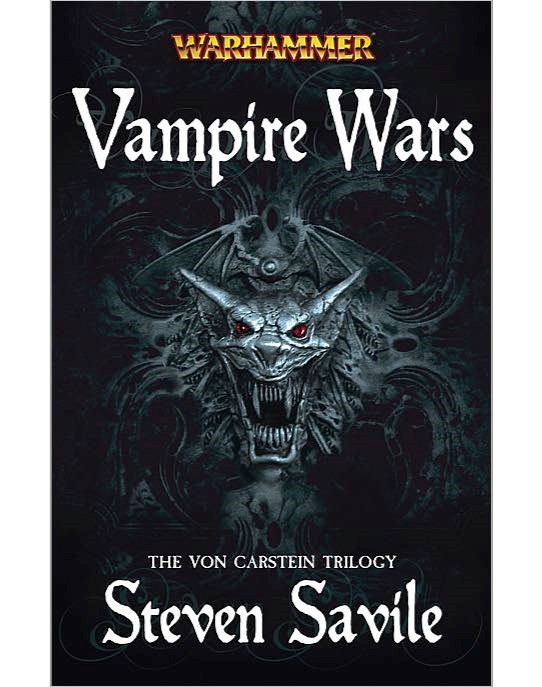
As long as I can remember, Vampires have been part of the role playing game. Mind you, back in first edition they would level drain you instead of sucking your blood. TSR was quick to put out their own take on the classic version of the vampire through the old Ravenloft module that has spawned its own setting and various updates on the adventure. White Wolf has several brands of Vampire to investigate. The media loves Vampires and TV loves them through such shows as the Vampire Diaries and True Blood.
Warhammer has its own history with the vampire. I'm not real familiar with it mind you as I generally only toe dip into the tabletop side where much of the RPG side originated from. For example, one of the first books I recall with Vampires in it isn't Vampire Counts, its Undead. Vampires were just another monster that could be added. Vampires seemed to go the White Wolf route with the first Vampire Counts book where various bloodlines were introduced; Lahmians, Von Carsteins, Blood Dragons, Strigoi, and Necrarchs. The latest batch focuses on the Von Carsteins but still allows variety.
So far I've blathered on quite a bit about Vampires and mentioned their evolution and current status in the Warhammer setting but what about the book Vampire Wars? Well, my copy has a price of $13.99 on the back and I picked it up at Half-Price for less than the cost of a single paperback. The book features three eras of Vampires from the Von Carstein line and does a fair job of showcasing the strengths of the vampires as well as how hard they can be to fight. For someone looking to see the Vampire as a military leader and vastly powerful spellcaster in the Warhammer setting, its a good read with a lot of potential for adventure ideas.
I'll point out some specifics but note that if you find a series in the Warhammer fiction line that looks good, its probably best to wait on the collections before plunking down the cash. At $13.99, it's a steal.
Sunday, July 17, 2011
Sharpe's Fury by Bernard Cornwell

Sharpe's Fury continues the trend of Bernard Cornwell to throw Sharpe into all of the interesting parts of history that occur during this time. That in and of itself says a lot about characters and how they get to where they are going.
Looking at some settings like the Forgotten Realms and Greyhawk, one might wonder how they can use all of the coolest elements of the setting while keeping it consistent. It only has to be consistent to the characters. If the GM wants to run a certain part of the campaign world and then move on to another, it's up to the GM to get the characters moving, not expect the characters to decide on their own where they're going.
The GM can do this through a few methods, depending on what type of campaign the players are enjoying. In a campaign that focuses on dungeons, the easiest way to move the party, is to inform them of a famous dungeon or a ancient dungeon just found where people are either being killed in mass droves as they descend downwards, or are coming out with vast treasure and vast losses making it a combination of meat grinder and Monty haul. Of course what's actually going on may be far different than what people are talking about. Rumors after all, need to be validated.
In campaigns that take the form of the players having a patron, this one's pretty easy. The patron needs the players to leave their regular unit or army and move onto a different location for a different McMuffin of the week.
In games that are player drive, using elements of the character's own previous adventurers or backgrounds, the GM should be able to devise something that ties into the new local he wants to use and something that's in the character's history. For example, if there are undead hunters in the group, rumor of an outbreak of zombies or ghouls, or perhaps hints of a weapon that destroys such entities, can be thrown into the campaign. Those players seeking lost relatives, can hear tales of slavers and other similar themes that lead them to the new local.
Another interesting point in the book though, is night fighting. I know that I'm a child of the city and man, I've been out all hours of the night and because of all the so called night pollution, barely realize that it's night. On the other hand, I've got relatives in Indiana and when I drive out that way, the night driving is a thing of terror resembling something out of Stephen King's The Mist where the only way you know you're still on the road is the splat of massive bugs against the windshield and the occasional dip in the road.
RPG's can negate this somewhat by having races that see in the dark or having torches, magical light and other options, but its up to the GM to note the unusual aspects of night fighting. In some games, if all of the party has night vision, the GM show showcase that potential terror by having them stumble across enemies that don't have it. The benefits of fighting opponents who are effectively blind should be massive and should give the players a leg up.
Also in terms of giving players a leg up, is having them be on an 'inside joke'. Here, one of the wealthy officers, who doesn't like Sharpe, mainly because Sharpe's humble origins, falls for what is essentially a gold digger high class prostitute who passes herself off as a high end woman suffering from the times due to the war. While Sharpe and others know who she is, the officer doesn't. It's a good laugh for the players and a potential piece of information that Sharpe can use at a latter date.
In terms of player ingenuity, doesn't punish them when they use the tools they have at this disposal. Shapre is asked to help another man deliver funds for the blackmail. Shapre takes the imitative and goes to the drop point well ahead of time to scout it out and make plans in case there is a double cross since the last person who went there wound up dead. Its a good tactic. Encourage the players to be smart. Allow them to get the drop of the villains when appropriate.
Another nice touch Cornwell brings, is the city of Cadiz itself in the first few paragraphs talking about the stink of sewage and the direction the wind blows. If you can introduce a city with a few words and enforce that imagery later, the players, even if they only spent a short time there, will come away with memories of that place and a method of distinguishing it.
One of the things that I enjoyed about the book, is outside the war, there are various missions that Sharpe needs to be involved with. One of them involves blackmail as well as the messy business of unfinished business. When NPC's take actions against the characters and those actions are hidden by happenstance, dont' be afraid to let the player's find out later, even if it's years later in the campaign, what has happened. Friendships can grown between those who've been wronged and finding out latter that a man you've trusted with your live has killed a woman you loved or a man you respected can cast new light on such an individual.
In terms of religion, Cornwell shows little mercy to any faction. Here, we have divisions between Protestants and Catholic, using that difference as reason why, for a religious man, it's okay to commit the bloodiest of murders and the breaking of one's word. In most fantasy campaigns, pantheons are used so the opportunity to use a division within a church isn't always available, but that doesn't mean the GM can't use such a schism or break. The Forgotten Realms used one in the Church of Lathander for example.
Despite the year, 1811, the medical field is still way behind current times. For example, Sharpe suffers a glancing blow to his skull and is told in no uncertain terms that "We know almost nothing about head wounds." In most fantasy games, healing is built into the system through magical means. Those few that don't however, often have some harsh penalties. When looking at trying to make a game realistic or grim and gritty, don't forget that players will only put up with so much of that before they make a new character.
Sharpe's Fury, despite having nothing to do with fantasy warfare, provides a wealth of inspiration ranging from character focus and intrigue, to revenge and utility. Well worth a look.
Saturday, July 16, 2011
Jade Man's Skin by Daniel Fox

Back in the days of first edition of Advanced Dungeon's and Dragons, I loved the idea of Oriental Adventures. The lure of the far east, of martial arts, of exotic looking armor, of weapons that were non-standard was a big influence on me.
But I was always stuck for ideas on how to run the thing. When Legend of the Five Rings came out, it provided a hell of a background and methodology for running such a setting but at the cost of being so heavily involved with the setting, that my attention soon wandered off as events and timeline advancements took it well past where I was comfortable with.
That's not a bash against such events. I'm not too fond of them when they happen to say the Forgotten Realms, and hated Greyhawk Wars, but in those settings, I was so at ease with that style of adventure, that it didn't take much effort on my part to ignore this, or change that. I was never quite so comfortable with L5R to do that without worrying about the 'purist', which I freely ignored for my FR games.
But one thing that would have helped me enjoy making such changes and making the setting fully my own, would be books like Jade Man's Skin by Daniel Fox, the sequel to Dragon in Chains. I'll be discussing some of my thoughts on the book but a quick summary for those who don't want spoilers? It's a fun filled romp in fantasy ancient China that's well worth a read.
Now onwards!
The book has one thing in common though with L5R right off the bat. The importance of Jade. In this setting, Jade is something that long term exposure to, can make you superhuman. Indeed, Jade is the source of the Emperor's longevity. It's also being used so much here, that you get tired of seeing it. The cover is an powerful illustration of an animal encountered in the book, a jade tiger. In the book its described as massive. There is also a set of jade armor made. Its so heavy that only someone who is already super human can use it because of its weight. While its a great idea and a great visual, the use of jade after jade after jade, apparently all of it the same color, is well, boring. There is nothing that can make the exotic and the far away as boring as overdoing it.
Having said that though, the book provides a reason for things like jade armor, not being used before. The sheet weight of it. Does that strike anyone as familiar? As anyone who played older editions and had to deal with having a very high strength to use certain weapons? And why certain magical items like Gauntlets of Ogre Power and Girdle's of Giant Strength were so highly sought after?
The nice thing though, is that like some of the old artifacts in the game, there is a potential price to pay. In this case, the jade armor turns the emperor green, unto like jade itself. It is also difficult to remove. This reminds me of those quaint and weird little bits that some of the artifacts in the old edition could have in that you could gain vast power but it might cost you say, your humanity. There might be other costs, worse cost associated with it but that was part of the charm. I hate to bash 4e for this, but that game is so focused on the balance of magic items that most efforts at making quirky magic items or items with personality seem pale shadows of earlier editions.
When making unique items for your own campaign, try to give them something different. Try to give them something that's not standard. Try to give them something that works, perhaps better than promised, but has its own draw backs to it. If the draw backs are too high, the item goes unused. If the drawbacks aren't really drawbacks, then there's no point in including them. Some of the point build games used to be very specific in this, "A disadvantage that is not a disadvantage is not a disadvantage and worth no points." or something along those lines.
In terms of working themes into a game, one of the things that book starts off with is corruption. While a messenger is running along, he notes that several soldiers are abusing their position by taking items away from various merchants and family on the road in the name of the emperor. This is not an isolated problem to the realms or fiction, nor to the past. Corruption is an every day occurrence in the modern world and the weight can be costly.
Can you rely on the police if they're under the influence of drug cartels? Mexico seems to be having a lot of problems in that vein and the American movie industry has no shortage of corrupt cop movies. When corruption is present, trust is far and away. People forget things they saw. In some of these movies though, the people are more prone to work with outsiders and are more prone to possibly trusting them and allowing the outsiders to make real changes that couldnt' be made by internal forces. This is an opportunity for players who enjoy the role playing aspect, the challenge of convincing people who are scared for their lives, scared for their families, and scared for their own businesses, that they should trust the heroes.
Another aspect brought up is picking where you fight. One of the few things I think 4th edition tried to do well, that at least brought light to the subject, is making the environment more a part of the game. In previous editions, there might be a small bonus for holding the higher ground (+1 to hit!) but it rarely went beyond that.
Entertainment is far different in this old eras than modern entertainment. In one of the C. J. Sansom books, the author noted bear baiting. Here, Fox brings out fighting crickets. The differences in entertainment are as much a choice of the limits of technology as they are availability of resources. When not fighting for daily survival, what do people do to fill the time? For some like farmers that may be a foolish question as there is no spare time save perhaps to go to church and prepare for the better world that awaits in the next life. For those in the city and those who have the funding, what do they do?
And for those who have power, those who have responsibility, how do they react to it? Bernard Cornwell made no secret that some of the joy that the raiders took, including a Christian Priest, was that there was a savage joy in having no responsibilities to anyone other than yourself. Do such characters run away from their responsibilities when time allows? Do they seek to indulge themselves in their own past times?
And in terms of resources, how does an economy deal with dwindling supplies? Is there an acknowledgement that there is a problem? Is it covered up? Do those in charge send out seekers of new resources and supplies? Does the government prepare itself for when those supplies will run out? Or do they ignore it, pretend that its not a problem and that somehow, and someway, things will work themselves out on their own?
Fox also brings more of the setting's religion into the forefront this time around. A mother and her daughters were told to seek sanctuary at an old temple and now have taken to the temple as their own. And the goddess of that temple speaks through the mute, speaks through the damaged, speaks through those who would not speak on their own, including infants. How do the gods of the setting make contact with the world?
For those who are of noble blood or royalty or prestige, how do they declare it? Here, the Emperor's color is yellow, but a very specific, very pure yellow. Purple seems to be the color of royalty in the standard fantasy settings. The wearing of these colors, especially by those not empowered to do so, can be severer ranging from death and banishment to maiming. It is an obvious sign of challenge to wear the colors that are prohibited to any but the royal family.
On the other hand, it does make for a great method of impersonating members or even soldiers of such a family. After all, if the consequence for doing so is death, who would dare do it?
In terms of the creatures of the setting, what do they think about? How do they think? One part of running a campaign that can be hard to handle, is making non-humans different than humans. In this book, one of the character is tied into a dragon's mind. The view point of the dragon is so vast and different than whenever the link is active, the character feels threatened with drowning and being lost inside that mind. If you can provide a different mind set to the monsters and provide them with reasons for that difference, you'll provide some interesting times to the players.
When creating NPCs, try to look past the surface. In the story here, the mother of the Emperor notes that she has been trying to poison a general who is advising the emperor falsely to no avail because the man is too well protected in court. It comes off like a not important remark, but it puts the older woman in a whole new light. It showcases a level of ruthlessness that a reader would never find otherwise despite her tough as nails demeanor.
If you're looking for ideas on your next Oriental Adventure's campaign, Jade Man's Skin is well worth al ook.
Monday, July 11, 2011
Ip Man 2: Legend of the Grandmaster
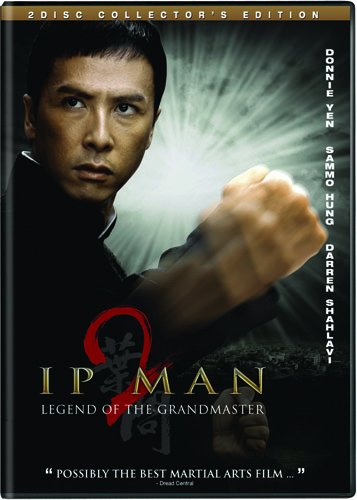
In terms of casting a nemesis, there are a few ways to do it. Some of the most common involve creating someone who is equal to the character, built along similar lines as the character. For Ip Man, this often means fighting martial artist who are masters of their trade and craft. They may dress similar, may have similar builds and may have their own outlooks and attitudes that aren't that different from the main character.
In others, they go the exact opposite. For example, Superman, the alien, the man from tomorrow, the individual with incredible innate powers, has a normal human as his main enemy; Lex Luthor. While its obviously more complicated then that, as Lex uses high tech equipment and henchmen and other bits to make himself Superman's physical equal, the idea, that the native born, Earth first, Lex Luthor, could ever stand up to someone like Superman, is where the contrast comes in.
In a similar manner, when Twister, the world champion British Boxer is introduced here, he is an excellent study in contrast. The actor sports a massive build, impressive height, and a wild mane of hair. His outfit, that of the traditional boxer, showcases this musculature, while Ip Man and other martial artist, often wear lose fitting garb. There might also be an age difference going on here, but it's difficult for me to say. I mention this because Ip Man mentions his age as a factor in the decline of martial abilities.
In making foes for the characters, try to keep the differences, as well as the potential similarities in mind. The drow against the elves, the derro against the dwarves, the tielflings and the devas. The lists go on and on.
Another thing that struck me, was the quick use of rivals turned allies here. The first master to perhaps be able to challenge Ip Man, Hung Chun-nam, uses a different style but the two come together when they realize that their own differences are petty when compared to the threat against all Chinese Martial Arts from the British.
Does that sound familiar? How about Rocky IV? How about most of the heroes of Dragonball Z, who originally started off as enemies of Goku ranging from Vegeta to Piccolo to Yamcha to Tien Shinhan.
In role playing games though, this can be a difficult feat not because its not something to look into, but rather, because unless you're playing something like a martial arts tournament, or something like a Super Hero setting, most fantasy combats don't stop until the death of one character or the other. This is another problem when trying to have recurring characters that are meant to challenge the players outside of the realm of politics and the social arena.
Ip Man 2: Legend of the Grandmaster is well worth a viewing for those who enjoy the fight scenes.
Sunday, July 10, 2011
LP Man
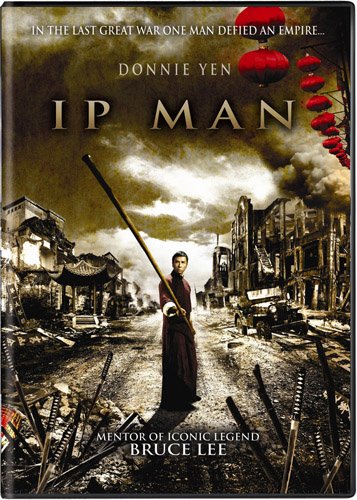
I am way behind the times when it concerns movies, even action packed movies of the Kung Fu style that I so enjoy. For example, my friends have been telling me about LP Man for many moons. They've been telling me about it for so long that it already has a sequel.
In some ways, LP Man uses a lot of the old tricks that come up in many forms of media, including animation and super hero comics.
Showcasing the villain's strength is done through showcasing the villain defeat another opponent that has some establishment as a powerful figure. This one happens in anime like Dragon Ball Z all the time, but it also happens in comics. Usually in comics, some modifcation is made to another villain to bring them out of their C list status and people think, "wow, this guy is awesome now" but alas, it's all a trick to showcase how dreadful the person who takes out the C lister is.
In other aspects, it reminded me of the movie, Cinderella Man. Here, two champions of hand to hand combat, who are hailed for being some of the best, if not the best in their field, find out that regardless of personal strength, regardless of personal holdings, that the events of the world can bypass all of those benefits.
In the case of Cinderella Man, it's a fall of the stock markets that destroys all of his personal wealth. In LP Man's instance, it's an invasion of his home country by Japan. Both men discover that they have hidden reservers and that their value on family is important as they are forced to take jobs that pay for food and shelter. Something like this might be hard to acheive in a role playing session for a number of reasons.
First off, and this is all just in my experience of course, players don't often like to be tied down to the setting with a wife and children. Second off, players would rather take deseperate chances and gambles because the characters can be replaced. If you have players who are interested in these fields though, in these tests and trials, don't be afraid to use them. After all, in GURPS and Hero, those DNPC (dependent NPC) are providing points to the player for a reason.
LP Man also provides some nice contrast in terms of the foes he faces. For instance, in the occupying army, the enemy general is fairly honorable. When he makes a promise, he delivers on it. He is also shown as being a formidable enemy. On the other hand, his aide is a perfect example of a scheming weasel who will stop at nothing to ensure that no disgrace hits the Rising Sun flags of Japan regardless of how vile or petty it is. On the other hand, there are divisions within the people of China itself. The northern people practice a different style of martial art and seek to proof their superiority. When that fails and the country is occupied, they then become bandits.
The ravages of war make strange bedfellows of your enemies. Those who you may simply have not gotten along with in the past, may become your staunchest allies or they may seek to use the upheaveal for their own benefit and bring about your downfall. It is often the doom of a people that regardless of the horror being inflected upon them, that they cannot pull together as a single people with a single purpose and overcome adversity. There will always be opportunist and cowards who seek only to augment their own forces or merely provide for their own survival.
LP Man packs in numerous action scenes and anyone playing a Monk in any edition of Dungeons and Dragons, should give it a view.
Sharpe's Prey By Bernard Cornwell

My apologies for yet another Bernard Cornwell book. I know they've got to be getting boring by now in some aspects. I only have a few more to ramble out and I'll be done with Bernard for a little while. I've got a few others, like Jade Man's Skin, Vampire Wars, and Revelation, all by different authors, to hit soon.
Neutral won't cut it. Denmark isn't part of the war between France and England but they have resources, in the form of a navy, that France wants and England can't allow to fall into enemy hands. As President George W Bush said, "You're either with us, or against us." When the giants are clashing, trying to sit back on the side lines either to try and get the best deal out of the situation or an honest fear of becoming enrolled in the war, will not cut it.
In gaming campaigns, you might think, that doesn't necessarily have to happen. One of the best examples of thing in television would be Babylon 5 when Kosh, states something like, "Once the boulders roll, the peples cannot speak." as his people, the Vorlons, begin to destroy any planet or civilization that hosts the Vorlon enemy, the Shadows.
Even in the modern world outside my window, America invaded its ally Pakistan in order to get a mass murderer who was essentially hanging out outside one of their military schools. In other areas, American unmanned drones or other air strikes, are killing civilians. This collateral damage creates a lot of hatred for the countries inflicting it, but it doesn't stop it.
Another potential problem for players, may be that their own contacts and allies in a location are under threat of death. In this book, one of the inhabitants of Denmark has been an ally to England, providing information and intelligence. He will not leave Denmark and so, to England at least, he and his daughter, become dangerous to the safety of all of those other people that the spy has contact with. A spy that cannot act as a spy and is probably going to fall into enemy hands? Not long for this world.
These are not the acts of good people. These are prudent and coldly calculated thoughts. These issues may be things that players cannot find themselves doing but may see being done around them.
The Sharpe series continues with all of the hailing points of previous books in the series. We have Sharpe in need of a mission, in need of service. We have the typical beautiful woman who Sharpe will romance and know. We have the villain, a clever man whose proven his worth already by killing the man Sharpe is to replace on this misson. Like James Bond, the signature elements are there and Cornwell weaves them into quick and entertaining story.
Subscribe to:
Posts (Atom)


