One of the things I bought at Gen Con this year, was Paizo's GameMastery Map Pack: Extradimensional Spaces which I was directly inspired to do so by Dungeon Siege III's use of the Causeways.
The Causeways are an outer planar feature that allows rapid movement between one location to the next.
This is not a brand new innovation, even in video games. Games like Diablo have used them for a long time, and I know that at least in places like the Wheel of Time, where you can enter another dimension to save some time on the material plane, in terms of travelling, they have been used.
The lure of such places fits a few things though. For one, teleportation, especially as a spell, if a very powerful tool and something many players, especially those who've actually played through to the level where they can gain it, will keep in their back pocket. This may at times leave the party in the lurch as their artillery suddenly decides that after taking 40 of his 45 hit points of damage in a single stroke, to get the hell out of there.
By introducing such a manner of movement, you allow the players to bypass having teleportation. sure, they may want it, but if customizing your campaign, don't give it to them. It doesn't exist. Movement of troops and small elite forces, such as adventurers, is often done through the use of these types of causeways. This allows the players to still have a means of moving rapidly without potentially unbalancing the campaign to the point where the GM has to have some viable reason why the player's can's scry, teleport and assassinate.
Saturday, August 27, 2011


Friday, August 26, 2011
The Red Wolf Conspiracy

Occassionally the Science Fiction Book Club will recommend something to me while I'm picking up say, The Barry Windsor Smith Archieves of Conan for a very low price. One of them was the Red Wolf Conspiracy. I'm always interested in seeing how new authors, or at least authors I haven't read, are doing in terms of what they bring to the genre.
The shoft list is that this is a fun book that has a fairly wide cast of characters. It involves numerous nationalities and social classes. It has magic, but isn't about throwing fireballs and lightning bolts about. It's an entertaining read.
I'll be looking at some of the specifics below so if you want to avoid spoilers, read no further.
"Pazel, however, was a bonded servant and a foreigner- even worse, a member of a conquered race."
One of the things that's interesting here is the use of one nation as a 'super nation' if you will that has bested several other nations and accumulated their people into its own workforce and borders. This does not go smoothly many times and resentments linger. Those of the 'super nation' carry an air of superiority about them and are dismissive of many other nationality's own gifts, including those of magic believing very little in it unless directly confronted.
These traits can make good role playing attributes for new characters. Those who are playing older characters, may tone down the arrogance and attitude as they may have seen their home nation at both its best and its worst. Those who are playing younger characters, or nationalist, may adopt a my country right or wrong, the ethos of the super patriot. Of course if they find out that they're all sacrifical lambs sent out to start a war, their attitude may change...
The opposite is also true though. Those who are conquered may be bitter.
"They tried to kill us for hundreds of years, and couldn't. You managed it in two days."
"Crawlies! Muckin' sewer-sippin' whorespawned grubs! I'll kill ye!"
One of the things that the book introduces is the Ixchel. Imagine if you will, the old carton characters, The Littles, but armed and armored like Tarzan or Conan. A wild savage lot who have suffered a great deal at the hands of people who don't understand them and fear them. These individuals are assumed to bring bad luck and are hunted down. They are supposed to sink ships and do other unspeakable things. But they show themselves here as a warrior race.
This is an interesting take on a race of tiny individuals. It also makes for a different take on things. When designing your races, think of how you can make things different. Think of how you can switch things up.
Friday, August 19, 2011
Dungeon Siege III: Rare Rares Part 2
When I was discussing Anjali in the Dungeon Siege setting, one of the things I forgot to mention, and it tends to apply to many who are of a unique or rare race, is that the thrust of the character's involvement in the world tends to revolve around how they interact with others of their kind.
Drizzt: Prior to his lifting into super stardom and simulcast hatred, Drizzt didn't have a lot of interaction with other drow. When he did however, it was usually on the other side of the battle field.
Elric: Well, this guy destroys the kingdom that endured for ten thousand years.
Vampire Hunter D: While not a full blooded vampire himself, well, suffice it to say that he kills the full blooded ones.
Magiere: A half-vampire from the Noble Dead series, finds herself in a similar position to D. She has more in common with the blood suckers than she should, but she still winds up killing them.
I'm sure there are just as many instances of strange and rare races fighting alongside their fellow, such as Corum, whose race still essentially dies off despite him being on their side, but it tends to be the ones who have a steak in how their own lives are impacted by their people, that stand out to me. It may not work for every group, but when that Shardmind thinks he's doing the will of the people, perhaps he discovers that their origin is a ruse. When that Warforge decides to adept human ways, perhaps the war between metal and flesh begins in earnest.
These manner of conflicts also set up internal turmoil for the character. Is every member of their race out to get them? Are there any they can trust? Should they be fighting against their own people? It allows the character to examine who they are in relation to the world about them.
Drizzt: Prior to his lifting into super stardom and simulcast hatred, Drizzt didn't have a lot of interaction with other drow. When he did however, it was usually on the other side of the battle field.
Elric: Well, this guy destroys the kingdom that endured for ten thousand years.
Vampire Hunter D: While not a full blooded vampire himself, well, suffice it to say that he kills the full blooded ones.
Magiere: A half-vampire from the Noble Dead series, finds herself in a similar position to D. She has more in common with the blood suckers than she should, but she still winds up killing them.
I'm sure there are just as many instances of strange and rare races fighting alongside their fellow, such as Corum, whose race still essentially dies off despite him being on their side, but it tends to be the ones who have a steak in how their own lives are impacted by their people, that stand out to me. It may not work for every group, but when that Shardmind thinks he's doing the will of the people, perhaps he discovers that their origin is a ruse. When that Warforge decides to adept human ways, perhaps the war between metal and flesh begins in earnest.
These manner of conflicts also set up internal turmoil for the character. Is every member of their race out to get them? Are there any they can trust? Should they be fighting against their own people? It allows the character to examine who they are in relation to the world about them.
Thursday, August 18, 2011
Dungeon Siege III: Anjali
If you check out the Dungeon Siege III homepage, you may notice a woman on fire with blazing hair and runes glowing about her apparently naked body. This is Anjali, an Archon of this setting.
While racial history does play a small role in the humans, such as Katarina being related to Lucas through the father, Anjali is the only non-human here.
Some of the things that makes her work though in terms of story and pacing and place, can also work for other esoteric races in fantasy games.
For one, she is human or at least human looking. When she uses her other form, her Archon form, she's still humanoid.
Two, she's been raised while not necessarily in secret, by those who know taht she is not a normal child.
Three, she is not the only one of her kind. The big bad of the series? Her mother was an Archon. The Archon's ages old origins and place in the setting? Important to the game, especially in their role as heralds to the old gods. The other Archons you encounter? Depending on how the initial encounters go, can either fight against you to the death, or provide you access to areas and put up a brief fight for the sake of a show.
Four, the Archons are rare. Remember when drow as players were rare? I'm not saying that they were 'cooler' back then, but the fact that they weren't meant to be a player race from the get go, as well as the other strange races that were introduced in the game, were rare. The disconnect some gamers have with more modern games that are fantasy based, is it's more like Star Wars and the Cantina scene where a thousand different aliens are mingling with the humans. There's nothing wrong with this appraoch. After all, some of the oldest takes on D&D, like Arduin, have some very strange races in them, but its not necessarily for everyone, especially those who grew up on Conan or Fafrd and the Gray Mouser or even Elric, who despite his heritage, didin't necessarily run into a lot of non-human character.
Five, because she's rare, she has questions about her background. She has questions about her role in the world. She doesn't quite know everything that she's supposed to be doing despite feelings she has. If she were a more common race, these questions are already answered. Its possible to play against type, but even that's playing type. How many noble drow, cambions or other evil races have we seen in addition to fallen angels, and other divine types?
By making the race of the character important and playing a role in the background and current adventurers in the campaign, you can add the unusual or the different. Beware of trying to including too much at one time or allowing players to step on each others toes with a thousand variants. Enjoy the rare character ever now and again if that's the style your going for but beware of the dilution of the default 4th edition assumption of "Yes."
While racial history does play a small role in the humans, such as Katarina being related to Lucas through the father, Anjali is the only non-human here.
Some of the things that makes her work though in terms of story and pacing and place, can also work for other esoteric races in fantasy games.
For one, she is human or at least human looking. When she uses her other form, her Archon form, she's still humanoid.
Two, she's been raised while not necessarily in secret, by those who know taht she is not a normal child.
Three, she is not the only one of her kind. The big bad of the series? Her mother was an Archon. The Archon's ages old origins and place in the setting? Important to the game, especially in their role as heralds to the old gods. The other Archons you encounter? Depending on how the initial encounters go, can either fight against you to the death, or provide you access to areas and put up a brief fight for the sake of a show.
Four, the Archons are rare. Remember when drow as players were rare? I'm not saying that they were 'cooler' back then, but the fact that they weren't meant to be a player race from the get go, as well as the other strange races that were introduced in the game, were rare. The disconnect some gamers have with more modern games that are fantasy based, is it's more like Star Wars and the Cantina scene where a thousand different aliens are mingling with the humans. There's nothing wrong with this appraoch. After all, some of the oldest takes on D&D, like Arduin, have some very strange races in them, but its not necessarily for everyone, especially those who grew up on Conan or Fafrd and the Gray Mouser or even Elric, who despite his heritage, didin't necessarily run into a lot of non-human character.
Five, because she's rare, she has questions about her background. She has questions about her role in the world. She doesn't quite know everything that she's supposed to be doing despite feelings she has. If she were a more common race, these questions are already answered. Its possible to play against type, but even that's playing type. How many noble drow, cambions or other evil races have we seen in addition to fallen angels, and other divine types?
By making the race of the character important and playing a role in the background and current adventurers in the campaign, you can add the unusual or the different. Beware of trying to including too much at one time or allowing players to step on each others toes with a thousand variants. Enjoy the rare character ever now and again if that's the style your going for but beware of the dilution of the default 4th edition assumption of "Yes."
Monday, August 15, 2011
Dungeon Siege III
I don't play a lot of video games. Between work, the g/f, my vast reading pile, and the occasional movie, it's rare that I'm willing to sacrifice a huge time chunk to a full fledged video game.
Dungeon Siege III is probably the first new game I've bought in quite a while. The last one probably being Assassin's Creed years after it was out.
Dungeon Siege III is far more character based and in some ways, limited than previous entries. You have a choice of four different characters to select. The interesting thing is that the characters all play different in terms of appearance, style, and abilities. They can be highly customized with various attributes that rise as you gain levels, allowing a user to play through the game multiple ways with the same character. I'll be mentioning some specifics below so if you want to avoid spoilers, read no further.
That reminds me of one of the strengths of D&D. As a whole, it's generally good to have a well rounded party. While 4th edition may have given these roles terms like striker, defender, controller and leader, in many ways, they've been a part of the game since thief, fighter, magic user, and cleric. Perhaps not always in exactly the same role, and perhaps some customization could change how classes worked in the game, such as multi-classing demi-humans in the OSR realms, but for the most part...
The game hits on a lot of high points I've mentioned in the past.
Religion plays a huge role. The main villain of the series is called the Living Saint and has a massive following in the East where the church is strong.
Family relations play another big role. The villain is after the heroes because they murdered her father. The villain is also related to the current queen and has a legitimate claim to the crown. Two of the selectable characters are related to each other. One of the characters is a direct descendant of one of the most powerful spellcasters in the history of the setting. These things have an influence on how people see each other, they provide illumination into motivations and provide insight into what someone might do.
The game isn't that open in some aspects, but it does allow a few variations including redeeming foes, sparing foes, and taking different paths that wind up crossing the paths not taken. The writing isn't bad and there are probably a few ideas that could easily be yanked for your own campaign.
The side quests aren't always fighting either, even if they may have an ultimate effect of providing some damage to the enemy. For example, while the Queen's forces are under siege, you can set up a cannon and prevent the enemy from entering the cave complex where the Queen is holding up. There are a few examples of this combat handy but not actual combat skill tests throughout the game. When setting up challenges for the players, see what options you can provide them that don't necessarily rely straight up on dealing damage.
Dungeon Siege III is probably the first new game I've bought in quite a while. The last one probably being Assassin's Creed years after it was out.
Dungeon Siege III is far more character based and in some ways, limited than previous entries. You have a choice of four different characters to select. The interesting thing is that the characters all play different in terms of appearance, style, and abilities. They can be highly customized with various attributes that rise as you gain levels, allowing a user to play through the game multiple ways with the same character. I'll be mentioning some specifics below so if you want to avoid spoilers, read no further.
That reminds me of one of the strengths of D&D. As a whole, it's generally good to have a well rounded party. While 4th edition may have given these roles terms like striker, defender, controller and leader, in many ways, they've been a part of the game since thief, fighter, magic user, and cleric. Perhaps not always in exactly the same role, and perhaps some customization could change how classes worked in the game, such as multi-classing demi-humans in the OSR realms, but for the most part...
The game hits on a lot of high points I've mentioned in the past.
Religion plays a huge role. The main villain of the series is called the Living Saint and has a massive following in the East where the church is strong.
Family relations play another big role. The villain is after the heroes because they murdered her father. The villain is also related to the current queen and has a legitimate claim to the crown. Two of the selectable characters are related to each other. One of the characters is a direct descendant of one of the most powerful spellcasters in the history of the setting. These things have an influence on how people see each other, they provide illumination into motivations and provide insight into what someone might do.
The game isn't that open in some aspects, but it does allow a few variations including redeeming foes, sparing foes, and taking different paths that wind up crossing the paths not taken. The writing isn't bad and there are probably a few ideas that could easily be yanked for your own campaign.
The side quests aren't always fighting either, even if they may have an ultimate effect of providing some damage to the enemy. For example, while the Queen's forces are under siege, you can set up a cannon and prevent the enemy from entering the cave complex where the Queen is holding up. There are a few examples of this combat handy but not actual combat skill tests throughout the game. When setting up challenges for the players, see what options you can provide them that don't necessarily rely straight up on dealing damage.
Sunday, August 14, 2011
Revelation by C. J. Sansom
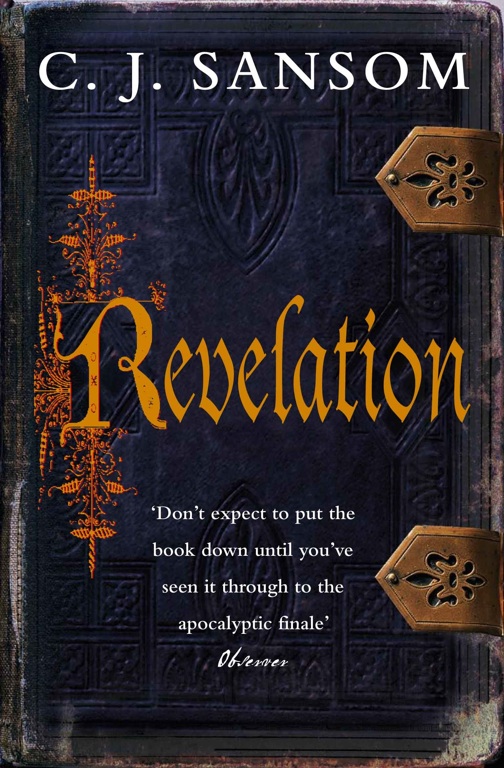
The first, is a wide cast of characters. Sansom isn't afraid to throw characters into the mix and then murder them off. I've heard it said before that GM's must be ready to murder their children. This is a truism that needs to be followed. While some of the characters you create may have some untold stories, keep those stories in mind and transfer them over and let the characters wonder what's going on as some of their favorites die off.
The next thing, is keep the plot moving. If the character run up against some walls or issues or, well, let's be honest, just stink at investigating, throw them a bone or two. Perhaps the villain isn't as clever as he though and leaves some evidence out to torture the players with just how smart he thinks he is? Perhaps someone the players have helped in the past has seen something and wishes to provide some assistance in compensation for the player's aid in the past?
Another factor to keep in mind, is bodies rot. In the novel, the villain leaves the windows open during winter so that the cold air will slow down the rot. In a game where blasts of ice might not be that hard to summon up, or even where magical means of completely destroying a body might be applicable, players may not discover murder has been done in a timely fashion or at all unless they use their own divination magics.
For the old school gamers, remember poisons are bad. In most old school games, if you fail a saving throw versus poison, you're dead. On the other hand, an interesting thing used here, is a poison that provide not death, but a pleasant feeling so that when the corpses are found, they seem to be in a state of bliss. Poisons and drugs can do more than kill, then can alter perception, alter reality, and without some type of anti-venom or cure-all, there isn't much that can be done outside of making a save and noting that the poison didn't enter the old blood stream.
Another aspect of the book that takes place is omens and con men. A few big fish wash up on shore from the Thames and people claim that they are Leviathan. Of course as soon as some religious significance is attached to the fish, the snake oil sellers are out selling various unguents, oils, and potions that they claim are made from the fish with various abilities to heal, cure, and do other things. Small incidents can help showcase the reality of the setting so to speak, and provide players with some interaction with the background that isn't necessarily of the violent nature. GMs feeling generous might even allow the players to make some knowledge or skill checks to see if any of the snake oil is real or might have properties that the seller's are unaware of. Its okay to let the players occasionally cheat a con man out of something he doesn't know he has.
For campaign seeds, it can be difficult to provide advice that means anything unless its specific to a campaign. For example, one of the characters here, Guy, is a doctor. He is reading a book that focuses on medicine in a whole new way. A manner that proves older books, books that have been used for decades if not longer, are false. While the same fervor is not attached to them as might be a religious text, old ideas can be hard to change. But if none of the people in the group are interested in medicine, its a moot point. It's a possible background element you might be able to introduce.
The same is true of false teeth. Here doctors are buying people's teeth for the creation of false teeth, apparently a fad that was popular in France during this time that made its way among the English. Little elements that provide a touch of, in this case, strangeness.
Having said all of that though, when you're running a game, it's not the same thing as reading a book at all. The players may simply be smarter then you or may get lucky. In a novel, the author can keep the audience and the hero guessing for quite a while. In a role playing game, the players may just stumble onto the main villain in the first act.
Go with it. Few things are more annoying than having the players do this as it's happened to me. It happens in written modules all the time. While I love the concept of the Witch Fire trilogy for the Iron Kingdoms Game, originally just for fantasy d20 in many ways, I don't think I ever saw a group have a hard time figuring out what was going on in the mystery portion of the game. Just run with it. Keep the rest of the stuff, characters, encounters, details, and other important bits, for another game or another sesson.
C. J. Sansom provides a wide cast of characters and events to keep the story going and someone looking for how an investigation might have happened during this darker days should pick up a copy of Revelation today.
Saturday, August 13, 2011
Captain America: The First Avenger

Now I'll be talking about specifics in the movie and how they bounce around the old brain and how I might relate some of that to a role playing game.
In terms of structure, Captain America is a soldier. Prior to that, he is a patriot. He wants to serve his country. One of the reasons I like games that follow some type of military structure, either mercenary or military, is that they provide a fairly clear structure that allows the game to flow in a manner that the GM has a little bit more leeway in controlling. As shown in the film however, not every soldier always does as he's told and even in those situations, they work out to be action filled scenarios that have the soldier 'officially' in the wrong, but doing such a good job of crippling the enemy, that it still works out to every one's advantage and any actual punishments are wink winked away.
For equipment, Captain America uses a specialized mesh for his uniform to protect him from small arms fire as well as from bayonets. His shield however, is a unique weapon of defense that is painted over and over again in the colors of his home country. With his augmented strength and agility, the shield becomes both defensive and offensive weapon. It is also iconic. Few fans of Marvel Comics wouldn't recognize the red, white, and blue of Captain America's shield.
Supporting cast includes fellow officers and agents who are allied with America. Another reason why I enjoy the military structure, there are opportunities to surround the players with interesting people who may not have the same type of plot protection that the players have. Will an explosion kill a friend? Will a sniper take out an important ally?
The nemesis... I've mentioned the Red Skull already. In this version, he too benefits from the super serum that turns a man into a super soldier. It ties him and Captain America together. the actor playing the Red Skull does a great job of bringing a level of arrogance to the Skull that works well. For example, when first introduced, he is warned away from an item of great power by an old guardian who tells him, "It's not meant for normal men to look upon", or something of that nature. The Red Skull agrees with him! Other opportunities for the Red Skull to shine include his first physical encounter with Captain America, which is cut short by the destruction of the building around them.
This destruction is a good method of keeping the final fight from happening. It allows the audience to get a taste of the Red Skull's physical prowess and reveals his madness as he claims to embrace his greater than human nature, by showcase his well, red skull visage.
In many situations where there is a need for a nemesis, having that nemesis have a similar origin to the players can provide insight into the abilities, methods, and motivations of the nemesis. It also serves to set up the nemesis as someone who is just as capable as the players. a good villain needs a good introduction. He needs a good theme.
The Red Skull also benefits in that he has a lot of neat toys. His car for example, is a slick piece of machinery while his soldiers, Hydra, are all armed with high powered energy weapons with their own signature look. These touches work well for the movie in that they allow viewers to quickly identify who the good guys and bad guys are.
Captain America is also packed with high energy. It keeps moving. There are times I wanted it to slow down as it actually uses a montage of Cap taking down various Hydra bases instead of showcasing specific missions. Keeping things moving is also vital to a role playing game. It helps keep things moving. It provides the players reasons to pay attention, to keep their hands close to the dice.
While many of the ideas are immediately of use to a super hero based campaign, they are also grounds for any campaign that requires the GM to have a military structure with a villain who shares a common point of origin with the players. Good stuff all around.
Subscribe to:
Posts (Atom)


